
Rare Visit by Pakistani Minister to India Fuels Speculation of Bilateral Thaw
On 20‑22 November 2026, New Delhi hosted the inaugural Shanghai Cooperation Organization (SCO) Civilizational Dialogue Forum, a multilateral gathering that attracted delegations from 22 member states.
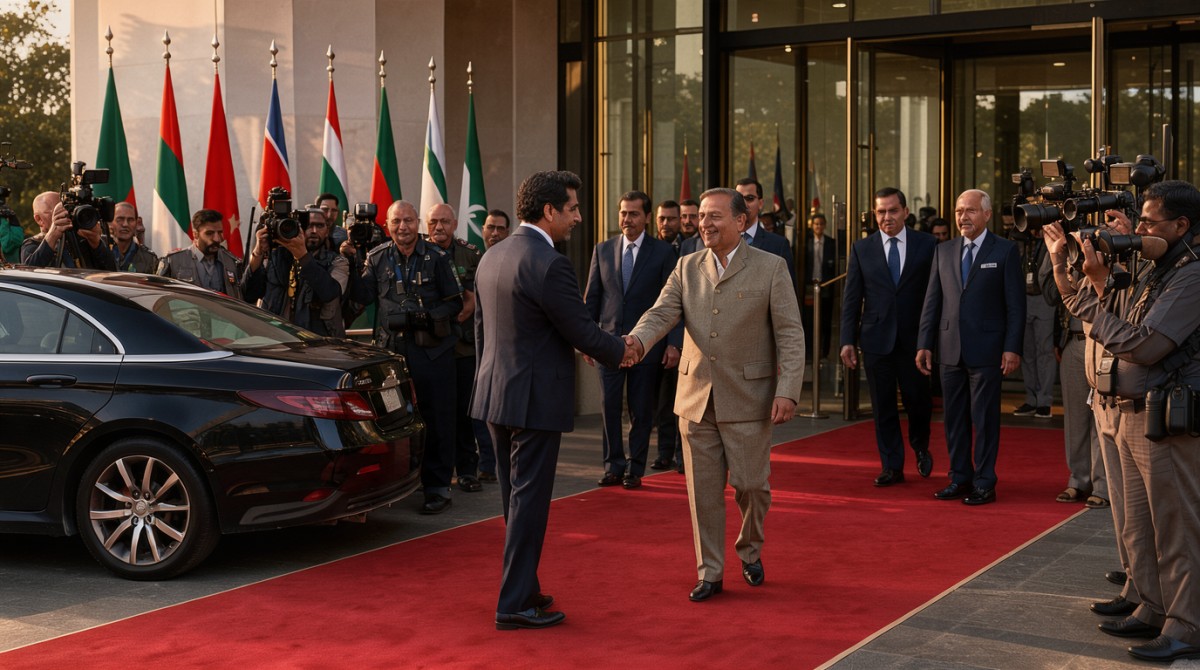
On 20‑22 November 2026, New Delhi hosted the inaugural Shanghai Cooperation Organization (SCO) Civilizational Dialogue Forum, a multilateral gathering that attracted delegations from 22 member states. Among the participants was Musadik Masood Malik, Pakistan’s Minister for Environment and Climate Change, marking the first minister‑level visit from Islamabad since May 2023, when then‑Foreign Minister Bilawal Bhutto Zardari attended the SCO Council of Foreign Ministers in Goa. The diplomatic significance of Malik’s presence must be understood against the backdrop of a decade‑long deterioration in India‑Pakistan relations, a trajectory shaped by a series of terrorist incidents, cross‑border military actions, and the suspension of key bilateral mechanisms such as the Indus Waters Treaty.
Historical Context of the India‑Pakistan Rift
The contemporary impasse traces its roots to 2016, when two high‑profile terrorist attacks—on an Indian Air Force base in Pathankot and on an Indian Army camp in Uri—prompted New Delhi to launch a cross‑border raid targeting alleged training camps inside Pakistan‑controlled territory. This operation signaled a strategic shift: India declared it would employ military force to eliminate terrorist infrastructure on the other side of the Line of Control. In the wake of the raid, India halted bilateral engagements with Pakistan and withdrew from the South Asian Association for Regional Cooperation (SAARC) summit that Islamabad was slated to host, leaving SAARC effectively dormant.
Subsequent flashpoints deepened the mistrust. In 2019, a terrorist attack on a bus carrying Indian paramilitary personnel in Pulwama triggered an Indian Air Force strike on Pakistani training camps, followed by Pakistan’s expulsion of India’s high commissioner and the recall of its own envoy after New Delhi revoked the special autonomous status of Jammu and Kashmir in August 2019. The revocation split the former state into two union territories under direct central rule, a move that further inflamed Islamabad’s perception of Indian aggression.
The 2025 Pahalgam Attack and Its Aftermath
The most recent escalation occurred in May 2025, when a terrorist assault on tourists in Pahalgam, a resort town in Indian‑administered Kashmir, resulted in a surge of accusations. New Delhi attributed the attack to a proxy of Lashkar‑e‑Taiba, a Pakistan‑based organization with a longstanding record of targeting Indian interests. Prime Minister Narendra Modi’s subsequent national address framed the incident as a decisive moment for India’s Pakistan policy, emphasizing that “terror and talks cannot go together” and warning that any future aggression would be met with decisive strikes, even at the risk of nuclear escalation.
In response, India placed the 1960 Indus Waters Treaty in abeyance in April 2025, a step that heightened water security concerns in Islamabad. The treaty, which allocates the eastern rivers (Sutlej, Beas, Ravi) to India and the western rivers (Indus, Jhelum, Chenab) to Pakistan, has long been a cornerstone of bilateral resource management. Pakistan’s environment minister, Malik, had earlier in June 2026 warned that Pakistan would “cut off those hands” attempting to dominate Indus waters, underscoring the intertwining of water politics with broader security calculations.
The SCO Forum as a Multilateral Platform
The SCO, which admitted both India and Pakistan as full members in 2017, has emerged as one of the few venues where the two rivals can sit at the same table without bilateral issues dominating the agenda. The 2026 Civilizational Dialogue Forum was explicitly framed as a multilateral event, with the External Affairs Ministry’s Randhir Jaiswal stating on X that invitations were extended to all SCO members, including Pakistan. This framing was reinforced by the fact that the forum’s official statements, released on 21 November, focused on cultural exchange and civilizational dialogue rather than contentious bilateral disputes.
During his stay, Malik attended cultural site visits, including the Taj Mahal in Agda and monuments in New Delhi, and participated in a lunch with India’s Minister of Culture Gajendra Singh Shekhawat. While opposition parties in India criticized the optics of a Pakistani minister sharing a venue with Indian officials, the Ministry’s narrative emphasized the multilateral nature of the event, seeking to distance the invitation from any implication of a bilateral thaw.
Signals of Restraint and Their Interpretation
Malik’s public remarks at the forum were notably restrained. When pressed by Indian journalists on terrorism, the Kashmir dispute, and bilateral relations, he limited his comments to the cultural themes of the dialogue and echoed Prime Minister Modi’s call for “dialogue among civilizations.” His restraint was highlighted by former Indian High Commissioner to Pakistan T.C.A. Raghavan, who suggested that Pakistan’s chairmanship of the SCO in 2026 likely motivated Malik to avoid controversy on a platform where “there is little to be gained by being controversial.” Raghavan cautioned, however, that such measured conduct should not be read as a sign of an imminent unfreeze in ties.
The diplomatic calculus appears to be one of selective engagement: Pakistan seeks to project a constructive image within the SCO while preserving leverage on core issues such as the Indus Waters Treaty and the Kashmir dispute. By limiting contentious statements, Islamabad may aim to secure favorable outcomes in the upcoming SCO chair year, during which it will host a series of meetings and extend invitations to senior Indian officials, including External Affairs Minister S. Jaishankar, Defence Minister Rajnath Singh, and National Security Advisor Ajit Doval.
Domestic Political Reactions in India
Within New Delhi, the invitation to a Pakistani minister has provoked criticism from opposition parties, which accuse the government of “confused” Pakistan policy. The visual of Malik seated in the front row—albeit not beside Prime Minister Modi—has been seized upon as symbolic of a perceived softening, despite the Ministry’s insistence that the event remained strictly multilateral. Critics argue that any engagement short of a formal bilateral dialogue risks legitimizing Pakistan’s claims while undermining India’s hardline stance articulated after the Pahalgam attack.
Nevertheless, the Indian government’s official position, as articulated by the External Affairs Ministry, remains that the SCO forum’s purpose is to foster civilizational exchange, not to serve as a venue for bilateral negotiations. This delineation reflects a broader strategic approach: maintaining pressure on Pakistan over terrorism and water disputes while exploiting multilateral platforms to isolate Islamabad on the international stage.
Prospects for the Upcoming SCO Chairmanship
Pakistan’s upcoming chairmanship of the SCO in 2027 will provide Islamabad with an opportunity to shape the agenda of a major regional organization that includes China, Russia, and Central Asian states. By inviting senior Indian officials to attend SCO meetings in Pakistan, Islamabad may seek to create a diplomatic environment conducive to incremental confidence‑building measures, particularly in the realms of cultural exchange and environmental cooperation, which fall within Malik’s ministerial remit.
However, the fundamental points of contention—terrorism, the Kashmir dispute, and water sharing—remain unresolved. The suspension of the Indus Waters Treaty and the entrenched narrative that “terror and trade cannot go together,” as voiced by Prime Minister Modi, suggest that any substantive bilateral progress will require a separate, high‑level dialogue beyond the SCO’s multilateral framework. In the short term, the SCO forum serves as a limited conduit for engagement, allowing both sides to signal a willingness to cooperate on non‑core issues while preserving strategic ambiguity on the core disputes.
Strategic Implications for Regional Stability
From a broader geopolitical perspective, the modest diplomatic overture embodied by Malik’s participation in the Delhi forum illustrates the delicate balance South Asian states must strike between rivalry and multilateral cooperation. The SCO’s emphasis on civilizational dialogue aligns with China’s vision of a “shared future” for Eurasia, offering a platform where India and Pakistan can engage without directly confronting each other on the most sensitive bilateral issues.
For scholars of Korean foreign policy, the Indian‑Pakistani dynamic offers a cautionary parallel: regional powers often leverage multilateral institutions to manage bilateral tensions while pursuing strategic objectives. South Korea, for instance, has utilized the ASEAN‑Plus‑Three framework to navigate its own security dilemmas with North Korea, emphasizing multilateral confidence‑building while reserving bilateral negotiations for core security matters. Similarly, India and Pakistan appear poised to continue this pattern—maintaining a hardline stance on security and water disputes while engaging in limited cultural and environmental cooperation within the SCO.
Looking ahead, the trajectory of India‑Pakistan relations will likely hinge on whether multilateral engagements, such as the SCO Civilizational Dialogue Forum, can generate sufficient diplomatic capital to bring the two sides back to the negotiating table on core issues. Until such a breakthrough occurs, the restraint displayed by Pakistan’s environment minister should be read as a tactical maneuver within a broader strategy of selective engagement, rather than as an indicator of a substantive policy shift.
This article was produced with AI-assisted research and editorial support. Reporting is based on the source material cited below. Sources: The Diplomat; thediplomat.com; Global1.News (25 November 2026).
By Prof. David Park, Staff Writer
What's Your Reaction?
 Like
0
 Dislike
0
 Love
0
 Funny
0
 Wow
0
 Sad
0
 Angry
0
East Asia/Technology Correspondent at Global1.News. Seoul-based voice covering Korean politics, technology, business, and culture. Analyzes how technology and geopolitics intersect across East Asia.













Comments (0)