
VP Sara Duterte Posts Bail, Arrest Warrant Lifted in Grave Threats Case
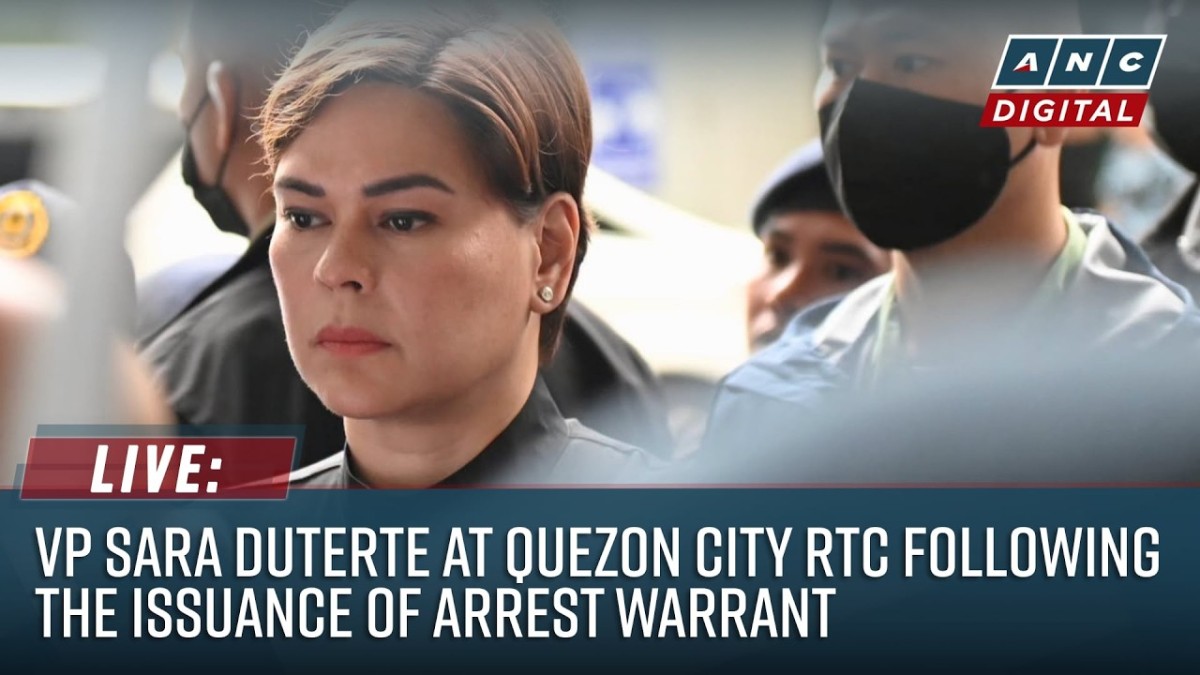
MANILA — In an ANC 24/7 live broadcast on Saturday, Vice President Sara Duterte walked into the Quezon City Regional Trial Court and posted bail of P120,000 for each of three counts of grave threats, totaling P360,000, a move that temporarily defused a historic standoff between the country's second-highest official and the criminal justice system.
MANILA — In an ANC 24/7 live broadcast on Saturday, Vice President Sara Duterte walked into the Quezon City Regional Trial Court and posted bail of P120,000 for each of three counts of grave threats, totaling P360,000, a move that temporarily defused a historic standoff between the country's second-highest official and the criminal justice system. Her voluntary surrender, confirmed by her lawyer Paul Lawrence Lim, came a day after QC RTC Branch 98 issued an arrest warrant against her, marking the first time in Philippine history that a sitting Vice President has faced an arrest warrant while an impeachment trial proceeds simultaneously in the Senate.
VP Sara Duterte Posts P360,000 Bail, Arrest Warrant Lifted in Grave Threats Case
Manila, Philippines – Saturday, September 5 — The Quezon City Regional Trial Court lifted the arrest warrant after the Vice President posted P120,000 bail for each of three counts of grave threats — P360,000 in total — with her lawyers saying she will continue to exercise all her available legal remedies.
A Morning of Tension at the Quezon City Hall of Justice
Duterte arrived at the Quezon City Hall of Justice in the morning accompanied by her lawyers, Poa and Lim, but took about an hour before she actually entered the court premises. Her legal team explained the delay: authorities would have been compelled to enforce the arrest warrant if she had not voluntarily presented herself, so careful arrangements were made to allow her security personnel and members of the media to accompany her in certain areas outside the courtroom.
Additional police forces were deployed around the Quezon City Hall of Justice after the warrant's issuance on Friday, and they were seen securing the area on Saturday morning. The visible police presence underscored the gravity of the moment — a Vice President, protected by her own security detail, walking into a courtroom where a judge had found probable cause to hold her for trial on charges that could carry prison time.
After she posted bail, the QC RTC lifted the arrest warrant, and she was considered to have surrendered, according to her lawyer Michael Poa. The legal mechanics moved swiftly once she was inside, but the emotional weight of the day was evident in Duterte's own words as she addressed reporters and supporters.
'I Do Not Feel Safe': The Vice President's Plea
Speaking in Filipino, Duterte painted a picture of a woman who believes she is in physical danger. "I have documented threats and harassment since 2023. I fear for my children. I do not feel they are safe if I am with them. I left the place where my children are to go to the court but the police still came. I do not feel safe. I feel like they will kill me," she said.
Her statement reflects a deep personal anxiety that has defined her public posture since the political rupture with the Marcos family became irreparable. For ordinary Filipinos watching the live coverage, the image of a Vice President fearing for her own life — and the lives of her children — is a stark reminder that political power in the Philippines does not always translate to personal security. The Duterte family has long claimed threats against them, and Sara Duterte's remarks on Saturday suggest that those fears have not subsided even as she navigates the legal system.
The human dimension here is impossible to ignore. Whatever one thinks of her politics or her statements, Duterte is also a mother who says she fears for her children's safety. That anxiety is now intertwined with a criminal case that will test whether the Philippine justice system can treat a powerful official with the same rigor it applies to ordinary citizens.
The Warrant: What Happened on Friday
The arrest warrant, dated September 4 and signed by Presiding Judge Maria Angelica De Ramos of QC RTC Branch 98, was issued after the court found probable cause to hold Duterte for trial on the three grave threats charges. The warrant set bail at P120,000 per count and was served at the Office of the Vice President along EDSA in Mandaluyong City by PNP Col. Christine Tabdi.
The National Bureau of Investigation (NBI) is also authorized to implement the warrant. NBI Director Melvin Matibag confirmed that the court can process bail applications during Saturdays, citing a Supreme Court directive. Matibag also addressed a key legal question that has been circulating since the charges were filed: can a criminal case proceed while an impeachment trial is ongoing? His answer was unambiguous. "The impeachment court will proceed with their hearing, and the case of grave threats will also proceed," Matibag said.
That dual-track approach — impeachment in the Senate and criminal prosecution in the regular courts — is unprecedented in Philippine history. It raises fundamental questions about the separation of powers, the meaning of accountability, and whether the justice system can handle the political pressure that comes with prosecuting a Vice President.
The Charges: What Duterte Is Accused Of
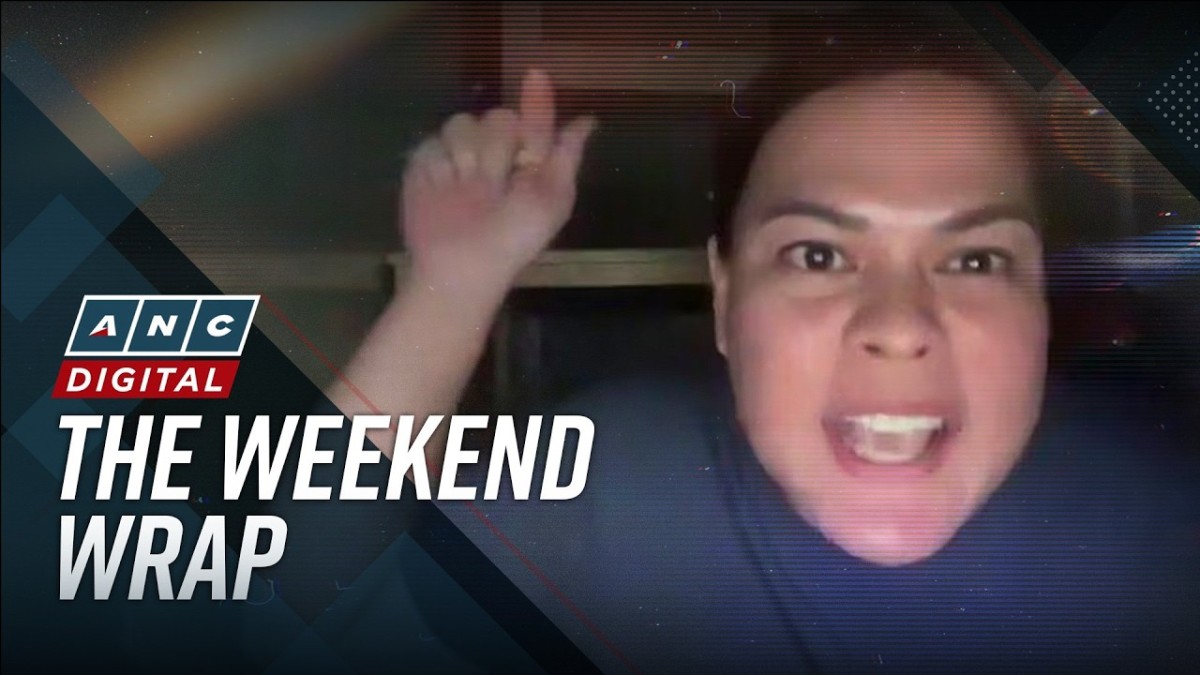
The Department of Justice charged Duterte last month, in early August, with three counts of grave threats in relation to Section 6 of Republic Act No. 10175, the Cybercrime Prevention Act of 2012. The case stems from her remarks during a late-night online press conference in November 2024, when she said she had contracted someone to kill President Ferdinand Marcos Jr., First Lady Liza Araneta Marcos, and then-House Speaker Martin Romualdez if she herself were killed.
Under Article 282 of the Revised Penal Code, grave threats covers threatening another person with the infliction of any wrong amounting to a crime. The charge is a felony, and the fact that it was elevated to the Cybercrime Prevention Act reflects the online medium through which the threats were made. Duterte has consistently maintained that her remarks were "maliciously taken out of logical context," a defense that her legal team will now have the opportunity to present in a full trial.
For the public, the November 2024 press conference was a seismic moment in Philippine politics. A sitting Vice President openly discussing the assassination of the President, the First Lady, and the House Speaker — even conditionally — shattered whatever remained of the so-called "UniTeam" alliance that had swept Marcos and Duterte into power in 2022. The remarks triggered a cascade of political consequences, including the impeachment complaint that is now being tried in the Senate.
The Defense: Immunity, Jurisdiction, and the Motion to Quash
Duterte's legal strategy has centered on a motion to quash filed on the ground of jurisdiction. Her lawyers argue that she and other impeachable officers have limited procedural immunity while in office under the 1987 Constitution, and that she should be under the jurisdiction of the impeachment court rather than the regular courts. The QC RTC held oral arguments on the motion in late August, on August 25, and ultimately denied both the motion to quash and a separate motion to defer or recall the arrest warrant.
The court's decision to deny the motion and issue the warrant represents a significant legal ruling: a sitting Vice President is not immune from criminal prosecution for acts that are not connected to her official duties. This interpretation aligns with the position Duterte herself took earlier, when she said criminal prosecution can proceed concurrently against an impeachable official while an impeachment trial is ongoing, and clarified that the Vice President is not immune from lawsuits.
University of the Philippines College of Law associate dean Tamase noted that Duterte can potentially question the issuance of the warrant of arrest before the Court of Appeals or the Supreme Court. That avenue remains open, and her legal team may well pursue it. But for now, the case will proceed to trial, and Duterte will have to defend herself in a courtroom — not just in the political arena of the Senate impeachment trial.
Official Reactions: Respect for the Court, Defense of Due Process
Malacañang moved quickly to frame the administration's position. Palace Press Officer Undersecretary Atty. Claire Castro said in Filipino: "The Palace respects any decision or order from the court." The Department of Justice issued its own statement: "The Department respects the Court's ruling and reaffirms its commitment to the rule of law."
House impeachment prosecution panel spokesperson Lanao del Sur Rep. Zia Alonto Adiong offered a more nuanced take, emphasizing that the warrant is not a conviction. "The issuance of an arrest warrant is not a finding of guilt. Due process must be observed at every stage. A court, however, does not issue a warrant without probable cause. That determination has now been made," Adiong said.
On the other side of the political spectrum, PDP-LABAN denounced the arrest warrant, describing it as a "blatant attempt to decimate the political Opposition." That framing reflects the deep partisan divide that now characterizes Philippine politics. For Duterte's supporters, the criminal case is a political persecution dressed up in legal robes. For her critics, it is a long-overdue moment of accountability — proof that no one, not even a Vice President, is above the law.
What This Means for the Rule of Law in the Philippines
The significance of this case extends far beyond the fate of one politician. This is a landmark test of whether the Philippine justice system can treat powerful officials like ordinary Filipinos. When a Vice President posts bail at the same courthouse where countless ordinary citizens have done the same, the symbolism is profound. The law, at least in theory, applies equally to everyone.
But the case also raises uncomfortable questions about the intersection of law and politics. The charges against Duterte stem from statements she made about the President, the First Lady, and the House Speaker — the three most powerful figures in the executive and legislative branches. The fact that the Department of Justice, which is under the executive branch, filed the charges, and that the House of Representatives, led by Speaker Romualdez, initiated the impeachment, creates the appearance of a coordinated political offensive against the Vice President.
Duterte's supporters will point to this as evidence of persecution. Her detractors will argue that the charges are based on her own words, captured on video, and that no amount of political context can excuse threatening to kill the President. Both narratives contain elements of truth, and the court will now have to navigate this politically charged terrain while maintaining its judicial independence.
The Impeachment Trial Continues: A Dual Test of Accountability
Duterte's impeachment trial before the Senate is now in its third month. The alleged threats also form part of one of the Articles of Impeachment against the Vice President, meaning she faces parallel proceedings that could result in either removal from office or criminal conviction — or both. The Constitution provides that impeachment is a political process, while criminal prosecution is a legal one. The two can proceed simultaneously, as NBI Director Matibag confirmed.
For the Filipino people, this dual-track accountability is unprecedented. Never before has a sitting Vice President faced both an impeachment trial and a criminal prosecution at the same time. The outcome of these parallel proceedings will shape the future of Philippine governance, setting precedents for how the country handles allegations of misconduct against its highest officials.
The case also tests the resilience of Philippine institutions. The Senate, sitting as an impeachment court, must demonstrate that it can conduct a fair trial despite the political pressures surrounding it. The regular courts, meanwhile, must show that they can adjudicate a case involving the Vice President without succumbing to political interference. The Quezon City RTC's decision to issue the warrant and deny the motion to quash suggests that at least one court is willing to apply the law without fear or favor.
A Historic Moment for the Justice System
As Duterte left the Quezon City Hall of Justice on Saturday, having posted bail and secured her temporary freedom, the full weight of the moment settled in. This is the first time a sitting or recent Vice President has faced an arrest warrant and posted bail while an impeachment trial proceeds simultaneously. The case is a landmark test of the rule of law, checks and balances, and whether the justice system treats powerful officials like ordinary Filipinos.
For ordinary citizens watching from their homes, from sari-sari stores in the provinces, from OFW dormitories abroad, the message is mixed. On one hand, the fact that a Vice President had to post bail like any other accused person is a powerful affirmation of the principle that no one is above the law. On the other hand, the political context of the case — the charges filed by an executive department against a political rival, the impeachment initiated by a legislative chamber led by the President's ally — raises concerns about whether the law is being used as a weapon.
The coming months will determine which narrative prevails. The criminal trial will proceed, and Duterte will have her day in court. The impeachment trial will continue in the Senate. And the Filipino people will watch, as they always do, hoping that justice is served — not for the politicians, but for the country itself.
By Bella Reyes, Staff Writer
This article was produced with AI-assisted research and editorial support. Reporting is based on sources cited in the article.
What's Your Reaction?
 Like
0
Like
0
 Dislike
0
Dislike
0
 Love
0
Love
0
 Funny
0
Funny
0
 Wow
0
Wow
0
 Sad
0
Sad
0
 Angry
0
Angry
0

Philippines/Southeast Asia Correspondent at Global1.News. Manila-based journalist covering Philippine politics, environment, maritime security, and social issues. Passionate about marine conservation and the communities protecting the Philippines' natural heritage.













Comments (0)