
Chinese Survey Vessel Monitored in Panatag Shoal for Weeks
The Philippine Coast Guard says the Chinese survey vessel Haiyang Dizhi Shihao operated 25 days inside the country's exclusive economic zone, including three weeks near Panatag (Scarborough) Shoal, without a permit. Beijing rejects the claim; Manila hit back over Batanes.
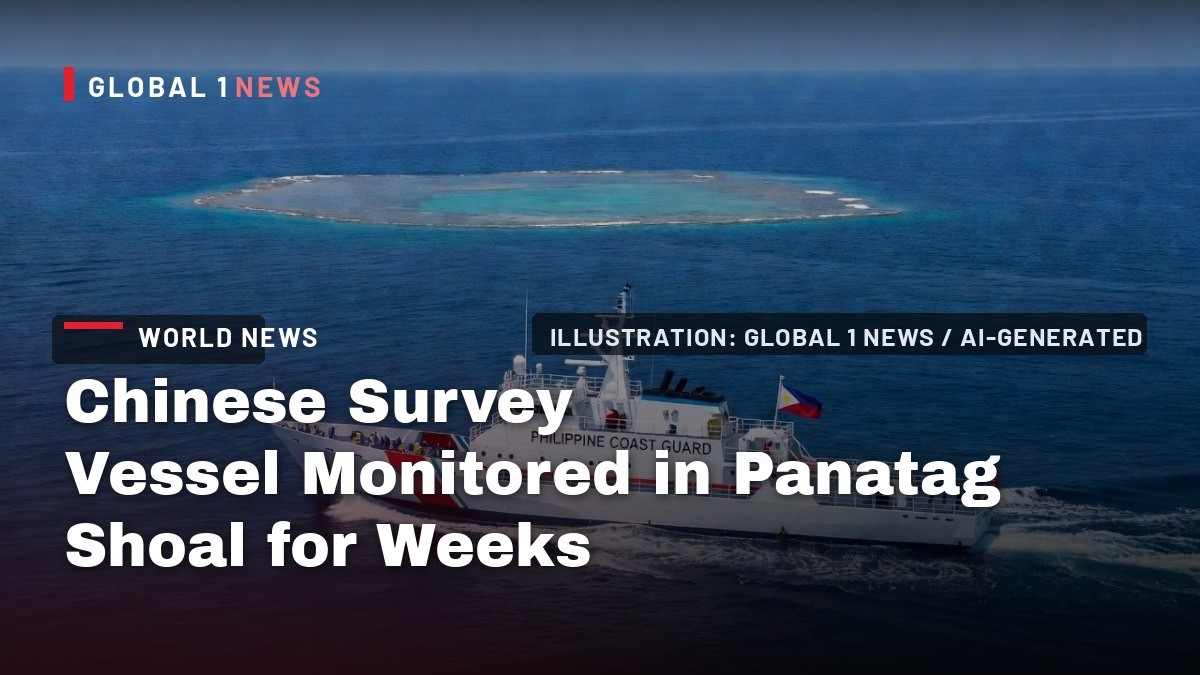
While the Philippines was focused on monsoon rains and flooding, a Chinese survey vessel operated illegally inside Panatag (Scarborough) Shoal for nearly a month, the Philippine Coast Guard (PCG) reported on Friday, September 4. The PCG’s West Philippine Sea spokesman, Rear Admiral Jay Tarriela, detailed the vessel’s movements, which included three weeks inside the 12-nautical-mile territorial sea of Bajo de Masinloc, prompting strong reactions from Manila and a firm rebuttal from Beijing.
25 Days of Alleged Illegal Operation
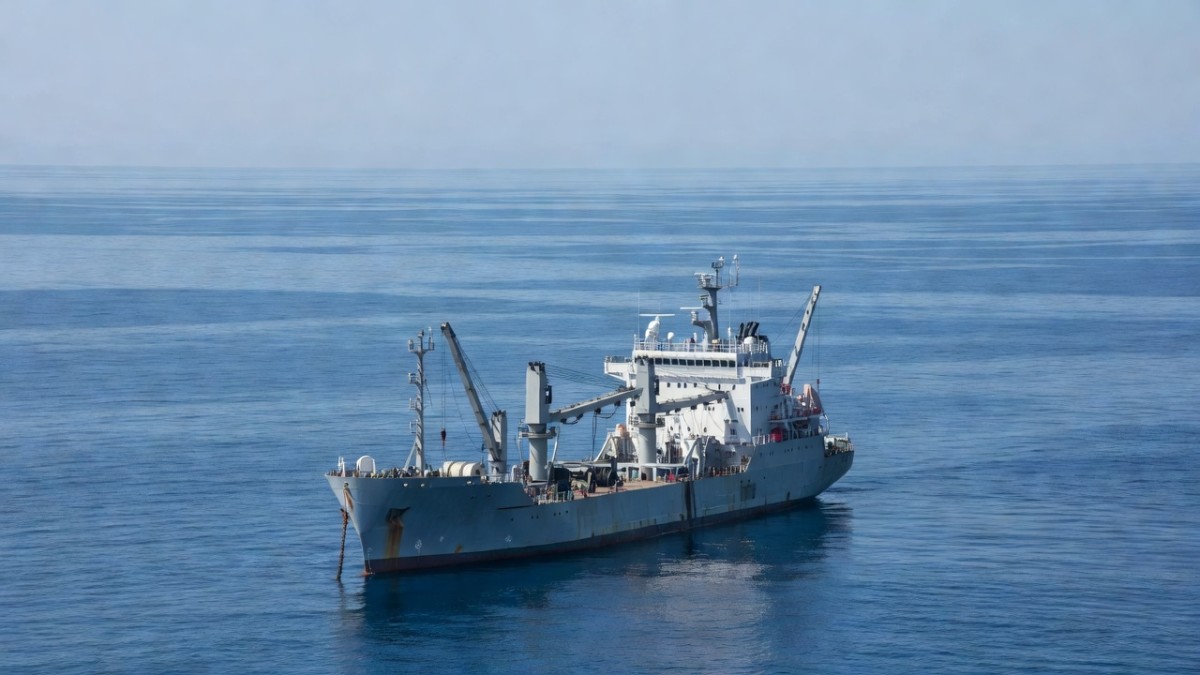
Rear Admiral Tarriela told reporters that the 76-meter Chinese survey vessel, the Haiyang Dizhi Shihao, has been operating within the Philippines’ exclusive economic zone (EEZ) for 25 days. “For 25 days, the 76-meter Chinese survey vessel Haiyang Dizhi Shihao has been operating inside our exclusive economic zone — three weeks of it inside the 12 nautical miles territorial sea of Bajo de Masinloc,” Tarriela said, using the local name for Panatag Shoal.
According to satellite tracking shared by Tarriela, the vessel entered the Philippines’ EEZ near midnight on August 10. It remained inside the shoal’s territorial waters from August 11 to September 1. The PCG spokesman emphasized that the ship deliberately switched off its automatic identification system (AIS) to avoid detection at sea. Despite this, Philippine authorities were able to track the vessel with assistance from Canada’s Dark Vessel Detection program, which uses satellite radar to spot ships that are not broadcasting their positions.
Tarriela identified the vessel as being operated by the Guangzhou Marine Geological Survey. He noted its capabilities, saying it is equipped for deep-sea drilling and had drilled 302.07 meters beneath the seafloor in 2023. “This is the same vessel that spent seven weeks surveying inside Indonesia’s EEZ in the North Natuna Sea in 2021,” he added, drawing a parallel to previous incidents in the region.
Timing Questioned Amid Severe Weather
The PCG spokesman flagged the timing of the vessel’s deployment, suggesting it was a calculated move while the Philippines was distracted by natural calamities. “While the Philippines has been battered by typhoons and the monsoon these past weeks, China moved its survey vessel in at precisely the moment our vessels were least able to intercept it,” Tarriela said.
This observation resonates deeply with Filipino communities, particularly in coastal areas and fishing villages that bore the brunt of the recent weather. For many subsistence fishermen in Zambales and other provinces near the West Philippine Sea, the monsoon season already means reduced catch and dangerous conditions. The presence of a foreign survey vessel during this time adds another layer of concern for those whose livelihoods depend on these waters.
Tarriela also noted that the vessel was escorted by the China Coast Guard before it withdrew from the waters ahead of the ASEAN summit. The withdrawal came after the extended stay, but the PCG maintained that the operations were unauthorized.
No Permit Issued, Says DFA
According to Tarriela, the Department of Foreign Affairs (DFA) has confirmed that no permit was issued for the vessel to conduct marine scientific research within Philippine waters. Under the United Nations Convention on the Law of the Sea (UNCLOS), foreign marine scientific research inside another state’s EEZ requires the explicit consent of the coastal state.
The Philippines’ position is bolstered by the 2016 arbitral ruling, which Manila won against China. That ruling struck down China’s nine-dash line claim, found that Beijing had violated Philippine sovereign rights in its EEZ, and held that Scarborough Shoal is a rock generating only a 12-nautical-mile territorial sea. This legal framework underpins the Philippine government’s assertion that the Chinese vessel’s activities were illegal.
“It is illegal,” Tarriela said in a post on X, summarizing the PCG’s stance in no uncertain terms. The absence of a permit, combined with the vessel’s deliberate AIS shutdown, points to an operation designed to evade scrutiny, according to Philippine officials.
Chinese Embassy Rejects Claims
The Chinese Embassy in Manila quickly rejected the Philippine government’s allegations. Deputy Spokesperson Guo Wei said the vessel was carrying out “routine scientific research and navigational operations in waters under China’s jurisdiction.” Guo Wei maintained that the operations were lawful under Chinese domestic legislation and international law, including UNCLOS.
This response reflects the ongoing divergence between Manila and Beijing over maritime jurisdiction in the West Philippine Sea. While the Philippines relies on the 2016 arbitral ruling, China has consistently refused to recognize that decision, insisting on its own interpretation of historical rights and international law.
The Chinese Embassy’s statement did not address the specific allegations regarding the vessel’s AIS shutdown or the lack of a permit from the DFA. Instead, it reaffirmed China’s position that its activities in the area are legitimate, framing them as part of routine scientific work.
DND Denounces Disinformation on Batanes
In a related development, the Department of National Defense (DND) denounced what it described as China’s latest efforts to sow disinformation, specifically regarding claims that Batanes is part of Chinese territory. DND spokesman Arsenio Andolong issued a firm statement: Batanes is not and has never been part of Chinese territory.
The controversy began two months ago when Chinese academic scholars first claimed that Batanes belongs to China by way of Taiwan. This argument was repeated in an opinion piece published by the state-run Global Times on Thursday. The DND’s response underscores the sensitivity of the issue, as Batanes is the northernmost province of the Philippines, geographically closer to Taiwan than to mainland Luzon.
For the people of Batanes, an island province with a distinct Ivatan culture, these claims are not abstract geopolitical maneuvers. The province is home to tight-knit communities where the sea is both a source of sustenance and a connection to the outside world. Any assertion of foreign sovereignty over their homeland is met with deep concern and resistance from local leaders and residents alike.
Defense Secretary Meets Maritime Experts
Amid these tensions, Defense Secretary Gilbert Teodoro Jr. met with retired Supreme Court justice Antonio Carpio and retired Philippine Navy rear admiral Rommel Jude Ong on Friday. The discussion focused on the Law of the Sea and the assertion of Philippine maritime rights. Carpio, a renowned expert on maritime law, has long been a vocal advocate for the Philippines’ claims in the West Philippine Sea, while Ong brings practical naval experience to the table.
The meeting signals the government’s intent to strengthen its legal and operational posture in the face of continued Chinese activities. By consulting with legal and military experts, the Department of National Defense appears to be preparing a more robust response to future incursions, potentially including enhanced surveillance and diplomatic actions.
National Security Experts Urge Vigilance
National security expert Jose Antonio Goitia weighed in on the incident, urging the Philippines to examine not only what China was studying but also how the information gathered could be used in the future. “The temporary presence today can become the accepted reality of tomorrow if it is allowed to [continue],” Goitia warned.
Goitia noted that the vessel is designed for marine geological surveys and is capable of examining the seabed and shallow subsurface. It is equipped with a stern-mounted A-frame used to deploy and retrieve survey and scientific equipment. Such capabilities could generate detailed information about seabed conditions, which might have strategic implications for resource exploration and naval operations.
This is not the first time Chinese research vessels have been linked to activities in the shoal. In May, a floating platform or raft was spotted inside the shoal and was reportedly linked to Chinese research vessels. The pattern suggests a sustained effort by China to establish a presence in the area, even as diplomatic tensions simmer.

Impact on Filipino Fisherfolk and Coastal Communities
For the subsistence fishermen of Masinloc and nearby coastal towns, the shoal is more than a geopolitical flashpoint—it is their fishing ground. The West Philippine Sea has long been a source of livelihood for these communities, who rely on the rich marine biodiversity of the area. Incursions by foreign vessels, whether survey ships or fishing fleets, disrupt their daily lives and threaten their access to traditional fishing areas.
The timing of the Chinese vessel’s operation, during the height of the monsoon season, is particularly troubling for these fisherfolk. Many were already struggling to recover from the effects of recent typhoons and heavy rains. The knowledge that a foreign vessel was operating in their waters while they were dealing with these challenges adds to their sense of vulnerability.
Local government units and barangay captains in the region have repeatedly called for stronger government action to protect their waters. The bayanihan spirit, so central to Filipino culture, is evident in how these communities support each other during crises, but they look to the national government for protection against external threats to their maritime heritage.
Looking Ahead: Legal and Diplomatic Options
As the Philippines weighs its next steps, the government has several options at its disposal. Diplomatic protests through the DFA are likely, given the clear violation of UNCLOS procedures. The Philippines could also bring the matter before international bodies, although China’s refusal to recognize the 2016 arbitral ruling limits the effectiveness of such avenues.
Enhanced surveillance and patrols in the West Philippine Sea are also being considered, particularly with the assistance of international partners like Canada, whose Dark Vessel Detection program proved invaluable in tracking the Haiyang Dizhi Shihao. Strengthening the PCG’s capabilities and coordinating with other agencies will be crucial in deterring future incursions.
The Philippine government remains committed to asserting its sovereign rights in accordance with international law. As Defense Secretary Teodoro’s meeting with legal and military experts suggests, Manila is preparing a comprehensive strategy that combines legal arguments, diplomatic pressure, and operational readiness to protect its maritime interests.
For ordinary Filipinos, from the fisherfolk of Zambales to the residents of Batanes, these developments are a reminder that the country’s maritime disputes are not distant affairs but issues that affect their daily lives, their livelihoods, and their national identity. The coming weeks will test the resolve of both the government and the people as they navigate these choppy waters.
This article was produced with AI-assisted research and editorial support. Sources: The Philippine Star, GMA News Online, Manila Bulletin, The Manila Times (Sept. 4-5, 2026).
By Bella Reyes, Staff Writer
What's Your Reaction?
 Like
0
Like
0
 Dislike
0
Dislike
0
 Love
0
Love
0
 Funny
0
Funny
0
 Wow
0
Wow
0
 Sad
0
Sad
0
 Angry
0
Angry
0

Philippines/Southeast Asia Correspondent at Global1.News. Manila-based journalist covering Philippine politics, environment, maritime security, and social issues. Passionate about marine conservation and the communities protecting the Philippines' natural heritage.















Comments (0)