
US Unpredictability Is Reshaping How America's Asian Allies Cooperate
When President Donald Trump abruptly ordered the Pentagon to substantially reduce joint military exercises with South Korea, officials in Seoul were caught off guard.
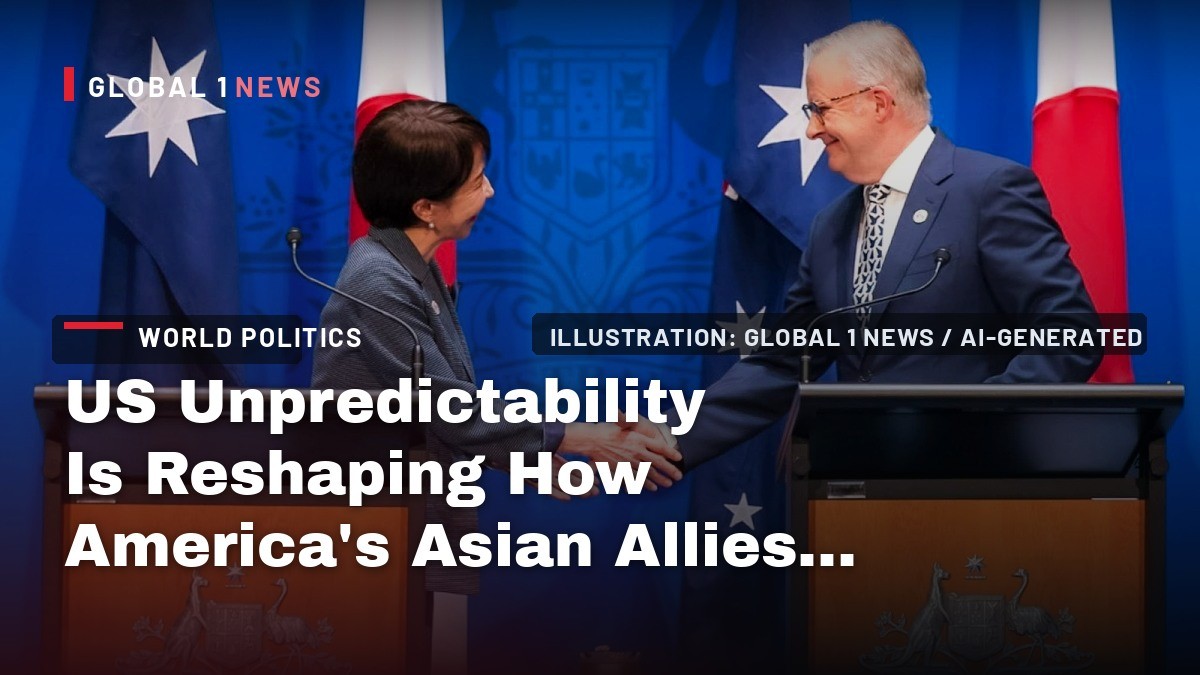
When President Donald Trump abruptly ordered the Pentagon to substantially reduce joint military exercises with South Korea, officials in Seoul were caught off guard. The annual Ulchi Freedom Shield drills still went ahead but were cut short on Trump's order, a stark reminder that even one of Washington's closest allies can find the assumptions of its security policy changed with little warning.
That uncertainty is now driving a quiet but consequential transformation across the Indo-Pacific. South Korea, Japan, and Australia are not abandoning their alliances with the United States — far from it. But they are investing more heavily in relationships with one another and with Europe, building a web of cooperation designed to remain useful even when Washington changes course suddenly, as it has on defense, trade, and diplomatic tactics.
Allies Hedge Against Washington Uncertainty With Deeper Regional Ties
Seoul, South Korea — September 5, 2026 — Across the Indo-Pacific, America's closest partners are responding to the unpredictability of the Trump administration not by leaving the U.S. alliance system, but by diversifying their options. From the Korea-Japan supply chain pact to Australia's acquisition of Japanese warships and new security dialogues with Brussels, a layered architecture of cooperation is emerging that functions alongside — and sometimes independently of — Washington.
The Korea-Japan Rapprochement Survives Political Turnover
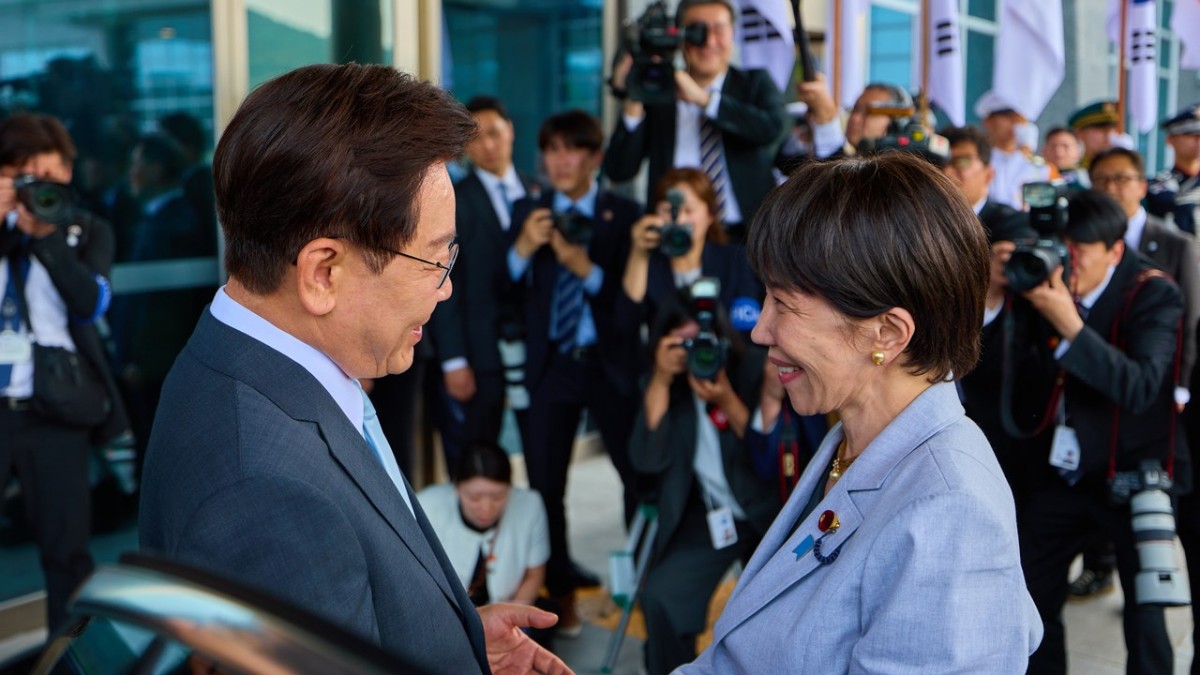
The most politically unlikely example of this trend is the continued deepening of South Korea-Japan relations. Their relationship has repeatedly been derailed by disputes over Japan's colonial rule, wartime labor, and historical memory. The rapprochement begun under former South Korean President Yoon Suk-yeol and former Japanese Prime Minister Kishida Fumio looked vulnerable to political turnover in both countries.
Instead, it has continued under progressive South Korean President Lee Jae-myung and conservative Japanese Prime Minister Takaichi Sanae. In his August 15 Liberation Day address — the day commemorating Korea's liberation from Japanese colonial rule — Lee pointed to a year of shuttle diplomacy with Japan and highlighted cooperation in supply chains, energy, and advanced industries. The setting was as significant as the message: a South Korean president was emphasizing the practical value of ties with Tokyo on the very day Koreans mark their independence from Japan.
From Symbolism to Substance in Bilateral Cooperation
The substance of the relationship has become harder to dismiss as mere symbolism. In March, Seoul and Tokyo signed a Supply Chain Partnership Arrangement that created mechanisms for information sharing and consultation during disruptions. Their industry ministries also established a regular policy dialogue covering trade, economic security, supply chains, and mineral resources.
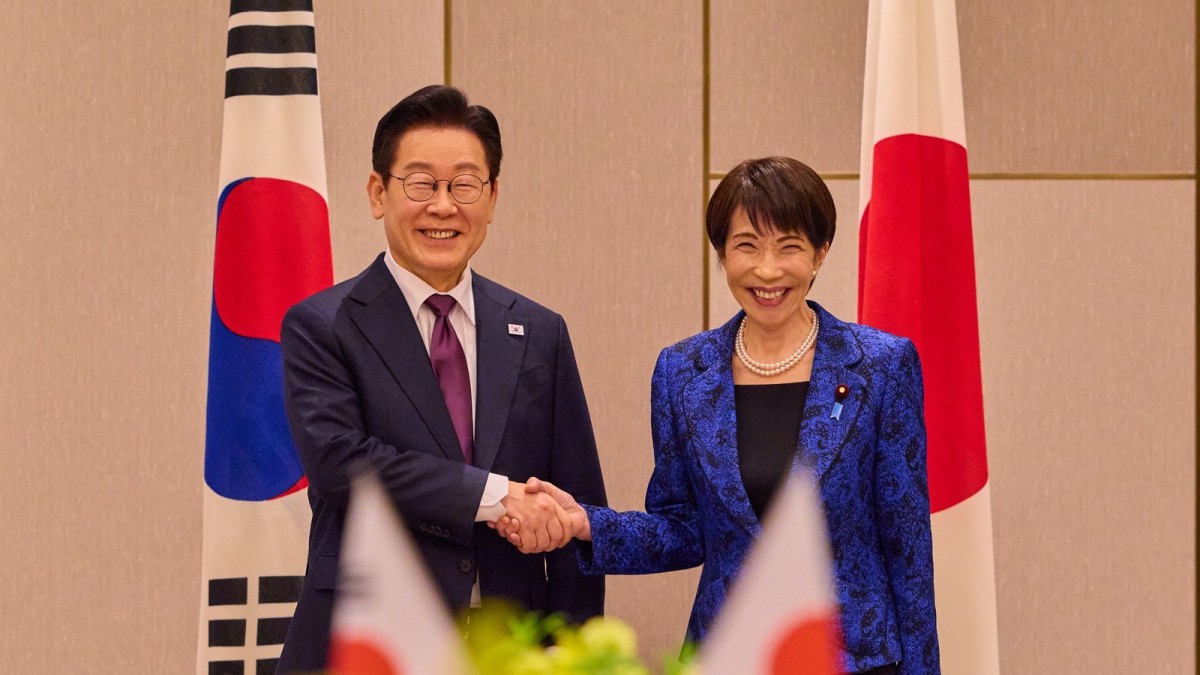
At the Lee-Takaichi summit in May — held in Andong, North Gyeongsang Province, Lee's hometown, as a reciprocal visit after Lee traveled to Takaichi's home region of Nara Prefecture in mid-January — the two governments moved further into energy security. They agreed to explore emergency cooperation involving crude oil and petroleum products while strengthening supply-chain resilience, under shared pressure from the effective closure of the Strait of Hormuz. Takaichi welcomed the agreement to launch cooperation under the "POWERR Asia" initiative, focused on strengthening energy supply resilience in the Indo-Pacific, including expanded stockpiling capacity.
The summit meeting lasted approximately 100 minutes, including a small-group meeting and plenary session, followed by a joint press occasion. Perhaps most tellingly, SK Hynix is now considering a large memory-chip manufacturing investment in Japan. The project may never materialize, but its consideration is striking given the history of rivalry and trade friction between the two countries' semiconductor sectors.
Washington's Changing Role in Trilateral Dynamics
Washington once provided much of the external pressure encouraging Seoul and Tokyo to overcome their differences. Under the Biden administration, the Camp David summit in 2023 made improved bilateral ties a central part of a U.S.-led trilateral strategy. Under Trump, the logic has become more complicated. The United States remains indispensable to both countries, but uncertainty over U.S. trade and alliance policy is increasing the value of a relationship that does not depend on Washington to function.
The Trump administration today is not playing the same mediating role as its predecessor did, and yet Japan-South Korea relations are arguably closer than ever. This is a remarkable development: the removal of active U.S. brokerage has not caused the rapprochement to stall but has instead given Seoul and Tokyo their own reasons to sustain it.
Japan and Australia: Defense and Economic Security Converge
Japan and Australia show the same trend in a more mature form. In May, Prime Ministers Takaichi and Anthony Albanese signed a Joint Declaration on Economic Security Cooperation at the annual Australia-Japan Leaders' Meeting in Canberra, committing their countries to consult during economic-security contingencies and deepen cooperation on energy, critical minerals, resilient supply chains, and critical technologies.
Their defense relationship is advancing even faster. Australia is acquiring Japan's upgraded Mogami-class frigates, having locked delivery of its first three general-purpose frigates based on that design in April. Both governments are working to establish sustainment and shipbuilding capabilities in Australia. In August, they announced successful field trials of their first jointly developed defense-technology project: Boobook, a laser-based surveillance system.
They are also developing arrangements for Japan to use Australian test ranges for long-range weapons, including systems linked to Japan's hypersonic missile program. Japanese F-35s have spent weeks training in Australia, and the two militaries are expanding information sharing and operational coordination.
China Remains the Primary Driver, But Trump Adds Urgency
It would be a mistake to recast every new Australia-Japan initiative as a reaction to Trump. China is the clearest strategic driver of this partnership, and the security logic of Tokyo-Canberra cooperation predates Trump's return to office. Yet Tokyo and Canberra's ability to work directly with each other is more valuable at a time when neither can assume that U.S. priorities, trade policy, or diplomatic tactics will remain consistent.
The two countries share a common interest in a rules-based regional order, freedom of navigation, and resilient supply chains for critical minerals and technologies. Their geographic position — Japan as a frontline state facing Chinese pressure in the East China Sea, Australia as a middle power with vast resources and strategic depth — makes them natural partners. The unpredictability of U.S. policy has accelerated a trajectory that was already underway.
Europe Enters the Indo-Pacific Equation
The search for additional options extends beyond Asia. South Korea and Japan both established Security and Defense Partnerships with the European Union in 2024, and Australia signed its agreement with Brussels in March. Seoul and the EU are expanding cooperation on maritime security, cybersecurity, space, and defense industry policy. Japan and the EU held their second Security and Defense Dialogue in May. Australia's new partnership with the EU spans maritime security, cyber, emerging technologies, and support for Ukraine, while Canberra and Brussels have also concluded negotiations on a free-trade agreement.
These relationships are modest compared with U.S. alliances. Europe cannot provide South Korea or Japan with extended nuclear deterrence, or replace the operational reach the United States provides Australia. But replacement is not the point. More partnerships mean more channels for coordinating supply chains, technology, energy, and security when governments face a shock.
Trade Pressure Reinforces the Logic of Diversification
That matters because uncertainty from Washington is no longer confined to defense policy. Trump's trade agenda has applied pressure to allies as well as competitors. In July, the administration imposed new Section 301 tariffs covering South Korea, Japan, and Australia, as well as the European Union, though applicable rates differ under existing trade arrangements. The measures reinforced a message allies had already absorbed: close security ties with Washington do not guarantee insulation from U.S. economic pressure.
For South Korea, Japan, and Australia, this makes economic resilience and strategic flexibility increasingly difficult to separate. Cooperation on critical minerals can reduce vulnerability to supply disruptions. Energy arrangements can provide alternatives during crises. Deeper technology and defense industrial ties can spread capacity across trusted partners. None of these measures protects them from every shift in U.S. policy, but they reduce the cost of having too few alternatives.
Limits and Strategic Implications
There are limits to this cooperation. Seoul, Tokyo, and Canberra do not share identical threat perceptions, and historical disputes can still disrupt Japan-South Korea ties. Their relations with Europe are far less consequential militarily than their alliances with the United States. In many cases, stronger cooperation among these countries reinforces rather than competes with U.S. strategy.
Washington's Asian allies are not preparing for a post-American Indo-Pacific, and there is little evidence that they want one. They are preparing for an Indo-Pacific in which the United States remains indispensable but can no longer be assumed to be predictable. The response is not to leave the United States behind, but to make sure they have more options when Washington changes course.
For South Korea, this has particular domestic resonance. President Lee, a progressive who campaigned on a more independent foreign policy line, has found common ground with conservative Prime Minister Takaichi on practical cooperation even as historical sensitivities remain. The fact that shuttle diplomacy has continued across ideological lines suggests that the structural incentives for Korea-Japan cooperation now run deeper than any single administration's preferences.
The strategic significance extends beyond bilateral ties. A more networked Indo-Pacific — with multiple overlapping layers of cooperation among U.S. allies and with European partners — creates resilience that benefits the entire alliance system. When one channel is disrupted, others remain open. That is precisely the logic that uncertainty from Washington has now reinforced.
This article was produced with AI-assisted research and editorial support. Sources: The Diplomat; AP News; Reuters; Yonhap; The Korea Herald; Japan Times; Australian Prime Minister's Office; Japan Ministry of Foreign Affairs.
By Prof. David Park, Staff Writer
What's Your Reaction?
 Like
0
Like
0
 Dislike
0
Dislike
0
 Love
0
Love
0
 Funny
0
Funny
0
 Wow
0
Wow
0
 Sad
0
Sad
0
 Angry
0
Angry
0

East Asia/Technology Correspondent at Global1.News. Seoul-based voice covering Korean politics, technology, business, and culture. Analyzes how technology and geopolitics intersect across East Asia.













Comments (0)