
US sanctions UK-based Palestine Action group
The US Treasury designated UK-based Palestine Action as a Specially Designated Global Terrorist, freezing assets and enabling secondary sanctions. Co-founder Huda Ammori called the move “beyond hypocritical,” as activists warn of a chilling effect on Palestine solidarity.
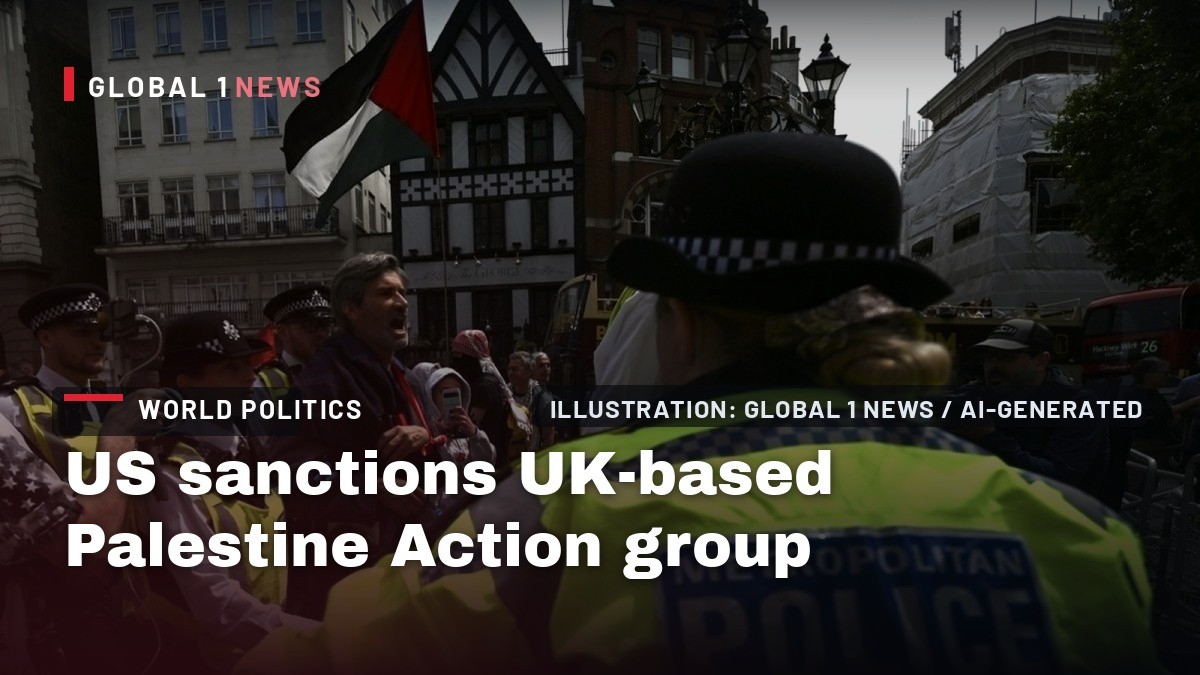
US Treasury Designates Palestine Action as Global Terrorist Entity
The United States Treasury Department on Wednesday designated the UK-based activist group Palestine Action as a Specially Designated Global Terrorist (SDGT), a move that places the organization on the Office of Foreign Assets Control's Specially Designated Nationals and Blocked Persons List. The designation, announced August 26, 2026, marks a significant escalation in Washington's approach to Palestine solidarity activism, targeting a group that has been active in Britain since 2020.
The action was taken pursuant to Executive Order 13224, as amended by Executive Order 13886 — legal authority originally signed in the aftermath of the September 11 terror attacks. The order targets US-designated terrorists and those providing financial, material, or technological support to them, and allows for secondary sanctions against individuals or entities that provide support to the designated organization.
What the Designation Means
The SDGT designation carries substantial consequences. Assets held by Palestine Action within US jurisdiction are now frozen, and US persons are prohibited from engaging in transactions with the group. More significantly, the secondary sanctions mechanism means that any individual or organization worldwide — including banks, financial institutions, and payment processors — could face penalties for facilitating transactions linked to the group.
For a UK-based organization that has operated primarily through direct action and public campaigning, the practical impact may be limited in the short term. However, the designation creates a legal environment in which financial support for the group becomes a serious risk for any institution with US connections. This includes British banks, many of which maintain correspondent relationships with American financial institutions and could face pressure to sever ties with anyone associated with Palestine Action.
The US Treasury Department accused the group of supporting "numerous acts of terrorism since" its establishment, though the announcement did not provide specific details about which actions it considers terrorist in nature.
Palestine Action's Response
Palestine Action co-founder Huda Ammori responded sharply to the designation, characterizing the US decision as "beyond hypocritical." In a statement posted on the social media platform X, Ammori said: "As a Palestinian and Iraqi, the fact the country which destroyed both my homelands is calling me a terrorist, is beyond hypocritical."
Ammori also addressed the Trump administration directly, stating that US President Donald Trump represents the "antithesis" of Palestine Action's values. The group, founded in 2020, defines its mission as "ending global participation in Israel's genocidal and apartheid regime" — language that reflects the growing international discourse around Israeli policies in the occupied Palestinian territories.
Wider Sanctions Sweep
Palestine Action was not the only target of Wednesday's action. The Treasury Department also sanctioned Masar Badil, the Palestinian Alternative Revolutionary Path Movement, including two of its senior leaders. The US alleged that Masar Badil operates as a front for the Popular Front for the Liberation of Palestine (PFLP), which has been designated a Foreign Terrorist Organization by the United States since 1997.
The sanctions were announced as part of what the Treasury Department described as an "action against violent far-left terrorist networks." The sweep also included a sanction against Autistici Inventati, an Italy-based entity that the US said supplies services for Antifa, the loosely organized network of anti-fascist activists.
Treasury Secretary Scott Bessent issued a stark warning alongside the designations. "Far-left extremists, their fronts, and their enablers should be on notice: We will bring the full weight of our economic tools to bear," Bessent said.
Context: From RAF Base to US Terror List
Wednesday's designation follows a decision by the UK government in July 2025 to proscribe Palestine Action under the Terrorism Act. That ban came after activists entered a Royal Air Force base and spray-painted two aircraft — an action that drew significant media attention and sparked debate about the line between protest and criminal damage.
The group has also targeted Elbit Systems, an international defense electronics company with ties to the Israeli military. Palestine Action has organized numerous protests and direct actions at Elbit facilities across the UK, arguing that the company's operations contribute to what human rights organizations have documented as systematic violations of Palestinian rights.
The trajectory from UK proscription to US terror designation reflects a coordinated approach between Washington and London toward Palestine solidarity activism. The UK ban in July 2025 criminalized membership in and support for the group under British law, while the US designation now extends similar consequences across the Atlantic and, through secondary sanctions, potentially globally.
Human Rights Concerns
The designation raises serious questions about the use of terrorism designations against activist organizations engaged in political protest. Human rights observers have long warned that the broad language of Executive Order 13224 — which targets those providing "material support" to designated entities — can be applied in ways that criminalize legitimate advocacy and humanitarian work.
Palestine Action's activities in the UK have primarily involved nonviolent direct action, including occupations of buildings, spray-painting of property, and public demonstrations. While these actions have resulted in criminal charges in some cases, they are a far cry from the armed violence typically associated with terrorism designations.
The inclusion of Masar Badil in the sanctions sweep is particularly concerning to Palestinian civil society observers. The group has positioned itself as a political movement advocating for Palestinian rights, and its designation as a front for the PFLP — an allegation the group has denied — could have a chilling effect on Palestinian political organizing more broadly.
Reactions and Analysis
The sanctions come at a time of heightened tension around Palestine solidarity activism in Western countries. In the United States, several states have introduced legislation targeting boycotts of Israel, and university campuses have seen intense debates over the boundaries of acceptable speech regarding the Israeli-Palestinian conflict. In the UK, the proscription of Palestine Action has already led to concerns among civil liberties groups about the narrowing space for political dissent.
The designation of a UK-based group by US authorities also raises questions of sovereignty and jurisdiction. Palestine Action operates entirely within the United Kingdom, and its members are British residents. The US action effectively extends American legal authority over activities that have already been adjudicated under British law — a development that legal experts say could set a precedent for how Washington treats activist groups in allied countries.
For Palestinian communities in the diaspora, the sanctions send a clear message about the risks associated with militant advocacy. The designation of Palestine Action — a group that has never been accused of violence against persons — alongside Masar Badil and an Italian entity linked to Antifa suggests a broader strategy of targeting left-wing movements that challenge US policy in the Middle East.
The practical effects of the designation remain to be seen. Figures on Palestine Action's financial resources were not immediately available, and the group's reliance on volunteer activism and small-scale donations may limit the direct economic impact of asset freezes. However, the symbolic weight of being placed on a US terror list — alongside organizations like al-Qaeda and the Islamic State — is significant.
For activists in the UK and beyond, the message is clear: the cost of Palestine solidarity is rising. Whether that cost will deter future activism or galvanize it remains an open question. What is certain is that the landscape for Palestine advocacy in Western countries has shifted dramatically, and Wednesday's designation marks another milestone in that transformation.
By Fatima Al-Rashid, Staff Writer
This article was produced with AI-assisted research and editorial support. Sources: Middle East Monitor, Anadolu Agency.
What's Your Reaction?
 Like
0
Like
0
 Dislike
0
Dislike
0
 Love
0
Love
0
 Funny
0
Funny
0
 Wow
0
Wow
0
 Sad
0
Sad
0
 Angry
0
Angry
0

Gulf/MENA Correspondent at Global1.News. Based in Doha, covering Gulf politics, energy markets, diplomacy, and development across the Middle East and North Africa. Tracks the economic transformation of the Gulf states.













Comments (0)