
Israel's 'Takeover' of Greece: Defense Deals, Rising Rents, and a Growing Backlash
In a recent Middle East Eye report, former CIA analyst John Kiriakou did not mince words, describing the expanding relationship between Israel and Greece as a "takeover" and questioning whether Athens fully understands the asymmetrical nature of the partnership.
In a recent Middle East Eye report, former CIA analyst John Kiriakou did not mince words, describing the expanding relationship between Israel and Greece as a "takeover" and questioning whether Athens fully understands the asymmetrical nature of the partnership. His interview with MEE's Mathilda Mallinson, published on August 26, 2026, has struck a nerve in a country already grappling with the visible consequences of this deepening alliance, from billion-euro defense contracts to soaring rents in Athens.
The video, which has amassed 37,000 views in a single day, poses a pointed question: Can Israel's friendship with Athens survive its own unpopularity? As Greece embarks on its most ambitious military modernization program in decades, the answer is becoming increasingly complex, with public opinion sharply divided and regional rivals watching closely.
Israel's 'Takeover' of Greece: Defense Deals, Rising Rents, and a Growing Backlash
Athens, Greece – August 27, 2026 — The sun-baked streets of Athens have become an unlikely theater for a geopolitical drama that pits strategic necessity against public conscience. On one hand, Greek officials celebrate what they describe as an unprecedented defense partnership with Israel, signing contracts worth billions of euros. On the other, a growing segment of the Greek public sees these deals as a Faustian bargain, one that ties their country to what they view as an occupying power while doing little to address the everyday struggles of ordinary citizens.

A Strategic Embrace Deepens
The scale of the Israel-Greece defense partnership in 2026 is difficult to overstate. The two countries signed a comprehensive defense cooperation program for the year that includes 29 activities hosted in Greece and 25 in Israel. The program covers defense industry collaboration, military training, joint exercises, and technology exchange, with particular focus on countering unmanned aerial vehicle swarms, unmanned underwater systems, and cyber threats.
The financial commitments tell an even more striking story. On June 4, 2026, the Israeli and Greek defense ministries signed an agreement worth approximately $750 million (EUR 650 million) for Elbit Systems' PULS precision rocket artillery system, which includes launchers, precision-guided rockets, and loitering munitions. Israel's Defense Ministry hailed the deal as evidence that the strategic security partnership had reached its "highest point."
Just seven weeks later, on July 23, Greece approved a multilayered air defense system worth up to EUR 3.5 billion from Israel, integrating Rafael and Israel Aerospace Industries radar and missiles for anti-ballistic missile, anti-aircraft, and anti-drone protection. This system forms the core of Greece's planned "Achilles Shield." Greek Defense Minister Nikos Dendias said the system should be fully operational within 35 months and that Greek companies would manufacture at least 25 percent of it.
These acquisitions are part of a larger EUR 28 billion military modernization program through 2036, which includes up to 40 US-made F-35 fighters, new frigates, drones, and other systems. When Dendias met Israeli Defense Minister Israel Katz in Athens on January 20, 2026, he described the cooperation as covering the "entire spectrum," including operational interoperability, joint exercises, research, innovation, defense technology, and the military industry, all within a broader Greece-Cyprus-Israel-US framework.
Turkey Watches, and Prepares for War
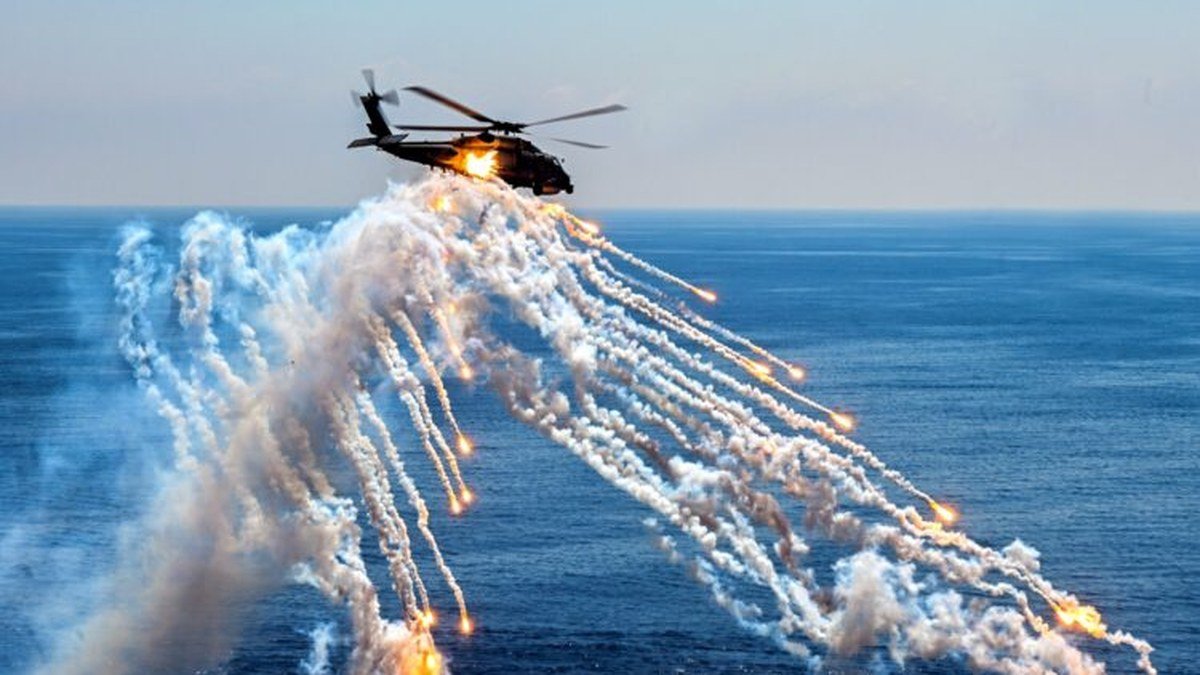
Across the Aegean, Turkey is monitoring these developments with growing alarm. In an August 10, 2026 letter to Turkish Parliament member Hasan Ozturkmen of the opposition CHP party, Turkish Defense Minister Yasar Guler confirmed that work concerning "possible crisis, tension and war" in Turkey's surrounding region continues in full coordination across state institutions. Guler stated that Turkey is closely monitoring the expanding Israeli-Greek military cooperation.
The lawmaker's inquiry, which prompted Guler's response, cited reports that Greece was preparing to reinforce Aegean islands near Turkey with Israeli-made air defense systems, build underground military facilities, and harden command centers. Ozturkmen also raised questions about Greek plans in light of Turkey's concerns over the "Achilles Shield." Turkey's Defense Ministry said it continuously monitors Greek activities in the Aegean that violate Turkey's "rights, interests and concerns," adding that necessary steps are rapidly taken.
Greece has dismissed these concerns. In March 2026, the Greek Foreign Ministry said Turkish claims about island demilitarization were "unfounded." Yet the rhetoric from Ankara suggests a deep unease about the shifting military balance in the eastern Mediterranean, one that could have profound implications for regional stability.
On the Ground: Rents, Protests, and Rising Anger
While diplomats and defense officials exchange pleasantries, the human cost of this partnership is being felt in Greek neighborhoods. In a rare move, Israel issued a warning to its citizens in Greece ahead of nationwide pro-Palestine protests, advising them to avoid advertising their nationality in public. The advisory, reported by Middle East Eye's Iason Athanasiadis on August 19, 2026, reflects the tense atmosphere that now surrounds Israeli visitors and residents in Greece.
The sources of friction are numerous. Rising rents in Athens and other major cities are widely blamed on Israeli property purchases, a trend that has accelerated as Israelis seek refuge from missile barrages and the high cost of living at home. There is also anger over incidents of Israelis jeering at pro-Palestinian demonstrations, behavior that many Greeks find deeply offensive given their country's historical solidarity with the Palestinian cause.
At the center of this discontent is the close personal friendship between Greek Prime Minister Kyriakos Mitsotakis and Israeli Prime Minister Benjamin Netanyahu. For many Greeks, this relationship symbolizes a policy that prioritizes strategic alliances over moral considerations. A 2026 Pew Research poll found that 65 percent of Greeks opposed the partnership, though many view it as a necessary evil because of what they perceive as an expansionist Turkey.
An 'Asymmetrical' Relationship
Konstantinos Isychos, a former Greek deputy defence minister who opposes the alliance, offers a stark assessment. "It's an asymmetrical relationship, where one side is powerful and the other powerless," he told Middle East Eye. "Developing relations with Israel is a double suicide because, were the genocide to pass unnoticed and unpunished, it sets a criminal precedent and could be repeated again."
Kiriakou's framing of the relationship as "colonial" resonates with this critique. The former CIA analyst argued that Israel's influence over Greek defense policy, economic sectors, and even social dynamics represents a form of soft power that undermines Greek sovereignty. His comments have fueled a broader debate about whether Athens is sacrificing its independence for the sake of military security.
Iason Apostolopoulos, a pro-Palestine activist and migrant rescuer, articulates the frustration many Greeks feel. "There's never money available for better hospitals, firefighting aeroplanes, trains or pensions," he said. "But there's always funds for purchasing Predator [a surveillance programme] and arms packages from Israel that feed a military machine that daily produces occupation, death and apartheid."
The human dimension of this story extends beyond Greece's borders. Nearly 100,000 Israelis left Israel for more than three months in 2025, a third record year of emigration. These emigrants, often critical of Netanyahu, cite missile barrages and the high cost of living as their primary motivations. Ehud Eiran, associate professor of political science at the University of Haifa, offers a striking observation: "Buying property in Greece and Cyprus became the secular response to the settler project."
From the Junta Era to the Moscow Dinner
The current partnership represents a remarkable transformation in Greek-Israeli relations, one that would have been unthinkable just a few decades ago. Greece was among the last Western countries to recognize Israel, doing so only in 1990. The Greek military junta secretly purchased weapons from Israel in the 1960s and discussed joint arms factories, but ties were interrupted by democracy's restoration in 1975.
Relations resumed through intelligence and military cooperation in the 1990s, became public in 2002, and expanded as Israel-Turkey relations deteriorated. Israeli fighter jets began using Greek airspace for training, a practice that continues to this day. A turning point came in 2010 when former Greek Prime Minister George Papandreou bumped into Netanyahu in a Moscow restaurant, a chance encounter that reportedly helped cement the strategic alignment.
Today, Greece and Cyprus offer Israel diplomatic and industrial access into the European Union. The three countries are connecting electricity grids, developing submarine natural gas reserves, and discussing joint patrols in the eastern Mediterranean. This trilateral framework has become a cornerstone of regional geopolitics, reshaping alliances that were once defined by different fault lines.
Analysis and Implications
The vision driving this partnership extends far beyond the Aegean. Israeli Defense Ministry Director General Amir Baram said at the Herzliya Conference on June 30, 2026, that Israel should help construct a new regional architecture stretching "from India through the UAE to Greece and Cyprus," framed around countering Iran. This ambitious blueprint would position Greece as a key node in an Israeli-led security network spanning three continents.
Yet the Gaza war and Israel's conduct there remain a central backdrop for Greek public anger. Israeli weapons and surveillance technology purchases are a focus of Greek pro-Palestine activism, which has grown increasingly vocal and organized. The disconnect between official policy and public sentiment is becoming harder to ignore.
For the people on the ground in Greece, the implications are tangible. The defense contracts may bring jobs and technological expertise, but they also bring moral compromises that many find difficult to accept. The rising rents, the social tensions, and the sense that their government is prioritizing foreign alliances over domestic needs have created a simmering discontent that shows no signs of abating.
As Greece moves forward with its EUR 28 billion modernization program and the "Achilles Shield" takes shape, the question posed by Kiriakou and others becomes increasingly urgent: Can this partnership survive its own unpopularity? The answer may depend not on the capabilities of the weapons systems being purchased, but on whether Greek leaders can reconcile their strategic ambitions with the values and concerns of the people they serve. In a region where alliances shift with the wind, the durability of the Israel-Greece embrace remains an open question, one that will be answered not in defense ministries but in the streets, markets, and homes of ordinary Greeks.
By Fatima Al-Rashid, Staff Writer
This article was produced with AI-assisted research and editorial support. Reporting is based on sources cited in the article.
What's Your Reaction?
 Like
0
Like
0
 Dislike
0
Dislike
0
 Love
0
Love
0
 Funny
0
Funny
0
 Wow
0
Wow
0
 Sad
0
Sad
0
 Angry
0
Angry
0

Gulf/MENA Correspondent at Global1.News. Based in Doha, covering Gulf politics, energy markets, diplomacy, and development across the Middle East and North Africa. Tracks the economic transformation of the Gulf states.













Comments (0)