
US-Iran War Reaches Day 158 as Talks on Hormuz Strait Hang in Balance
The US-Iran war enters day 158 with Strait of Hormuz talks hanging in the balance: Trump calls negotiations Iran's 'last chance' while Tehran says only Oman is mediating, as another ship is struck and Brent crude falls below $80 a barrel.
Conflict Enters Prolonged Phase
The US-Iran war marked its 158th day on August 4, 2026, according to Sky News live updates. The fighting began on February 28, 2026, after joint US-Israeli strikes killed Iran's Supreme Leader Ayatollah Ali Khamenei. That event triggered Iran's deepest crisis since the 1979 Islamic Revolution, as reported by CNN.
US forces have conducted repeated strikes while Iran has responded with missile and drone activity. The prolonged timeline has strained both sides' resources and prompted fresh diplomatic efforts. Sources including Al Jazeera and The Guardian note that the pause in major operations has allowed limited talks to proceed.
President Trump described the current negotiations as the "last chance" for Tehran to reach an agreement and avoid further escalation. He spoke on August 3 about progress tied to the Strait of Hormuz and eventual denuclearization. The Guardian and NYT carried those remarks.
Diplomatic Channels Under Scrutiny
Iran maintains that no direct talks with the United States are underway. An Iranian official told Sky News that all discussions occur exclusively between Iran and Oman. Tehran insists no third party, including Washington, participates in those exchanges.
Trump cited advances in the Oman-mediated channel when he canceled a threatened strike over the weekend. He said a deal involving the Strait of Hormuz and denuclearization appeared imminent. NYT reporting confirmed the cancellation followed those reported gains.
US Treasury Secretary Scott Bessent stated that Iran could agree to reopen the Strait "today or tomorrow." Any such arrangement would guarantee freedom of movement for commercial ships, according to The Economist and Al Jazeera. Iran has not confirmed any timeline for reopening.
Maritime Incidents Continue
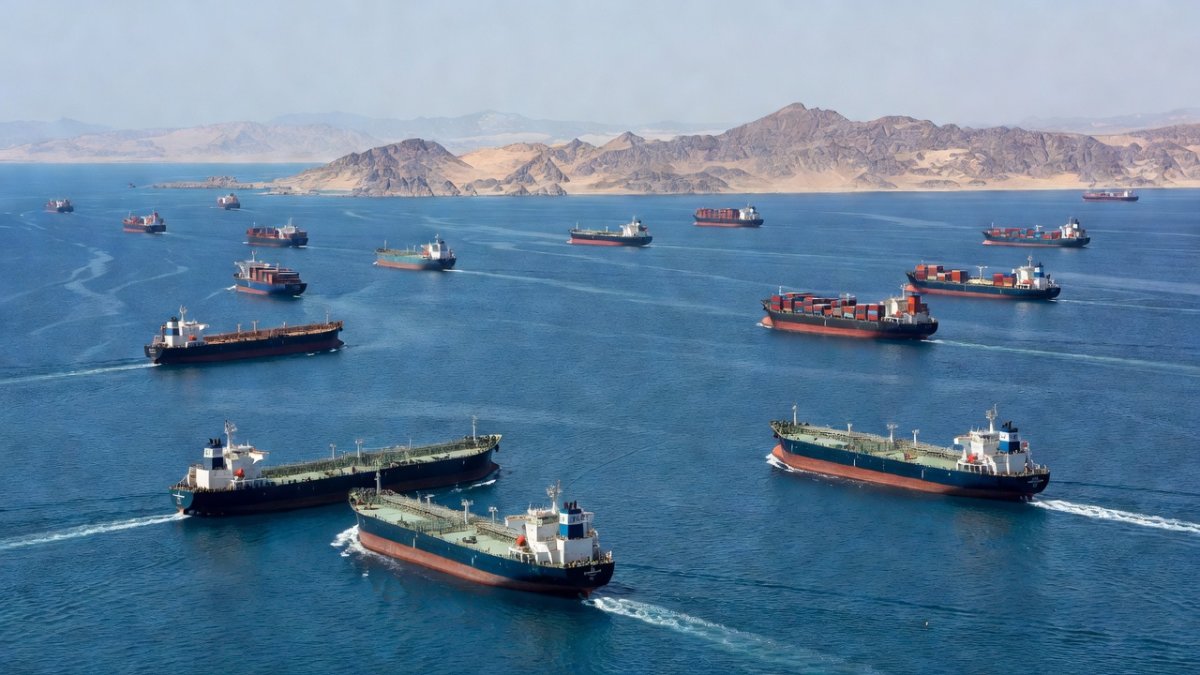
A trade vessel was struck by a projectile in the Strait of Hormuz on August 4, roughly 23 miles northeast of Al Khasab in Oman. Fox News and Al Jazeera live blogs documented the event while talks continued. No immediate claim of responsibility emerged.
The Indian-flagged vessel MSV Faize Noore Oliya capsized and sank near Yemeni waters after a similar projectile strike. India's shipping minister Sarbananda Sonowal confirmed that all 14 crew members were rescued. Sky News and News18 reported India's condemnation of the "unprovoked attack."
Iran warned that vessels cannot safely use the southern route through Omani waters under current war conditions. An Iranian official told Al Jazeera that the Strait "will not be reopened through military attacks." The statement came as military activity persisted.
These repeated strikes underscore how fragile any pause remains when commercial traffic continues to navigate one of the world's most vital chokepoints, a waterway that carries roughly a fifth of global oil consumption. The pattern of incidents near Omani waters suggests that even limited military activity can quickly disrupt established shipping lanes and force rerouting decisions that raise costs for importers far beyond the region.
India's swift condemnation and emphasis on the unprovoked nature of the attack on its vessel highlight the broader diplomatic fallout that such events generate, particularly when crew safety becomes entangled with ongoing Hormuz negotiations. The successful rescue of all 14 sailors offers a narrow positive note, yet it also illustrates how quickly one projectile can escalate tensions between third-party nations and the primary combatants.
Tehran's insistence that military pressure will not reopen the strait reflects a calculated stance aimed at preserving leverage during Oman-mediated discussions, even as incidents accumulate. This position aligns with Iran's broader warning that the southern route remains unsafe, a claim that directly challenges any assumption that commercial shipping can resume normal patterns without verifiable security guarantees.
US Military Resource Concerns
People familiar with the matter told Sky News that the US military is nearly out of long-range missiles. A separate source indicated that resupply remains possible through global US military stocks. CENTCOM has reportedly reloaded from dispersed supplies.
Iran's IRGC claimed it shot down a US MQ-9 Reaper drone over the Strait of Hormuz on August 3. Press TV, which is state-aligned, reported the use of a "modern and advanced" air defense system. US officials have not publicly confirmed the loss.
Iran is described as making "maximum use" of the current pause to boost its military strength. Al Jazeera cited Iranian statements emphasizing continued readiness. The buildup occurs alongside ongoing Oman-mediated discussions.
The reported depletion of long-range missiles places CENTCOM in a position where any sustained escalation would depend heavily on rapid global redistribution, a process that could strain alliances and logistics networks already stretched by the 158-day conflict. This constraint adds weight to Trump's decision to cancel the weekend strike, suggesting that resource realities may be shaping the pace of diplomacy as much as political calculations.
Iran's claimed downing of the MQ-9 Reaper demonstrates how even a temporary lull allows Tehran to test and showcase air defense capabilities, potentially deterring future US drone operations over the strait. Such actions during the pause reinforce Iran's narrative that it retains significant defensive options despite the loss of its supreme leader earlier in the war.
The emphasis on "maximum use" of the current window for military strengthening indicates that Iranian forces view the Oman channel as an opportunity to improve their posture rather than a signal to stand down, a development that could complicate any final agreement on Hormuz access if one side perceives the other as gaining an edge.
Oil Market Reactions
Brent crude fell more than 4 percent to below $80 a barrel on August 4. That level marked the lowest price in three weeks, according to NYT and The National. Traders reacted to conflicting reports about the status of US-Iran talks.
President Trump accused oil companies of "making too much" amid the price swings. The Guardian carried those comments on August 4. The drop followed earlier spikes tied to Hormuz shipping risks.
Gulf states have turned to China for assistance in pressuring Iran over shipping chokepoints. The Arab Weekly, via NewsNow, reported those diplomatic overtures. The moves reflect regional concern over prolonged disruption.
The sharp decline in Brent prices reveals how sensitive markets remain to even tentative signs of progress in the Oman talks, yet the drop below $80 also exposes the volatility that persists when incidents at sea continue to generate fresh uncertainty. Traders appear to be pricing in the possibility of a deal while remaining wary that any single projectile strike could reverse the recent calm.
Trump's criticism of oil companies for profiting excessively during these swings underscores the political pressure building on energy firms to avoid appearing to exploit the Hormuz crisis, a stance that could influence future US policy if prices rebound sharply on renewed tensions. The accusation arrives at a moment when Gulf states are actively seeking Chinese leverage, suggesting that multiple actors are maneuvering to shape both market outcomes and diplomatic results.
Regional outreach to Beijing highlights how the conflict has drawn in external powers whose economic interests in stable energy flows may now outweigh traditional alignments, potentially creating new channels of influence that could either support or complicate the existing Oman-mediated process.
Competing Claims on Negotiations
Trump accused Iran of being "unbelievably duplicitous" in its approach to the talks. Sky News reported the remark during coverage of the August 3 statements. Iranian officials have rejected the characterization.
Tehran condemned a reported US plan to use frozen Iranian assets for war damages. BBC carried the Iranian foreign ministry statement. The proposal remains unconfirmed by US officials in the provided material.
Sources conflict on whether any direct US-Iran channel exists. Sky News and NYT attribute the denial to Iranian officials while Trump has pointed to Oman-mediated progress. Each side continues to frame the situation differently.
Regional Ripple Effects
India condemned the attack on its flagged vessel and demanded accountability. The rescue of all 14 crew members was confirmed by the shipping minister. Sky News noted the incident's timing during active Hormuz discussions.
Broader shipping concerns have prompted warnings from multiple governments. Iran has reiterated that military pressure will not force reopening of the waterway. Al Jazeera reported those positions on August 4.
Global attention remains fixed on whether the Oman channel can produce a verifiable agreement. The 158-day mark underscores the stakes for energy markets and regional stability. Conflicting statements continue to shape daily developments.
The sinking of the Indian-flagged vessel near Yemeni waters extends the conflict's reach beyond the strait itself, demonstrating how spillover incidents can draw additional nations into the diplomatic fray and complicate efforts to isolate the core US-Iran dispute. India's condemnation arrives at a sensitive moment when Oman-mediated talks are attempting to establish basic rules for commercial passage.
Iran's repeated warnings about unsafe routes through Omani waters serve as a reminder that any agreement on Hormuz must address not only the main channel but also adjacent areas where military activity has already produced casualties and losses. This broader geography of risk raises the bar for what constitutes a credible reopening.
The involvement of Gulf states seeking Chinese pressure on chokepoints illustrates how the 158-day war has reshaped regional alignments, with energy security concerns now driving outreach that bypasses traditional US-led frameworks and could influence the durability of any future deal.
Outlook for Coming Days
Trump has framed the current window as decisive for avoiding further strikes. Bessent's comments suggest a possible quick resolution on Hormuz access. Iranian officials have not matched that timeline.
Continued incidents at sea test the durability of the pause. The 23-mile location of the latest strike and the sinking of the MSV Faize Noore Oliya illustrate the risks. All cited sources stress the fluid nature of events.
Attention now turns to whether Oman can bridge the gap between the two sides. The conflict's 158th day arrives with both military and diplomatic tracks active. Updates from Sky News, NYT, and Al Jazeera will track any shifts.
The contrast between US optimism about an imminent deal and Iran's refusal to confirm timelines suggests that any breakthrough on Hormuz access will require careful sequencing to avoid one side appearing to capitulate under military pressure. Bessent's public remarks may be intended to lock in momentum, yet they also risk highlighting gaps if Tehran maintains its current posture.
Resource constraints on the US side, combined with Iran's reported military buildup during the pause, create a narrow window in which both parties have incentives to test diplomacy before either concludes that force offers a clearer path forward. The next few days will likely reveal whether the Oman channel can convert these pressures into concrete steps on shipping freedom.
Market reactions and third-party condemnations from nations like India further raise the cost of renewed escalation, potentially giving negotiators additional leverage to push for verifiable guarantees that address both the main strait and surrounding waters where recent strikes have occurred.
By Jessica Ali, Staff WriterThis article was produced with AI-assisted research and editorial support. Reporting is based on sources cited in the article.
What's Your Reaction?
 Like
0
Like
0
 Dislike
0
Dislike
0
 Love
0
Love
0
 Funny
0
Funny
0
 Wow
0
Wow
0
 Sad
0
Sad
0
 Angry
0
Angry
0

Editor-in-Chief at Global1.News. Atlanta-based journalist who cuts through the BS and tells it like it is. Lead anchor, host, and the voice you hear when the spin stops and the truth starts.












Comments (0)