
US-Iran War at Six Months: Stalemate and Shortages
Six months after the first missiles struck Tehran, the war the White House predicted would last "four to five weeks" has become a grinding test of endurance, reshaping the military balance in the Persian Gulf and exposing the limits of American power projection. The conflict, which began on February 28, 2026, with US and Israeli strikes that killed Supreme Leader Ayatollah Ali Khamenei, has evolved into a multi-front economic and military siege with no end in sight.
Six months after the first missiles struck Tehran, the war the White House predicted would last "four to five weeks" has become a grinding test of endurance, reshaping the military balance in the Persian Gulf and exposing the limits of American power projection. The conflict, which began on February 28, 2026, with US and Israeli strikes that killed Supreme Leader Ayatollah Ali Khamenei, has evolved into a multi-front economic and military siege with no end in sight.
Six Months of War: Trump's "Little Detour" Becomes a Strategic Quagmire
Beirut, Lebanon – August 28, 2026 — The arithmetic of this war is brutal. An estimated 8,000 to 10,000 people are dead, tens of thousands wounded, and the global energy market remains hostage to a waterway that once carried more than one-fifth of the world's oil and gas. President Donald Trump, who called the conflict a "skirmish" and a "little detour," now presides over a military campaign that has depleted American stockpiles to "beyond critical" levels in Europe and left the Western Pacific without a single US aircraft carrier.
Geopolitical Context: The "Skirmish" That Refuses to End
The war's opening act was supposed to be decisive. On February 28, US and Israeli jets struck Tehran, killing Ayatollah Ali Khamenei and several senior officials in a single, devastating blow. A separate strike on a school in Minab, southern Iran, killed scores of children, a tragedy that hardened Iranian resolve and drew international condemnation. Trump's prediction of a four-to-five-week campaign reflected a belief that decapitation strikes would trigger a swift collapse of the Islamic Republic.
Instead, the leadership in Tehran did not fracture. The Supreme Leader's son, Mojtaba Khamenei, assumed the role with the political establishment largely intact. The war did not end; it metastasized. By March 2, Israel and Hezbollah were locked in a separate conflict in Lebanon that has since claimed over 4,000 lives and displaced more than one million people. The Houthis imposed a blockade on Saudi shipping in the Bab al-Mandeb, and Iran closed the Strait of Hormuz, transforming a regional confrontation into a global economic crisis.
Brent crude spiked as high as $126 a barrel, a price shock that directly influenced Trump's decision to agree to an April 8 ceasefire—a truce that has been violated repeatedly but never formally abandoned. The president's rhetoric has shifted from victory to damage control, but the strategic reality is that the US is now managing a war it cannot win quickly and cannot afford to lose.
Historical Background: From Maximum Pressure to Maximum Escalation
The road to February 2026 was paved with a decade of "maximum pressure" campaigns that failed to change Tehran's behavior. The Trump administration's withdrawal from the 2015 nuclear deal in 2018, followed by the assassination of Qassem Soleimani in 2020, set a precedent for direct confrontation. But the 2026 strikes represented a qualitative escalation: the first direct, large-scale US-Iranian state-on-state conflict since the 18th century.
The nuclear file was the stated casus belli. US and Israeli intelligence claimed in February that Tehran was "weeks away" from developing nuclear weapons. Repeated strikes have damaged Iranian facilities, yet Tehran is believed to still possess 440 kilograms of highly enriched uranium—enough for multiple devices if weaponized. Iran has refused to hand over the stock or commit to zero enrichment, and a June 17 memorandum of understanding stalled over vague wording. Trump briefly floated the idea of US troops retrieving the stock by force, a proposal that underscored the absence of a diplomatic off-ramp.
The war has also exposed the limits of military decapitation as a strategy. Killing a Supreme Leader does not dismantle a state; it often galvanizes it. Iran's response has been asymmetric but effective: closing Hormuz, striking US assets in Jordan, and demonstrating an ability to absorb punishment that contradicts the pre-war assumption of rapid collapse.
Regional Dynamics: The Multi-Front War and the Hormuz Chokepoint
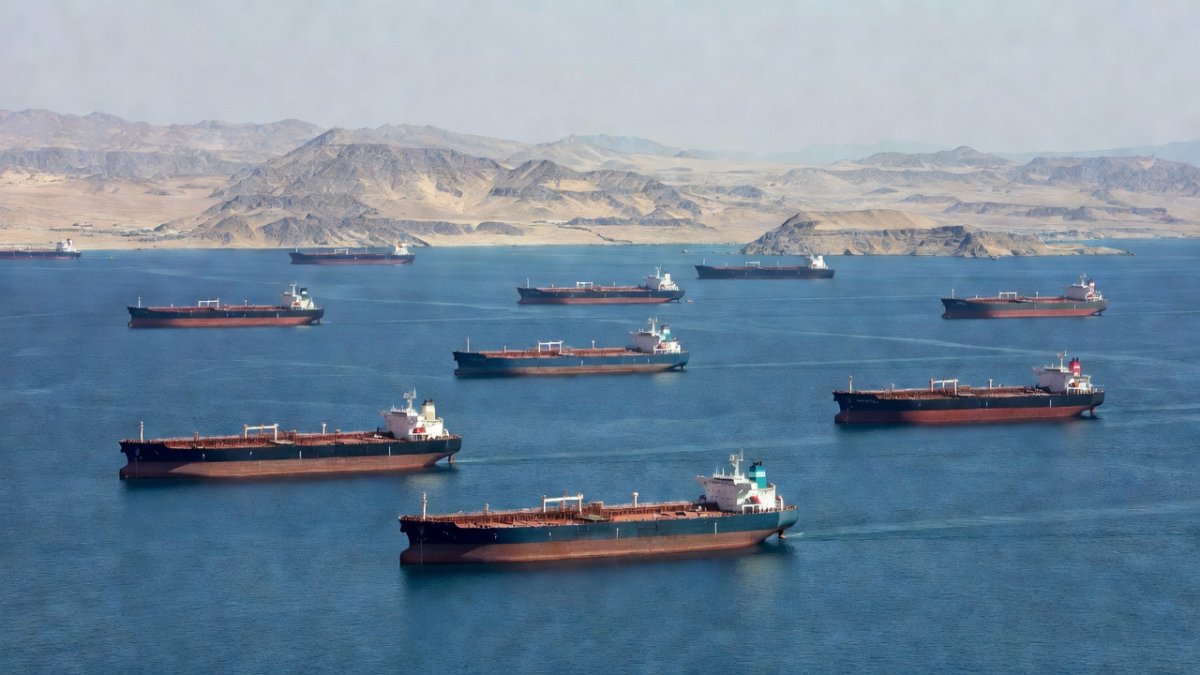
The Strait of Hormuz has become the war's central battleground. Before the conflict, more than 100 ships transited the waterway daily. Today, that number has slumped to an average of about five. Iran has struck vessels without its permission, while the US has imposed a naval blockade on Iranian ports. The result is a de facto economic siege of Iran, but also a stranglehold on global energy supplies that has alienated Washington's allies in Asia and Europe.
Iran is now negotiating the future of the waterway with Oman, and this week agreed to a shipping route it will partially control. This is a significant diplomatic victory for Tehran: it transforms Iran from a pariah state to a necessary interlocutor for global energy security. The US naval blockade, meanwhile, has not stopped Iran's missile program. In July, a long-range Iranian missile killed three US soldiers in Jordan, a reminder that Tehran retains the capacity to strike beyond its borders despite CENTCOM's claims of degradation.
The war has also drawn in regional actors in ways that complicate any exit strategy. The Israel-Hezbollah conflict in Lebanon is now inextricably linked to the broader US-Iran war, creating a northern front that Israel cannot ignore. The Houthi blockade on Saudi Arabia in the Bab al-Mandeb has turned the Red Sea into a secondary chokepoint, while Gulf states watch nervously as their security guarantees from Washington appear increasingly conditional.
Strategic Calculus: The Weapons Shortage and the Pacific Gap
The most consequential development of the sixth month is not on the battlefield but in the logistics depots of the US military. A Wall Street Journal report on August 28 revealed that American stockpiles are severely depleted. European Command is adjusting operational plans, and the US assessed it could not fully execute contingency plans to defend Taiwan in the short term. Air-defense units have been moved from Japan, South Korea, and Germany, creating "soft spots" in the global posture. PAC-3 Patriot and ATACMS inventories in Europe are at "beyond critical" levels, and THAAD and counter-drone systems have been redirected to the Middle East.
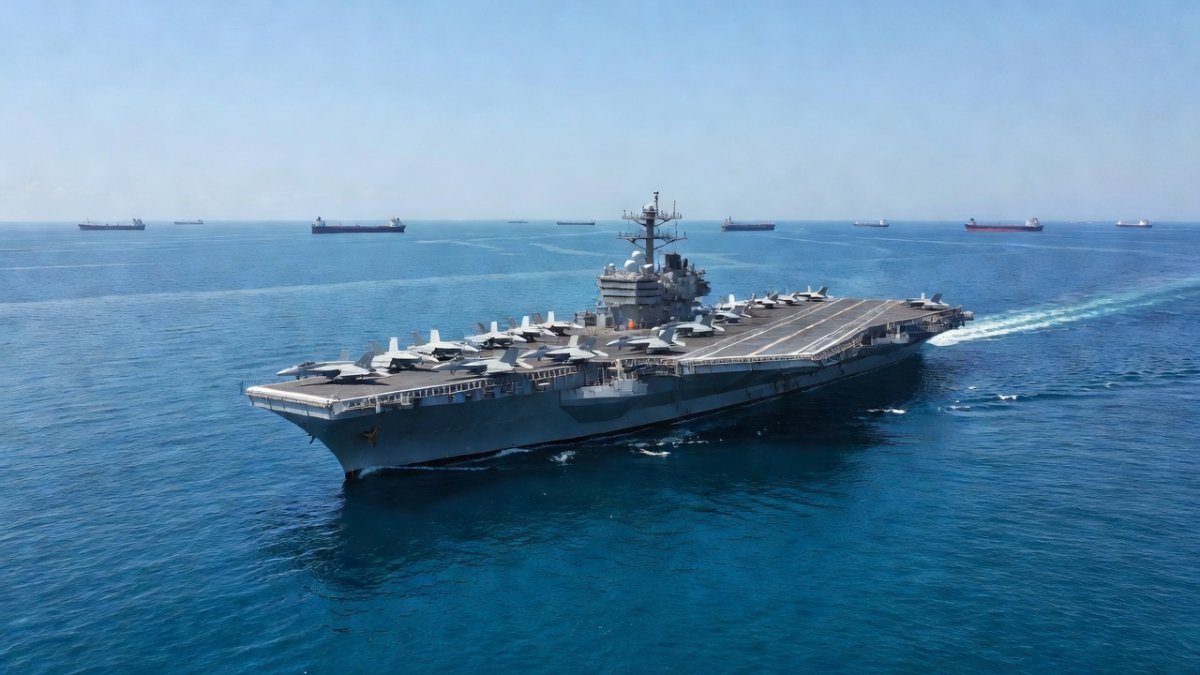
The White House and Pentagon deny scarcity, but the numbers tell a different story. The US has deployed its last aircraft carrier in the Pacific to the Middle East, leaving no American carrier in the Western Pacific for the first time in decades. This is a strategic gift to Beijing and Moscow, who are watching Washington's weaknesses with keen interest. The war has demonstrated that a single regional conflict can strip the US of its ability to project power elsewhere—a lesson that will shape Chinese and Russian calculations in the Indo-Pacific and Europe.
Trump's claims of success—that 82 percent of Iran's missiles are gone and its navy degraded, with 158 naval vessels hit—are contested by the July missile strike in Jordan and Iran's continued ability to threaten Hormuz. The administration's metrics of victory are increasingly difficult to reconcile with the operational reality of a war that has consumed American military resources without achieving a decisive outcome.
Regional Implications: Economic Warfare and the "Seismic" Response
Treasury Secretary Scott Bessent has declared an "economic D-Day," calling it "the single greatest financial offensive ever marshalled against an adversary" in a Financial Times opinion piece. On August 25, Washington sanctioned nearly 60 entities from Iran and abroad over Iranian oil, weapons, and cyber operations. Iran has vowed a "seismic" response and threatened to halt all oil exports—a threat that, if implemented, would send global prices spiraling and deepen the economic pain already felt by American consumers.
The economic warfare is a double-edged sword. Sanctions can degrade Iran's economy, but they also entrench the regime's survival narrative and push Tehran closer to Russia and China, who are willing to absorb Iranian oil at discounted prices. The "economic D-Day" may win headlines, but it has not yet produced a strategic capitulation from Tehran. Instead, Iran is negotiating from a position of perceived strength, having demonstrated that it can survive a full-scale US assault.
Analysts are divided on the outcome. Alam Saleh of the Australian National University argues that "the US lost even before the war," adding that "this might be a defeat for the US, but it's not a victory for Iran either." Clark Summers of Belmont Abbey College offers a more charitable view, suggesting the US "can rightly assert that these ends have been achieved. Although for how long before Iran can rebuild is difficult to assess." What is clear is that the war has demonstrated to Tehran that it can survive a full-scale US assault—and has lost its fear of war.
Legal Dimensions: The War Powers Debate and the Road Ahead
Beyond the battlefield, the war has created a legal and political quagmire. Experts argue the conflict is illegal under US law, as it lacks congressional authorization, and violates the UN Charter. This legal fragility undermines the legitimacy of the campaign and complicates efforts to build a coalition for post-war reconstruction or diplomacy. The administration's reliance on executive authority has left the war vulnerable to legal challenges and political reversal.
The path forward is unclear. A return to the status quo ante is impossible; Iran's nuclear program, even if degraded, remains a latent threat, and the regime's survival has been legitimized by its resilience. The US faces a choice between escalation—risking a wider war with Russia and China—or de-escalation, which would require accepting a negotiated outcome that falls short of the "total victory" Trump promised. The June 17 memorandum of understanding, stalled over vague wording, suggests that a diplomatic off-ramp exists but remains elusive.
The war's sixth-month mark is not a milestone but a warning. It has exposed the limits of American military power, the resilience of the Islamic Republic, and the fragility of the global energy order. For the Middle East, the conflict has redrawn alliances and deepened sectarian divides. For the world, it has demonstrated that a "little detour" can become a strategic dead end with consequences that will outlast any presidency.
By Malik Hassan, Staff Writer
This article was produced with AI-assisted research and editorial support. Reporting is based on sources cited in the article.
What's Your Reaction?
 Like
0
Like
0
 Dislike
0
Dislike
0
 Love
0
Love
0
 Funny
0
Funny
0
 Wow
0
Wow
0
 Sad
0
Sad
0
 Angry
0
Angry
0

Middle East Correspondent at Global1.News. Based in Beirut, covering politics, conflict, energy, and society across the Middle East. Brings context and depth to a region often reduced to headlines.












Comments (0)