
Netanyahu Demands Smotrich and Ben-Gvir Merge or Risk Losing the Election to the Left
In a recent i24NEWS English report, Israeli Prime Minister Benjamin Netanyahu made a dramatic late-night appeal to the two leaders of the religious-nationalist camp, urging them to set aside years of personal rivalry and merge their parties before the October 27 Knesset election.
In a recent i24NEWS English report, Israeli Prime Minister Benjamin Netanyahu made a dramatic late-night appeal to the two leaders of the religious-nationalist camp, urging them to set aside years of personal rivalry and merge their parties before the October 27 Knesset election. The video message, released on Thursday evening, came exactly two weeks before the legal deadline for submitting party lists, and it laid bare the prime minister's fear that a divided Right could hand the next government to a center-left coalition.
Netanyahu Demands Smotrich and Ben-Gvir Merge or Risk Losing the Election to the Left
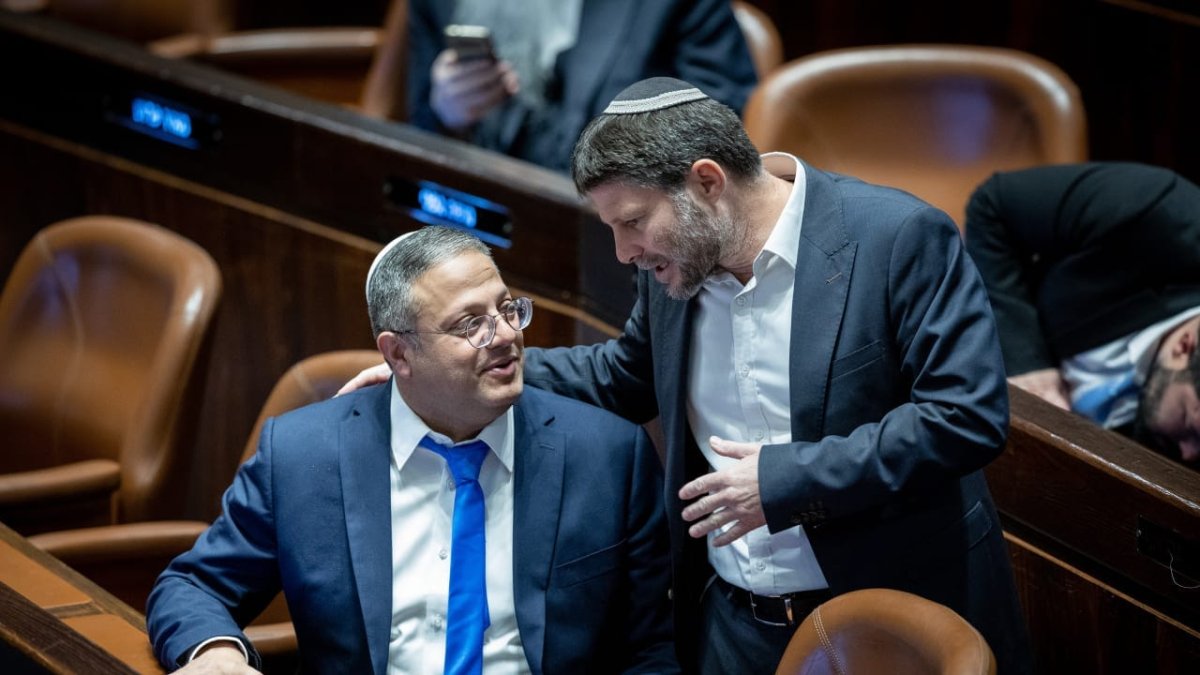
Jerusalem, Israel – Today — Prime Minister Benjamin Netanyahu issued a stark warning to Finance Minister Bezalel Smotrich and National Security Minister Itamar Ben-Gvir on Thursday evening, calling on them to unite their parties into a single electoral slate ahead of the October 27, 2026 Knesset election. In a video message released from Jerusalem, Netanyahu said, "They must unite. Every time we ran together, we won. When we ran separately, we lost." The appeal came precisely two weeks before the statutory deadline for submitting party lists to the Central Elections Committee, and it signaled growing anxiety inside Likud about the fragility of the right-wing bloc.
Why the Right Needs Unity Now
The stakes could not be higher. Israel's 25th Knesset became the first since 1988 to complete its full four-year term without early dissolution, with parliament voting to dissolve itself on July 17, 2026, and setting the general election for October 27, the latest date permitted by law. That extended runway has given opposition parties time to consolidate, and recent polls show a stiff challenge emerging from a field that includes former chief of staff Gadi Eisenkot, former deputy chief of staff Yair Golan, Yesh Atid leader Yair Lapid, and former prime minister Naftali Bennett, whose party has run close to Likud in several surveys.
The arithmetic is unforgiving. Israel's electoral threshold requires parties to win roughly 3.25 percent of the national vote to enter the Knesset, and any votes cast for parties below that line are simply discarded. For the religious-nationalist camp, this creates a nightmare scenario: if Smotrich's Religious Zionism Party and Ben-Gvir's Otzma Yehudit run separately, and if former IDF general Ofer Winter's new People of Israel party also competes for the same voters, the right-wing bloc could bleed thousands of votes into the void. Netanyahu's warning on Thursday was blunt: "All the polls show that if Ben-Gvir and Smotrich unite it will create a strong party that strengthens the right-wing bloc. Smotrich is on the verge of the electoral threshold. If you don't unite with him, we'll get a left-wing government of Eisenkot with Yair Golan and the Arab parties."
Netanyahu's Personal Push
The prime minister's video message was notable for its historical framing and its direct appeal to the two men's sense of national duty. Netanyahu reached back to Israel's 1992 election, when right-wing parties collectively received more votes than the Left but ran as three separate lists, failed to pass the threshold, and handed victory to Yitzhak Rabin. "We got the Oslo disaster, we got Arafat here, Hamas here, and everything else is a disaster," Netanyahu said, drawing a direct line from that electoral failure to the security challenges Israel faces today.
He acknowledged the personal dimension of the feud. "I understand that there are personal grievances between them. They need to overcome them. I will invite them in the coming days. We will make a supreme effort to unite, and this is what the public expects from them, and rightfully so." The prime minister's plan is to convene both leaders in Jerusalem in the coming days, likely at the Prime Minister's Office on Balfour Street, to broker a merger agreement before the list submission deadline. The challenge is formidable: Smotrich and Ben-Gvir have spent years competing for the same religious-nationalist voters, and their relationship has been marked by mutual suspicion and public sniping over everything from settlement policy to police authority.
Ben-Gvir's Resistance
Ben-Gvir responded within hours with a video of his own, rejecting the premise of Netanyahu's appeal. "You want a small Otzma Yehudit party so you can join Eisenkot to establish a 'broad national government,'" he said, accusing the prime minister of seeking to weaken his party to create flexibility for a post-election coalition with the center. Ben-Gvir insisted that the only path to a fully right-wing government is a large Otzma Yehudit, and he floated the idea of running together with Smotrich and Ofer Winter under a single banner — but on his terms, not Netanyahu's.
The exchange escalated on X, where Netanyahu posted a direct challenge: "Ben-Gvir, don't bring down the Right. I did not understand your video. Are you saying that I want Otzma Yehudit to be weak because I am asking you to unite with Smotrich? It's the opposite!" He warned that a failure to merge would produce "a left-wing government of Eisenkot with Yair Golan and the Arab parties," and he closed with a pointed question: "I can't believe that because of personal whims you're willing to risk the country." Ben-Gvir fired back on the same platform: "The attempt to weaken Otzma Yehudit party in order to form a broad national government with Eisenkot is neither right-wing nor nationalistic."
Regional and Diplomatic Context
The political maneuvering is unfolding against a volatile regional backdrop. On August 26, just one day before Netanyahu's video message, the prime minister declared the West Bank "our land" and vowed to expand settlements and Jewish immigration, a statement that is certain to complicate relations with the Biden administration and with Arab states that have normalized ties with Israel. The declaration was widely seen as an attempt to shore up his right-wing base, but it also carries real diplomatic costs at a moment when Israel is still contending with the aftermath of this year's Iran war and the broader regional security posture.
The election outcome will have direct implications for Israel's security policy, its approach to the Palestinian issue, and its standing in the region. A right-wing government led by Netanyahu with a united Smotrich-Ben-Gvir bloc would likely pursue an aggressive settlement agenda and a hard line on security matters. A center-left government led by Eisenkot or Golan would face immediate pressure from the same regional actors to restart diplomatic processes, but it would also inherit the same security challenges that have defined Israeli policy since the Iran war. The Arab parties, meanwhile, have been discussing unification of their own, a move that could further shift the electoral math and potentially bring a joint Arab list closer to the threshold.
Analysis and What This Means
The immediate question is whether Netanyahu can pull off the merger. His track record as a coalition broker is mixed, but his political survival depends on maximizing the right-wing bloc's seat count. If Smotrich and Ben-Gvir run together, polls suggest they could form a party of 10-12 seats, enough to anchor a right-wing coalition. If they run separately, and if Winter's People of Israel party peels off additional votes, the bloc could lose five or more seats to the threshold — a margin that could be decisive in a tight race.
For Israeli voters, the coming weeks will be a test of whether the Right can learn the lesson of 1992 or whether it will repeat the same mistake. Netanyahu's invocation of Oslo was deliberate: he is telling religious-nationalist voters that their votes are not just about seats in the Knesset but about the future of the settlements, the security establishment, and Israel's position in the region. Ben-Gvir's resistance, meanwhile, reflects a deeper tension within the camp: he fears that a merger with Smotrich would submerge his party's identity and that Netanyahu would use a smaller Otzma Yehudit as a bargaining chip in coalition talks with Eisenkot.
The coming days will be critical. Netanyahu has promised to convene both leaders, and the pressure from the polls, the threshold, and the broader right-wing electorate will be intense. If he succeeds, the Right will enter the October 27 election with a unified religious-nationalist bloc and a clear path to a governing majority. If he fails, the votes of the religious-Zionist camp could be scattered across three or four lists, and the next government could be formed by a coalition that includes Eisenkot, Golan, and the Arab parties — a scenario Netanyahu described as a national catastrophe.
For now, the ball is in Ben-Gvir's court. His public defiance has energized his base, but it has also put him in direct conflict with the prime minister at the most critical moment of the campaign. The voters who supported Otzma Yehudit in the last election will be watching closely, and they will have to decide whether their loyalty lies with Ben-Gvir's independence or with Netanyahu's warning that a divided Right means a left-wing government. The answer will shape Israeli politics for years to come.
By Hannah Berg, Staff Writer
This article was produced with AI-assisted research and editorial support. Reporting is based on sources cited in the article.
What's Your Reaction?
 Like
0
Like
0
 Dislike
0
Dislike
0
 Love
0
Love
0
 Funny
0
Funny
0
 Wow
0
Wow
0
 Sad
0
Sad
0
 Angry
0
Angry
0
Israel Correspondent at Global1.News. Based in Tel Aviv, covering Israeli politics, security, technology, and society. Provides balanced, deeply-sourced reporting on one of the most closely-watched regions in the world.












Comments (0)