
US grants visas to Iranian delegation for UN General Assembly meetings in New York
While the State Department frames the move as a fulfillment of “international obligations” as host nation, the restrictions imposed on the Iranian officials raise serious questions about the human cost of politicised diplomacy and the broader implications for international law.
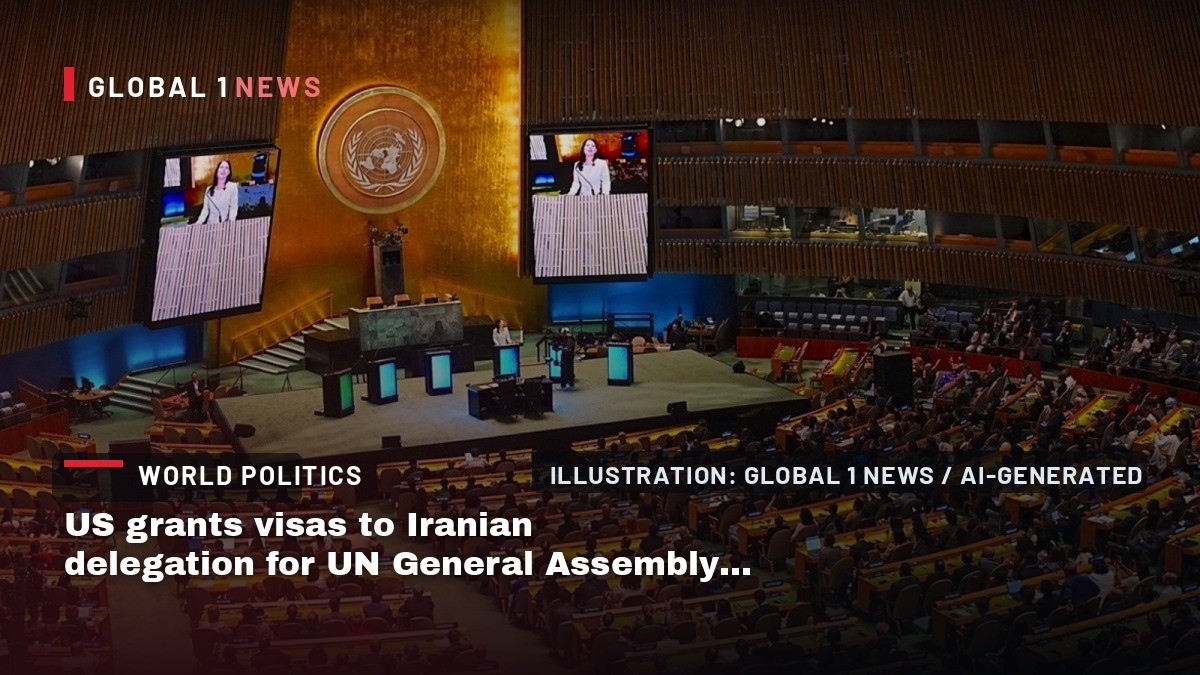
The United States has granted visas to members of Iran’s official delegation for the upcoming United Nations General Assembly in New York, a decision that underscores the complex interplay between diplomatic protocol and the harsh realities of a conflict that now stretches into its seventh month. While the State Department frames the move as a fulfillment of “international obligations” as host nation, the restrictions imposed on the Iranian officials raise serious questions about the human cost of politicised diplomacy and the broader implications for international law.
International obligations versus political realities
The State Department spokesperson emphasized that allowing the Iranian delegation to attend the General Assembly is a matter of “international obligations” tied to the United States’ role as host of the UN headquarters. This language reflects the legal framework under which the United Nations expects the host country to facilitate access for all member states, even those with which it maintains strained relations or imposes sanctions. In practice, however, the United States has long used its hosting duties to exert pressure on delegations from adversarial regimes, a pattern that continues with the current restrictions.
By granting visas but simultaneously limiting movement and spending, Washington signals a willingness to uphold the formalities of multilateral engagement while preserving leverage over Tehran. This duality illustrates how diplomatic gestures can be weaponised, turning the very act of attending a global forum into a controlled experience that limits the ability of Iranian officials to engage fully with their peers.
Restrictions on movement and spending
According to the State Department, the Iranian delegation will face “limits on travel outside designated areas” and a prohibition on purchasing certain luxury goods. Such measures echo previous constraints placed on Iranian officials attending UN meetings, reflecting a broader policy of curbing the benefits of diplomatic travel for sanctioned individuals. While the restrictions are presented as security or sanctions‑related precautions, they also curtail the personal freedoms of the delegates, raising concerns about the fairness of imposing selective limitations on sovereign representatives.
Human‑rights advocates argue that travel restrictions, even when framed as security measures, can amount to a form of punitive treatment that infringes on the dignity of the individuals involved. The inability to move freely within the host city or to purchase everyday items can create a climate of humiliation and surveillance that extends beyond the official diplomatic agenda.
The composition of the delegation
US officials have confirmed that the delegation will include President Masoud Pezeshkian and Foreign Minister Abbas Araghchi, among other officials. Notably, the State Department also indicated that the delegation will be smaller than the one that attended the previous year’s General Assembly. The reduction in size may reflect heightened security concerns, diplomatic signalling, or logistical constraints imposed by the United States.
The presence of Iran’s highest political leaders at the UN underscores the importance Tehran places on maintaining a voice on the world stage, even amid a deepening conflict with Washington. For the Iranian officials, the trip offers a rare opportunity to present their perspective to a global audience, seek solidarity, and potentially influence the discourse on regional security and humanitarian issues.
The ongoing US‑Iran conflict
The decision to grant visas comes at a time when the United States and Iran are locked in a conflict that has persisted for seven months. Diplomatic relations remain “severely strained,” and the broader geopolitical environment is marked by mutual accusations, sanctions, and occasional military posturing. Within this context, the United Nations serves as one of the few remaining platforms where both sides can engage, albeit under tightly controlled conditions.
For ordinary Iranians, the conflict has translated into economic hardship, restricted freedoms, and a climate of fear. The ability of their leaders to travel abroad, even under restriction, carries symbolic weight for a population yearning for international attention to their plight. Conversely, the United States’ imposition of movement limits can be perceived domestically as a continuation of punitive policies that exacerbate the suffering of ordinary citizens.
Legal dimensions of host‑country responsibilities
Under the host‑country agreement with the United Nations, the United States is obliged to facilitate access for representatives of all member states, regardless of bilateral tensions. This principle is rooted in the UN Charter’s commitment to universal participation and the notion that the UN should remain a neutral arena for dialogue. The United States’ decision to issue visas aligns with this legal expectation.
However, the same agreement does not preclude the host nation from imposing reasonable security measures. The challenge lies in defining what constitutes “reasonable” versus what may be deemed discriminatory or punitive. International law scholars note that excessive restrictions can undermine the spirit of multilateralism and may be contested as violations of the diplomatic privileges afforded to UN delegates.
Human‑rights implications of diplomatic restrictions
The imposed travel and spending limits raise broader human‑rights concerns. While sanctions are a tool of foreign policy, they often have unintended consequences for individuals, including the denial of basic comforts and the creation of a climate of intimidation. For the Iranian delegation, being barred from purchasing certain luxury goods may appear symbolic, yet it signals a broader pattern of restricting the personal autonomy of officials from sanctioned states.
Human‑rights organisations stress that any restrictions on diplomatic personnel must be proportionate, non‑discriminatory, and transparent. The lack of detailed public guidance on the specific “luxury goods” prohibited, and the vague description of “designated areas,” leave room for arbitrary enforcement, which can erode trust in the fairness of the process.
What the General Assembly may reveal
With the Iranian delegation set to attend next week’s General Assembly, the international community will watch closely for any statements or resolutions that address the ongoing conflict, regional security, and humanitarian concerns. The presence of President Pezeshkian and Foreign Minister Araghchi offers Tehran a platform to articulate its narrative, seek allies, and potentially raise issues such as civilian casualties, displacement, and the impact of sanctions on ordinary Iranians.
For the United States, the handling of the Iranian delegation will serve as a litmus test of its commitment to multilateral norms amid a fraught bilateral relationship. The balance between upholding legal obligations and exercising political pressure will be scrutinised by both allies and critics, with implications for future diplomatic engagements with other sanctioned or adversarial states.
This article was produced with AI-assisted research and editorial support. Reporting is based on the source material cited below. Sources: Middle East Monitor; middleeastmonitor.com; Global1.News (19 September 2026).
By Fatima Al-Rashid, Staff Writer
What's Your Reaction?
 Like
0
Like
0
 Dislike
0
Dislike
0
 Love
0
Love
0
 Funny
0
Funny
0
 Wow
0
Wow
0
 Sad
0
Sad
0
 Angry
0
Angry
0
Gulf/MENA Correspondent at Global1.News. Based in Doha, covering Gulf politics, energy markets, diplomacy, and development across the Middle East and North Africa. Tracks the economic transformation of the Gulf states.












Comments (0)