
US Central Command denies Iranian commander’s claims about seized tankers, carrier strike, Hormuz toll
In the volatile aftermath of the war that erupted on 28 February 2026 between the United States, Israel and Iran, the battlefield of information has become as contested as the waters of the Strait of Hormuz.
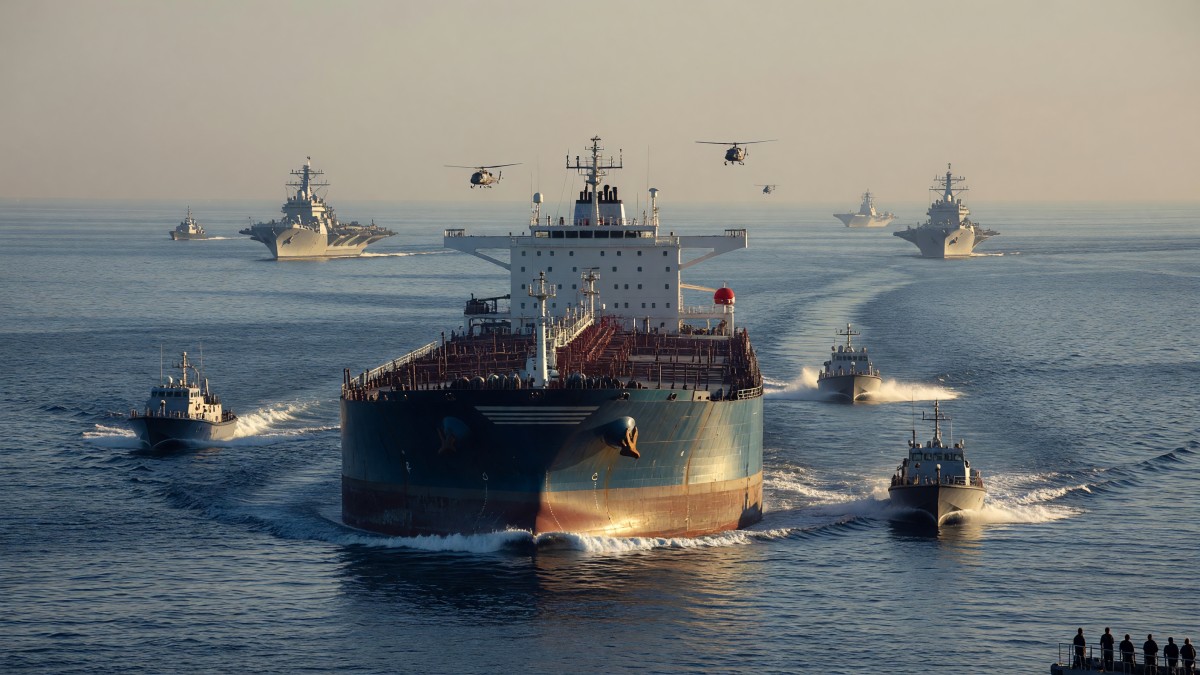
In the volatile aftermath of the war that erupted on 28 February 2026 between the United States, Israel and Iran, the battlefield of information has become as contested as the waters of the Strait of Hormuz. On 28 November 2026, the United States Central Command (CENTCOM) used its official X account to refute a series of dramatic claims made by an Iranian military commander, claims that had already been amplified by Iranian state media. The denials touch on three core narratives: the alleged seizure of Iranian oil tankers by U.S. forces, a purported toll imposed on vessels transiting Hormuz, and an alleged strike on the U.S. aircraft carrier USS Abraham Lincoln during the opening day of Operation Epic Fury. Each of these narratives carries profound implications for regional security, international law, and the human cost of the conflict.
Iranian Claims and CENTCOM’s Rebuttal
The Iranian commander asserted that the Islamic Revolutionary Guard Corps (IRGC) navy had retaken two oil tankers that had been “stolen” by U.S. forces, alleging that American troops aboard the vessels were asleep while the IRGC reclaimed the assets. CENTCOM’s response was unequivocal: “Iran no longer has a navy. The entire situation the Iranian military commander described is another fabricated lie.” By dismissing the existence of an operational Iranian navy, the U.S. command sought to undercut the credibility of the claim at its source.
The Iranian narrative also alleged that a $2.5 million toll was being levied on ships passing through the Strait of Hormuz. CENTCOM countered that, while U.S. forces and regional partners maintain a security presence in the waterway, no such toll exists. The command highlighted that “thousands of ships and billions of crude oil barrels have transited the strait freely and safely under US protection,” emphasizing the continuity of commercial navigation despite the heightened military tension.
Operation Epic Fury and the USS Abraham Lincoln
Operation Epic Fury, launched by the United States and Israel on 28 February 2026, marked the formal commencement of hostilities against Iran. Within this context, the Iranian commander claimed that Iranian naval forces struck the USS Abraham Lincoln aircraft carrier on the first day of the operation, forcing U.S. forces to seek evacuation assistance from regional allies. CENTCOM refuted this, stating that the carrier strike group “was well defended and never struck by Iran.” The command further noted that the carrier completed a “historically successful combat deployment” and returned safely to the United States the previous month, suggesting that the alleged attack did not disrupt the carrier’s operational timeline.
The denial of an attack on the carrier carries weight beyond the tactical realm. An assault on a flagship vessel such as the Abraham Lincoln would have signaled a dramatic escalation, potentially inviting broader regional involvement and raising the specter of a direct confrontation between Iran and the United States. By denying the strike, CENTCOM aimed to convey that the balance of naval power in the Gulf remains firmly in favor of the U.S.-led coalition.
The Human Dimension of the Claims
While the strategic and legal implications dominate headlines, the human cost of these narratives must not be overlooked. The mention of “3,500 U.S. troops” aboard the amphibious assault ship USS Tripoli, which arrived in CENTCOM’s area of responsibility in March 2026, underscores the scale of the American deployment. Each soldier represents a family, a community, and a set of aspirations that become entangled in the geopolitics of the Gulf. Likewise, the claim that Iranian troops were “asleep” on board seized tankers, if true, would have exposed them to the dangers of a hostile takeover, raising questions about the protection owed to service members under the Geneva Conventions.
On the Iranian side, the alleged seizure of oil tankers touches on the livelihoods of civilian crews, many of whom are ordinary seafarers whose families depend on the income from each voyage. The narrative of a “fabricated lie” about the seizure, if accepted, may be intended to shield civilian crews from the stigma of being caught in a state‑driven propaganda campaign. Yet the very act of publicizing such claims can endanger them, as international shipping firms may become wary of employing Iranian‑flagged vessels for fear of retaliation.
International Law and Navigation Rights
The dispute over a purported toll on Hormuz vessels raises fundamental questions of international maritime law. The United Nations Convention on the Law of the Sea (UNCLOS) guarantees the right of innocent passage through international straits used for navigation. By asserting that no toll is being levied, CENTCOM aligns its stance with the principle that sovereign states cannot impose arbitrary fees on ships transiting international waterways. Conversely, the Iranian claim of a $2.5 million charge, if it had been true, would have constituted a breach of these established norms, potentially justifying legal challenges before international tribunals.
The denial also serves a diplomatic purpose. By emphasizing that “thousands of ships and billions of crude oil barrels have transited the strait freely and safely,” CENTCOM seeks to reassure global markets and shipping companies that the security regime in the Gulf remains stable, thereby mitigating the risk of economic disruption that could exacerbate humanitarian suffering in oil‑dependent economies across the region.
The Strategic Context of the Memorandum of Understanding
The source material notes that a memorandum of understanding (MoU) signed in June 2026, intended to pave the way for a final peace deal, collapsed amid disagreements, including over navigation in the Strait of Hormuz. This failure highlights how deeply intertwined security arrangements and economic considerations are in any prospective settlement. The MoU’s collapse suggests that even as diplomatic overtures were being explored, the underlying mistrust regarding control of maritime routes persisted, fueling the very narratives that CENTCOM now disputes.
The breakdown of the MoU also underscores the fragility of cease‑fire mechanisms in a context where both sides possess the capacity to influence global oil supplies. Any perceived concession on navigation rights could be interpreted domestically in Tehran as a surrender of sovereignty, while in Washington, it could be seen as a strategic necessity to maintain the free flow of energy. The contested claims about tolls and seized tankers thus become bargaining chips in a broader diplomatic deadlock.
Media Amplification and the War of Narratives
The Iranian commander’s statements were reported by Anadolu Agency, a Turkish news outlet, before being amplified through Iranian state channels. CENTCOM’s rebuttal, posted on the U.S. social media platform X, illustrates the rapid, cross‑border flow of information in modern conflicts. Each side seeks to shape international perception: Tehran aims to portray itself as a victim of Western aggression, while Washington strives to depict Iranian accusations as baseless propaganda.
For journalists, the challenge lies in navigating these competing narratives while adhering to factual verification. The source material provides direct quotations from both the Iranian claim (as reported by Anadolu) and the CENTCOM response. By presenting both sides and contextualizing them within the legal and humanitarian frameworks, reporting can illuminate the human impact behind the headlines rather than merely echoing sensationalist claims.
Looking Ahead: Implications for Regional Stability
The denial of Iranian claims by CENTCOM does not resolve the underlying tensions that continue to simmer in the Gulf. The presence of the USS Tripoli with 3,500 troops, the ongoing operation of carrier strike groups, and the unresolved MoU all signal that the region remains on a precarious footing. The human cost—both for military personnel and civilian mariners—will continue to rise as long as the conflict’s narrative battles play out in public forums.
International observers must monitor how these claims and denials influence policy decisions in Washington, Tehran, and allied capitals. If the Iranian narrative gains traction despite CENTCOM’s refutations, it could embolden Tehran to pursue further maritime provocations, potentially jeopardizing the safety of commercial shipping. Conversely, a clear demonstration of U.S. naval dominance, reinforced by the successful deployment of the Abraham Lincoln and the safe transit of countless vessels, may deter further escalation. Ultimately, the resolution of this dispute will hinge on diplomatic breakthroughs that address both security concerns and the legitimate economic interests of the region’s peoples.
This article was produced with AI-assisted research and editorial support. Reporting is based on the source material cited below. Sources: Middle East Monitor; middleeastmonitor.com; Global1.News (28 November 2026).
By Fatima Al-Rashid, Staff Writer
What's Your Reaction?
 Like
0
 Dislike
0
 Love
0
 Funny
0
 Wow
0
 Sad
0
 Angry
0

Gulf/MENA Correspondent at Global1.News. Based in Doha, covering Gulf politics, energy markets, diplomacy, and development across the Middle East and North Africa. Tracks the economic transformation of the Gulf states.














Comments (0)