
UN Officials Warn Occupied West Bank Has Reached a Critical 'Breaking Point'
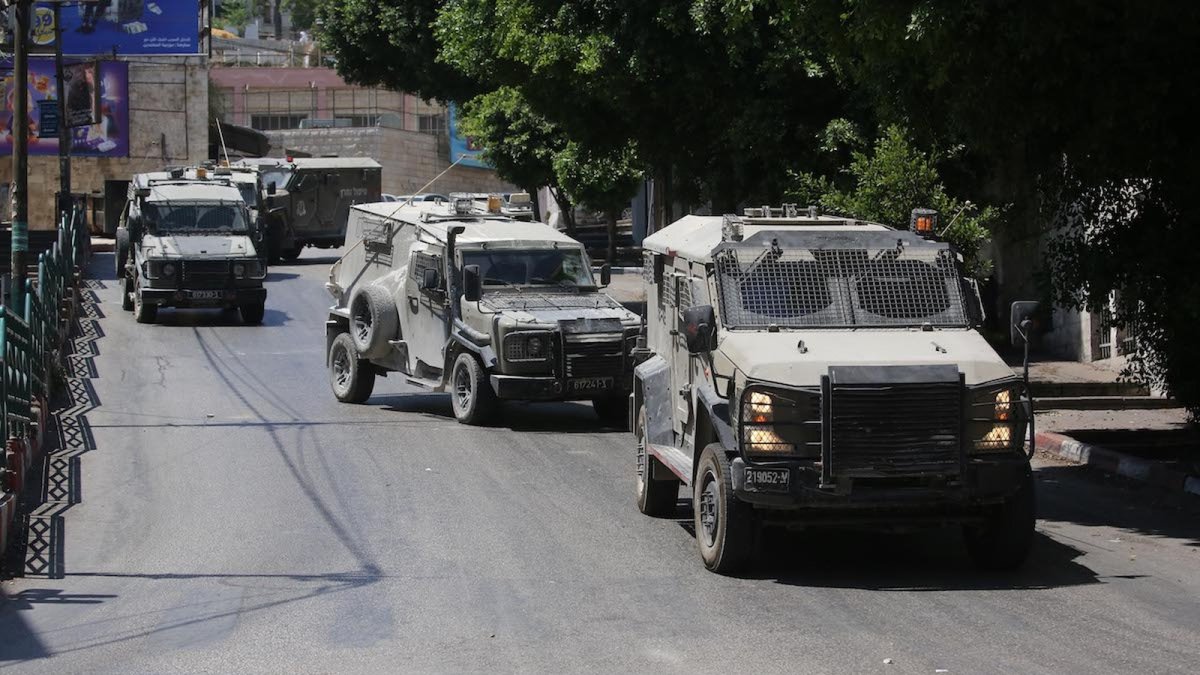
UN officials told the Security Council on Tuesday that the occupied West Bank has reached a critical "breaking point," citing a record surge in violence by Israeli forces and occupiers alongside a systematic unraveling of Palestinian statehood. The briefing, which drew on verified data from UN agencies on the ground, painted a stark picture of a territory in acute crisis, with children bearing the heaviest burden of a deteriorating situation.
UN Officials Warn Occupied West Bank Has Reached a Critical 'Breaking Point'
UN officials told the Security Council on Tuesday that the occupied West Bank has reached a critical "breaking point," citing a record surge in violence by Israeli forces and occupiers alongside a systematic unraveling of Palestinian statehood. The briefing, which drew on verified data from UN agencies on the ground, painted a stark picture of a territory in acute crisis, with children bearing the heaviest burden of a deteriorating situation.
Deputy Special Coordinator Ramiz Alakbarov described the situation as an emergency requiring immediate action to prevent de facto annexation, while UNICEF Deputy Executive Director Hannan Sulieman delivered a blunt message to the international body: humanitarian organizations alone cannot fix what is fundamentally a political failure. "Humanitarian organizations cannot create the political conditions that children need to be safe," Sulieman told the Security Council. "That responsibility rests with member states who have the power to change them."
Children Pay the Highest Price
The statistics presented by Sulieman were devastating in their precision. Since January 2024, 174 Palestinian children have been verified killed in the occupied West Bank. "That is more than one child every week," she noted, underscoring the frequency with which minors are becoming casualties of the ongoing escalation.
Beyond the death toll, Sulieman revealed that at least 355 Palestinian children are currently held in military detention, the highest figure recorded in eight years. Nearly half of these children are detained without charge or trial, a practice that has drawn repeated condemnation from human rights organizations but continues unabated. The UNICEF official presented four urgent requests to the international community: prioritizing the protection of children by ending administrative detention, halting forced displacements through diplomatic pressure, ensuring safe access to schools and hospitals, and allowing vital humanitarian supplies to move without delay.
The detention figures reflect a broader pattern of military justice applied to minors, a system that human rights groups have long criticized for its lack of due process protections for Palestinian children. The fact that these numbers have reached an eight-year high suggests that the situation is not merely static but actively worsening.
Displacement and Demolitions
Alakbarov reported that in 2026 alone, dozens of Palestinians have been killed and approximately 3,800 displaced due to demolitions, evictions, and attacks by occupiers. The displacement figures represent a significant acceleration of a long-standing pattern in the West Bank, where Palestinian communities in vulnerable areas, particularly in the Jordan Valley and areas near Israeli settlements, face constant pressure to leave their homes.
The demolitions are not random acts but part of a systematic approach that Alakbarov described in stark terms. He warned of a clear pattern where Palestinian populations are forcibly removed from their villages before occupiers seize the vacated land. This sequence, repeated across the territory, has the effect of gradually redrawing the map of the West Bank in ways that make a contiguous Palestinian state increasingly difficult to achieve.
In a development that Alakbarov flagged as unprecedented, land was explicitly seized in "Area A" to build infrastructure for occupiers. Area A, under the Oslo Accords, was designated as falling under full Palestinian civil and security control. The explicit seizure of land in this area for Israeli infrastructure represents a significant breach of the agreements that have governed the occupied territories since the 1990s.
Settler Violence on the Rise
"Settler violence has reached unprecedented levels," Alakbarov emphasized, citing more than 1,400 documented incidents this year affecting 260 communities. The scale of these attacks, which range from physical assaults to the destruction of olive trees and property, has transformed daily life for many Palestinian villagers.
The documented incidents represent only those cases that have been formally recorded, and local observers suggest the actual number is likely higher. The affected communities span the length of the West Bank, from the northern governorates of Nablus and Jenin to the southern reaches of Hebron, where settler presence is most concentrated.
The pattern Alakbarov described, of forced removal followed by land seizure, has been documented by human rights organizations for years, but the pace and intensity have increased markedly. Villages that have existed for generations are being emptied, their residents pushed into increasingly crowded urban centers or across the Jordan River.
A Fiscal Stranglehold
Alakbarov also highlighted the acute fiscal crisis facing the Palestinian Authority, which reportedly lacks $6 billion in clearance revenues withheld by Israeli authorities. Clearance revenues, taxes collected by Israel on behalf of the Palestinian Authority, have long been a point of contention, with Israel periodically withholding funds for political reasons.
The $6 billion figure represents a staggering sum for an authority already struggling to pay salaries and provide basic services. The fiscal crisis has compounded the security and humanitarian challenges, weakening the Palestinian Authority's ability to function as a governing body and undermining its legitimacy in the eyes of many Palestinians.
The financial pressure comes at a time when the Palestinian Authority is already facing criticism for its security coordination with Israel, a policy that many Palestinians view as complicity in the occupation. The combination of fiscal strangulation and political delegitimization has created a perfect storm for the authority, which finds itself unable to protect its population or provide for their basic needs.
Elections and a Fragile Political Horizon
Amid the turmoil, Alakbarov welcomed preparations for legislative elections scheduled for Nov. 28. The elections, if they proceed, would be the first Palestinian legislative elections in nearly two decades, a potentially significant step toward renewing the democratic legitimacy of Palestinian institutions.
However, the timing raises questions about feasibility. With the West Bank in crisis, Gaza still recovering from two years of war, and the Palestinian political leadership deeply divided between Fatah and Hamas, the path to credible elections is fraught with obstacles. The Palestinian Authority's fiscal crisis further complicates the logistics of organizing a vote across the occupied territories.
Alakbarov concluded that the various developments are "interconnected steps, not isolated developments," aimed at weakening Palestinian governance. This framing suggests that the displacement, violence, and fiscal pressure are not separate problems but components of a coordinated strategy to undermine the possibility of a viable Palestinian state.
Annexation Fears
The UN officials' warnings come against the backdrop of long-standing Palestinian fears that the escalation is part of Israeli efforts to impose facts on the ground, paving the way for annexation of the occupied West Bank. Such a move would undermine the possibility of establishing a Palestinian state along the 1967 borders under relevant UN resolutions.
Alakbarov said that if the situation continues to unravel, it will undermine implementation of resolution 2803 (2025) and erode the prospects for realizing a negotiated Israeli-Palestinian peace based on the two-state solution. Resolution 2803 endorses a peace plan proposed by US President Donald Trump for the Gaza Strip and a temporary international force in the enclave following two years of war.
The reference to resolution 2803 and the New York Declaration suggests that the international community has already agreed on a framework for addressing the conflict, but the implementation has lagged. Alakbarov urged an immediate "and in full" implementation of resolution 2803, together with the New York Declaration, signaling frustration with the pace of progress.
What the International Community Can Do
Sulieman's four requests to the international community provide a concrete agenda for action: ending administrative detention of children, halting forced displacements through diplomatic pressure, ensuring safe access to schools and hospitals, and allowing vital humanitarian supplies to move without delay. These are not abstract demands but specific, measurable actions that member states could take immediately.
The broader context remains grim. Since the start of Israel's genocide in Gaza on Oct. 8, 2023, Israeli forces and occupiers have escalated attacks in the West Bank, killing more than 1,183 Palestinians, injuring 13,000, and arresting nearly 25,000, according to Palestinian figures. The West Bank escalation has proceeded in parallel with the war in Gaza, suggesting a coordinated approach across both fronts.
The international community faces a choice. It can continue to issue statements of concern while the situation on the ground deteriorates, or it can take the concrete steps that UN officials have outlined. The "breaking point" language used by the UN officials suggests that time is running out for a diplomatic solution that preserves the possibility of a two-state outcome.
For the families in the 260 communities affected by settler violence, for the parents of the 174 children killed since January 2024, and for the 355 children held in military detention, the abstractions of Security Council resolutions offer little comfort. What they need is action, and the UN officials made clear on Tuesday that the responsibility for that action rests with member states who have the power to change the conditions on the ground.
The coming months will be critical. With elections scheduled for November and the situation continuing to deteriorate, the window for meaningful intervention is narrowing. Whether the international community will rise to the occasion remains to be seen, but the warnings from the Security Council briefing could not be clearer: the occupied West Bank is at a breaking point, and the consequences of inaction will be borne by the most vulnerable.
This article was produced with AI-assisted research and editorial support. Sources: Middle East Monitor (MEMO), United Nations Security Council briefing.
By Fatima Al-Rashid, Staff Writer
What's Your Reaction?
 Like
0
Like
0
 Dislike
0
Dislike
0
 Love
0
Love
0
 Funny
0
Funny
0
 Wow
0
Wow
0
 Sad
0
Sad
0
 Angry
0
Angry
0

Gulf/MENA Correspondent at Global1.News. Based in Doha, covering Gulf politics, energy markets, diplomacy, and development across the Middle East and North Africa. Tracks the economic transformation of the Gulf states.











Comments (0)