
Two men charged in UK with helping Iran over RAF Fairford incident
British authorities have taken a decisive step against what they describe as an Iranian‑directed espionage effort on UK soil, charging two men under the National Security Act in connection with the September incident at RAF Fairford.
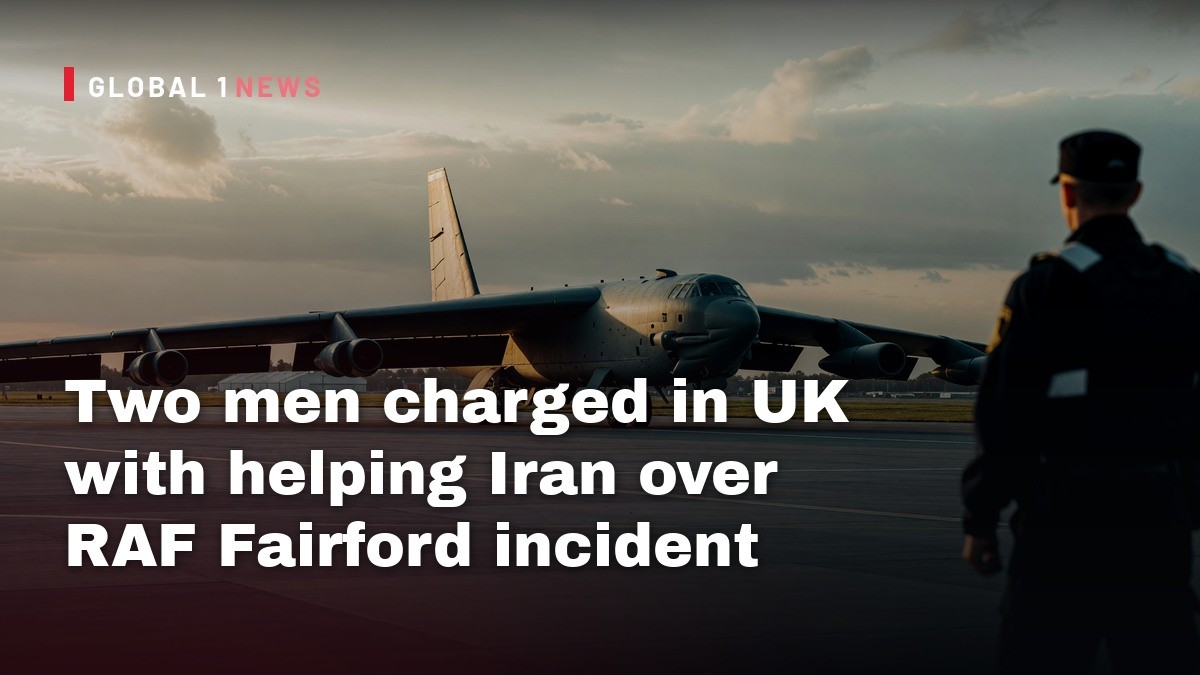
British authorities have taken a decisive step against what they describe as an Iranian‑directed espionage effort on UK soil, charging two men under the National Security Act in connection with the September incident at RAF Fairford. The case, which involves a British national accused of aiding Iranian intelligence, underscores the growing complexity of Iran’s covert operations in Europe and raises fresh questions about the security of joint Anglo‑American military sites that have recently been used in the region’s escalating conflict.
Background to the RAF Fairford episode
RAF Fairford, a Royal Air Force base in Gloucestershire, was temporarily repurposed in 2026 to host United States bombers tasked with launching strikes against Iranian targets. The deployment was short‑lived; the aircraft were withdrawn on “security grounds” after a series of arrests outside the base in the early hours of 27 September. The arrests, which initially involved five British men, signalled a sudden escalation in the threat environment surrounding the base.
According to the British Ministry of Defence, the presence of US bombers at Fairford was part of a broader coalition effort to respond to Iran’s recent missile launches and regional destabilisation. The withdrawal, however, was prompted by concerns that Iranian intelligence services were attempting to infiltrate or sabotage the operation, a claim that British officials have repeatedly stressed.
The charges and the accused
Prosecutors have now formally charged two individuals: 24‑year‑old British national Mohmed Abdulkarim and 24‑year‑old dual British‑Iranian citizen Nouman Essghir. Abdulkarim faces a charge of “engaging in conduct that was likely to materially assist a foreign intelligence service” for the period between 31 August and 28 September. The indictment suggests that the alleged assistance was directed toward Iran, although the exact nature of the conduct remains confidential.
Essghir, who was first detained outside the base on 27 September, is charged with “entering a prohibited place for a purpose prejudicial to the United Kingdom” on 22 August. Both men are scheduled to appear before Westminster Magistrates’ Court later on Tuesday, where the Crown will outline the evidence linking them to Iranian intelligence directives.
Official responses and diplomatic tension
Prime Minister Andy Burnham, speaking earlier this month, asserted that the activity at RAF Fairford was likely coordinated from Tehran. This assessment aligns with statements from the UK’s National Counter Terrorism Policing unit, whose Assistant Commissioner Laurence Taylor highlighted a “range of incidents” in recent months that he believes were directed by the Iranian state. Taylor cited comments from the Director General of MI5, indicating a coordinated effort to “intervene, identify and respond” to the threat.
Iran’s ambassador to Britain has denied any involvement, a stance that mirrors Tehran’s broader diplomatic strategy of rejecting allegations of espionage or sabotage in Europe. The denial, however, does little to ease the concerns of British security agencies, who have warned that Iranian intelligence operations are becoming increasingly sophisticated and geographically dispersed.
Implications for UK‑US military cooperation
The incident at RAF Fairford has prompted a reassessment of the security protocols governing joint Anglo‑American bases. While the United States has not publicly commented on the arrests, the withdrawal of its bombers underscores a precautionary approach to protecting assets and personnel from potential Iranian interference.
Security experts within the Ministry of Defence note that the presence of foreign intelligence operatives near operational airfields poses a direct risk to mission integrity. The episode may lead to tighter perimeter controls, enhanced surveillance, and a review of the vetting processes for local contractors and support staff who operate in proximity to such bases.
Regional security context and Israeli concerns
From an Israeli perspective, the revelation of Iranian espionage activities in the United Kingdom adds a new dimension to the already volatile security landscape of the Middle East. Israel’s Ministry of Defence has long warned that Tehran’s intelligence apparatus seeks to exploit Western allies to further its regional ambitions, from supplying proxy militias to gathering intelligence on Israeli defence capabilities.
Israel Innovation Authority officials have highlighted that the same cyber‑espionage techniques used in Europe are being deployed against Israeli critical infrastructure. The Fairford case therefore serves as a reminder that Iranian covert operations are not confined to the Middle East, but extend into the heart of Europe, potentially compromising the security of allied nations that host Israeli‑related technology firms or joint research projects.
Legal and civil liberty considerations
The use of the National Security Act to charge the two suspects reflects the UK government’s willingness to employ robust legal tools against perceived foreign threats. Critics, however, caution that such measures must balance national security with the preservation of civil liberties, especially in cases where the evidence is largely classified.
Human rights organisations have called for transparency in the judicial process, urging that the accused receive a fair trial and that any evidence presented be subject to rigorous scrutiny. The upcoming court appearance will be closely watched by both legal experts and civil society groups, who will assess whether the charges meet the standards of proportionality and due process under UK law.
Looking ahead: potential fallout and broader implications
Should the court find sufficient evidence to convict Abdulkarim and Essghir, the case could set a precedent for how Western democracies confront Iranian intelligence operations on their soil. A conviction would reinforce the narrative of an active Iranian espionage network targeting strategic sites across Europe, prompting allied nations to heighten vigilance.
Conversely, a dismissal or acquittal could embolden Iranian operatives, suggesting that legal hurdles remain a barrier to effective prosecution. Either outcome will likely influence the strategic calculus of Israel, the United Kingdom, and the United States as they coordinate responses to Iran’s covert activities, balancing diplomatic engagement with security imperatives.
This article was produced with AI-assisted research and editorial support. Reporting is based on the source material cited below. Sources: Al-Monitor; al-monitor.com; Global1.News (27 October 2026).
By Hannah Berg, Staff Writer
What's Your Reaction?
 Like
0
 Dislike
0
 Love
0
 Funny
0
 Wow
0
 Sad
0
 Angry
0

Israel Correspondent at Global1.News. Based in Tel Aviv, covering Israeli politics, security, technology, and society. Provides balanced, deeply-sourced reporting on one of the most closely-watched regions in the world.














Comments (0)