
Trump Demands Iran Pay Reparations as Hormuz Talks Stall and Oil Prices Surge
Trump demands Iran pay reparations as Hormuz talks stall, with only seven ships transiting the strait Sunday. Brent crude surges to $88, Houthis kill four crew members in Red Sea, and Iran nears bilateral pact with Oman that bypasses Washington.
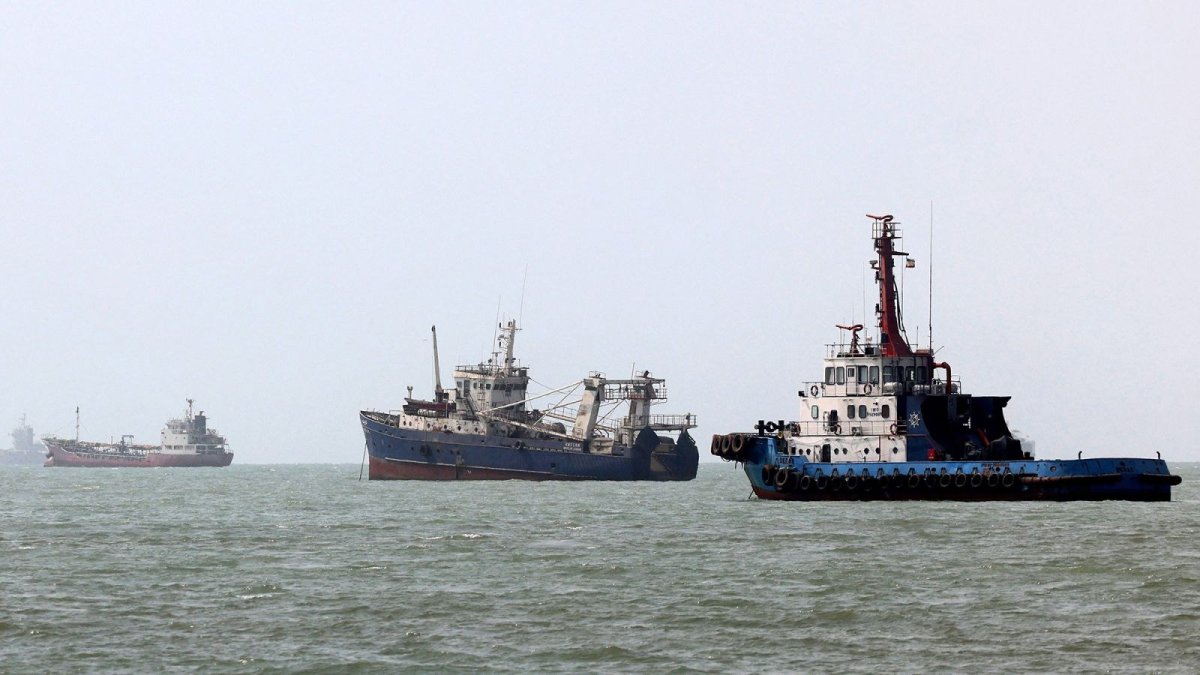
Washington and Tehran Trade Conditions as Shipping Lanes Remain Frozen
The Strait of Hormuz standoff entered a dangerous new phase this week as President Donald Trump demanded Iran pay compensation for people he said were killed by Iran in wars, attacks and protests, while Tehran insisted the United States first lift sanctions and cover war damages before any deal to reopen the vital waterway can be sealed. The diplomatic impasse sent Brent crude climbing nearly 5 percent to about $88 a barrel on Sunday, August 9, according to the New York Times.
Trump's demand, made Monday, August 10, directly contradicts Iran's stated precondition that Washington compensate Tehran for damages from the US-Israeli campaign that began February 28, 2026. The war erupted after airstrikes killed several Iranian officials, including Supreme Leader Ali Khamenei. Iran's deputy foreign minister, Kazem Gharibabadi, has repeatedly stressed that any reopening of the strait hinges on the United States meeting specific, unnamed demands.
On Tuesday, August 11, Trump escalated his rhetoric, claiming the US has "100% control" of Hormuz while simultaneously demanding reparations. A senior Pakistani minister, speaking to CNBC, said the two sides are close to "some sort of arrangement," but no formal framework has emerged. The contradiction between Trump's assertion of total control and the reality of a strait moving only seven commercial vessels on Sunday underscores the fragility of the situation.
Only Seven Ships Transited Hormuz on Sunday as Tankers Go Dark
The National reported that just seven commodity vessels transited the Strait of Hormuz on Sunday, August 9, with some ships deliberately switching off their transponders to avoid detection. This represents a catastrophic collapse in traffic through a waterway that normally carries roughly one-fifth of global petroleum supply. The near-total halt has driven energy prices higher and fueled global inflation, a politically explosive issue for Trump ahead of November's congressional elections.
Brent crude was trading at $83.55 on Friday, August 7, according to Trading Economics, and spiked nearly 5 percent to about $88 a barrel over the weekend, the New York Times reported. It settled around $84.47 on Monday, August 10, according to Indian market reports. The benchmark remains 16 percent higher than just before the war began, a figure that directly threatens American consumers at the pump.
The blockade's economic impact extends beyond oil. Insurance rates for any vessel willing to transit have skyrocketed, and shipping companies are rerouting cargo around Africa, adding weeks to delivery times. The global supply chain, already strained by the Red Sea crisis, is now facing a second major chokepoint closure simultaneously.
Iran-Oman Pact Nears Finalization, Bypassing Washington
Iran is near finalizing a bilateral agreement with Oman that would define new shipping lanes through the strait, according to Deputy Foreign Minister Gharibabadi. Speaking to Stripes and Middle East Monitor, he described the arrangement as "a new model for the Strait of Hormuz arrangements that differs from the model of the past 60 years." Tehran is adamant this deal is bilateral and not US-brokered, a pointed rebuke to Washington's claims of control.
On August 5-6, Iran and Oman reached "preliminary understandings" and locked in geographic coordinates for a new shipping lane routing most commercial vessels through Iranian waters. This would effectively give Tehran direct oversight of all traffic, a dramatic shift from the internationalized transit regime that has governed the strait since the 1960s. Al Jazeera reported on August 7 that the US, Iran, and Oman were close to a temporary deal, but that optimism has since faded.
The Omani channel is Tehran's leverage play. By controlling the only viable route, Iran can dictate terms not just to Washington but to every oil-importing nation. Gharibabadi's insistence that the deal is bilateral signals Iran's intent to marginalize the United States entirely, a strategy that has clearly frustrated Trump, who has complained about US weapons stockpile issues as he seeks to maintain negotiating leverage, according to CNN on August 9.
Trump's Reparations Demand Reverses the Negotiating Table
Trump's Monday demand that Iran pay compensation "for people killed by Iran in wars, attacks and protests" reframes the entire conflict. Rather than negotiating over sanctions relief, Trump is now demanding Tehran acknowledge liability for decades of attacks on American personnel and interests. This position, reported by Reuters, Al Jazeera, and Arabian Business, appears designed to appeal to his domestic political base rather than to facilitate a diplomatic breakthrough.
Iran's counter-demand is equally maximalist: the United States must lift all sanctions and compensate Tehran for war damages from the current conflict. The two positions are mutually exclusive, leaving no obvious middle ground. The Pakistani minister's claim that an arrangement is close may reflect back-channel talks, but no credible source has confirmed any substantive progress on the core issues.
The political calculus for Trump is brutal. Higher gasoline prices are politically toxic ahead of the November congressional elections, and every day the strait remains closed deepens the economic pain. Yet conceding to Iranian demands would be a massive political defeat, undermining his image as a strongman leader. The reparations demand may be an attempt to save face while quietly negotiating a compromise, but it risks hardening Tehran's position further.
Red Sea Front Erupts as Houthis Kill First Crew Members Since War Began
While Hormuz dominates headlines, the Red Sea front has turned deadly. On Tuesday, August 11, four crew members were killed in a suspected Houthi attack on the Egyptian-owned cargo vessel Tihamah in the Bab el-Mandeb strait, according to France24 and gCaptain. Yemen's government reported at least six killed. These are the first deaths from a Houthi strike on shipping since the Iran war began, marking a dramatic escalation.
Trump launched military strikes against Yemen's Iran-aligned Houthis on Saturday, August 8, over attacks on Red Sea shipping, as reported by Arab News. The strikes did not deter the group. On August 9, Houthi missile and drone attacks hit the port of Mokha, and Saudi Arabia confirmed a fire at the Jazan refinery, according to DeepDraft and Fortune. The Houthis had announced a naval blockade of Saudi Arabia last month, and they are now actively enforcing it.
The United States has said Iran is "deeply involved" in planning Houthi attacks on commercial vessels transiting the Red Sea, according to the Financial Times. This connection ties the two fronts together: any deal on Hormuz must also address Iranian support for the Houthis, or the Red Sea will remain a shooting gallery. A container ship was also struck by a missile off Pakistan in a suspected US attack, per France24, suggesting the conflict is spreading beyond its original theaters.
Weapons Stockpile Concerns Undermine US Leverage
CNN reported on August 9 that US weapons stockpile issues have frustrated Trump as he seeks to maintain leverage in negotiations with Iran. The prolonged conflict, now in its sixth month, has drained precision-guided munitions and air defense interceptors at a rate that concerns Pentagon planners. This logistical strain limits Washington's options for escalating pressure on Tehran or the Houthis.
The stockpile problem is not just tactical but strategic. Iran knows the United States cannot sustain an open-ended air campaign, and this knowledge hardens Tehran's negotiating position. Trump's claim of "100% control" of Hormuz rings hollow when the US cannot guarantee the safety of its own forces or maintain a continuous strike tempo against Houthi positions in Yemen.
This is the core tension of the current moment: the United States has overwhelming military superiority but finite resources, while Iran has strategic patience and control of the world's most critical energy chokepoint. The longer the standoff continues, the more the resource asymmetry favors Tehran. Trump's reparations demand may be an attempt to shift the narrative, but it does nothing to solve the underlying logistics problem.
Global Economic Fallout Accelerates as Inflation Fears Mount
The combined closure of Hormuz and the Red Sea attacks are creating a perfect storm for global energy markets. With roughly one-fifth of global petroleum supply transiting Hormuz and a significant portion of container traffic using the Red Sea, the simultaneous disruption is unprecedented. Brent at $88 is already straining economies, and analysts warn that sustained closure could push prices toward triple digits.
For American consumers, the impact is immediate and visible. Gasoline prices are rising daily, and Trump's political opponents are already hammering him on the issue. The congressional elections in November will be fought on kitchen-table economics, and the president is acutely aware that a prolonged energy crisis could cost his party control of both chambers. This political timeline gives Iran enormous leverage in any negotiation.
The global south is even more vulnerable. Developing nations that import energy are facing balance-of-payments crises, and food prices are rising as shipping costs multiply. The trajectory is clear: this is not just an energy crisis but a food and humanitarian crisis in the making. The world is watching whether Washington and Tehran can find a path forward before the economic damage becomes irreversible.
What Happens Next: Three Scenarios for the Strait
The most likely near-term outcome is a temporary arrangement brokered through Oman that reopens the strait under Iranian oversight, allowing oil to flow while the broader political issues remain unresolved. This would give Trump a political win on prices while allowing Iran to claim a historic victory in reshaping the strait's governance. The Pakistani minister's comments suggest this is the direction of current talks.
The second scenario is continued stalemate, with the strait remaining effectively closed and oil prices climbing toward $100. This would trigger a global recession, massive political fallout in Washington, and potentially force Trump into a humiliating retreat. Iran would suffer economically as well, but Tehran appears willing to absorb short-term pain for long-term strategic gain.
The third and most dangerous scenario is military escalation. If Trump's frustration boils over and the US attempts to force the strait open, the result could be a direct US-Iran naval confrontation with unpredictable consequences. The weapons stockpile issues make this option less attractive, but the president's temperament makes it impossible to rule out. For now, the world holds its breath as the negotiations continue.
By Jessica Ali, Staff WriterThis article was produced with AI-assisted research and editorial support. Sources: Reuters, Al Jazeera, CNBC, The New York Times, CNN, France 24, Fortune, The National, Stars and Stripes, Middle East Monitor, Arab News, Financial Times.What's Your Reaction?
 Like
0
Like
0
 Dislike
0
Dislike
0
 Love
0
Love
0
 Funny
0
Funny
0
 Wow
0
Wow
0
 Sad
0
Sad
0
 Angry
0
Angry
0

Editor-in-Chief at Global1.News. Atlanta-based journalist who cuts through the BS and tells it like it is. Lead anchor, host, and the voice you hear when the spin stops and the truth starts.












Comments (0)