
Syrian Court Sentences Assad to Death for Crimes Against Humanity
A Damascus criminal court sentenced ousted President Bashar al-Assad to death in absentia for crimes against humanity and war crimes, alongside his brother Maher and cousin Atef Najib. The landmark ruling is the first verdict against Assad since he fled to Russia in December 2024.
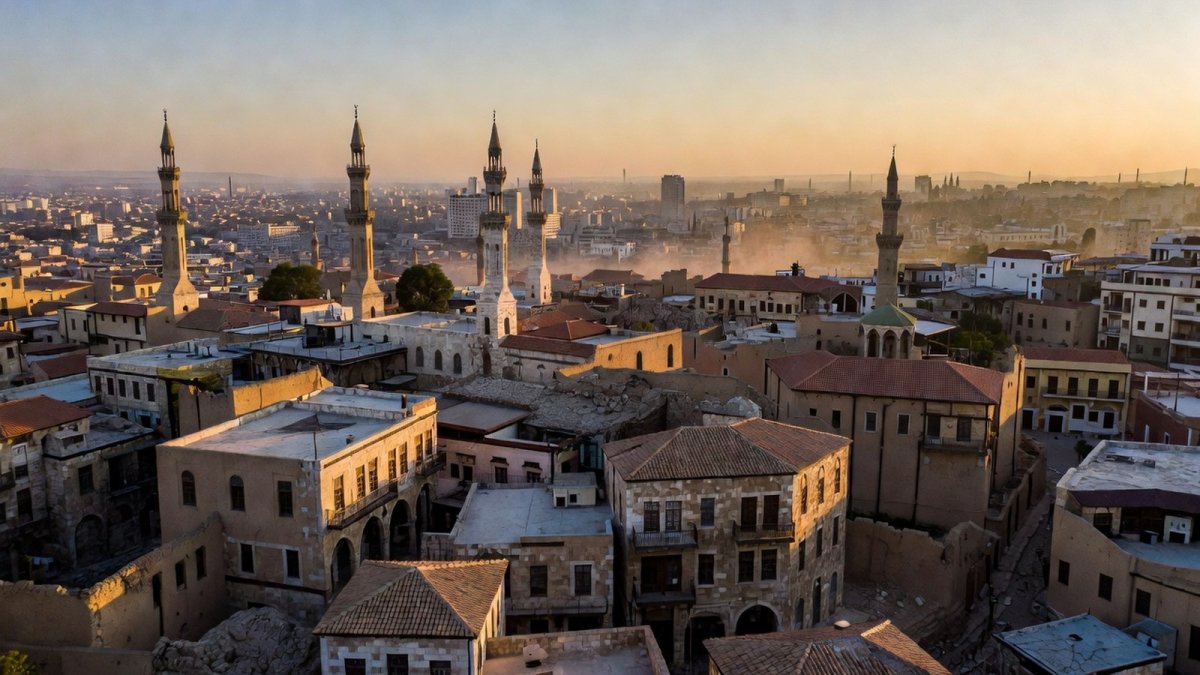
Folks, let’s be crystal clear about what happened in Damascus this week: the man who once ruled Syria with an iron fist, who turned his own cities into graveyards, has just been handed a death sentence. Not by a foreign tribunal, not by a distant court in The Hague, but by a Syrian criminal court in the heart of the capital. Bashar al-Assad, the ousted president who fled to Moscow in December 2024, has been convicted in absentia of crimes against humanity and war crimes. The sentence? Death.
Syrian court sentences Assad to death for crimes against humanity
DAMASCUS — On Tuesday, a Damascus criminal court, presided over by Judge Fakhr al-Din al-Aryan, delivered a verdict that many thought would never come. Bashar al-Assad, along with his younger brother Maher al-Assad and his cousin Atef Najib, was sentenced to death. The charges were staggering: premeditated murder, the intentional killing of more than one person, the intentional killing of children under 15 years old, torture, torture leading to death, and deprivation of liberty on multiple occasions. The court classified these acts as crimes against humanity and war crimes. This is the first verdict against Assad since his ouster, and it lands like a thunderclap.
The Verdict
Let’s talk about what this actually means, because there’s a lot of noise out there. This wasn’t some symbolic slap on the wrist. This was a full criminal conviction, handed down by a Syrian judge, for the worst crimes imaginable. Judge al-Aryan didn’t mince words. He found Assad guilty of orchestrating a campaign of terror against his own people. The court didn’t just stop at the former president, either. It ordered that Bashar and Maher al-Assad be pursued internationally, building on an arrest warrant issued against the former president last December.
Now, here’s the part that gets people fired up: the trial was held in absentia. Assad and his brother are sitting in Russia, likely in comfortable surroundings, far from the courtroom where their fate was sealed. But that doesn’t make this verdict hollow. In the eyes of Syrian law, these men are now condemned. The international arrest warrant means that if they ever set foot outside Russia’s protective umbrella, they face detention and extradition. That’s not nothing, folks. That’s a sword hanging over their heads for the rest of their lives.
The Crimes
Let’s break down the charges, because they matter. The court convicted Assad of premeditated murder — not just of one person, but of many. The intentional killing of more than one person is a specific charge under Syrian law, and it carries the weight of a systematic campaign. Then there’s the charge that should make your blood run cold: the intentional killing of children under 15 years old. Think about that for a second. Children. Under 15. Killed intentionally. That’s not collateral damage. That’s not a tragic accident of war. That’s a crime against humanity, plain and simple.
The court also found Assad guilty of torture and torture leading to death. We’re talking about the infamous detention centers, the ones where families spent years not knowing if their loved ones were alive or dead. The deprivation of liberty on multiple occasions — that’s the charge that covers the mass arrests, the disappearances, the people who walked out their front doors and never came back. The court classified all of this as crimes against humanity and war crimes. That’s the legal language, but let’s translate it: this was a regime that systematically destroyed its own people.
The Daraa Connection
Now, let’s talk about Atef Najib, because his story is the spark that lit the fire. Najib, Assad’s cousin, was the former head of political security in Daraa. And it was his crackdown in that southern city in 2011 that triggered the uprising. The Guardian reports that Najib led the brutal response to peaceful protests in Daraa, and that crackdown was the match that ignited a nearly 14-year civil war. About half a million people died in that conflict, per The Guardian. Half a million. Let that number sink in.
Judge al-Aryan noted that Najib denied the charges against him and showed “no remorse.” No remorse. That’s the hallmark of these men, isn’t it? They watched their country burn, they ordered the barrel bombs, they filled the mass graves, and they showed no remorse. Najib was sentenced to death alongside his cousins. The court didn’t buy his denials. The evidence was overwhelming, and the judge said so.
Who Else Was Sentenced
Assad and Najib weren’t the only ones. The National reported that a total of nine people — Assad plus eight other former regime officials — were sentenced to death. Syria’s state news agency, SANA, named additional fugitives who received the same sentence: Fahd al-Freij, Louay al-Ali, Qusay Mayhoub, Wafiq al-Nasser, and Talal al-Aysami. These are the men who ran the machinery of repression. They’re the ones who gave the orders, who managed the security apparatus, who ensured that dissent was met with death.
This is significant, folks. This isn’t just about one man. This is about dismantling the entire structure of the Assad regime’s criminal enterprise. The court is saying, one by one, that these people are guilty. And while they may be beyond reach right now, the verdicts stand. They’re condemned in the eyes of Syrian law, and that’s a permanent stain.
Reaction on the Streets
Now, let’s talk about the reaction, because this is where the story gets real. Syrians gathered outside Damascus’s Justice Palace to celebrate. Families of victims described the ruling as “justice at last,” according to Al Jazeera and AP. Think about that. People who lost children, parents, siblings — people who spent years searching for answers in the rubble — they came out to celebrate a verdict. They called it a first step toward transitional justice.
This is the emotional core of the story, folks. For years, these families were told that justice was impossible. The regime was too powerful, the international community too divided, the situation too complex. And now, a Syrian court has looked the monster in the eye and said: you are guilty. You will die for what you did. It doesn’t undo the pain. It doesn’t bring back the dead. But it tells the living that their suffering was seen, that their loss was acknowledged, and that the men who caused it are not above the law.
What Happens Now: The Moscow Question
Here’s the hard truth, and I’m not going to sugarcoat it. Assad is in Russia. He fled there in December 2024 after being swept from power, and Moscow has shown no indication that it will hand him over. The death sentence is, in practical terms, largely symbolic. He’s not going to be executed tomorrow. He’s not going to be extradited to Damascus anytime soon. Russia has sheltered him, and as long as he stays within their borders, he’s beyond the reach of Syrian law enforcement.
But here’s the thing about symbols, folks: they matter. This verdict is a milestone in Syrian accountability efforts. It establishes a legal record. It says, officially, that the Assad regime committed crimes against humanity. That’s not just a political statement — it’s a legal finding. And it creates a foundation for future prosecutions, whether in Syria or internationally. The arrest warrant issued last December, combined with this death sentence, means that Assad is now a wanted man in the eyes of the law. If he ever travels to a country that recognizes the warrant, he’s done.
The Road to Accountability
So where do we go from here? This verdict is a beginning, not an end. The families who celebrated outside the Justice Palace know that. They called it a first step. The next steps are harder. There’s the question of the thousands of lower-level officials who carried out the atrocities. There’s the question of the detention centers that still hold the disappeared. There’s the question of the mass graves that still need to be exhumed and identified. And there’s the question of whether the international community will back up this verdict with action.
Russia’s stance is the elephant in the room. Moscow has been Assad’s protector for years, and it’s unlikely to change course now. But international pressure can build. Other countries can refuse to recognize his legitimacy. They can freeze assets, impose sanctions, and make it clear that Assad is a pariah. The verdict gives them legal cover to do so. It’s not a magic wand, but it’s a tool.
And let’s not forget the broader context. Assad ruled Syria for decades. His father, Hafez al-Assad, ruled before him. The 2011 uprising was met with a wave of harsh repression that turned into a civil war, a regional proxy conflict, and a humanitarian catastrophe. The fact that a Syrian court has now convicted the man at the center of it all is a profound shift. It’s a signal that the old order is truly gone, and that the new Syria is willing to confront its past.
What to Watch For
Here’s what I’m watching, and you should be too. First, will the international arrest warrant actually be enforced? That’s the test of whether this verdict has teeth. Second, will other countries — particularly those in Europe and the Middle East — formally recognize this ruling and act on it? Third, what happens with the other eight convicted officials? Are they within reach, or are they all sheltered abroad? And fourth, how will Russia respond? Will they continue to protect Assad, or will they start to see him as a liability?
This is a developing story, folks, and it’s moving fast. The verdict is in, but the fight for justice is far from over. The families who celebrated this week know that better than anyone. They’ve been waiting for over a decade. They’ve buried their dead. They’ve searched for answers. And now, they have a piece of paper that says the man who did this to them is condemned to death. It’s not everything. But it’s something. And sometimes, something is enough to keep going.
Keep your eyes on Damascus. Keep your eyes on Moscow. And keep your eyes on the families who never gave up. This story isn’t over. It’s just getting to the good part.
By Jessica Ali, Staff Writer
This article was produced with AI-assisted research and editorial support. Sources: Reuters, AP, The Guardian, Al Jazeera, CNN, Le Monde, France 24, The National, SANA.
What's Your Reaction?
 Like
0
Like
0
 Dislike
0
Dislike
0
 Love
0
Love
0
 Funny
0
Funny
0
 Wow
0
Wow
0
 Sad
0
Sad
0
 Angry
0
Angry
0

Editor-in-Chief at Global1.News. Atlanta-based journalist who cuts through the BS and tells it like it is. Lead anchor, host, and the voice you hear when the spin stops and the truth starts.












Comments (0)