
Trinidad and Tobago Joins New US Military Task Force in Quiet Partnership
Port of Spain, Trinidad and Tobago — Trinidad and Tobago has been formally listed among the partner nations of Joint Task Force Western Hemisphere, the new United States military command activated on 4 August 2026 to dismantle drug cartels across the Americas. The Trinidad and Tobago Defence Force appears among the operating partners of the Miami-based command, which replaces Operation Southern Spear — yet Port of Spain has issued almost no public statement about the arrangement.
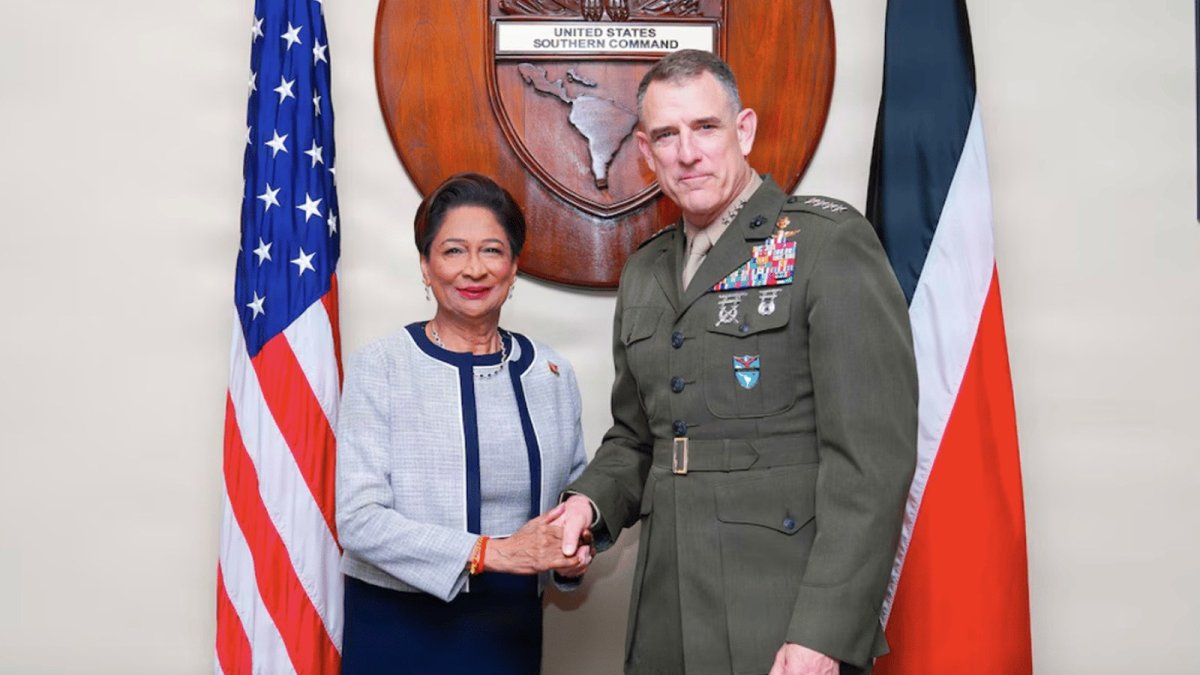
Port of Spain, Trinidad and Tobago — Trinidad and Tobago has been formally listed among the partner nations of Joint Task Force Western Hemisphere, the new United States military command activated on 4 August 2026 to dismantle drug cartels across the Americas. The Trinidad and Tobago Defence Force appears among the operating partners of the Miami-based command, which replaces Operation Southern Spear — yet Port of Spain has issued almost no public statement about the arrangement.
Activation of the Joint Task Force Western Hemisphere
U.S. Southern Command activated Joint Task Force Western Hemisphere at its headquarters in Miami, Florida, on 4 August 2026. SOUTHCOM Commander Gen. Francis L. Donovan directed the activation, creating a unified structure to direct counter-narco operations at tactical and operational levels. The new task force integrates military capabilities with the 18 partner nations of the Americas Counter Cartel Coalition and replaces Operation Southern Spear as the command's principal operational formation for counter-narco-terrorist operations.
SOUTHCOM Media Relations Officer Steven McLoud described the change as an evolution that strengthens the command's whole-of-government approach to transnational threats. In practice, that approach means defence, police, customs and other agencies working side by side, so that the fight against illegal trade reaches ports, borders and community spaces where ordinary people feel the effects most directly. For a small island state, the shift also signals that Washington intends to move beyond episodic operations towards a standing, coordinated presence in the region.
Trinidad and Tobago's Place in the Americas Counter Cartel Coalition
Trinidad and Tobago joined the 18-nation Americas Counter Cartel Coalition in March 2026, after U.S. President Donald Trump signed the Doral Charter at the Shield of the Americas summit in Doral, Florida, on 7 March 2026. Guyana joined at the same time, strengthening the southern Caribbean link. The coalition coordinates shared intelligence and joint patrols among member states, giving smaller nations a seat at the table when decisions are made about trafficking routes that pass through Caribbean waters.
The United States Embassy in Trinidad and Tobago said the country's participation in both the coalition and the new task force reflects a shared commitment to reducing drug trafficking and related crime. The Trinidad Guardian has reported that the task force will synchronise military operations with trusted allies and partners, including Trinidad and Tobago, against drug cartels and other transnational criminal organisations. For Caribbean small states, the coalition offers practical help in slowing the movement of weapons and narcotics, while questions about sovereignty remain a central consideration in regional debate.
Prime Minister's Visit and Early Discussions
Prime Minister Kamla Persad-Bissessar travelled to SOUTHCOM headquarters in Doral, Florida, on 9 March 2026, meeting Gen. Francis L. Donovan and other senior command leaders to discuss collaborative efforts to combat narco-terrorism. She said the delegation had been invited "based on an invitation from the United States government given our strong support, determined action and dynamic partnership to eliminate the illegal drug trade." The visit signalled that the Government intends to treat security as a matter that touches every household, and it could open doors to training and equipment that local forces need.
The meeting built on a pattern of cooperation that has grown steadily in recent years, with security cooperation between Port of Spain and Washington expanding well beyond traditional law enforcement. Observers note that the Prime Minister's own account of the March visit framed Trinidad and Tobago as an active partner rather than a passive recipient of assistance, a posture that resonates domestically at a time when crime ranks among the public's chief concerns.
The Absence of Public Comment from Port of Spain
Despite the formal listing of Trinidad and Tobago as a partner in the new task force, the Government in Port of Spain has issued almost no public statements on the matter. The quiet approach has drawn attention in regional reporting, and it stands in contrast to the debates that usually fill Parliament and the daily papers. Without clear updates, questions arise among civil society groups about how the decision was reached and what safeguards are in place.
Sovereignty and transparency sit at the centre of these concerns, especially when military cooperation with the United States carries memories of earlier security arrangements that left ordinary citizens questioning whose interests came first. Critics argue that open discussion would ease concerns that cooperation might limit local control over security matters. The lack of detail also leaves room for questions about how operations will unfold, what practical support might reach local forces, and whether Parliament will be asked to debate the partnership before it deepens further.
Connecting Regional Efforts to Everyday Safety Concerns
Crime and gang violence remain pressing issues for families in areas such as Morvant, Bamboo and Aranguez. The Government has expanded joint police and army patrols in several communities, and the Prime Minister has called on citizens to play their part in reducing criminal activity. Gang violence in Trinidad and Tobago in 2026 often traces back to the same drug supply lines that regional efforts now target, so any success in cutting cartel routes could eventually ease pressure on local gangs.
The country's geographical position has long made it a transit point for narcotics moving between South America and North America and Europe, a reality that shapes both its crime problem and its value as a security partner. At the same time, households already stretched by rising costs worry about how new security measures might affect daily life. When communities see their safety tied to wider Caribbean cooperation, the hope is that steady partnership can bring relief without adding fresh burdens to those who simply want their children to walk home safely.
Looking Ahead for Caribbean Cooperation
The new task force and Trinidad and Tobago's involvement sit within ongoing CARICOM discussions on security and regional stability. Neighbouring countries face similar challenges with transnational crime, and coordinated action across borders offers one route to easing those pressures. While timelines for full operational integration are still being clarified, the partnership signals continued engagement between Caribbean nations and the United States on issues that directly affect daily life in the islands.
For the region, the quiet way in which Port of Spain has handled the listing may prove as significant as the partnership itself. Further updates from official channels would help residents see how these wider efforts translate into safer streets at home, and would answer the questions now being asked in communities, in the media and around the CARICOM table about exactly what this new command means for the sovereignty and security of small island states.
By Sharon Sahatoo, Staff WriterThis article was produced with AI-assisted research and editorial support. Reporting is based on sources cited in the article.
What's Your Reaction?
 Like
0
Like
0
 Dislike
0
Dislike
0
 Love
0
Love
0
 Funny
0
Funny
0
 Wow
0
Wow
0
 Sad
0
Sad
0
 Angry
0
Angry
0
Caribbean Correspondent at Global1.News. Based in Port of Spain, Trinidad, covering Caribbean politics, economy, energy, climate, and culture. Amplifying the voices and stories of the Caribbean region.










Comments (0)