
Tinubu not happy with Wike for attacking APC governors – Farouk
President Bola Tinubu’s re‑election campaign for 2027 is already stirring fierce debate within the All Progressives Congress (APC). In his remarks, he described a number of APC governors as “politically lazy,” a phrase that quickly ignited controversy.
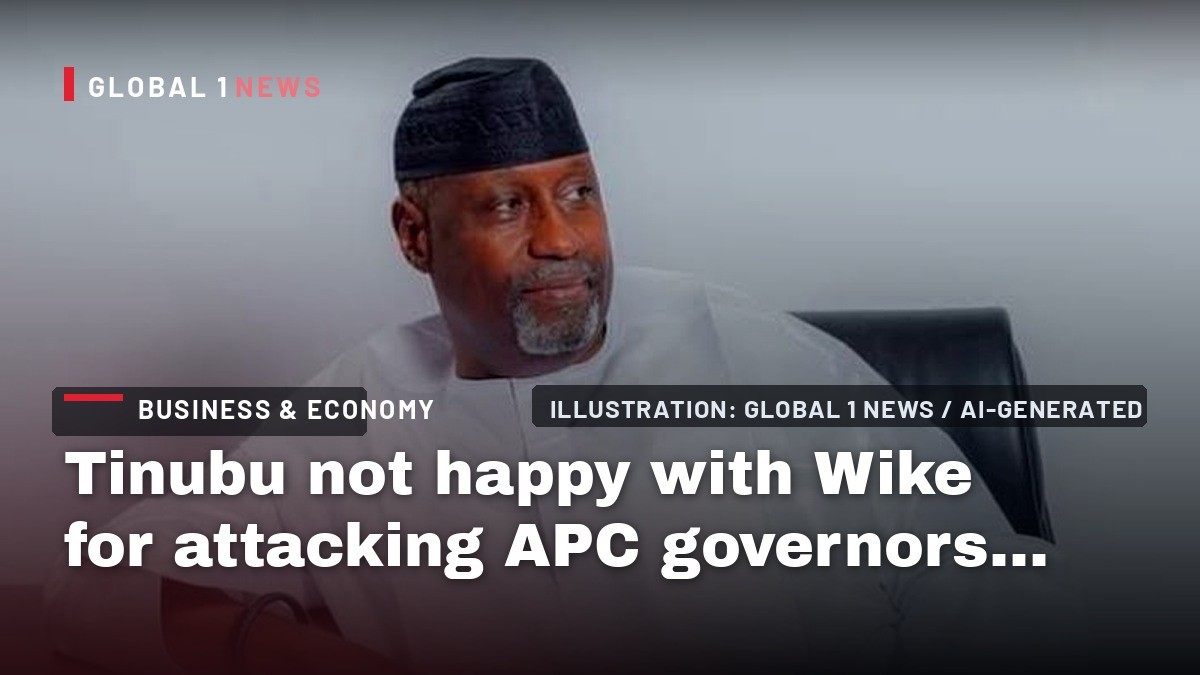
President Bola Tinubu’s re‑election campaign for 2027 is already stirring fierce debate within the All Progressives Congress (APC). The latest flashpoint emerged when Governor Nyesom Wike, the Minister of the Federal Capital Territory, labelled several APC governors as “politically lazy” while championing his self‑styled Rainbow Coalition. Aliyu Farouk, a senior APC chieftain, warned on Arise Television’s Morning Show that the president is unlikely to be pleased with Wike’s criticism, underscoring a growing rift between the party’s central leadership and a faction that seeks a broader, cross‑party alliance.
Wike’s Rainbow Coalition and the “politically lazy” remark
Governor Wike’s defence of the Rainbow Coalition centred on its role in mobilising support for Tinubu’s 2027 presidential bid. In his remarks, he described a number of APC governors as “politically lazy,” a phrase that quickly ignited controversy. By singling out members of the ruling party, Wike positioned his coalition as a reformist force, suggesting that the APC’s own ranks were failing to energise the electorate.
The criticism came at a delicate moment. The APC Governors’ Forum, chaired by Imo State Governor Hope Uzodimma, had just rejected any political alliance that could weaken the party’s unity ahead of the upcoming elections. Wike’s comments, therefore, were not only a personal jab but also a direct challenge to the consensus being forged among the party’s state leaders.
Aliyu Farouk’s response on Arise Television
Aliyu Farouk, speaking on Arise Television’s Morning Show, framed the issue as a matter of party discipline and strategic coherence. He affirmed that the APC is working to establish a unified campaign structure at both national and state levels, with governors expected to spearhead campaign activities in their respective states. Farouk stressed that while the party could not stop Wike from speaking his mind, it “resented” the comment that painted APC governors as lazy.
Farouk’s remarks carried an implicit warning: the president, Bola Tinubu, would not be happy with Wike’s attacks. By linking the governor’s remarks to the president’s likely displeasure, Farouk signalled that the party’s top brass were monitoring internal dissent closely and were prepared to enforce a tighter campaign discipline.
The quest for a unified APC campaign structure
According to Farouk, the APC’s strategic priority is to avoid a fragmented electoral landscape where voters are forced to choose between “APC, PDP, or any other party.” He outlined a plan to build a unified campaign structure that would operate seamlessly across the nation, with state governors taking charge of local campaign operations. This approach reflects a classic central‑to‑peripheral coordination model, aiming to harness the governors’ grassroots networks while maintaining a cohesive national message.
The emphasis on a unified structure underscores the party’s awareness of the risks posed by splinter groups like Wike’s Rainbow Coalition. By consolidating campaign responsibilities under the governors, the APC hopes to present a single, powerful front that can counter both internal dissent and external opposition from the People’s Democratic Party (PDP) and other emerging parties.
Wike’s claim of direct talks with President Tinubu
Wike has asserted that he held discussions with President Tinubu concerning his political activities ahead of the 2027 elections. Farouk challenged this claim, noting that the APC leadership was not privy to any such arrangement. He suggested that if Wike had indeed met the president, the details of those talks were not shared with the broader party apparatus.
This dispute over access to the president reflects a deeper contest for influence within the ruling coalition. While Wike positions himself as a key ally of Tinubu through the Rainbow Coalition, Farouk’s denial hints at a possible sidelining of Wike’s faction within the party’s inner circles, raising questions about who truly controls the narrative and strategy for the 2027 campaign.
Implications for the 2027 presidential race
The clash between Wike’s coalition and the APC’s central command could have far‑reaching consequences for the 2027 presidential election. If the Rainbow Coalition succeeds in mobilising opposition parties to field candidates against APC contenders in governorship and legislative races, the party could face a fragmented vote base at the state level, weakening its ability to deliver a decisive national mandate.
Conversely, the APC’s push for a unified campaign structure, as articulated by Farouk, aims to pre‑empt such fragmentation. By placing governors at the helm of state‑level campaigns, the party hopes to lock in loyalty and ensure that any dissenting voices are contained within the broader party framework rather than spilling over into independent electoral contests.
Potential impact on intra‑party dynamics
The public spat between Wike and the APC leadership may embolden other dissenting voices within the party. Governors or party officials who share Wike’s frustration with what they perceive as “politically lazy” performance could see the Rainbow Coalition as a viable platform for expressing their grievances. This could lead to a proliferation of parallel structures that challenge the party’s central authority.
Farouk’s call for party members to avoid “public exchanges” with Wike signals an attempt to contain the debate within internal channels. However, the very need for such a directive indicates that the party is aware of the risk of an escalating public feud that could erode voter confidence in the APC’s ability to govern cohesively.
Looking ahead: the stakes for Tinubu’s re‑election bid
President Tinubu’s re‑election ambitions hinge on a delicate balance between maintaining party unity and accommodating reformist pressures. The emergence of the Rainbow Coalition, coupled with Wike’s outspoken criticism, presents both a challenge and an opportunity. If managed carefully, the coalition could broaden Tinubu’s appeal by demonstrating a willingness to work across party lines. If mishandled, it could fracture the APC’s electoral base and provide the opposition with a narrative of internal chaos.
As the 2027 election cycle gathers momentum, the APC’s ability to enforce a unified campaign structure while addressing legitimate concerns about governance performance will be a decisive factor. The party’s next moves—whether to integrate Wike’s coalition into the broader campaign framework or to marginalise it—will shape not only the political landscape of Nigeria but also set a precedent for how dominant parties across Africa navigate internal dissent in the run‑up to pivotal elections.
This article was produced with AI-assisted research and editorial support. Reporting is based on the source material cited below. Sources: Daily Post Nigeria; dailypost.ng; Global1.News (17 September 2026).
By Sarah Okafor, Staff Writer
What's Your Reaction?
 Like
0
Like
0
 Dislike
0
Dislike
0
 Love
0
Love
0
 Funny
0
Funny
0
 Wow
0
Wow
0
 Sad
0
Sad
0
 Angry
0
Angry
0

Africa Correspondent at Global1.News. Based in Lagos, covering politics, business, technology, and culture across the continent. Focused on telling African stories beyond the headlines — the innovation, entrepreneurs, and communities shaping the region's future.














Comments (0)