
The US Military Can't Function Without China
China controls roughly 70 percent of rare earth mining and over 90 percent of processing, leaving U.S. defense production exposed. F-35 radars, missile stockpiles, and the U.S.-ROK alliance now hinge on breaking that dependency.
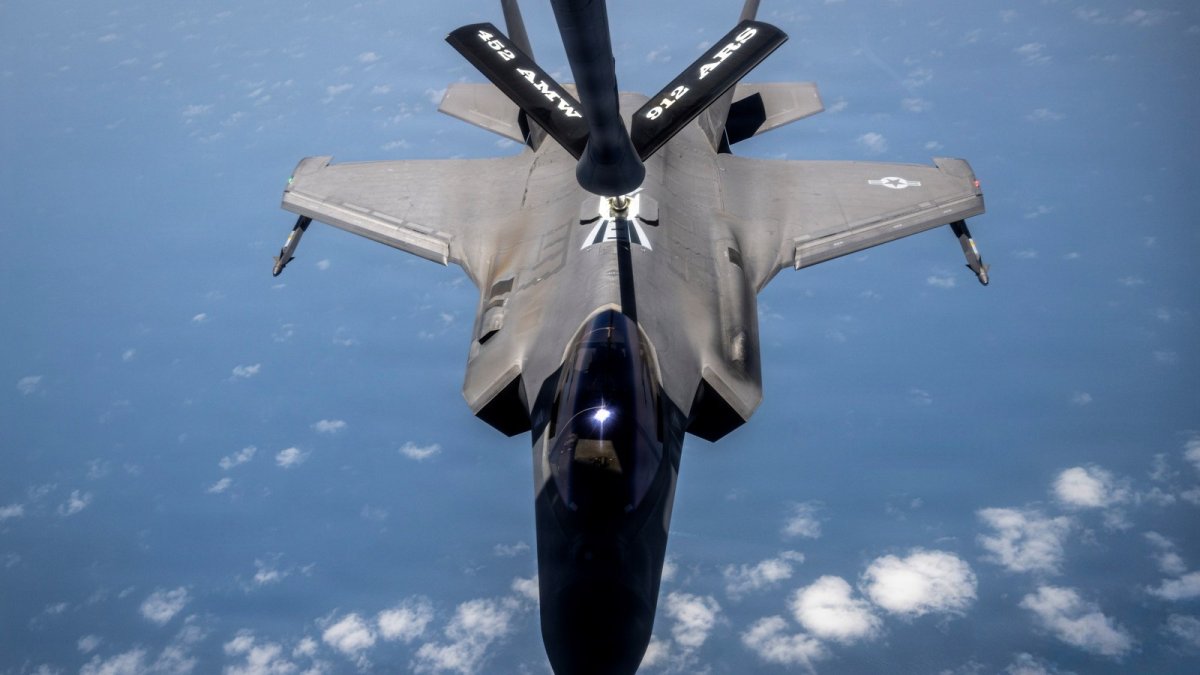
The United States military, the most technologically advanced fighting force in human history, has a critical vulnerability: it cannot build its most sophisticated weapons without materials controlled by its primary strategic rival. China’s dominance over the mining, processing, and manufacturing of rare earth elements has evolved from a trade statistic into a direct threat to American defense production, with profound implications for the U.S.-ROK alliance and the credibility of extended deterrence on the Korean Peninsula.
China’s Rare Earth Stranglehold: A Looming Crisis for U.S. Defense and the U.S.-ROK Alliance
Seoul – August 17, 2026 — The manufacture of modern weapons begins not on the factory floor, but in the earth itself. Rare earth elements—critical components in the magnets, sensors, radars, and lasers that guide precision munitions and power stealth aircraft—have become the fulcrum of a new geopolitical struggle. According to the U.S. Department of Defense, a single F-35 fighter requires more than 400 kilograms of rare earths to build, while a destroyer or submarine can require two to five metric tons each. These materials appear in everything from Tomahawk missiles to Predator drones, and they have been expended in significant quantities during the U.S.-Iran conflict over the last five months. Yet, the United States remains overwhelmingly dependent on China for these essential inputs, a dependency that Beijing has shown it is willing to weaponize.
The Scale of the Dependency
China’s dominance over the critical mineral supply chain is not merely significant; it is near-total. According to the U.S. Geological Survey, China accounts for roughly 70 percent of all rare earth mining and more than 90 percent of all rare earth processing. In 2025, China mined an estimated 270,000 metric tons of rare earths out of a global total of 390,000 tons—approximately 69 percent of the world's extraction. More tellingly, China leads global production in 30 of 44 critical minerals, maintaining at least one monopoly in mining, refining, or processing for each of those 30.
The specific elements are as crucial as the aggregate numbers. Neodymium magnets produce enormous magnetic forces relative to their low mass, making them invaluable for motors and guidance systems. Dysprosium and terbium retain performance at high temperatures, essential for jet engines and missile systems. Samarium and cobalt enhance stability under pressure, critical for precision-guided munitions. Samarium, in particular, is a critical component in chemical manufacturing, cancer treatment, nuclear reactors, and satellites—and Chinese companies essentially hold a monopoly on the world's samarium processing. China also produces over 80 percent of the world's tungsten, which is essential for armor-piercing applications, radiation shielding in nuclear submarines, and the cutting and drilling tools required throughout military fabrication.
Beijing’s Export Controls and the American Response
Following tariff tensions with Washington at the start of President Donald Trump’s second term in 2025, Beijing began to leverage this dominance. On April 4, 2025, China’s Ministry of Commerce added seven rare earths to its export control list, including several essential to the F-35’s engine and radar magnets. The restrictions required special licenses, and shipments slowed sharply while the licensing system was set up. Beijing subsequently restricted samarium exports for military applications, forcing American weapons manufacturers to search for alternatives. Most could not find them. One highly publicized exception involved a long-forgotten cache in France, which still resulted in processing expenses over five times that of typical Chinese exports.
The basic requirement for Chinese exporters to vet foreign buyers and reject sales destined for military applications has remained in effect since 2025, effectively shutting American weapons manufacturers out of direct access to Chinese rare earth materials. When Chinese tungsten exports fell by almost 40 percent year on year after Beijing’s export controls took effect, prices skyrocketed. Following China’s initial controls, the U.S. and EU reached preliminary agreements to restart critical mineral exports, but Beijing eventually extended controls to other elements and even the sale of mineral processing equipment. In October 2025, China imposed its most stringent rare earth and magnet export controls yet, restricting products with even trace Chinese content, heightening risks to U.S. defense and semiconductor supply chains.
The impact on American defense production has been tangible. A recent batch of new F-35s was reportedly delivered without their AN/APG-85 radars, rendering the planes unusable in combat and suitable only for limited training exercises. Delays in combat-ready drone manufacture have been reported, attributed to the spiking cost of samarium, offered at prices up to 60 times the pre-control average. The shortage of even one critical rare earth component can render a $100 million machine essentially useless. As the West Point Modern War Institute noted in July 2025, China’s April controls were "a shot across the bow" of the U.S. defense industrial base, which relies on high-performance magnets built with neodymium, samarium, and dysprosium for fighter jets, satellites, guided missiles, and submarines.
The Strategic Replenishment Crisis
The urgency of the situation is underscored by the depletion of American munitions stockpiles. After five months of aerial activity against Iran, the U.S. reportedly expended "virtually all" of its available ATACMS and Precision Strike Missiles, roughly half of its Tomahawk cruise missiles, and substantial portions of its Patriot and THAAD interceptors—all of which require rare earth components to replenish. The Pentagon has pressured weapons manufacturers to accelerate production, signing agreements intended to triple production for Patriot components and quadruple it for THAAD. However, these production targets are meaningless without a secure supply of the raw materials required to meet them.
Washington has responded with a flurry of investments and partnerships. In July 2025, the Pentagon agreed to invest $400 million in MP Materials, operator of the only active rare earth mine in the United States, including a $150 million loan, a commitment to purchase output from a planned magnet factory, and price guarantees to help American producers compete with Chinese exports. A year later, the Pentagon announced a $25 million investment in ReElement Technologies to expand domestic processing of critical minerals, most notably gallium and germanium. In October 2025, the United States and Australia committed a combined $3 billion to critical mineral mining and processing projects. The U.S. has also invested more than $70 million in Canadian mineral projects through the Defense Production Act, as part of the multinational Minerals Security Partnership launched in 2022.
Yet these efforts face a fundamental obstacle: time. New mine construction in the U.S. typically takes an average of 29 years due to surveying, permits, planning, and infrastructure expansion. China is responsible for producing over 90 percent of the world’s rare earth magnets, and it remains unclear whether the United States has the technical expertise or sufficient skilled workers to build and operate the facilities required to mine, refine, process, and build the magnets, alloys, and other products needed. As CSIS analysis from April 2026 concluded, Washington has responded with billions in financing and global partnerships, but the U.S. remains far from true resilience.
The South Korean Dilemma
For South Korea, this crisis is not an abstract geopolitical contest—it is a direct threat to national security and economic survival. South Korea remains highly dependent on China for critical minerals: around 95 percent of its rare earth imports originate from China, alongside 78 percent of its niobium, 84 percent of its magnesium, 93 percent of its indium, and 98 percent of its gallium. South Korea’s rare earth import dependence exceeds 80 percent. This dependency is particularly acute given that South Korea operates F-35A fighters and hosts U.S. THAAD batteries; the U.S. supply chain bottlenecks directly affect the credibility of extended deterrence on the Korean Peninsula. If the United States cannot replenish its Patriot and THAAD interceptors, the security guarantee it provides to Seoul is fundamentally weakened.
The economic dimension is equally pressing. Korea’s semiconductor and EV battery industries—the engines of its export economy, dominated by Samsung, SK, LG, and Hyundai—depend on the same critical minerals China dominates: gallium, indium, and magnet rare earths. A disruption in these supplies would not only affect military readiness but would also strike at the heart of Korea’s economic model. Recognizing this vulnerability, South Korea has invested 250 billion won in a critical minerals strategy to reduce import dependency and secure supply chains. POSCO, LS Eco Energy, and KIGAM (the Korea Institute of Geoscience and Mineral Resources) are building domestic supply chains to change the status quo.
China’s rare earth "weaponization" has sparked a multibillion-dollar Korea-U.S. minerals alliance. As Beijing tightens rare earth exports, Washington is turning to Korean companies for billions in new partnerships across mining, refining, and magnet production. However, as The Diplomat noted in June 2026, South Korea has diversified some critical minerals, but the hardest dependencies remain. For six minerals critical to South Korea’s most strategically important industries, China’s 2025 share of Korean imports ranges from 14.8 percent to 94.2 percent. Seoul is pursuing closer cooperation with China on critical mineral supply chains even as it deepens participation in U.S.-led efforts to reduce dependence on Beijing—a delicate balancing act that reflects the broader geopolitical tightrope Korea walks between its security ally and its largest trading partner.
Strategic Implications and the Road Ahead
The rare earth crisis represents a fundamental challenge to the post-Cold War assumption that global supply chains would remain open and reliable. China has demonstrated that it can and will use its mineral dominance as a strategic weapon, and the United States has discovered that its military superiority is contingent on materials it does not control. The F-35s delivered without radars and the depleted missile stockpiles are not isolated incidents; they are symptoms of a systemic vulnerability that will take decades to address.
For the U.S.-ROK alliance, the implications are profound. The credibility of extended deterrence rests not only on the willingness of the United States to defend Korea but also on its capability to do so. If American weapons cannot be produced or replenished due to Chinese export controls, the alliance’s foundational promise is called into question. This reality is driving unprecedented cooperation between Washington and Seoul on critical mineral supply chains, but the path forward is fraught with difficulty. The 29-year timeline for new U.S. mine construction is not a bureaucratic inconvenience; it is a strategic liability. The question is no longer whether China’s rare earth dominance matters, but whether the United States and its allies can build alternatives before the next crisis exposes the full extent of their vulnerability.
This article was produced with AI-assisted research and editorial support. Sources: The Diplomat, CSIS, Korea JoongAng Daily.
By Prof. David Park, Staff WriterWhat's Your Reaction?
 Like
0
Like
0
 Dislike
0
Dislike
0
 Love
0
Love
0
 Funny
0
Funny
0
 Wow
0
Wow
0
 Sad
0
Sad
0
 Angry
0
Angry
0

East Asia/Technology Correspondent at Global1.News. Seoul-based voice covering Korean politics, technology, business, and culture. Analyzes how technology and geopolitics intersect across East Asia.















Comments (0)