
DBM releases P9.75 billion for free higher education
DBM releases P9.753 billion to CHED via UniFAST to settle Free Higher Education arrears for 108 SUCs covering AY 2022-2025, easing financial strain on institutions and Filipino families relying on tuition-free college education.
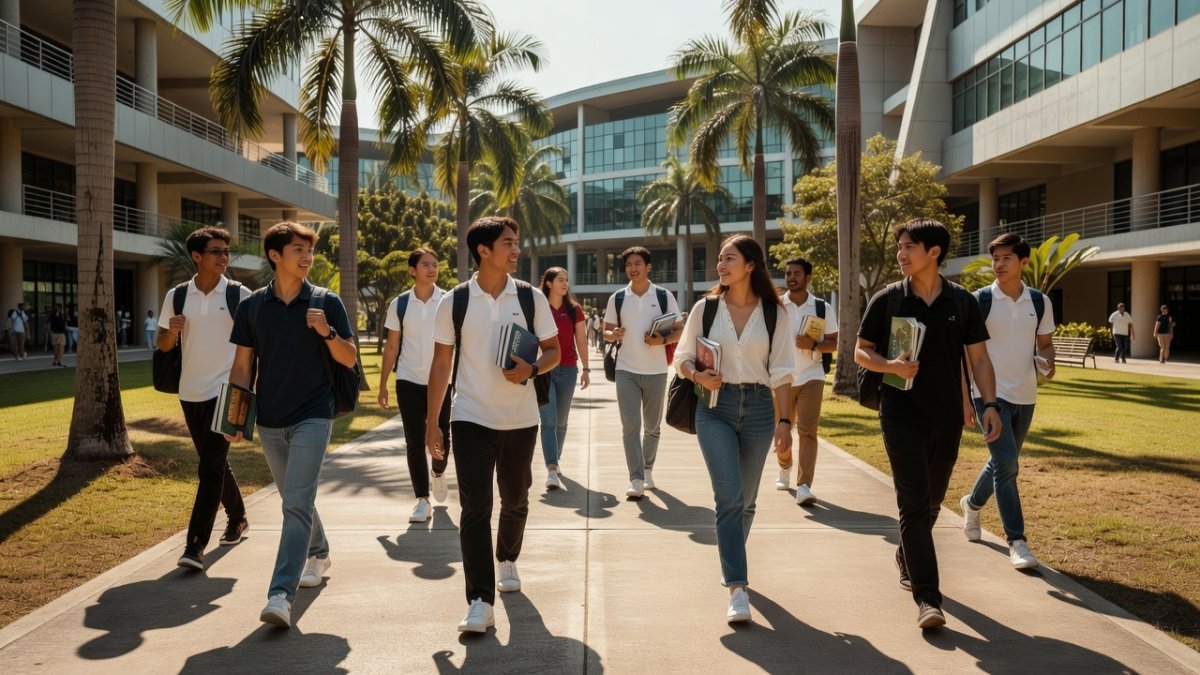
The Department of Budget and Management (DBM) has released P9.753 billion to the Commission on Higher Education (CHED) to settle long-standing funding shortfalls under the Free Higher Education (FHE) Program, a move that finally addresses the financial burden that state universities and colleges (SUCs) have been carrying for years. Acting Budget Secretary Kim Robert de Leon announced the release on Sunday, Aug. 16, 2026, describing it as a crucial step in settling the validated arrears that SUCs had previously absorbed using their own institutional resources. For the thousands of Filipino families who have come to rely on tuition-free tertiary education, this release is more than just a budget line item — it is a promise kept to students who showed up to class even when the government's funding had not yet arrived.
P9.75 Billion Released for Free College Program
The DBM's release of P9.753 billion to CHED through the Unified Student Financial Assistance System for Tertiary Education (UniFAST) marks a significant milestone in the implementation of the FHE Program, which was created under Republic Act No. 10931, the Universal Access to Quality Tertiary Education Act, signed into law in 2017. Acting Budget Secretary Kim Robert de Leon announced the release in a statement on Sunday, Aug. 16, 2026, emphasizing that the funds are meant to settle the funding deficiencies that have accumulated over several academic years.
This is not a new allocation for upcoming expenses — it is a settlement of what the government already owes. The release covers validated arrears incurred during Academic Years 2022-2023, 2023-2024, and 2024-2025, obligations that SUCs had previously absorbed using their own institutional resources. For many state universities, this meant reallocating funds meant for infrastructure, faculty development, and research just to keep the lights on and classrooms running while waiting for the national government to fulfill its commitment.
The timing of the announcement is notable, coming just weeks after the DBM formally submitted the proposed P7.2-trillion 2027 National Expenditure Program to Congress earlier this month. That proposed budget is about 6 percent higher than the P6.793-trillion 2026 budget, signaling that education remains a priority even as the government grapples with competing demands for limited resources.
What the Funds Cover
The P9.753 billion release addresses funding deficiencies across 108 state universities and colleges nationwide. This is not a small number — these are institutions spread across the archipelago, from the Ilocos region to Mindanao, serving hundreds of thousands of students who would otherwise struggle to afford a college education.
The funds specifically cover validated arrears for three academic years: 2022-2023, 2023-2024, and 2024-2025. The word "validated" is important here — it means that CHED and the DBM have gone through the process of verifying that these expenses were legitimate and properly documented under the FHE Program. This is not a blank check; it is a careful accounting of what SUCs have already spent out of their own pockets to keep the promise of free higher education alive.
The release was channeled through UniFAST, the government's unified system for student financial assistance. UniFAST serves as the central coordinating body for various forms of tertiary education support, including the FHE Program, the Tulong Dunong scholarship, and other financial aid mechanisms. By routing the funds through UniFAST, the government ensures that the money reaches the right institutions and is accounted for properly.
For the SUCs themselves, this release is a lifeline. Many have been operating on tight budgets, forced to make difficult choices about which programs to prioritize. The arrears settlement means that these institutions can now replenish the resources they had diverted to cover tuition and other school fees for their students, allowing them to invest again in improving the quality of education they offer.
How the Free Higher Education Program Works
The Free Higher Education Program was established under Republic Act No. 10931, also known as the Universal Access to Quality Tertiary Education Act, which was signed into law in 2017. This landmark legislation was a response to the persistent problem of financial barriers preventing qualified Filipino students from pursuing higher education.
Under the FHE Program, students enrolled in SUCs and CHED-recognized local universities and colleges (LUCs) are exempted from paying tuition and other school fees. This includes not just the basic tuition but also miscellaneous fees that often add up to a significant amount — laboratory fees, library fees, computer fees, and other charges that can make or break a family's ability to send a child to college.
The program covers all students in these institutions, regardless of their family's income level. This universal approach was a deliberate policy choice — the framers of RA 10931 argued that free higher education is a public good that benefits society as a whole, not just individual students. When more Filipinos have access to college education, the reasoning goes, the entire nation benefits from a more skilled workforce, higher productivity, and greater social mobility.
However, the implementation has not been without challenges. The program has faced recurring funding shortfalls, forcing SUCs to absorb costs using their own resources. This has created a cycle of uncertainty — students are told that college is free, but the institutions that serve them are left scrambling to cover the actual costs. The release of P9.753 billion is an acknowledgment that this situation was unsustainable and that the government needed to step up and fulfill its obligations.
What This Means for Filipino Students and Families
For the average Filipino family, this news is a quiet but significant relief. Consider the parents who scrimp and save, who work overtime or take on extra sideline jobs, just to ensure that their anak can finish college. For many, the FHE Program has been the difference between a child who gets a degree and a child who stops after high school because the family simply cannot afford the tuition.
Think of the OFW parents — the nanay working as a domestic helper in Hong Kong or the tatay on a construction site in the Middle East — who send remittances home not just for daily expenses but for their children's education. The FHE Program has eased their burden, but the funding shortfalls meant that SUCs were sometimes cutting corners or delaying services. This release means that the institutions can now operate more smoothly, providing the quality education that these families sacrificed so much for.
There is also the story of the first-generation college student — the one whose parents never had the chance to finish school but who dream of something better for their children. For these students, a state university is not just a fallback option; it is the gateway to a different life. The validation of these arrears is a signal that the government recognizes the importance of keeping that gateway open.
In the barangays, in the sari-sari stores where neighbors gather to talk, in the tricycle terminals where drivers wait for passengers, the conversation about education is always present. Parents compare notes about which SUC has the best programs, which campus has the most supportive faculty, which course will lead to a stable job. The FHE Program has made these conversations more hopeful — but the funding uncertainty has also made them more anxious. This release, while it addresses past obligations, also sends a message that the government is committed to making free higher education work.
The Road Ahead for Education Funding
While the release of P9.753 billion is welcome news, it also raises important questions about the sustainability of the FHE Program. The arrears being settled cover three academic years — 2022-2023, 2023-2024, and 2024-2025 — which means that the funding gaps were not a one-time occurrence but a recurring pattern. If the government continues to underfund the program, SUCs will again be forced to absorb costs, and we will be back to the same situation in a few years.
The proposed P7.2-trillion 2027 National Expenditure Program, which the DBM submitted to Congress earlier this month, represents a 6 percent increase over the P6.793-trillion 2026 budget. This growth is encouraging, but it remains to be seen how much of it will be allocated to higher education and whether it will be enough to prevent future arrears from accumulating.
There is also the question of the broader education sector. While free higher education is important, it is only one part of the picture. The Department of Education continues to grapple with issues of classroom shortages, teacher salaries, and learning materials. The Commission on Higher Education must also address concerns about the quality of education in SUCs — free tuition means little if the education itself is substandard.
For Congress, the challenge is to ensure that the 2027 budget provides not just for the settlement of past arrears but for the full funding of the FHE Program going forward. This means allocating enough to cover the actual costs of tuition and other fees for all enrolled students, not just a portion. It also means building in mechanisms to adjust for inflation and for increases in student enrollment.
The Department of Budget and Management, for its part, must ensure that the release of funds is timely and that SUCs are not left waiting for months or years to receive what they are owed. The validation process, while necessary for accountability, should not become a bureaucratic hurdle that delays the delivery of services to students.
The Bottom Line
The release of P9.753 billion for the Free Higher Education Program is a significant step in the right direction. It acknowledges the sacrifices that SUCs have made to keep the promise of free college education alive, and it provides the resources needed to stabilize their operations. For the students who have been attending classes without knowing whether their institutions would have enough funding to continue, this is a reassurance that their education matters.
But this is not the end of the story. The challenge now is to ensure that this does not become a recurring cycle of underfunding and belated settlements. The government must commit to fully funding the FHE Program in the 2027 budget and beyond, so that SUCs can plan ahead and focus on their core mission of providing quality education.
For Filipino families, the message is clear: free higher education is a right that the government is obligated to uphold. The release of these funds is a recognition of that obligation, but it must be followed by sustained and adequate funding. The students who walk through the gates of our state universities every day are not just statistics — they are the future engineers, teachers, nurses, and entrepreneurs who will build the Philippines of tomorrow. Investing in their education is investing in the nation itself.
As the school year continues and families across the country make sacrifices for their children's education, this release offers a measure of hope. It is a reminder that when the government fulfills its promises, the impact is felt not just in budget documents but in the lives of ordinary Filipinos — in the barangay, in the sari-sari store, in the tricycle terminal, in every home where a parent dreams of a better future for their anak.
This article was produced with AI-assisted research and editorial support. Sources: Philstar.com, Philippine News Agency, Manila Bulletin, The Manila Times.
By Bella Reyes, Staff Writer
What's Your Reaction?
 Like
0
Like
0
 Dislike
0
Dislike
0
 Love
0
Love
0
 Funny
0
Funny
0
 Wow
0
Wow
0
 Sad
0
Sad
0
 Angry
0
Angry
0

Philippines/Southeast Asia Correspondent at Global1.News. Manila-based journalist covering Philippine politics, environment, maritime security, and social issues. Passionate about marine conservation and the communities protecting the Philippines' natural heritage.











Comments (0)