
The AI Gas Boom Is About to Hit the Clean Air Act — and Nobody's Ready
Texas plans 40 gigawatts of behind-the-meter gas power for AI data centers, yet Governor Abbott's grid audit ignores air pollution. With 287 million tons of annual emissions projected, the Clean Air Act is the next bottleneck for the AI buildout.
The AI Gas Boom Is About to Hit the Clean Air Act — and Nobody's Ready
I've been watching this AI buildout trip over one bottleneck after another for eighteen months now. First it was chips. Then it was power. Then water. Then community consent — the NIMBY wave that turned data center hearings into political minefields. I thought I'd seen the whole obstacle course. Then this week I found the next one, and it's the one nobody in this industry wants to say out loud: air.
Two stories landed within forty-eight hours of each other, and they tell you everything you need to know. On Monday, the governor of Texas — the state that spent a year bragging it was the "epicenter of AI development" — slammed the brakes on new data center grid connections. On Tuesday, the New York Times published an investigation into the scores of gas-burning power plants being built to feed AI data centers, and how little anyone is saying about what they pump into the air. Those two stories are the same story. The buildout got too big for the grid, so it decided to generate its own power. Now it's about to find out what the Clean Air Act thinks about that.
The Texas Story — 40 Gigawatts of Gas and an Audit That Missed the Air
Let me give you the Texas numbers, because they're staggering. Governor Greg Abbott's August 3 directive ordered the Public Utility Commission and ERCOT to audit every data center in the interconnection queue before approving new grid connections. That queue has more than 1,800 projects representing over 474 gigawatts of connection requests — more than five times Texas's record peak demand, and about 90 percent of it comes from data centers. ERCOT is forecasting demand could double by 2032. Texas is on track to overtake Virginia as the biggest data center market in the country, on the back of a 2014 data center tax break that has ballooned into more than a billion dollars a year — with the state potentially losing $3.2 billion in sales tax revenue over the next two years.
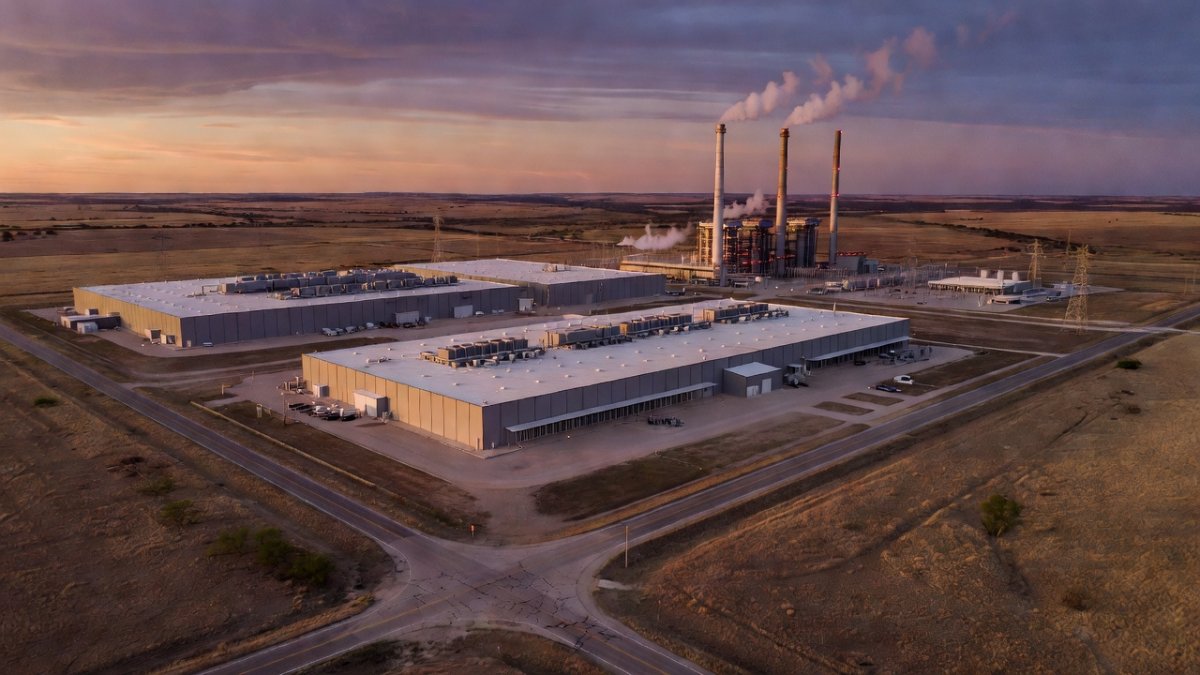
Now here's the detail that should make every operator in this industry sit up straight. Abbott's audit demands data on grid dependence, electricity consumption, water use, ownership, even noise mitigation and light controls. But the directive conspicuously neglects to mention local air pollution or greenhouse gas emissions. And it doesn't apply to projects building their own on-site power. Texas leads the nation in announced behind-the-meter capacity for data centers — 40 gigawatts of it, according to market intelligence firm CleanView — powered by Permian Basin gas and a permissive regulatory environment. Think about that. The governor is auditing everything except the air, and handing the projects that skip the grid a free pass.
The Permitting Loophole — How Gas Turbines Got Built Without Anyone Asking
How did we get here? It's not one big policy decision. It's a thousand small ones. Floodlight, the nonprofit newsroom, reported that AI companies used a local permit loophole in Texas to install gas-fired turbines and backup diesel generators on site at new data center campuses — no extensive environmental review, no outreach to the community. The supply chain tells you everything about the mood: with combined-cycle gas turbines sitting on long backlogs, developers are turning to mobile gas generators strapped to semitrucks and aeroderivative turbines originally designed for aircraft and warships. That's not a power strategy. That's a mad dash.
And it lands on real people. WIRED documented OpenAI's flagship data center in Abilene, where a natural-gas power plant sits roughly 500 yards from one resident's house — the exhaust stacks clearly visible from her kitchen window. The Environmental Integrity Project's executive director put it plainly: "It makes no sense for a technology of the future to be powered by the dirty fossil fuels of the past."
The Numbers — 287 Million Tons and a Lot of NOx
Here's the scale of what's coming. The Environmental Integrity Project identified 32 proposed gas-fired power plants in Texas built specifically to serve AI data centers — the largest concentration in any state, nearly half of the 74 behind-the-meter plants identified nationwide. Their estimate: those Texas projects could collectively emit more than 287 million tons of greenhouse gases every year, plus thousands of tons of particulate matter and nitrogen oxides linked to respiratory illness. The New York Times, using data as of July 6, counted 39 proposed plants in Texas — again, nearly half the nationwide total. Both counts are moving targets, and they're moving up.
Now, I'm not here to moralize. I run servers, not a climate campaign. But I've run infrastructure long enough to know what happens when an industry becomes the story. The debate over data centers so far has been about water and noise — the Times piece made exactly that point, that pollution has been "less mentioned." That's because it's invisible, until it isn't. And the moment it isn't invisible, you get exactly what we saw with water: courts, regulators, injunctions, and a thousand community groups with lawyers on retainer.
The Washington Push — Approvals "in a Matter of Weeks"
Now add the federal layer, because this isn't just a Texas story. In early July, President Trump told reporters he was shocked to learn how much energy AI needs, and said his administration is approving energy facilities for data centers "in a matter of weeks." EPA Administrator Lee Zeldin had apparently told him tech companies weren't taking advantage of the fast approvals. Trump said he called Mark Zuckerberg, Jeff Bezos, Sam Altman, and Elon Musk directly: "They thought we were kidding." The administration is waiving environmental protections, expediting permits, and loosening construction rules — and the president was explicit that wind is off the table. Nuclear, oil, gas. That's the menu.
Do you see the contradiction? Washington is telling the hyperscalers to build their own gas plants as fast as possible, while Texas — the most data-center-friendly state in the union — is telling them to slow down and get audited. When a state that hands out a billion dollars a year in tax breaks slams the brakes, that's not politics. That's the market screaming. And what's the fastest way to resolve the contradiction? Someone's going to say "fine, build behind the meter, just don't connect to the grid" — which is exactly what the loophole already allows. So you end up with more gas, more diesel, more air, and a governor's audit that never mentions any of it.
What This Actually Means for Independent Hosting Providers
First — watch your power costs, because emissions compliance is a cost like any other. Every dollar the gas plants spend on scrubbers, NOx controls, or litigation is a dollar that comes out of someone's power bill. If you're in a colo or running your own cages, lock in power contracts now, before the compliance costs get passed through. The grid-tied, firm-power contract is about to become the most valuable thing you own.
Second — expect the new-build competitors to slow down, not speed up. The behind-the-meter gas play was supposed to be the shortcut past grid queues. But the Clean Air Act has been there since 1970, and it doesn't care about your timeline. The moment these plants face their first citizen suit or EPA enforcement action — and they will — the "fast-tracked" projects become the most exposed. Every month they're tied up in court is a month your existing capacity is worth more. Price accordingly.
Third — audit your own backup generation before someone audits it for you. Diesel generators and gas turbines at data centers are exactly what the environmental groups are looking at next. If you run generators for backup, know your NOx numbers, document your permits, and don't wait for the compliance letter. The operators who can show clean paperwork will be the ones who don't get shut down in the first wave.
Fourth — think about site selection differently. The smart money is moving toward places with real grid capacity and stable power, away from counties already fighting gas plant battles or sitting in ozone nonattainment areas. And be careful about who you colo with: a provider whose power comes from an unpermitted gas plant next door is a provider with a legal liability that could take down your uptime.
Fifth — lean into the clean angle as a selling point. I know "green hosting" sounds like marketing fluff, but this is different. When the entire industry is about to be tarred with the gas-plant brush, the independent operator running efficient, grid-tied, renewable-backed infrastructure is the one customers will flee to. It's not virtue signaling. It's risk management that happens to look good in a pitch deck.
The Structural Reality — Every Workaround Creates a New Constraint
Here's the pattern I've been watching for eighteen months, ent? First the buildout needed chips nobody could make fast enough. So they built fabs. Then it needed power the grid couldn't supply. So they built gas plants. Then it needed water the communities couldn't spare. So they built closed-loop cooling and fought transparency battles. Now it needs air — and you can't manufacture air, and you can't close-loop your way out of a Clean Air Act violation. Every workaround creates a new constraint. That's not a coincidence. That's the physics of building giant things in a world that's already built.
The industry is about to learn what every veteran operator already knows: the fastest path to power is not the fastest path to a running data center. It's the fastest path to a lawsuit. The question isn't whether the gas boom collides with the Clean Air Act. It's whether the collision happens before or after the next earnings cycle.
The Bottom Line
So here's where I land. If you're an independent host, this is not the moment to panic — it's the moment to position. Lock your power. Document your generators. Choose your sites carefully. And when a customer asks why they should trust you over the giant with the 40-gigawatt gas plan, you have an answer they can actually hear: you're the one who can stay up when the fast-tracked stuff gets shut down. The AI buildout thought it could outrun every constraint on the planet. It just found the one you can't dodge — you have to breathe it.
-- Allan Ali, Founder
This article was produced with AI-assisted research and editorial support. Reporting is based on sources cited in the article.
What's Your Reaction?
 Like
0
Like
0
 Dislike
0
Dislike
0
 Love
0
Love
0
 Funny
0
Funny
0
 Wow
0
Wow
0
 Sad
0
Sad
0
 Angry
0
Angry
0

Publisher of Global1.News. Automation architect, systems builder, and the guy making sure the truth gets published.













Comments (0)