
Taiwan Demands Answers as Indonesia Joins China in First-Ever Naval Exercise East of the Island
The waters east of Taiwan, a strategic corridor that has long served as a barometer for great-power competition in the Western Pacific, became the stage for an unprecedented military development this week. On Tuesday, August 11, 2026, China’s Ministry of National Defense announced that Chinese and Indonesian naval vessels would conduct a "navigation exercise" in the area in mid-August. The drill, which took place the following day, marks the first time Beijing has conducted a joint naval maneuve
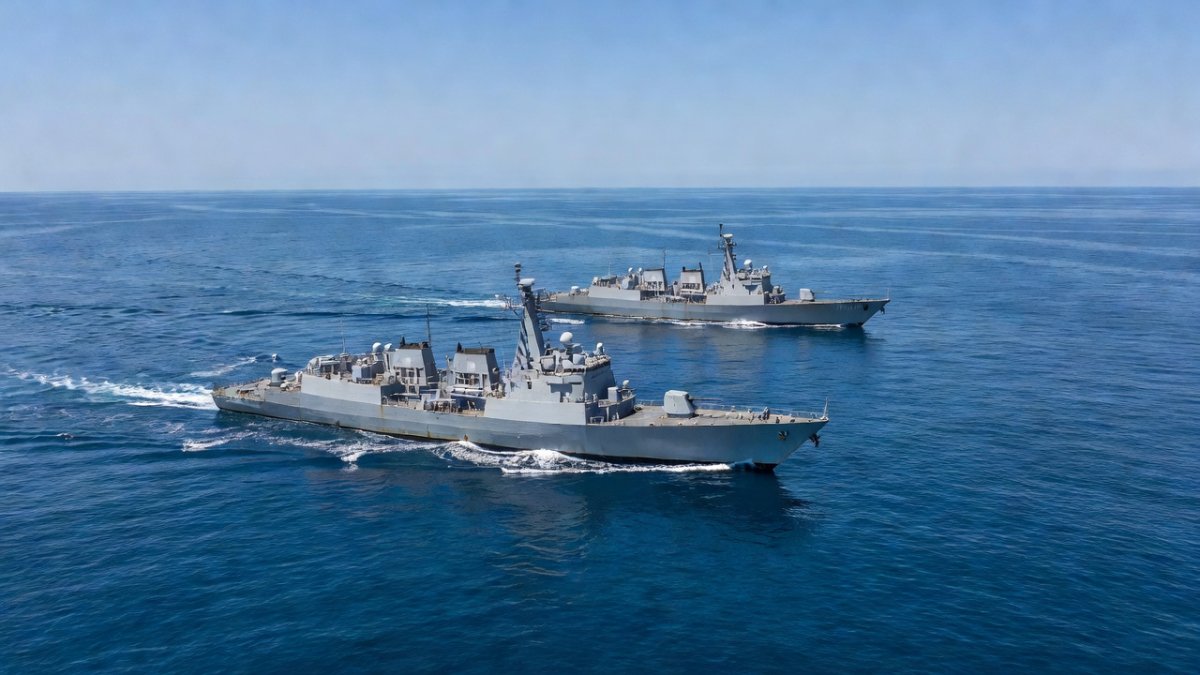
The waters east of Taiwan, a strategic corridor that has long served as a barometer for great-power competition in the Western Pacific, became the stage for an unprecedented military development this week. On Tuesday, August 11, 2026, China’s Ministry of National Defense announced that Chinese and Indonesian naval vessels would conduct a "navigation exercise" in the area in mid-August. The drill, which took place the following day, marks the first time Beijing has conducted a joint naval maneuver with a foreign military in these particular waters, prompting a sharp diplomatic rebuke from Taipei and a formal request for clarification from Jakarta.
The exercise, which involved the People's Liberation Army Navy (PLAN) Type 054A guided-missile frigate *Honghe* (hull number 523) and an Indonesian Navy vessel, has injected a new layer of complexity into the already fraught security dynamics of the region. While Chinese state media framed the event as a demonstration of "willingness to cooperate pragmatically and jointly safeguard regional peace," the symbolism of the location—proximate to Japan's southwestern islands and the Philippines—has raised alarms across the Indo-Pacific. Taiwan’s Mainland Affairs Council (MAC) has condemned the maneuver as "dangerous," a "military provocation," and a form of "political manipulation," while the United States State Department weighed in on Thursday, August 13, labeling the joint maneuver a "destabilizing act."
An Unprecedented Naval Engagement in a Contested Zone
The announcement from Beijing was notable for its lack of operational specificity. The Ministry of National Defense did not disclose the precise start and end dates, coordinates, or the intended route of the exercise, a level of ambiguity that is itself a strategic signal. The drill was confirmed to have occurred on Wednesday, August 12, 2026, with the PLA Eastern Theatre Command stating that the exercise involved the *Honghe* frigate and an Indonesian Navy vessel. The identity of the Indonesian ship remains a point of contention among defense analysts; the South China Morning Post and Defence Security Asia reported the vessel as the SIGMA 10514-derived frigate KRI *I Gusti Ngurah Rai*, while USNI News identified it as the Bung Tomo-class corvette KRI *John Lie* (hull 358). This discrepancy underscores the fog of war that often surrounds such announcements, and it is a limitation that must be acknowledged when assessing the operational scope of the drill. What is clear is that the exercise included maritime communications drills, formation maneuvering, and replenishment at sea—activities that, while routine in bilateral naval diplomacy, take on outsized significance when conducted in the waters east of Taiwan. This is the first time China has held a drill with a foreign military in this specific maritime domain, breaking a tacit norm that had previously kept foreign naval cooperation west of the island or in the South China Sea. The choice of location is deliberate; it places the exercise squarely within the arc of the first island chain, a geostrategic concept that Beijing has long sought to challenge.Jakarta’s Balancing Act and Taipei’s Alarm
The Indonesian response to the ensuing diplomatic storm has been one of studied nonchalance. On Wednesday, the Indonesian Navy issued a statement asserting that the exercise was "routine" and "not related to war fighting," a framing designed to de-escalate tensions while maintaining the bilateral engagement with Beijing. This position reflects the broader hedging strategy of ASEAN member states, which must balance deep economic ties with China against growing concerns about its maritime assertiveness. For Jakarta, the naval exercise is a tangible demonstration of its non-aligned posture, a signal that it can engage militarily with Beijing without severing its relationships with the United States and its allies. Taipei, however, views the matter through a far more alarmist lens. The Mainland Affairs Council has sought an official explanation from Indonesia, a request complicated by the fact that the two entities do not maintain formal diplomatic relations. Despite this, the people-to-people ties are substantial, with more than 300,000 Indonesian migrant workers residing and working on the island. This demographic reality gives Jakarta significant leverage in Taipei, but it also creates a diplomatic vulnerability for Indonesia, which must now navigate the delicate task of reassuring Taiwan without antagonizing Beijing. The MAC’s characterization of the exercise as "political manipulation" suggests that Taipei sees this not as a military threat per se, but as a calculated move to erode its international standing and test the limits of its diplomatic space.The View from Seoul: A Familiar Pattern of Gray-Zone Pressure
For South Korea, the events east of Taiwan resonate with a deeply familiar pattern of Chinese gray-zone operations. Seoul has experienced firsthand the economic and diplomatic coercion that Beijing can deploy when its strategic interests are perceived to be threatened. The 2016 THAAD deployment remains the seminal case study, where South Korea faced a sustained campaign of economic retaliation, including restrictions on tourism, cultural exports, and the entertainment industry. More recently, the South Korean military has monitored Chinese and Russian military aircraft entering its Korea Air Defense Identification Zone (KADIZ) with increasing frequency, a form of pressure that stops short of a direct violation of sovereignty but serves as a constant reminder of the military balance in Northeast Asia. The drill east of Taiwan also intersects with South Korea’s significant defense-industrial relationship with Indonesia. Seoul and Jakarta are partners in the KF-21 Boramae fighter program and the KSS-III submarine project, collaborations that represent billions of dollars in contracts and deep technological interdependence. This relationship places South Korea in a delicate position. While Seoul has no direct stake in the Taiwan Strait dispute, its defense ties with Indonesia mean that Jakarta’s military cooperation with Beijing is being watched closely in Seoul. The question for South Korean strategists is whether Indonesia’s engagement with China represents a genuine strategic shift or merely a tactical diversification of its security partnerships. The former would be deeply concerning; the latter is more likely, given Jakarta’s historical preference for a "free and active" foreign policy that avoids entangling alliances.Strategic Implications for the Indo-Pacific Architecture
The exercise must be understood within the broader context of China’s efforts to reshape the regional security architecture. In June 2026, the China Coast Guard announced it had stepped up patrols in the waters east of Taiwan, a move framed as a response to talks between Japan and the Philippines. That announcement drew expressions of concern from Britain, France, Germany, and the United States, highlighting the extent to which this maritime domain has become a flashpoint for collective Western anxiety. The naval exercise with Indonesia can be seen as a logical escalation of this strategy, moving from coast guard patrols to formal naval cooperation with a foreign partner. The timing is also significant. The exercise follows a goodwill visit by the PLA Navy Task Group 83 to Surabaya, East Java, from August 2-6, 2026, during which Chinese naval officers paid courtesy calls on Indonesian military and government leaders and visited the Indonesian Naval Academy. This diplomatic groundwork suggests that the exercise was not an impulsive act but rather the culmination of a deliberate outreach campaign. For Beijing, the drill serves multiple purposes: it normalizes Chinese naval presence in waters east of Taiwan, it demonstrates that China can attract partners from within ASEAN, and it sends a message to Washington and its allies that the "free and open Indo-Pacific" is not a monolithic bloc.ASEAN Hedging and the Limits of Chinese Outreach
The Indonesian decision to participate in the exercise is a textbook example of ASEAN hedging, a strategy that seeks to maximize autonomy by engaging multiple great powers without formally aligning with any of them. For Jakarta, the drill with China is a counterweight to its own military exercises with the United States and Australia, ensuring that no single power can take Indonesian cooperation for granted. However, this approach carries inherent risks. By participating in a drill in such a sensitive location, Indonesia has implicitly endorsed the Chinese narrative that the waters east of Taiwan are a legitimate arena for multilateral naval activity, a position that runs counter to the interests of Japan, the Philippines, and Taiwan itself. The reaction from Washington has been predictably stern. The State Department’s characterization of the maneuver as a "destabilizing act" on Thursday, August 13, reflects a broader concern that China is successfully peeling away ASEAN members from the U.S.-led security architecture. Yet, the reality is more nuanced. Indonesia’s participation does not signify a strategic realignment; rather, it is a calculated move to preserve its diplomatic flexibility. The challenge for the United States and its allies is to differentiate between genuine strategic shifts and tactical hedging, a distinction that is often lost in the heat of geopolitical competition.Regional Security in a Time of Flux
The exercise east of Taiwan did not occur in a vacuum. Around the same period, North Korea launched a ballistic missile as South Korea and the United States planned joint military drills, underscoring the broader volatility of the regional security environment. These simultaneous developments highlight the interconnected nature of Indo-Pacific security, where events in one theater reverberate across others. For Seoul, the combination of North Korean provocations and Chinese naval assertiveness creates a complex threat matrix that requires careful calibration. The trilateral framework with the United States and Japan remains the cornerstone of South Korea’s security posture, but the Indonesian exercise serves as a reminder that the region is not neatly divided into blocs. Looking forward, the implications of this exercise are likely to be enduring. It establishes a precedent for Chinese naval cooperation with foreign powers in the waters east of Taiwan, a precedent that Beijing may seek to replicate with other ASEAN states, particularly Cambodia and Laos, which have closer ties to China. It also places Indonesia in a position of heightened scrutiny, as both Beijing and Washington will now view Jakarta’s future military engagements through the lens of this exercise. For Taiwan, the event is a stark reminder of its diplomatic isolation, even as it maintains robust unofficial ties with many of the nations involved. The coming months will reveal whether this was a one-off event or the beginning of a new pattern of Chinese naval diplomacy. What is certain is that the waters east of Taiwan have become a litmus test for the region’s security architecture, and the Indonesian decision to participate in this exercise has added a new and unpredictable variable to an already volatile equation. This article was produced with AI-assisted research and editorial support. Sources: The Diplomat, SCMP, Reuters wire coverage, Taipei Times, Rappler, USNI News, Defence Security Asia. By Prof. David Park, Staff WriterWhat's Your Reaction?
 Like
0
Like
0
 Dislike
0
Dislike
0
 Love
0
Love
0
 Funny
0
Funny
0
 Wow
0
Wow
0
 Sad
0
Sad
0
 Angry
0
Angry
0

Prof. David Park
East Asia/Technology Correspondent at Global1.News. Seoul-based voice covering Korean politics, technology, business, and culture. Analyzes how technology and geopolitics intersect across East Asia.














Comments (0)