
Seoul Expands Hangang Bus Night Services to Boost Nighttime Economy
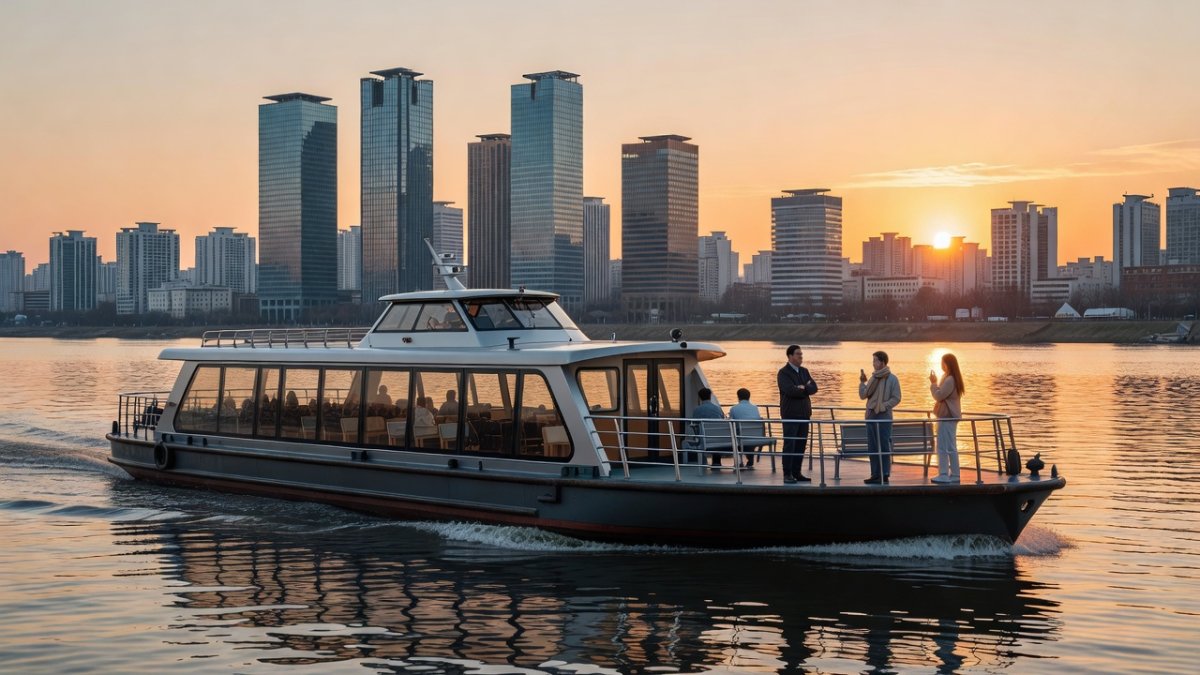
Seoul is doubling down on its ambitious experiment to transform the Han River from a transit corridor into a leisure destination. Starting Saturday, August 15, 2026, the Seoul Metropolitan Government (SMG) will expand Hangang Bus services with additional evening departures, a move designed to capitalize on sunset views and invigorate the city's nighttime economy.
Seoul is doubling down on its ambitious experiment to transform the Han River from a transit corridor into a leisure destination. Starting Saturday, August 15, 2026, the Seoul Metropolitan Government (SMG) will expand Hangang Bus services with additional evening departures, a move designed to capitalize on sunset views and invigorate the city's nighttime economy. The expansion comes as cumulative ridership on the waterborne transit system surpassed 500,000 passengers in its first eleven months of operation, signaling strong public appetite for this novel form of urban mobility.
Seoul Expands Hangang Bus Night Services to Boost Nighttime Economy
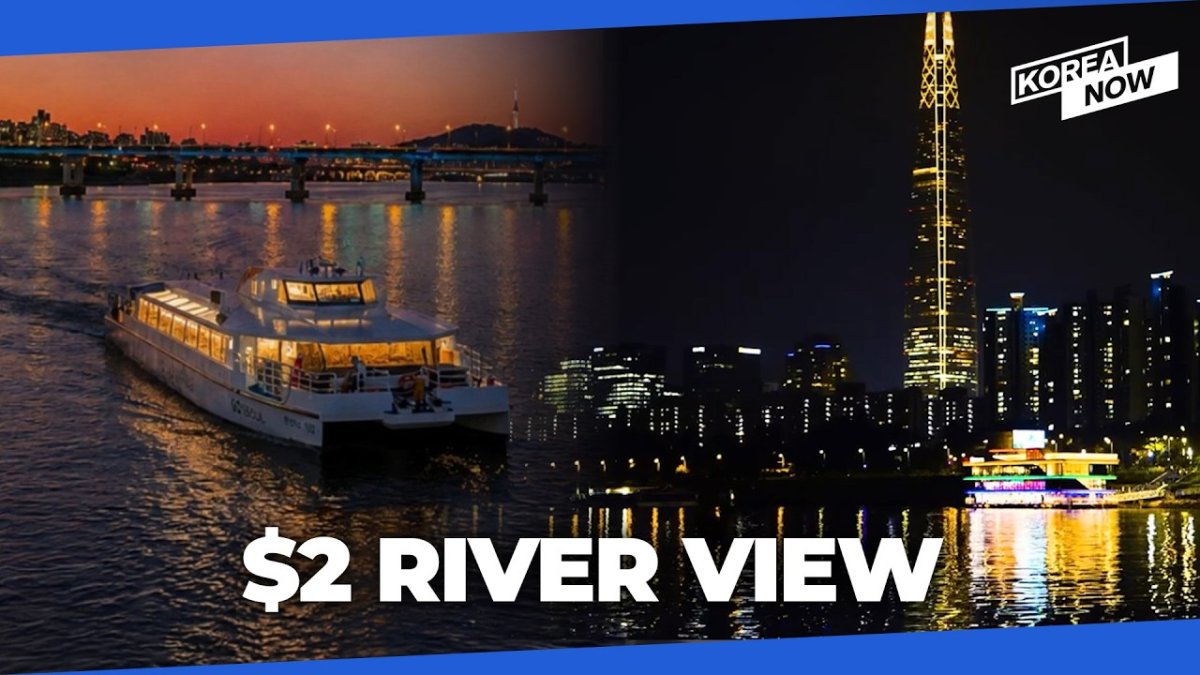
[Seoul, South Korea – August 15, 2026] — The Seoul Metropolitan Government announced on August 12-13 that it will add two evening services on the Jamsil→Yeouido route at 6:50 PM and 7:20 PM, and two on the Yeouido→Magok route at 8:25 PM and 8:55 PM, allowing passengers to experience Seoul's skyline transitioning from golden hour to illuminated nightscape. Two additional daytime services will also run on the Magok→Yeouido route at 3:00 PM and 3:30 PM, and on the Yeouido→Jamsil route at 4:00 PM and 4:30 PM. The service expansion reflects a deliberate policy calculation: that waterfront infrastructure can serve dual purposes as commuter transit and as a platform for urban leisure, tourism, and commercial revitalization.
From Transit Route to Urban Experience
The Hangang Bus, which officially launched on September 18, 2025, connects seven piers from Magok to Jamsil along 31.5 kilometers of the Han River. Its trajectory has been notable not only for its operational milestones but for how quickly it has captured the public imagination. Cumulative ridership reached 501,430 passengers as of August 13, 2026 — roughly eleven months after launch — with nearly half of all riders using the service on weekends. This weekend-heavy ridership pattern is a telling indicator: while the service was conceived partly as a practical commuting alternative, its leisure appeal has proven equally, if not more, significant.
Park Jin-young, head of the city's Future Han River Headquarters, told The Korea Times that "the Hangang Bus is quickly evolving from a daily transit route into a new way for people to experience the city." That evolution is now being deliberately accelerated through the nighttime service expansion, which positions the river bus as a vehicle for experiencing Seoul's urban aesthetics rather than merely traversing them.
The timing of the expansion is strategic. August in Seoul is characterized by intense midsummer heat and humidity, conditions that historically push residents and tourists alike toward indoor activities. The river, however, offers a natural cooling effect, and evening hours provide relief from daytime temperatures. The service has drawn both residents and domestic and international tourists despite the heat, suggesting that the Han River's appeal as a leisure space transcends seasonal discomfort.
Urban Policy Context: The Han River's Transformation
The Hangang Bus expansion must be understood within the broader arc of Seoul's relationship with its defining geographical feature. The Han River has undergone multiple policy reinventions over the past half-century — from a site of industrial development and periodic flood management in the 1970s and 1980s, to the ambitious Han River Renaissance Project under Mayor Oh Se-hoon's first tenure in the late 2000s, which created parks, promenades, and cultural facilities along the waterfront. The current iteration of Oh's vision, now in his second mayoral term, treats the river not merely as green infrastructure but as an economic and cultural asset capable of enhancing Seoul's global competitiveness.
At the September 2025 launch of the Hangang Bus, Oh described it as "a new lifestyle proposed by Seoul" and "a way to find leisure in a busy urban life and another way to meet the Hangang." This framing is significant. It signals a policy shift from viewing the river as a scenic backdrop to positioning it as an active component of daily urban life — a space where transit, recreation, and commerce converge. The nighttime service expansion is a logical extension of this philosophy, explicitly designed to encourage spending in nearby commercial areas and revitalize Seoul's nighttime economy.
The policy also reflects a broader trend in East Asian urban governance. Cities like Tokyo, Shanghai, and Singapore have increasingly invested in waterfront redevelopment as a tool for soft-power projection and quality-of-life enhancement. Seoul's approach is distinctive in its integration of public transit functionality with tourism infrastructure — the Hangang Bus is not a dedicated sightseeing vessel but a fare-integrated public transportation option that happens to offer exceptional views. This dual-use model represents a cost-effective approach to urban infrastructure investment, one that other cities with riverfront geographies may find instructive.
Nighttime Economy and Tourism: A Strategic Bet
The nighttime service expansion is explicitly tied to Seoul's ambitions to grow its nighttime economy — a policy priority that has gained traction globally as cities recognize the economic potential of evening and late-night activity. Seoul's nighttime economy push under Mayor Oh has included extended operating hours for cultural facilities, support for late-night commercial districts, and now, transportation infrastructure that enables evening mobility.
The connection between the Hangang Bus and tourism is particularly significant given the post-pandemic surge in inbound travel to South Korea, driven substantially by K-culture — music, drama, food, and beauty — that has made Seoul a premier Asian destination. International visitors increasingly seek experiences that go beyond conventional sightseeing, and the Hangang Bus offers a distinctly Seoul-centric activity: viewing the city's skyline from the water, passing landmarks in Magok, Yeouido, Jamsil, and Banpo, including the Banpo Bridge Rainbow Fountain area, which is itself a nighttime attraction.
The seasonal Seoul Forest Pier service, operating from June 8 to October 30, 2026, further demonstrates the city's willingness to adapt service to demand patterns. This seasonal flexibility — adding and removing stops based on time of year — suggests a data-driven approach to urban transit management that could serve as a model for other cities with seasonal tourism flows.
Operational Realities: Demand, Capacity, and Sustainability
Behind the celebratory ridership numbers lie operational considerations that will determine the service's long-term viability. The weekend-heavy ridership pattern — nearly half of all passengers riding on Saturdays and Sundays — raises questions about capacity utilization on weekdays. The new daytime services on the Magok→Yeouido and Yeouido→Jamsil routes at 3:00 PM and 4:00 PM appear designed to capture early-afternoon leisure demand, potentially from tourists and flexible-schedule workers, while the evening services target the post-work and post-dinner crowd.
The service's early operational history — launched September 18, 2025, then temporarily suspended ten days later before resuming — underscores the challenges of introducing novel transit systems. While the specifics of that suspension have not been publicly detailed, the fact that the service has since achieved half a million riders suggests that initial operational issues were resolved and public confidence restored. The expansion announced this week indicates that the city views the service as sufficiently stable to warrant increased investment.
Weather dependency remains a structural vulnerability. River transport is inherently subject to conditions that land-based transit does not face — high winds, heavy rain, and winter ice can all disrupt service. The fact that the expansion is being implemented in August, during peak summer demand, is logical, but the city will need to articulate a clear winter strategy if the Hangang Bus is to become a year-round transportation option rather than a seasonal amenity.
Expert Perspectives: Urban Governance and Global City Competitiveness
From an urban governance perspective, the Hangang Bus represents a notable case of a city using infrastructure investment to achieve multiple policy objectives simultaneously: transportation efficiency, tourism promotion, commercial revitalization, and quality-of-life enhancement. This multi-objective approach is characteristic of what urban scholars term "strategic infrastructure" — investments that generate returns across multiple policy domains rather than serving a single function.
The service also illustrates the growing importance of what might be called "experiential urbanism" in global city competition. As cities around the world compete for tourists, talent, and investment, distinctive urban experiences become competitive assets. Seoul's Han River, long a source of civic pride, is being repositioned as a differentiator in this competition. The Hangang Bus offers visitors and residents alike a way to experience Seoul that is not replicable in other cities — a water-level perspective on one of Asia's most dynamic skylines.
The policy also carries implications for inter-Korean relations, albeit indirectly. The Han River's lower estuary flows near the Demilitarized Zone and the inter-Korean border, and the waterway carried Cold War-era strategic significance — which gives its current transformation into a leisure space a symbolic resonance. That a waterway once associated with division and military tension now hosts sunset cruises and nighttime tourism speaks to South Korea's confidence and its embrace of normalcy. This transformation is not lost on international observers, who see in Seoul's riverfront development a metaphor for the country's broader trajectory.
Looking Ahead
The nighttime expansion of the Hangang Bus is a calculated bet that Seoul's residents and visitors will embrace the river as an evening destination. Early ridership data — particularly the weekend concentration — suggests the bet may pay off, but sustained success will require continued attention to operational reliability, weather resilience, and the development of complementary attractions along the riverfront that give passengers reasons to disembark and spend.
For other cities considering similar waterfront transit initiatives, the Seoul model offers several lessons. First, integrating tourism functionality into public transit infrastructure can generate ridership beyond what either service could achieve alone. Second, seasonal and time-of-day service adjustments allow cities to match supply to demand patterns without overcommitting resources. Third, political leadership matters — Mayor Oh's personal investment in the Han River's transformation has provided the sustained policy attention necessary to see the project through its challenging early phases.
As the Hangang Bus enters its second year of operation, its evolution from transit route to urban experience will be watched closely by urban policymakers across Asia and beyond. Seoul has positioned itself as a laboratory for waterfront urbanism, and the results of this experiment will inform not only the city's own future investments but also the broader conversation about how cities can leverage their natural assets to enhance livability, competitiveness, and quality of life.
By Prof. David Park, Staff Writer
This article was produced with AI-assisted research and editorial support. Reporting is based on sources cited in the article.
What's Your Reaction?
 Like
0
Like
0
 Dislike
0
Dislike
0
 Love
0
Love
0
 Funny
0
Funny
0
 Wow
0
Wow
0
 Sad
0
Sad
0
 Angry
0
Angry
0
East Asia/Technology Correspondent at Global1.News. Seoul-based voice covering Korean politics, technology, business, and culture. Analyzes how technology and geopolitics intersect across East Asia.













Comments (0)