
Boos, absences, and a diplomatic misstep: T&T's tense Emancipation Day
Port of Spain was supposed to be the stage for unity on August 1, 2026, as Trinidad and Tobago marked African Emancipation Day with the traditional march from the Treasury Building to the Queen's Park Savannah. Instead, the Lidj Yasu Omowale Emancipation Village became the backdrop for a political storm that has laid bare the fractures running through our national psyche.
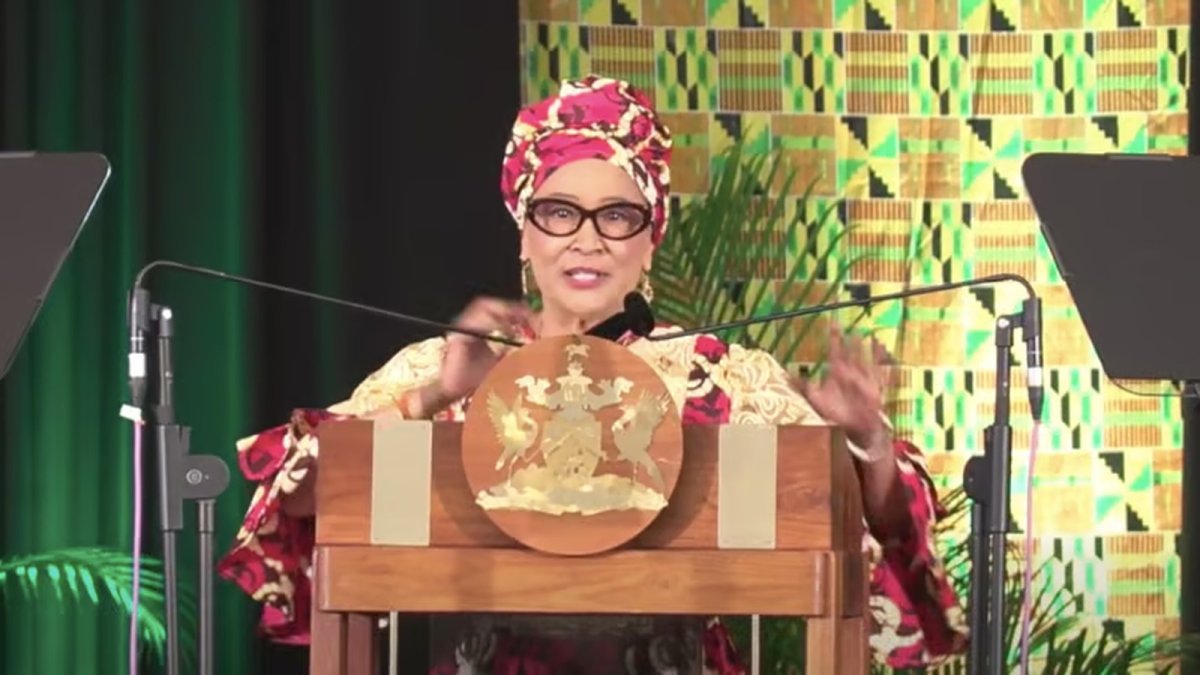
Port of Spain was supposed to be the stage for unity on August 1, 2026, as Trinidad and Tobago marked African Emancipation Day with the traditional march from the Treasury Building to the Queen's Park Savannah. Instead, the Lidj Yasu Omowale Emancipation Village became the backdrop for a political storm that has laid bare the fractures running through our national psyche. From an absent Prime Minister to a booed minister and a diplomatic calendar clash that raised eyebrows across the region, this year's commemoration of the abolition of slavery was anything but harmonious.
The day, which holds profound meaning for the descendants of the enslaved across the Caribbean, was meant to honour the legacy of those who suffered and survived the brutality of the plantation system. Trinidad and Tobago holds the distinction of being the first country in the world to declare a national public holiday commemorating the abolition of slavery, a fact that makes the events of this year feel all the more significant. But as the sun set on the Savannah, the conversations in the rum shops and on the talk radio programmes were not about the ancestors — they were about who showed up, who didn't, and what it all means for the delicate balance of our multicultural society.
The Prime Minister's conspicuous absence
The most glaring controversy of the day was the absence of Prime Minister Kamla Persad-Bissessar from the main observances. She had been advertised as the feature speaker for the event, and her no-show did not go unnoticed by the thousands gathered at the Emancipation Village. The silence from the podium where she was expected to address the nation was deafening, and it immediately became the subject of heated debate across social media and the airwaves.
The Prime Minister, however, was not one to take the criticism lying down. In a fierce repudiation of the backlash, she claimed that her critics are "consumed with an irrational hatred that has driven them deranged." She added that she was "sorry to disappoint those waiting to insult her," a statement that has only poured fuel on the fire. For a leader who has often spoken of national unity and the importance of respecting all cultures, the decision to skip an event of such historical weight has raised questions about her commitment to the African-Trinidadian community, which forms a significant pillar of the nation's demographic and cultural landscape.
Reports suggest that the Prime Minister had declined the invitation to the 2026 Emancipation Village, with some sources indicating she felt the celebration had become associated with the opposition PNM. This perception, whether accurate or not, has transformed a day of remembrance into a battleground for political point-scoring. It is a troubling development for a country that has long prided itself on the peaceful coexistence of its diverse ethnic groups, even as the undercurrents of racial politics have never fully disappeared from our national discourse.
Minister booed at the Savannah
If the Prime Minister's absence was the headline, the treatment of Culture and Community Development Minister Michelle Benjamin was the subplot that no one could ignore. Minister Benjamin, who attended the event in an official capacity, was met with boos from sections of the audience at the Queen's Park Savannah. The jeers were a clear signal of the crowd's displeasure, a visceral reaction that spoke volumes about the mood of the people.
Shabaka Kambon, Director of the Freedom Project, came to the defence of the Emancipation Support Committee of Trinidad and Tobago (ESCTT), the organisers of the event, over the booing incident. Kambon's intervention suggests that the committee itself was not the target of the crowd's ire, but rather the political representatives who chose to attend. The distinction is an important one, as it points to a growing frustration among the public with the political class, a sentiment that transcends party lines and speaks to a deeper disillusionment with how our leaders engage with cultural institutions.
The booing of a government minister at a national cultural event is not a trivial matter. It reflects a breakdown in the social contract between the governed and those who govern, a sense that the political directorate has become disconnected from the grassroots. For many in the crowd, Emancipation Day is not a political rally; it is a sacred observance. The intrusion of partisan politics into this space was clearly unwelcome, and the audience made their feelings known in no uncertain terms.
A war of words between leaders
The fallout from the day's events quickly escalated into a full-blown quarrel over race and national unity between the Prime Minister and PNM Political Leader Pennelope Beckles. Beckles launched a fierce attack on Persad-Bissessar over her decision to decline the invitation to the Emancipation Village, describing the move as "disdainful and discriminatory." The accusation of discrimination is a heavy one, carrying with it the weight of our nation's complex history of racial politics.
The Prime Minister, for her part, has accused Beckles of fuelling division, and the two leaders have engaged in a war of words that shows no signs of abating. Opposition MP Marvin Gonzales weighed in on the matter, describing the government as "thin-skinned" over the public's response to the Prime Minister and her ministers during the celebrations. Gonzales's comments, reported in the Trinidad Express, capture the sentiment of many who feel that the government has been too quick to take offence and too slow to acknowledge the legitimate grievances of the public.
This exchange is more than just political theatre. It is a reflection of the deep-seated tensions that continue to simmer beneath the surface of Trinidadian society. The relationship between the Indian and African communities, forged in the crucible of colonialism and indentureship, has always been complex. While we have made significant strides towards a shared national identity, events like this serve as a reminder that the work of reconciliation is far from complete. When our leaders use cultural observances as weapons in their political battles, they risk undoing the progress that has been made over generations.
The diplomatic misstep
Adding to the controversy was a diplomatic scheduling clash that sparked outrage across the country. The Indian High Commission in Port of Spain had scheduled an "Open House for the Indian Community and Diaspora Members," also reported as "Indian Diaspora Day," for August 1 — the very same day as Emancipation Day. The decision was widely perceived as a disrespectful oversight, a failure to recognise the significance of the date in the Trinidadian calendar.
The backlash was swift and vocal, with many questioning how such a scheduling conflict could have occurred. The High Commission, perhaps sensing the depth of the public's displeasure, later rescheduled the event to August 8. In a statement, the Commission said: "The Open House has been rescheduled to August 8 in view of August 1 being a public holiday." While the rescheduling was a necessary corrective, the initial misstep has left a sour taste in the mouths of many, particularly within the African-Trinidadian community who saw it as a slight against their heritage.
The incident also highlights the delicate diplomatic balancing act that foreign missions must perform in Trinidad and Tobago. Our nation is a tapestry of cultures, and any event that appears to privilege one community over another is bound to generate controversy. The Indian High Commission's error, whether born of ignorance or oversight, serves as a cautionary tale for all diplomatic missions operating in our plural society. It is a reminder that in Trinidad and Tobago, the calendar is not just a measure of time; it is a reflection of our collective memory and the sacrifices of our ancestors.
A call for unity in the face of division
In the wake of the controversies, the Trinidad Express published an editorial titled "Emancipation not a time for division" on August 3, 2026. The editorial questioned whether organisers and celebrants would allow the immediate pressures of the political climate to divide the commemoration. It is a pertinent question, and one that deserves serious consideration from all sides.
Emancipation Day is not merely a public holiday; it is a testament to the resilience of the human spirit. It commemorates the abolition of slavery in the British Empire, effective August 1, 1834, a date that changed the course of history for millions of people of African descent. The annual observance in Port of Spain, with its procession from the Treasury Building to the Emancipation Village, is a powerful symbol of our collective journey from bondage to freedom. To allow this sacred day to be diminished by political squabbles would be a disservice to the memory of those who fought and died for the freedoms we enjoy today.
The events of August 1, 2026, have revealed much about the state of our nation. They have shown that the wounds of our past are still capable of being reopened, that the politics of identity remain a potent force in our society, and that our leaders are not always able to rise above the fray. But they have also shown that the people of Trinidad and Tobago are paying attention, that they care deeply about the symbols and rituals that define our national character, and that they will not hesitate to voice their displeasure when they feel those symbols are being dishonoured.
As we move forward, the question is not whether we can agree on the meaning of Emancipation Day, but whether we can find the wisdom to honour it in a way that unites rather than divides. The ancestors who walked out of the plantation gates in 1834 did so in the hope of a better future for their children and their children's children. We owe it to them to ensure that their legacy is not squandered on the altar of partisan politics. The road to true national unity is long and winding, but it is a journey we must all undertake together, with respect for one another's histories and a shared commitment to the future of this beautiful, complicated, and resilient nation.
By Sharon Sahatoo, Staff Writer
This article was produced with AI-assisted research and editorial support. Reporting is based on sources cited in the article.
What's Your Reaction?
 Like
0
Like
0
 Dislike
0
Dislike
0
 Love
0
Love
0
 Funny
0
Funny
0
 Wow
0
Wow
0
 Sad
0
Sad
0
 Angry
0
Angry
0
Caribbean Correspondent at Global1.News. Based in Port of Spain, Trinidad, covering Caribbean politics, economy, energy, climate, and culture. Amplifying the voices and stories of the Caribbean region.












Comments (0)