
St. Petersburg Philosophy Professor Detained Over Navalny Donations
Russian philosophy professor Igor Zaytsev faces up to eight years in prison after police detained him over donations of 3,500 rubles to groups linked to the late opposition leader Alexei Navalny, in the latest Kremlin crackdown on academics.
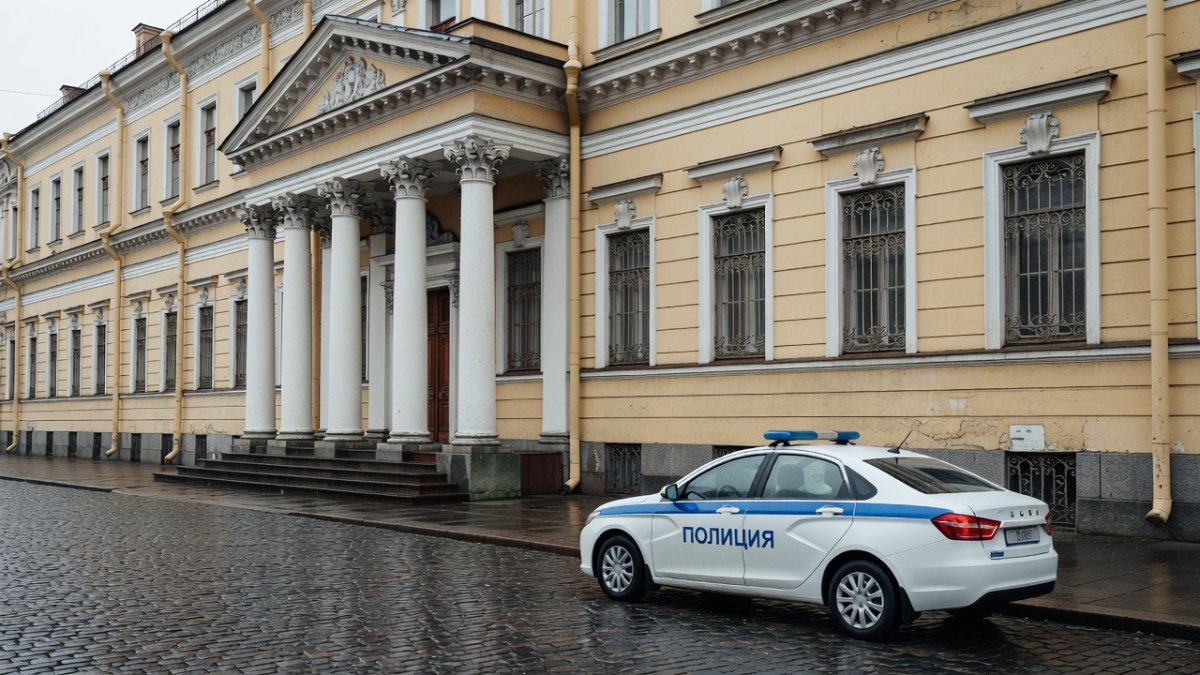
St. Petersburg police have detained a 58-year-old philosophy professor on suspicion of financing extremist activity, alleging he donated roughly 3,500 rubles ($42) to groups linked to the late opposition leader Alexei Navalny. The arrest, carried out in cooperation with the Federal Security Service (FSB), marks one of the most striking examples yet of the Kremlin's post-Navalny crackdown reaching into the academic elite. The professor, identified by multiple outlets as Igor Zaytsev, now faces up to eight years in prison over a series of small recurring donations made years ago.
St. Petersburg Philosophy Professor Detained Over $40 'Extremist' Navalny Donations
Moscow, Russia – August 13, 2026 — The detention of Igor Zaytsev, an associate professor and deputy dean of the faculty of philosophy and theology at the Dostoevsky Russian Christian Humanities Academy, has sent a chill through Russia's academic community. Police confirmed this week that the criminal case into "financing extremist activity" was opened on July 31, with the arrest following a coordinated operation involving the FSB. The sum in question — 3,500 rubles, or roughly $42 — is less than the cost of a modest dinner in central Moscow, yet it has placed a respected scholar in direct jeopardy of a lengthy prison sentence.
The Detention and the Video
St. Petersburg police released a video of the operation, which shows law enforcement officers addressing Zaytsev by name and questioning him about his electronic devices before conducting extensive searches of his home. In the footage, Zaytsev appears calm but visibly shaken as officers move through his residence. "I personally supported Alexei Navalny," Zaytsev told the officers on camera, a statement that has since circulated widely on independent Russian media channels. The police have withheld his name officially, but Fontanka, a St. Petersburg news outlet, and several other media organizations have confirmed his identity based on the video and academy records.
Who Is Igor Zaytsev?
Zaytsev, 58, is not a political activist by trade. His academic career has focused on philosophy and theology, and he has served as deputy dean at the Dostoevsky Russian Christian Humanities Academy, a private institution in St. Petersburg known for its Orthodox Christian orientation. Colleagues describe him as a reserved scholar, more comfortable in archives than at protest rallies. His alleged crime, according to investigators, is not public agitation but a series of small, recurring donations made to Navalny-affiliated groups before they were designated as extremist organizations by the Supreme Court in 2021.
The Charges and Legal Framework
The criminal case against Zaytsev falls under Article 282.3 of the Russian Criminal Code, which criminalizes "financing extremist activity." The charge carries a penalty of up to eight years in prison if convicted. The legal basis for the case rests on the Supreme Court's August 2021 ruling that declared Navalny's network of regional headquarters and affiliated groups to be "extremist organizations." That ruling effectively criminalized any financial support for those groups, retroactively in some interpretations, and has been used to prosecute dozens of individuals across Russia over the past five years.
Fontanka reported that the criminal case has not yet reached local courts, and Zaytsev's pre-trial restrictions have not yet been set. He could face house arrest, a travel ban, or detention pending trial, depending on the court's assessment of flight risk and the severity of the charges.
The Donations Timeline
According to Zaytsev's own statements in the police video, he signed up for monthly recurring donations to Navalny's organizations prior to the 2021 Supreme Court ruling. He told officers he could not recall whether he continued those donations after the extremism designation took effect. The total amount cited by investigators — 3,500 rubles — suggests a modest monthly contribution over a limited period, possibly as little as a few months of giving. The distinction matters legally: donations made before the 2021 ruling are not criminal, while those made after could constitute financing extremist activity. Investigators have not yet clarified which specific donations form the basis of the charge.
Navalny's Death and the Broader Crackdown
Alexei Navalny, Russia's most prominent opposition figure, died in an Arctic penal colony in February 2024 under circumstances that remain disputed. His death triggered international condemnation and sporadic protests, but also marked the beginning of a more aggressive phase in the Kremlin's treatment of his supporters. Since then, authorities have pursued a systematic campaign against anyone associated with Navalny's movement, from senior aides now living in exile to ordinary Russians who made small donations years ago. The case against Zaytsev fits this pattern, but his academic standing and the trivial amount of money involved have drawn particular attention.
Reaction From Independent Lawyers and Human Rights Groups
Independent lawyers and human rights organizations have criticized the case as disproportionate and politically motivated. "This is not about 3,500 rubles," said one Moscow-based defense attorney who has handled extremism cases but asked not to be named due to the sensitivity of the matter. "This is about sending a message to anyone who might consider supporting opposition figures, even in the smallest way. The amount is irrelevant; the intent is to intimidate." Human rights groups have documented a pattern of prosecutions against academics, journalists, and ordinary citizens for donations that would be considered routine political giving in most democracies. The Dostoevsky Russian Christian Humanities Academy has not issued a public statement regarding Zaytsev's detention, and attempts to reach his colleagues were unsuccessful.
Analysis and Implications
Analysts suggest this case signals a deliberate escalation in the Kremlin's approach to civil society, particularly targeting the academic sphere. By prosecuting a philosophy professor over a $42 donation, authorities appear to be drawing a bright line: no form of support for Navalny's movement, however symbolic, will be tolerated. The choice of a religious academy is also notable, suggesting that even institutions with Orthodox Christian affiliations are not exempt from scrutiny if their faculty members step out of line.
The timing of the case, opened on July 31 and executed with FSB involvement, indicates a coordinated effort between regional police and federal security services. This is not a rogue local investigation; it bears the hallmarks of a centrally directed operation. For ordinary Russians, the message is clear: the state's memory is long, and even small acts of political solidarity from years past can resurface with criminal consequences.
Zaytsev's case will now move through the St. Petersburg court system, where pre-trial hearings are expected in the coming weeks. His defense team is likely to argue that the donations predate the extremism ruling and that the prosecution is retroactively applying the law. Whether that argument prevails in a judicial system that has shown little independence in political cases remains doubtful. For the academic community, the detention serves as a warning that no one is too obscure, too scholarly, or too removed from politics to escape scrutiny. The $42 question now is not whether Zaytsev will be convicted, but how many others like him will be swept up in the same net.
By Irina Volkov, Staff Writer
This article was produced with AI-assisted research and editorial support. Sources: The Moscow Times, Fontanka, RBC.
What's Your Reaction?
 Like
0
Like
0
 Dislike
0
Dislike
0
 Love
0
Love
0
 Funny
0
Funny
0
 Wow
0
Wow
0
 Sad
0
Sad
0
 Angry
0
Angry
0
Russia/Eastern Europe Correspondent at Global1.News. Covering Russian politics, energy, security, and the shifting dynamics of the post-Soviet space. Provides clear-eyed analysis on one of the world's most opaque regions.













Comments (0)