
Plague fears fuel online push for antibiotics, emergency kits
In the wake of a reported death at a Russian plague research institute, a wave of anxiety has swept across North America, prompting a surge in online searches for antibiotics and emergency kits.
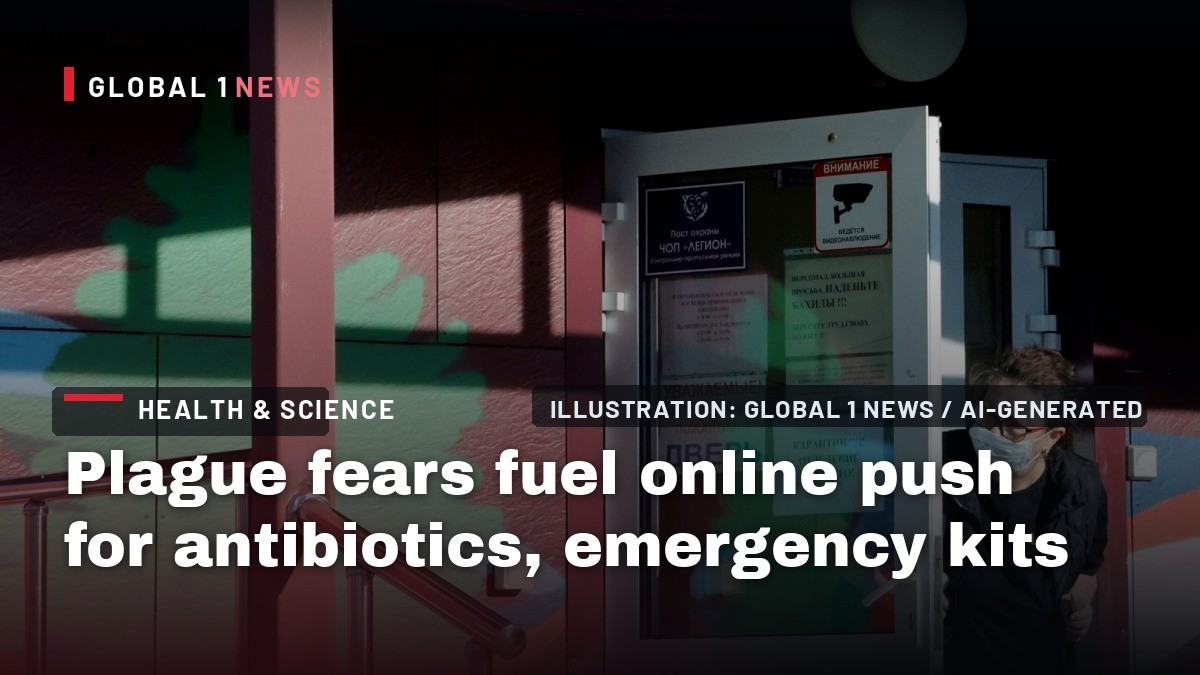
In the wake of a reported death at a Russian plague research institute, a wave of anxiety has swept across North America, prompting a surge in online searches for antibiotics and emergency kits. While Russian officials have not confirmed the cause of death, the episode underscores how quickly health scares can be amplified by social media influencers and the burgeoning prepper community, turning a regional incident into a continent‑wide market for unverified medical products.
From Irkutsk to the Internet: The catalyst of fear
The story began in the Irkutsk region of Siberia, where a woman employed at a plague research institute allegedly succumbed to the disease. Russian authorities have refrained from confirming the diagnosis, and the regional governor emphasized that no health concerns have been identified after tracing the woman’s contacts. Nonetheless, the mere suggestion of a plague case ignited a viral response online.
On Facebook, a video captioned “Don’t wait until everybody is scrambling. Prepare before you need it,” amassed more than 161,000 views, accompanied by the hashtags #Russia and #plague. The post, like many others, featured personalized discount codes, indicating that its creators stand to profit from the heightened demand for emergency kits. This pattern reflects a broader trend where health anxieties are monetised through influencer‑driven marketing.
The kits on offer: Contents and claims
Central to the online frenzy is a $300 emergency kit promoted by “The Wellness Company,” a brand fronted by American cardiologist Peter McCullough. McCullough, known for advancing COVID‑19 conspiracy narratives, has previously disseminated misinformation that was debunked by Agence France‑Presse. The company has not responded to inquiries about the kits, but the promotional material highlights the inclusion of doxycycline, an antibiotic employed in the treatment of plague in endemic regions.
Influencer Rogan O’Handley, known on social media as DC Draino, showcased the kit to his 2.9 million followers, emphasising the presence of doxycycline. The kits also claim to contain “hard‑to‑find” prescription drugs such as ivermectin, an antiparasitic approved by the U.S. Food and Drug Administration for certain worm infections but unrelated to bacterial illnesses like plague.
Medical experts warn against indiscriminate use
Infectious disease specialist Isaac Bogoch of Toronto General Hospital acknowledged that doxycycline is indeed used to treat plague where cases arise each year, noting its role in containing outbreaks. However, he cautioned that taking antibiotics without confirmed exposure is unnecessary and potentially harmful. “Obviously it can be a very severe infection,” Bogoch said, adding that the unverified Russian case “isn’t the type of infection that would cause a pandemic.”
Plague researcher Paul Keim of Northern Arizona University reinforced this warning, highlighting the risks of self‑medication. He explained that unnecessary antibiotic consumption can disrupt gut microbiota and foster antibiotic‑resistant bacteria, compromising future treatment efficacy. Keim also clarified that ivermectin has no role in treating bacterial diseases, underscoring the mismatch between the kit’s claims and established medical practice.
Historical precedents of health‑crisis profiteering
The current episode is not an isolated incident. Past health scares have similarly spawned markets for unproven remedies. In May, a cruise ship passenger contracted hantavirus, prompting social media accounts to tout ivermectin as a “cure” despite the absence of any approved treatment. More recently, during the 2026 Ebola outbreak in the Democratic Republic of the Congo, videos featuring a doctor recommending vitamin D3 and zinc proliferated alongside advertisements for supplements, even though these nutrients cannot treat Ebola.
Timothy Caulfield, a misinformation expert at the University of Alberta, observed that crises—particularly in the health domain—create fertile ground for “grifters” to exploit fear and uncertainty. The pattern is clear: a health event triggers a wave of anxiety, which is then leveraged by opportunists to market products that promise protection or cure, regardless of scientific validity.
The role of digital platforms in amplifying misinformation
Google Trends data revealed a noticeable spike in searches for “The Wellness Company” following the Russian incident, illustrating how quickly online curiosity can translate into commercial interest. Social media algorithms, which prioritise engagement, further accelerate the spread of sensational health claims, especially when paired with influencer reach. The use of discount codes and affiliate links embeds financial incentives directly into the content, blurring the line between public health information and commercial advertising.
These dynamics raise concerns about the capacity of digital platforms to moderate health‑related content. While platforms have taken steps to label misinformation, the rapid emergence of new health scares often outpaces policy responses, leaving users vulnerable to persuasive yet unfounded claims.
Public health implications of self‑medication trends
The surge in demand for antibiotics like doxycycline carries broader public health ramifications. Overuse of antibiotics is a well‑documented driver of antimicrobial resistance, a global threat that compromises the effectiveness of life‑saving drugs. When individuals consume antibiotics without medical indication, they not only risk personal side effects but also contribute to a collective erosion of drug efficacy.
Moreover, the promotion of ivermectin for unrelated conditions perpetuates misconceptions about its therapeutic scope. Although ivermectin remains a valuable antiparasitic, its misapplication can divert attention from evidence‑based treatments and foster a false sense of security, potentially delaying appropriate medical care during genuine outbreaks.
Looking ahead: Mitigating the cycle of fear and profiteering
Addressing the interplay between health scares, social media amplification, and commercial exploitation requires coordinated action. Public health authorities must communicate promptly and transparently when incidents arise, providing clear guidance on risk levels and recommended precautions. Such communication can help counteract speculative narratives that thrive on uncertainty.
Simultaneously, regulators and platform operators need to strengthen mechanisms for flagging and limiting the spread of unverified medical products, especially when they are tied to financial incentives. Partnerships with reputable medical experts to produce shareable, evidence‑based content can also dilute the influence of misinformation‑laden influencers.
Ultimately, the Irkutsk incident illustrates how a single, unconfirmed health event can cascade into a continent‑wide market for dubious medical kits. By recognising the patterns that underlie these cycles—fear, influencer reach, and profit motives—policy makers, health professionals, and the public can better navigate future health crises without falling prey to unfounded remedies.
This article was produced with AI-assisted research and editorial support. Reporting is based on the source material cited below. Sources: Daily Sabah Middle East; dailysabah.com; Global1.News (09 October 2026).
By Malik Hassan, Staff Writer
What's Your Reaction?
 Like
0
Like
0
 Dislike
0
Dislike
0
 Love
0
Love
0
 Funny
0
Funny
0
 Wow
0
Wow
0
 Sad
0
Sad
0
 Angry
0
Angry
0

Middle East Correspondent at Global1.News. Based in Beirut, covering politics, conflict, energy, and society across the Middle East. Brings context and depth to a region often reduced to headlines.














Comments (0)