
Seven Ethiopian rebel groups form new alliance
In a startling development that could reshape Ethiopia’s already fragile political landscape, seven rebel groups have announced a new coalition called the Alliance for Survival.
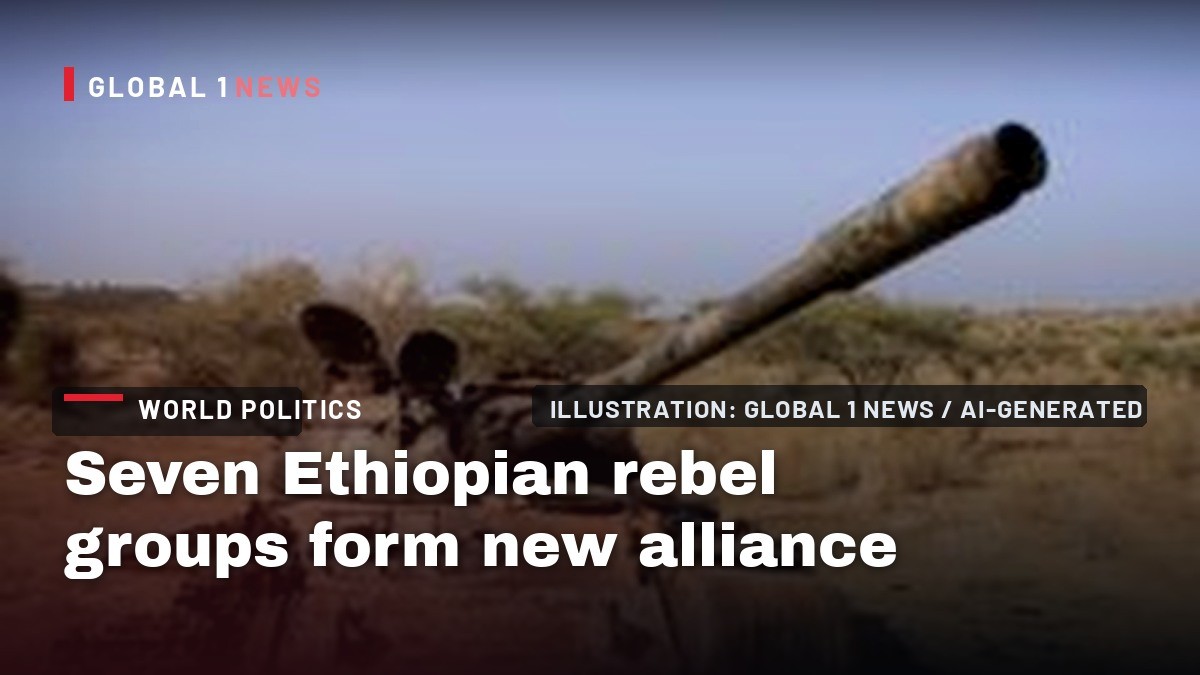
In a startling development that could reshape Ethiopia’s already fragile political landscape, seven rebel groups have announced a new coalition called the Alliance for Survival. The alliance, which brings together the Amhara‑based Fano militia, the Oromo Liberation Army (OLA), the Tigray People’s Liberation Front (TPLF) and four smaller movements, declares a common goal: to topple Prime Minister Abiy Ahmed’s government. Their statement accuses the administration of presiding over “war, genocide, mass destruction, and utter poverty,” warning that the nation teeters on the brink of disintegration.
Origins of the alliance
The coalition emerged from a backdrop of protracted conflict across Ethiopia’s most populous regions. Oromia and Amhara have endured years of armed unrest, while the northern Tigray region was ravaged by a two‑year civil war that left hundreds of thousands dead and displaced millions. Although a peace deal brokered by the African Union in 2022 formally ended the Tigray war, lingering mistrust and accusations of violations have kept the situation volatile.
According to the alliance’s spokesperson, Abdikadir Addaani Hirmooge of the Ogaden National Liberation Front (ONLF), the groups have decided to set aside historic rivalries in favour of a shared struggle against what they describe as an oppressive central authority. Addaani highlighted that the government had failed to honour a 2018 peace agreement in the Somali region, a grievance that fuels the ONLF’s participation in the new coalition.
Geographic breadth and ethnic dimensions
The Alliance for Survival spans half of Ethiopia’s twelve regional states, extending beyond the three most volatile areas—Oromia, Amhara and Tigray—to include movements rooted in Somali, Afar and Benishangul‑Gumuz. Ethiopia’s system of ethnic federalism, which grants a degree of autonomy to regions defined largely by dominant ethnic groups, has long been a double‑edged sword. While it recognises the country’s rich tapestry of more than eighty ethnicities, it also creates fault lines that can be exploited by armed factions.
By uniting groups from such diverse regions, the alliance signals an attempt to forge a pan‑ethnic front against the central government. Addaani stressed that the coalition seeks to “bring together communities that have been divided against one another,” aiming for a future where each group can exercise “democracy and the right to self‑determination.” This rhetoric underscores a broader narrative of collective marginalisation under Abiy’s Prosperity Party.
Shifting loyalties and past conflicts
One of the most striking aspects of the new coalition is the inclusion of factions that have previously fought each other. The Fano militia, for instance, fought alongside federal forces against the TPLF during the Tigray war, only to turn against the government less than a year after the conflict ended. Their rebellion was sparked by a refusal to comply with disarmament orders, illustrating how quickly alliances can dissolve in Ethiopia’s fluid security environment.
Similarly, the OLA has long waged an insurgency in Oromia, rejecting the legitimacy of the federal administration. Their participation in the Alliance for Survival marks a convergence of grievances that transcend previous enmities, suggesting that the perceived threat of a centralised, repressive state now outweighs historic animosities among the groups.
Political context and the June election
The alliance’s formation follows Ethiopia’s June 2026 general election, an event that was heavily shadowed by conflict and accusations of repression. While Prime Minister Abiy’s Prosperity Party retained an overwhelming parliamentary majority, the election was marked by low opposition participation and the exclusion of the Tigray region, home to roughly six million people, from the voting process. Both the Fano militia and the OLA publicly rejected the election results, casting doubt on the government’s claim to democratic legitimacy.
Prime Minister Abiy responded to the emergence of the new coalition with confidence, asserting that Ethiopia’s “defensive capabilities” remain strong and that the nation would not fear any additions to the opposition. His remarks, delivered to lawmakers in July, reflect a broader strategy of projecting resilience despite mounting internal challenges.
Regional implications and the Eritrean factor
The Alliance for Survival also arrives amid speculation about a possible partnership between the TPLF and neighbouring Eritrea. Earlier reports suggested an alleged alliance between the two, a development that could further destabilise the already tense border region. While the new coalition does not explicitly reference Eritrea, the presence of the TPLF within its ranks may influence future diplomatic calculations, especially if external actors perceive an opportunity to shape Ethiopia’s internal dynamics.
Should the alliance gain momentum, neighbouring states could face spill‑over effects, from refugee flows to cross‑border insurgent activities. The African Union, which previously mediated the 2022 peace deal, may be called upon again to navigate a potentially broader conflict that now involves multiple ethnic militias and regional interests.
Humanitarian concerns
Beyond the political calculus, the alliance’s formation raises urgent humanitarian questions. The earlier civil war in Tigray displaced millions, and continued fighting in Oromia and Amhara has already forced large numbers of civilians to flee their homes. The prospect of renewed large‑scale hostilities threatens to exacerbate an already dire situation, with limited access to basic services, food insecurity and the risk of further civilian casualties.
Human rights organisations have warned that the escalation of ethnic‑based armed groups could deepen “mutual oppression” and entrench cycles of violence. Addaani’s call for “communities to have democracy and to exercise their right to self‑determination” underscores a desire for political solutions, yet the path to achieving those goals without further bloodshed remains uncertain.
What lies ahead for Ethiopia?
The emergence of the Alliance for Survival marks a pivotal moment in Ethiopia’s turbulent post‑war trajectory. By uniting disparate rebel factions under a common banner, the coalition signals a heightened willingness to challenge the central government’s authority on a national scale. Whether this alliance can sustain cooperation among groups with a history of conflict, and whether it can translate its political rhetoric into effective military coordination, will shape Ethiopia’s near‑future stability.
For observers across the continent, Ethiopia’s fate carries symbolic weight. A nation once hailed as Africa’s economic powerhouse now grapples with the paradox of ethnic federalism, where autonomy can both empower and fragment. As the alliance seeks to “bring together communities” and demand “self‑determination,” the broader African community watches closely, hoping that dialogue, rather than further bloodshed, will chart a path toward a more inclusive and peaceful Ethiopia.
This article was produced with AI-assisted research and editorial support. Reporting is based on the source material cited below. Sources: BBC News Africa; bbc.co.uk; Global1.News (21 September 2026).
By Amara Diop, Staff Writer
What's Your Reaction?
 Like
0
Like
0
 Dislike
0
Dislike
0
 Love
0
Love
0
 Funny
0
Funny
0
 Wow
0
Wow
0
 Sad
0
Sad
0
 Angry
0
Angry
0

West Africa/Sahel Correspondent at Global1.News. Dakar-based journalist covering politics, security, climate, and development across Francophone and Anglophone West Africa. Tells the stories of a region undergoing profound transformation.














Comments (0)