
Settler Leader Dodges Piers Morgan Question on Palestinian Lives
In a recent Middle East Eye report, far-right Israeli settler leader Daniella Weiss repeatedly dodged Piers Morgan's question on whether she considers Israeli and Palestinian lives equal, a moment that has reignited global scrutiny of settler ideology and its deadly consequences.
In a recent Middle East Eye report, far-right Israeli settler leader Daniella Weiss repeatedly dodged Piers Morgan's question on whether she considers Israeli and Palestinian lives equal, a moment that has reignited global scrutiny of settler ideology and its deadly consequences. The exchange, which aired on Thursday on Piers Morgan Uncensored, came in the same week Israeli authorities charged a settler in the killing of a Palestinian activist — a rare prosecution that underscored the escalating crisis in the occupied West Bank.
Settler leader dodges question on Palestinian lives
Ramallah, occupied West Bank – August 11, 2026 — The video clip is brief but damning. Morgan, visibly frustrated, presses Weiss for the third time: "With respect, I've asked you three times! It's a very simple question." The question — whether a Palestinian life is worth the same as a Jewish life — hangs in the air as Weiss, 80, offers a deflection that has become all too familiar to those who follow the settler movement. "A Jew is proud to be a Jew, and a Muslim is proud to be a Muslim. So what's that comparison for..." she trails off, before adding, "I think that all human beings were created by God." She never gives a direct yes or no.
Morgan, unimpressed, responds: "You either do or you don't." Later, on X, he wrote: "Sometimes, a refusal to answer a simple question says all you need to know..." The exchange has reverberated across Palestinian communities, where Weiss's name is synonymous with the settlement enterprise that has reshaped the West Bank over five decades.
A Very Simple Question
The question Morgan posed was not abstract. It was rooted in a specific, documented statement made by Yehuda Shimon, an Israeli settler and lawyer from the Havat Gilad outpost, who told the BBC's Lucy Williamson that one Jewish life is worth 10 million Palestinian lives. That remark, which circulated widely in Palestinian media and among human rights organizations, laid bare an ideology that many settlers openly espouse: that Palestinian lives are inherently less valuable than Jewish ones.
Weiss's refusal to answer directly — despite Morgan's repeated insistence — speaks volumes. For Palestinians in the West Bank, the equivocation is not a diplomatic dodge but a confirmation of what they experience daily. The answer, they say, is written in demolished homes, uprooted olive trees, and the bodies of the dead.

Who Is Daniella Weiss?
To understand the weight of Weiss's words, one must understand her history. Born on 30 August 1945 in Bnei Brak, Weiss has spent her adult life at the forefront of the settler movement. She is the founder of Nachala, a far-right organization dedicated to expanding Israeli settlements in the West Bank, and she previously served as mayor of the Kedumim settlement. Known as the "godmother" of the settler movement, she has spent decades advocating for settlement expansion, describing her work as "dedicated to building the land of Israel."
Her public profile reached a new peak in 2025 when she was featured in Louis Theroux's BBC documentary "The Settlers," which offered an unflinching look at the ideology driving settlement expansion. In the documentary, Weiss is seen leading groups of young settlers to establish new outposts, often in areas where Palestinian communities have lived for generations. She speaks of her work with a sense of divine mission, framing settlement as a religious obligation rather than a political project.
That framing has made her a polarizing figure. To her supporters, she is a visionary; to her critics, she is an architect of displacement. In May 2025, the United Kingdom sanctioned Weiss and Nachala under the Global Human Rights Sanctions Regulations 2020. Foreign Secretary David Lammy said the sanctions target those involved in "threatening, perpetrating, promoting and supporting acts of aggression and violence against Palestinian individuals." The sanctions freeze assets and impose travel bans, but they have done little to slow Weiss's activities on the ground.
The Ideology Behind the Settlements
Weiss's ideology is not an outlier in Israeli politics; it is increasingly mainstream. The settlements in the occupied West Bank are considered illegal under international law, and the territory has been under Israeli occupation since the 1967 war. Yet successive Israeli governments have expanded settlements, and the current far-right cabinet includes ministers who openly support annexation and have called for the "encouragement" of Palestinian emigration.
The Guardian has reported that settler violence and ethnic cleansing has surged in the West Bank over the past three years, supported by far-right Israeli cabinet ministers. This support has taken various forms: funding for outposts, military protection for settlers, and legislation that makes it nearly impossible to prosecute settlers for attacks on Palestinians. The result is a system in which settlers operate with near-impunity, and Palestinians are left with little recourse.
Weiss's comments to Morgan reflect this ideological framework. When she says "all human beings were created by God," she is not expressing a universalist ethic but rather a theological claim that, in her view, justifies Jewish sovereignty over the land. The comparison Morgan sought — between the value of a Jewish life and a Palestinian life — is, for Weiss, not a question of equality but of divine order. This is why she cannot answer directly: to do so would be to acknowledge the humanity of Palestinians as equals, which would undermine the very foundation of the settlement project.
Violence on the Ground
The consequences of this ideology are measurable. According to data from the UN Office for the Coordination of Humanitarian Affairs (OCHA), settler attacks causing casualties or property damage surpassed 1,000 by June 2026. More than 230 Palestinian communities have been affected, and more than 2,200 Palestinians have been displaced in 2026 due to settler violence and access restrictions. The average of six incidents a day is higher than any year on record.
On July 29, 2026, the UN Office of the High Commissioner for Human Rights (OHCHR) warned that West Bank settler violence has hit an "all-time high." The OHCHR noted that settlers and Israeli security forces have "often" acted together to attack Palestinian communities, and that Israel continues to approve new settlements. This coordination between settlers and security forces is a particularly troubling development, as it blurs the line between civilian violence and state action.
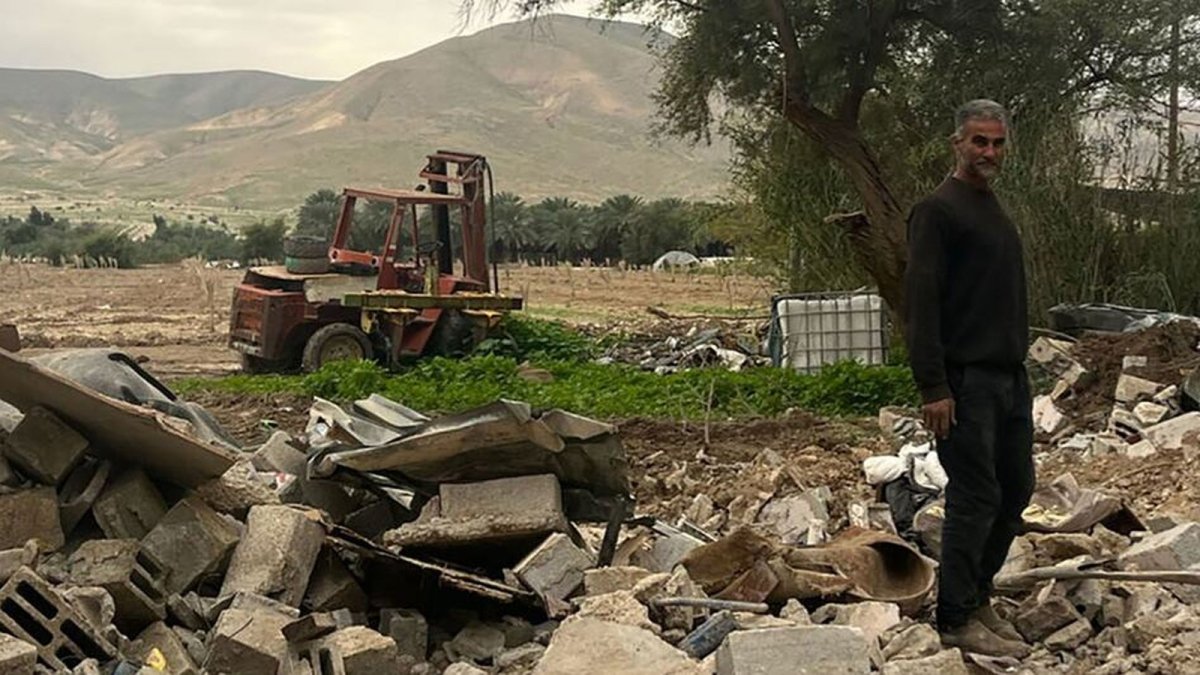
The human toll is not just statistical. In the village of Masafer Yatta, south of Hebron, entire communities have been displaced as settlers establish outposts on land that Palestinians have cultivated for generations. In the Jordan Valley, Bedouin communities face systematic expulsion. In cities like Nablus and Hebron, settlers regularly attack Palestinian homes and businesses under the protection of Israeli soldiers. The violence is not random; it is a deliberate strategy to push Palestinians off their land.
Accountability and International Law
Against this backdrop, the rare prosecution of a settler for killing a Palestinian activist stands out. On August 6, 2026, Israeli authorities charged a settler with reckless manslaughter in the killing of Awad Hathaleen, a Palestinian activist who contributed to the Oscar-winning film "No Other Land." Hathaleen's death had become a symbol of the violence that Palestinians face, and the charges were seen as a test of whether Israeli courts are willing to hold settlers accountable.
The prosecution is an exception, not the rule. Human rights organizations have documented hundreds of cases of settler violence that have gone unpunished, often because Israeli authorities classify the incidents as "nationalist crimes" and treat them with leniency. The UK sanctions on Weiss and Nachala were a rare example of international accountability, but they have not been matched by other Western nations. The United States, Israel's closest ally, has continued to provide military and diplomatic support to the Israeli government.
International law is clear: settlements are illegal, and the Fourth Geneva Convention prohibits an occupying power from transferring its civilian population into occupied territory. Yet the international community has been largely ineffective in enforcing these norms. The International Criminal Court's examination of the situation in Palestine remains a slow-moving process, and for Palestinians, the gap between international law and lived reality is a source of deep frustration.
Analysis and Implications
The exchange between Weiss and Morgan is more than a viral moment; it is a window into the mindset of a movement that has reshaped the West Bank. Weiss's refusal to answer the question is not a failure of communication but a reflection of an ideology that cannot accommodate equality. For her, the settlement project is a divine mission, and the Palestinians are obstacles to be removed, not people with equal rights.
This ideology has been amplified by the war in Gaza, where more than 73,000 Palestinians have been killed and more than 174,000 wounded since October 2023, according to the Gaza Health Ministry. More than 21,000 children have been reported killed, according to health and UN-based reports. The scale of death and destruction has emboldened settlers in the West Bank, who see the international community's inaction in Gaza as a green light for their own project.
For Palestinians on the ground, the implications are stark. The surge in settler violence, the expansion of settlements, and the lack of accountability all point to a future in which the West Bank is increasingly fragmented and unlivable. The two-state solution, already on life support, is being buried by the daily reality of displacement and violence.
The question Morgan asked Weiss was simple, but the answer — or lack thereof — reveals a complex and devastating reality. As the international community debates sanctions and ceasefires, Palestinians continue to live under a system that treats their lives as less valuable. Weiss's dodging was not a diplomatic misstep; it was a statement of policy. And until that policy changes, the violence will continue.
By Fatima Al-Rashid, Staff Writer
This article was produced with AI-assisted research and editorial support. Reporting is based on sources cited in the article.
What's Your Reaction?
 Like
0
Like
0
 Dislike
0
Dislike
0
 Love
0
Love
0
 Funny
0
Funny
0
 Wow
0
Wow
0
 Sad
0
Sad
0
 Angry
0
Angry
0
Gulf/MENA Correspondent at Global1.News. Based in Doha, covering Gulf politics, energy markets, diplomacy, and development across the Middle East and North Africa. Tracks the economic transformation of the Gulf states.













Comments (0)