
Palestine Red Crescent Opens Sixth Field Hospital in Northern Gaza as Health Sector Collapses
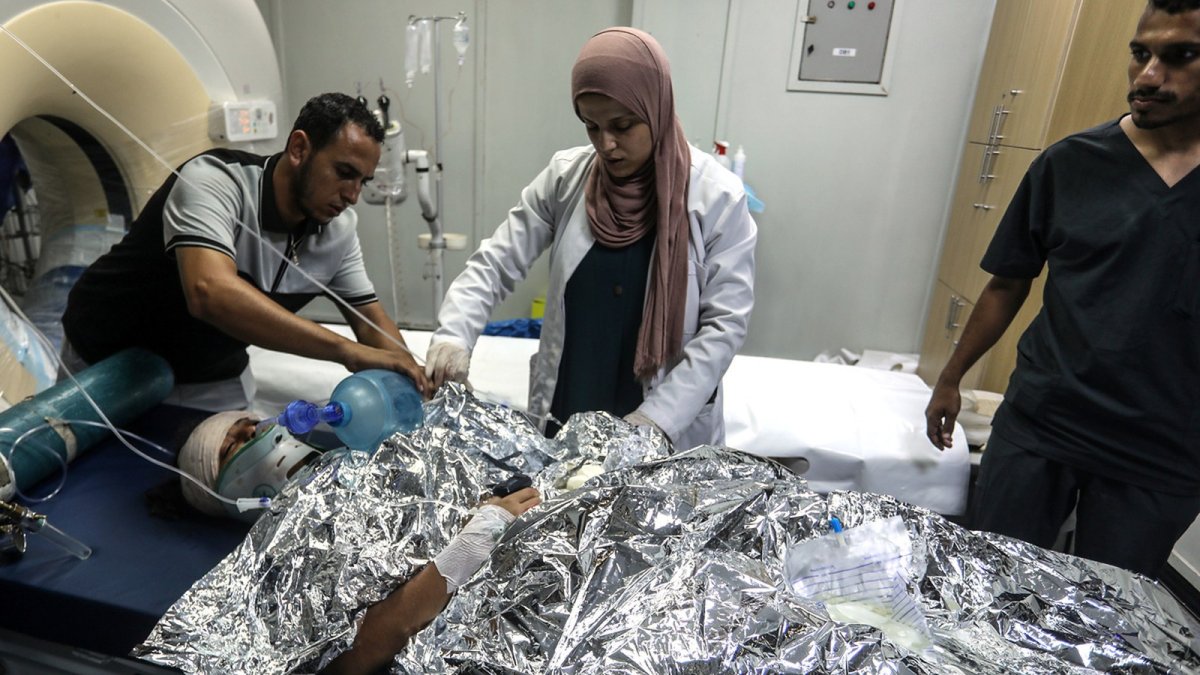
AL-BIREH, West Bank — The Palestine Red Crescent Society (PRCS) opened a field hospital in northern Gaza on Monday, a facility designed to serve nearly half a million people in an area where the health system has been systematically dismantled by Israel's ongoing war on the enclave.
Palestine Red Crescent Opens Sixth Field Hospital in Northern Gaza as Health Sector Collapses
AL-BIREH, West Bank — The Palestine Red Crescent Society (PRCS) opened a field hospital in northern Gaza on Monday, a facility designed to serve nearly half a million people in an area where the health system has been systematically dismantled by Israel's ongoing war on the enclave. The opening, announced from the society's headquarters in Al-Bireh in the central West Bank, comes as Gaza's medical infrastructure lies in ruins, with hospitals destroyed, staff killed or displaced, and essential medicines and supplies blocked at the borders.
The new North Field Hospital is the sixth such facility operated by the PRCS in Gaza, and its inauguration was framed by Palestinian officials as both an act of survival and a legal obligation under international humanitarian law. "Treating the sick and wounded is a humanitarian duty guaranteed by international law," Palestinian Prime Minister Mohammad Mustafa said at the ceremony, according to a statement from his office.
A National Response to a Growing Catastrophe
Speaking at the PRCS headquarters in Al-Bireh, Mustafa described the hospital's opening as a direct response to the medical emergency unfolding in northern Gaza, where an estimated 500,000 people remain without adequate access to care. "The opening of the hospital embodies the will of our people to remain steadfast and continue life, despite the humanitarian catastrophe in Gaza, the destruction of much of the health sector and shortages of medicines, equipment and medical staff," he said.
The prime minister's remarks were delivered during a visit to the society's warehouses and central call center, where he reviewed stocks of medicines, medical supplies, and relief materials prepared for dispatch to Gaza. The visit underscored the logistical complexity of delivering aid to a territory under near-total Israeli blockade, where every shipment requires coordination with Israeli authorities and faces the constant risk of denial or delay.
"This occasion combines pain and hope; pain over what our people in Gaza have reached, and hope that efforts will continue to change this reality toward a better situation and a more dignified life," Mustafa added. He called the North Field Hospital "a national response to growing health needs" and said it "sends a message about Palestinians' determination to continue living."
PRCS Leadership: A National Achievement Against the Odds
PRCS President Younis al-Khatib hailed the hospital's opening as "a national achievement" made possible by the dedication of the society's staff and its partners, despite what he described as severe restrictions on movement, access, and supplies. "Opening the facility was a step to strengthen the health response in northern Gaza, despite restrictions and challenges that affected its preparation and operation," al-Khatib said in a statement.
The hospital is part of the society's broader plan to reinforce health services across Gaza amid what it describes as a "severe shortage" of medical facilities. With the new addition, the PRCS now operates six field hospitals in the enclave, each designed to fill gaps left by the destruction of permanent medical infrastructure. The society said the new facility is expected to serve nearly half a million people in the northern governorates, where the population has been repeatedly displaced and where remaining hospitals have been rendered non-functional by Israeli strikes and ground operations.
Al-Khatib's remarks reflect a broader reality: the PRCS has become one of the few remaining providers of emergency medical care in Gaza, operating under conditions that would be unimaginable in any other context. Its staff, many of whom have lost colleagues and family members during the war, continue to report for duty in facilities that are often under-supplied, under-staffed, and at constant risk of being targeted.
57 Ambulances Waiting at the Border
In a statement released alongside the hospital's opening, the PRCS detailed the scale of its logistical readiness — and the obstacles it faces. The society said its warehouses contain "large quantities" of medicines and medical supplies ready to be sent to Gaza, but that delivery depends entirely on Israeli approval. According to the statement, 57 ambulances are currently prepared to enter Gaza once Israeli restrictions are lifted: 35 vehicles are positioned on the Egyptian side of the Rafah border crossing, and 22 are in the West Bank awaiting permission to move.
The ambulances represent a critical gap in Gaza's emergency response capacity. Since the war began, medical evacuation has been one of the most dangerous and difficult aspects of daily life in the enclave. Ambulance crews have been repeatedly targeted by Israeli forces, and the PRCS has documented multiple incidents in which its medics were killed or injured while responding to calls. The vehicles waiting at the border are not just equipment — they are a lifeline for the wounded, the sick, and the dying who cannot reach hospitals on foot.
The society's statement did not specify when the ambulances might be permitted to enter, and no timeline was provided. The lack of clarity reflects the broader unpredictability of Israeli policy on aid access, which has fluctuated between partial openings and complete closures since the war began.
The Destruction of Gaza's Health Sector
The opening of the North Field Hospital comes against the backdrop of a health sector that has been almost entirely obliterated. Since Israel launched its war on Gaza on October 8, 2023, more than 73,000 Palestinians have been killed and over 174,000 injured, according to figures cited by the PRCS and widely reported by international agencies. The majority of the dead and wounded are women and children, reflecting the indiscriminate nature of the bombing campaign and the lack of safe zones for civilians.
Approximately 90% of Gaza's civilian infrastructure has been destroyed, including hospitals, clinics, schools, water treatment plants, and residential neighborhoods. The health system, once capable of providing a range of specialized services, has been reduced to a patchwork of makeshift facilities, field hospitals, and overwhelmed emergency rooms. Many of Gaza's largest hospitals — including Al-Shifa in Gaza City and Al-Ahli Arab Hospital — have been damaged or rendered non-functional by Israeli strikes, and medical staff have been killed, detained, or forced to flee.
The shortages are not limited to infrastructure. Medicines, surgical supplies, anesthesia, fuel for generators, and even basic items like bandages and gloves are in critically short supply. The PRCS has repeatedly warned that the health system is on the verge of total collapse, and that without sustained access to aid, preventable deaths will continue to rise. The society's warehouses in the West Bank are full, but the road to Gaza is blocked — a paradox that defines the humanitarian crisis.
A Humanitarian Duty Under International Law
Prime Minister Mustafa's invocation of international law at the hospital's opening was not incidental. Under the Geneva Conventions, the treatment of the sick and wounded is a protected activity, and medical personnel, hospitals, and ambulances are explicitly shielded from attack. The deliberate targeting of medical facilities and staff constitutes a war crime, as does the denial of humanitarian access to civilian populations.
The PRCS, as a national society of the International Red Cross and Red Crescent Movement, operates under these legal protections. Its field hospitals, ambulances, and staff are entitled to safe passage and unimpeded access to those in need. In practice, however, the society has faced relentless obstruction, including airstrikes on its facilities, the detention of its personnel, and the denial of permits for ambulances and medical supplies to enter Gaza.
The gap between legal obligation and on-the-ground reality is stark. International humanitarian law exists precisely to protect civilians and medical workers in times of conflict, but its enforcement depends on the willingness of parties to comply — and on the international community to hold violators accountable. The opening of the North Field Hospital is, in this sense, both a practical intervention and a legal statement: a refusal to accept that the destruction of Gaza's health system is inevitable or acceptable.
What the Hospital Means for Northern Gaza
For the nearly half a million people living in northern Gaza, the new field hospital is more than a building with beds and equipment. It is a sign that life can continue, that the wounded will have somewhere to go, that pregnant women can give birth with some measure of safety, and that children with chronic illnesses will not be left to die for lack of care. In a territory where the health system has been deliberately dismantled, the presence of a functioning medical facility is an act of resistance in the most literal sense.
The hospital's location in the north is significant. That area has been the focus of some of the most intense fighting of the war, with entire neighborhoods reduced to rubble and populations repeatedly ordered to evacuate. Those who remain — or who have returned after being displaced — face daily risks from unexploded ordnance, contaminated water, and the constant threat of renewed strikes. A field hospital in their midst does not solve the crisis, but it offers a measure of protection and a point of stability in an otherwise chaotic landscape.
The PRCS's ability to open a sixth facility under these conditions is a testament to the organization's resilience and to the commitment of its staff, many of whom are themselves displaced and grieving. But it is also a reminder of what has been lost. A field hospital is a temporary measure, a stopgap in a system that was once capable of providing comprehensive care. The people of Gaza deserve more than makeshift facilities and waiting lists for ambulances that cannot cross the border. They deserve a functioning health system, protected by law and respected by all parties to the conflict.
Until that day comes, the North Field Hospital will stand as a symbol of Palestinian steadfastness — and as an indictment of a world that has allowed Gaza's health sector to be destroyed while the ambulances wait at the gate.
By Fatima Al-Rashid, Staff Writer
This article was produced with AI-assisted research and editorial support. Sources: Middle East Monitor, Anadolu Agency.
What's Your Reaction?
 Like
0
Like
0
 Dislike
0
Dislike
0
 Love
0
Love
0
 Funny
0
Funny
0
 Wow
0
Wow
0
 Sad
0
Sad
0
 Angry
0
Angry
0

Gulf/MENA Correspondent at Global1.News. Based in Doha, covering Gulf politics, energy markets, diplomacy, and development across the Middle East and North Africa. Tracks the economic transformation of the Gulf states.










Comments (0)