
NBI, PAOCC Raid Davao Steel Plant Over Radioactive, Substandard Steel Bars
In a recent ANC 24/7 report on The World Tonight (August 14, 2026), authorities revealed the dramatic raid of a Davao City steel plant that exposed a public safety crisis hiding in plain sight. The joint operation by the National Bureau of Investigation (NBI) and the Presidential Anti-Organized Crime Commission (PAOCC) uncovered not just substandard construction materials, but radioactive contamination that puts Filipino families, workers, and entire communities at risk.
In a recent ANC 24/7 report on The World Tonight (August 14, 2026), authorities revealed the dramatic raid of a Davao City steel plant that exposed a public safety crisis hiding in plain sight. The joint operation by the National Bureau of Investigation (NBI) and the Presidential Anti-Organized Crime Commission (PAOCC) uncovered not just substandard construction materials, but radioactive contamination that puts Filipino families, workers, and entire communities at risk. For ordinary Filipinos building homes or living in apartments, this is a stark reminder that the very steel holding their structures together may be dangerously compromised.
Davao Steel Raid: Radioactive Rebars, 14 Arrested, 174 Rescued
Manila, Philippines – August 2026 — The raid on Davao Mighty Steel (DMS) Corporation in Barangay Ilang, Bunawan District, Davao City, on Thursday night, August 13, 2026, has sent shockwaves through the construction industry and government regulatory bodies. What began as an NBI investigation into complaints about substandard reinforcing steel bars quickly escalated into a nuclear safety emergency when the Philippine Nuclear Research Institute (PNRI) detected radioactive isotopes in commercially distributed DMS products. The operation, which involved simultaneous teams from the NBI and PAOCC, resulted in the arrest of 14 individuals — 10 Chinese nationals and 4 Filipinos — while 7 suspects remain at large.
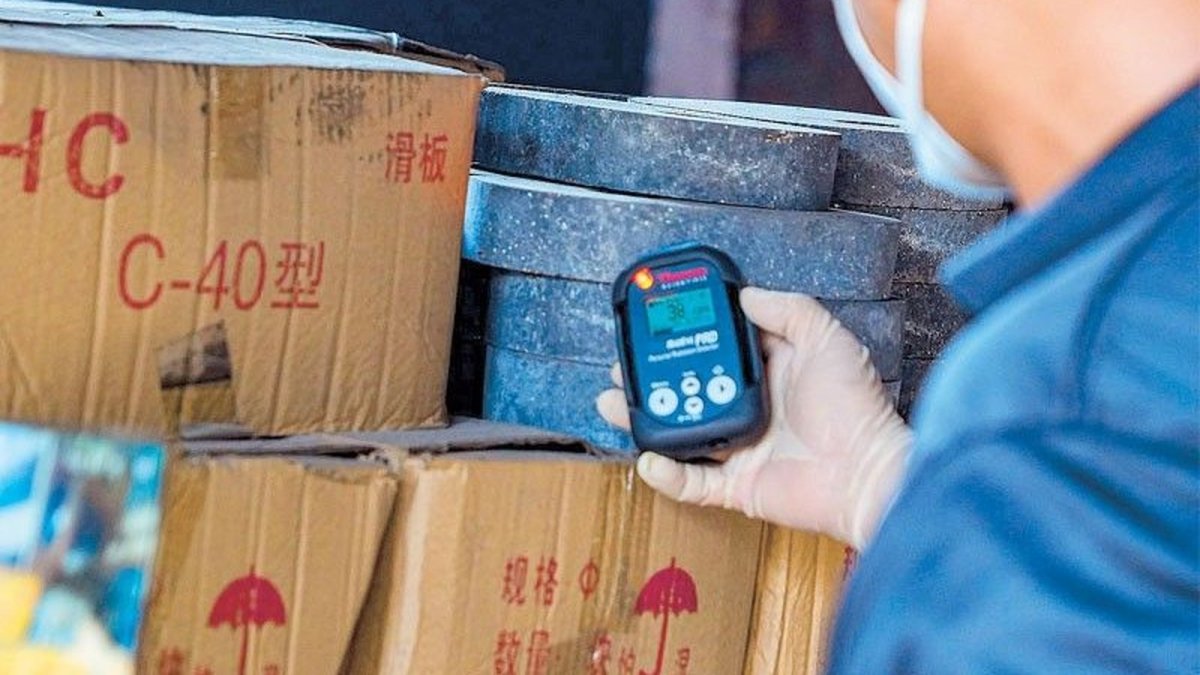
Radioactive Contamination Confirmed Across Operations
The PNRI confirmed the presence of radioactive isotopes including Uranium-238, Thorium-228, Thorium-232, and Radium-226 across the company's entire operations. These isotopes were found in finished DMS rebars, furnace-related materials, residual black sand, industrial powders, dust, wastes, and even wastewater. The PNRI stated emphatically that the company holds no license to acquire, possess, use, store, sell, transfer, import, or export nuclear or radioactive materials — a fundamental violation of Republic Act 5207, the Philippine Nuclear Safety Act.
The Department of Environment and Natural Resources (DENR) added another layer of condemnation, revealing that the company's environmental compliance certificate did not authorize the handling, processing, storage, or use of radioactive materials at the facility. This means DMS was operating entirely outside the bounds of its legal permits, exposing workers and the surrounding community to hazards that were never assessed or approved by any government agency.
174 Workers Rescued From Hazardous Environment
Perhaps the most human tragedy of this operation is the rescue of 174 Filipino workers who were laboring in an industrial environment saturated with radioactive-bearing materials, dust, fumes, wastes, and production residues. These workers were reportedly not using personal protective equipment (PPE), leaving them directly exposed to contaminants that could have long-term health consequences. The NBI and PAOCC teams found workers living and breathing in conditions that no Filipino should ever have to endure.
PAOCC Executive Director Undersecretary Benjamin Acorda Jr. warned about the long-term consequences for the next generation, noting that the effects of radiation exposure may not manifest for years or even decades. Acorda also pointed to a chilling precedent: a building in Pampanga collapsed even without an earthquake, suggesting that the substandard steel from DMS may already be responsible for structural failures across the country. The 21 suspects identified include corporate managers, supervisors, and administrative and technical personnel who allegedly knew about or facilitated these dangerous practices.
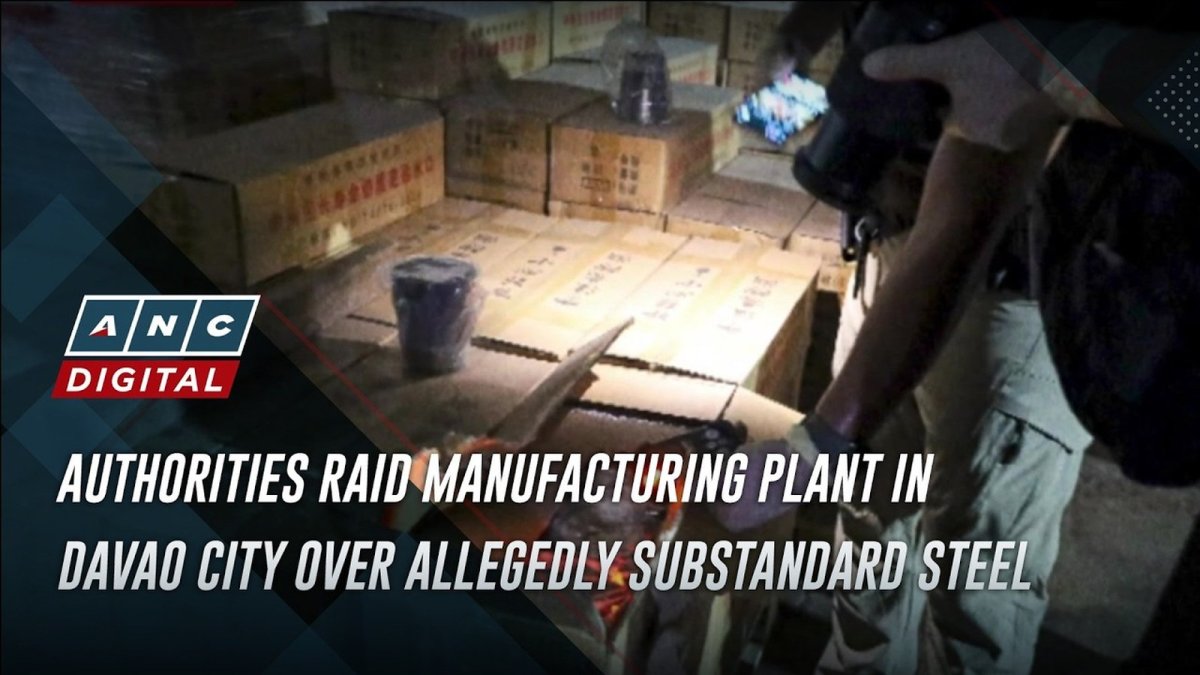
Half of Tested Steel Failed Safety Standards
The scale of the deception became clear through product testing conducted by authorities. Of 8 samples purchased from commercial hardware stores across Mindanao, 4 — a full 50 percent — failed the mandatory mass-variation requirement under PNS 49:2020, the Philippine National Standard for steel reinforcing bars. NBI Director Atty. Melvin Matibag stated that the radioactive materials found in the steel were "above normal" levels, and that half of the tested steels contained radioactive materials. This means that consumers walking into hardware stores in Mindanao had a 50-50 chance of buying dangerously contaminated construction materials.
The implications for public safety are staggering. On June 8, 2026, a magnitude 7.8 earthquake struck offshore Sarangani, causing significant damage across the region. Matibag revealed that approximately 70 percent of the defective steel bars used in buildings damaged in Sarangani, Davao del Sur, General Santos, and Davao Occidental carried DMS markings. This suggests that the company's products were not just marginally substandard — they were systematically failing at the exact moment when Filipino families needed their buildings to hold up against natural disasters.
Charges Filed Under Multiple Laws
The legal case against DMS is building on multiple fronts. Authorities will file charges under Republic Act 5207 (Philippine Nuclear Safety Act), Republic Act 6969 (Toxic Substances and Hazardous and Nuclear Wastes Control Act of 1990), Presidential Decree 1586 (Environmental Impact Statement System), and the Consumer Act of the Philippines. These overlapping charges reflect the multi-faceted nature of the violations — from nuclear safety to environmental protection to consumer rights.
Officials on scene Friday, August 14, included NBI Director Atty. Melvin Matibag, PAOCC Executive Director Undersecretary Benjamin Acorda Jr., and DENR Assistant Secretary Felix Alicer. Their presence underscored the seriousness of the operation and the coordination between multiple government agencies. Matibag said they will coordinate with the Davao City local government to identify who bought the steel, noting that LGU permits may help trace buyers. This tracing effort is crucial for public safety — families and developers who unknowingly used DMS products need to know if their buildings are at risk.
Political Context and Public Accountability
In a moment of levity during an otherwise grim press conference, Matibag quipped that he came to Davao "not for bato (rock) but for bakal (steel)" — denying any connection to the reported arrest of Senator Ronald dela Rosa. This remark highlighted the political sensitivity surrounding the operation, as Davao City has long been associated with the Duterte political dynasty. The NBI director's careful distancing from political matters suggests that the agency is focused purely on the public safety implications of the case.
The raid also raises questions about regulatory oversight in the construction materials industry. How did a company manage to operate for so long without detection? Why did it take an earthquake and a nuclear detection to expose what should have been caught by routine inspections? These are questions that Filipino taxpayers deserve answers to, especially as the government pushes for more infrastructure development under the "Build Better More" program. The DMS case reveals a dangerous gap in the regulatory framework that must be addressed urgently.
What to Watch For
In the coming weeks, the public should watch for several key developments. First, the NBI's coordination with the Davao City local government to trace buyers of DMS steel will be critical — this could lead to a recall of contaminated products and a public advisory for homeowners and developers. Second, the filing of formal charges against the 21 identified suspects will test whether the Philippine justice system can hold corporate actors accountable for endangering public health and safety. Third, the fate of the 174 rescued workers must be monitored — they need medical evaluation, compensation, and support for potential long-term health effects.
The 7 suspects still at large represent a continuing threat, and authorities must move quickly to apprehend them. Additionally, the PNRI and DENR should conduct a comprehensive assessment of the DMS facility and surrounding areas to determine the extent of environmental contamination. The black sand, industrial powders, and wastewater found on site could have contaminated soil and water sources in Barangay Ilang and beyond, affecting not just the workers but the entire community.
For Filipino families, the lesson from this raid is both alarming and empowering. It is alarming because it reveals that dangerous materials can enter the market through seemingly legitimate channels. But it is empowering because it shows that government agencies can act decisively when they work together. The NBI, PAOCC, PNRI, and DENR demonstrated that inter-agency cooperation can uncover and stop even the most sophisticated operations. The challenge now is to ensure that this vigilance continues and that the regulatory gaps that allowed DMS to operate are closed permanently.
As the investigation unfolds, Filipino consumers should demand greater transparency from hardware stores and construction suppliers about the origin and certification of their steel products. The government, for its part, must strengthen inspection protocols and impose stricter penalties for violations. The DMS case is not just about one company — it is about the integrity of the entire construction materials supply chain that Filipino families depend on for their homes, schools, hospitals, and workplaces. The next generation deserves buildings that are safe, steel that is strong, and a regulatory system that protects the public above all else.
By Bella Reyes, Staff Writer
This article was produced with AI-assisted research and editorial support. Reporting is based on sources cited in the article.
What's Your Reaction?
 Like
0
Like
0
 Dislike
0
Dislike
0
 Love
0
Love
0
 Funny
0
Funny
0
 Wow
0
Wow
0
 Sad
0
Sad
0
 Angry
0
Angry
0

Philippines/Southeast Asia Correspondent at Global1.News. Manila-based journalist covering Philippine politics, environment, maritime security, and social issues. Passionate about marine conservation and the communities protecting the Philippines' natural heritage.














Comments (0)