
Secret Service Confirms Awareness of Iranian Video Threatening Barron Trump's Life
The Islamic Republic of Iran has crossed a new threshold in its asymmetric confrontation with the United States. By broadcasting a direct threat against the life of a private citizen—the 20-year-old son of the American president—Tehran has signaled a shift from targeting the commander-in-chief to ta
The Islamic Republic of Iran has crossed a new threshold in its asymmetric confrontation with the United States. By broadcasting a direct threat against the life of a private citizen—the 20-year-old son of the American president—Tehran has signaled a shift from targeting the commander-in-chief to targeting his family, a move that carries profound implications for the ongoing war and the rules of engagement between the two nations.
Iranian State Media Airs Threat Against Barron Trump, Secret Service Confirms Awareness Amid Escalating US-Iran War
Beirut, Lebanon – August 27, 2026 — The U.S. Secret Service has confirmed it is investigating a direct threat against Barron Trump, the 20-year-old son of President Donald Trump, after Iranian state media aired a video explicitly detailing surveillance of the young man and calling for his death. The development marks a significant escalation in the psychological warfare component of the ongoing conflict between Washington and Tehran, a war that began with the U.S. assassination of Iran's Supreme Leader, Ayatollah Ali Khamenei.

A Video Threat and a $10 Million Bounty
On August 24, 2026, media entities affiliated with the Islamic Revolutionary Guard Corps (IRGC) produced and broadcast a roughly three-minute video on Channel 3 of Iranian state television. Titled "Where to Kill Barron Trump," the clip alleged that the president's son is being "fully monitored." It depicted dormitories at New York University's Constance Milstein & Family Global Academic Center, where Barron Trump attends school, alongside campus maps and images of the security vehicles that transport him. The video further claimed his gaming accounts had been located, named some of his friends, and referenced Trump Tower, his known residence in New York.
The broadcast concluded with an ominous message: "This is just the beginning. Barron Trump, wait for us." Reports from the New York Post and New York Sun indicate the video also places a $10 million bounty on Barron Trump. The Epoch Times, which independently reviewed the footage, noted that the statements within it could not be independently verified and that the claims may be fabricated or exaggerated for the purpose of intimidation.
On August 25, 2026, the U.S. Secret Service responded. Spokesman Nate Herring stated: "The U.S. Secret Service is aware of the video and investigates anything that can be perceived as a threat toward our protectees... Out of concern for operational security, we do not discuss matters of protective intelligence." The White House referred questions on the matter to the Secret Service. CNN previously reported that the agency had knowledge of the threat.
The Strategic Calculus: Why Target a President's Son?
The targeting of Barron Trump, who holds no public office and is not a politician, is widely viewed as an attempt to intimidate President Trump through his family. This is not the first such broadcast. In July 2026, an IRGC-affiliated news agency aired a similar video threatening First Lady Melania Trump, claiming to possess information on her security detail, her movements, and alleged security vulnerabilities. That video also ended with the same chilling refrain: "This is just the beginning. Barron Trump, wait for us."
From Tehran's perspective, this is a calculated escalation in a war it cannot win militarily. The IRGC, having lost its supreme leader to a U.S. strike, is leveraging its most potent remaining weapon: the ability to project fear and uncertainty into the American homeland. By broadcasting these threats on state media, Iran is not merely issuing a warning; it is engaging in a form of strategic communication designed to achieve several objectives simultaneously.
First, it aims to demonstrate that the regime retains the capacity to reach the American president's inner circle, even after suffering catastrophic blows to its military and command structure. Second, it seeks to sow domestic discord in the United States, potentially pressuring the administration through public anxiety over the safety of the first family. Third, it serves as a deterrent signal, warning Washington that any further escalation will be met with attacks on the most personal level possible.

Context: The War in Iran and the Assassination of Khamenei
This propaganda offensive must be understood within the broader context of the 2026 war in Iran. The conflict, launched by the Trump administration alongside Israel, began with the assassination of Ayatollah Ali Khamenei. That strike decapitated the Islamic Republic's leadership and triggered a full-scale military confrontation that continues to this day. Since that moment, Iranian media have circulated content threatening President Trump and his family members on multiple occasions, attempting to retaliate psychologically for a blow that has fundamentally altered the balance of power in the region.
The IRGC, while degraded, remains a formidable actor. Its ability to project power through proxies in Lebanon, Syria, Yemen, and Iraq is well-documented. However, the direct threat against Barron Trump represents a departure from the usual pattern of proxy warfare. It suggests a willingness to consider operations on U.S. soil, a capability that American intelligence and law enforcement have long feared but rarely seen explicitly threatened on state television.
The Secret Service's confirmation of awareness, while carefully worded, underscores the seriousness with which the U.S. government is treating this threat. The agency's statement—that it investigates "anything that can be perceived as a threat"—is standard protocol, but the fact that it issued a public statement at all indicates the threat has risen to a level requiring acknowledgment.
Sanctions Warfare: The "Economic D-Day"
Parallel to this psychological campaign, the Trump administration is intensifying its economic pressure on the Iranian regime. Treasury Secretary Scott Bessent has described a major new sanctions push as an "economic D-Day" against Iran, calling it the "greatest financial offensive" ever mounted against the country. This initiative aims to cripple the Iranian economy, sever its remaining financial lifelines, and accelerate the regime's collapse from within.
The combination of military defeat, leadership decapitation, and economic strangulation has pushed Tehran into a corner. In such circumstances, regimes often lash out in unpredictable ways. The threats against the Trump family may be an attempt to create leverage—a way to force Washington to reconsider its maximalist approach by raising the personal stakes for the president.
However, this strategy carries significant risks for Iran. By threatening a private citizen, Tehran has handed Washington a propaganda victory and a justification for further escalation. It also risks alienating international opinion, which may view the targeting of a president's son as an act of state-sponsored terrorism rather than legitimate resistance.
Regional Dynamics: Gulf States and Israel Watch Closely
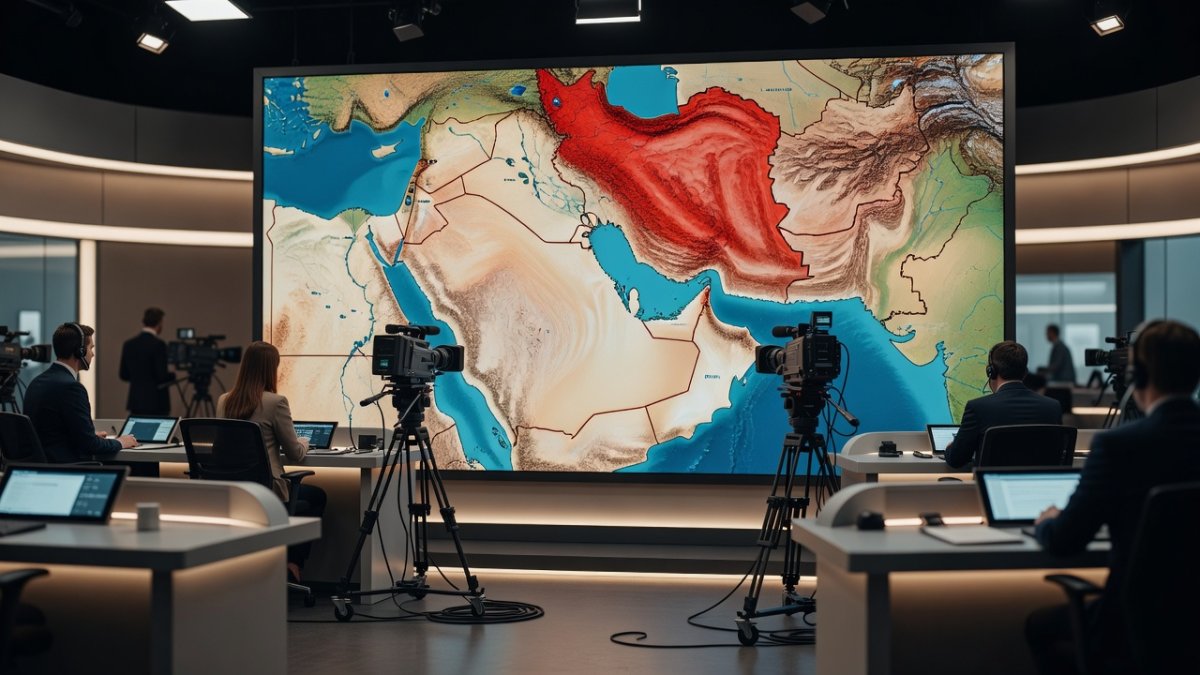
The Gulf states, which have long lived in the shadow of Iranian retaliation, are watching these developments with deep concern. The assassination of Khamenei and the subsequent war have fundamentally altered the security calculus of the region. Saudi Arabia and the United Arab Emirates, while supportive of the U.S. campaign against Iran, fear the consequences of a desperate and cornered Tehran. The threats against the Trump family suggest that Iran is willing to escalate beyond conventional military responses, raising the specter of attacks on U.S. interests throughout the Gulf.
Israel, which has been a key partner in the war against Iran, views the threats as confirmation of its own assessments regarding Iranian intentions. Israeli intelligence has long warned that the IRGC would seek to strike at American targets in retaliation for the assassination of Khamenei. The targeting of Barron Trump, while symbolic, reinforces the need for continued vigilance and preemptive action against Iranian networks operating abroad.
For the United States, the threat against Barron Trump raises difficult questions about the limits of retaliation. The Trump administration has already demonstrated its willingness to use decisive force against Iranian leadership. The question now is whether Washington will respond to this latest provocation with further military action, or whether it will rely on the Secret Service and law enforcement to protect the first family while continuing the economic and military pressure campaign.
Regional Implications: A New Phase in the Conflict
The threat against Barron Trump marks a new phase in the US-Iran conflict, one in which the boundaries between state and personal warfare have been deliberately blurred. Iran, having lost its supreme leader and facing economic collapse, is signaling that it will use every tool at its disposal to resist American pressure. The targeting of a president's son through state media is a calculated act of psychological warfare, designed to demonstrate that no American is beyond Tehran's reach.
As the war continues and sanctions tighten, the region braces for further escalation. The Gulf states, caught between American power and Iranian desperation, face an increasingly precarious position. Israel, emboldened by the weakening of its primary adversary, may see this as an opportunity to further degrade Iranian capabilities. And Washington, confronted with a direct threat to the first family, must weigh its response carefully.
The coming weeks will be critical. If the Trump administration interprets this threat as an act of war, the conflict could expand significantly. If it treats it as propaganda, the psychological battle will continue. Either way, the rules of engagement have changed. Iran has made clear that it will target the personal lives of American leaders, and the United States must now decide how to respond to a threat that transcends the traditional battlefield.
By Malik Hassan, Staff Writer
This article was produced with AI-assisted research and editorial support. Reporting is based on sources cited in the article.
What's Your Reaction?
 Like
0
Like
0
 Dislike
0
Dislike
0
 Love
0
Love
0
 Funny
0
Funny
0
 Wow
0
Wow
0
 Sad
0
Sad
0
 Angry
0
Angry
0
Middle East Correspondent at Global1.News. Based in Beirut, covering politics, conflict, energy, and society across the Middle East. Brings context and depth to a region often reduced to headlines.










Comments (0)