
Why Netanyahu is framing Türkiye as a political threat
The calculus behind Israeli Prime Minister Benjamin Netanyahu’s recent escalation against Türkiye extends far beyond the narrow confines of an election campaign. As Israel’s Oct.
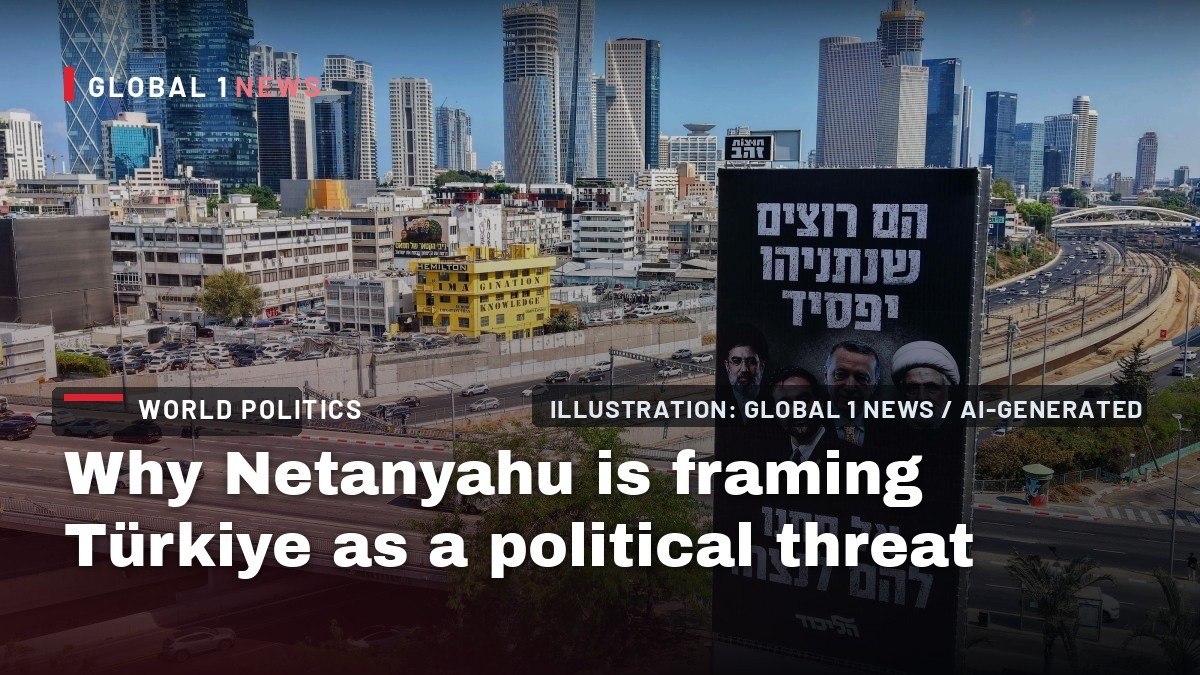
The calculus behind Israeli Prime Minister Benjamin Netanyahu’s recent escalation against Türkiye extends far beyond the narrow confines of an election campaign. As Israel’s Oct. 27 elections approach, the framing of Ankara as a strategic threat is converging with deeper structural shifts across the Middle East, from Syria’s reconstruction to the emergence of new power blocs and trade corridors that challenge Israel’s regional posture.
Netanyahu’s ‘Politics of Threat’ and the Abu al-Duhur Strike
Jerusalem - August 2026 - Israel’s Aug. 18 strikes on Syria’s Abu al-Duhur air base have been presented by the Netanyahu government as a preemptive measure against a potential Turkish military deployment. Yet the base had been out of service for a considerable period, suggesting the target was not an active capability but a future one that could emerge with Türkiye’s support. Israel claimed Syria was preparing to allow Turkish troops at the facility, a charge Damascus rejected. Syrian Foreign Minister Asaad al-Shaibani stated the base was being rehabilitated for the Syrian Air Force, with no plans for a permanent Turkish military presence.
The strike, therefore, appears less about immediate military necessity and more about signaling a red line. The Netanyahu government’s portrayal of Türkiye’s growing presence in Syria as an unacceptable security threshold raises a larger question: Is Israel concerned with what exists at Abu al-Duhur today, or with an emerging regional power architecture in which Türkiye is becoming increasingly central?
Domestic Pressures and Legal Vulnerabilities
Netanyahu’s political position ahead of the elections is precarious. The opposition has long criticized him over the security failure of Oct. 7, the Gaza war, and his government’s broader policies. Recent election polls have exposed this vulnerability, with opposition parties gaining ground and Likud potentially remaining within the low-to-mid 20-seat range. If Netanyahu fails to secure the electoral outcome he seeks, two major consequences could follow.
The first concerns his domestic political future. His ongoing corruption trial would once again become a central issue shaping his political position. A loss of political power could make his legal challenges increasingly significant. The second dimension concerns foreign policy and international law. The International Criminal Court (ICC) has issued an arrest warrant for Netanyahu in connection with the Gaza war. Although Israel and the United States reject the ICC’s jurisdiction and oppose the warrant, enforcement remains relevant for states that are parties to the court. Any future foreign travel by Netanyahu could continue to involve significant legal and diplomatic constraints.
Netanyahu therefore faces legal pressure on two fronts: internationally through the ICC process and domestically through cases before Israeli courts. It is within this context that his attempt to construct a powerful “external threat” ahead of the elections becomes particularly significant. Türkiye has increasingly become one of the actors through which this narrative is being concretized. Opposition circles within Israel have long criticized Netanyahu for using external security challenges to reinforce his own political position.
Syria’s Reconstruction as a Geopolitical Flashpoint
The first major development warranting consideration is Syria’s reconstruction. The fundamental question is why Israel is so concerned about Syria rebuilding its own military capacity. Following the fall of the Assad regime, Israel gained considerable operational freedom in Syrian airspace. The restoration of Syrian state capacity would mean a gradual narrowing of the operational space in which Israel has so far pursued aggressive and unilateral policies on Syrian territory.
From Türkiye’s perspective, strengthening Syria, rebuilding state capacity, restoring territorial integrity, and eliminating the operational space available to terrorist organizations are fundamental matters of stability. Stability, like conflict, tends to spread and therefore constitutes one of the essential conditions for regional peace. The Abu al-Duhur strike, in this context, is not merely a conjunctural military move but a signal of Israel’s opposition to any reconstruction that could limit its freedom of action.
The ‘Mecca Agreement’ and a New Power Center
The second development is the emerging security framework between Türkiye, Saudi Arabia, and Pakistan, referred to as the “Mecca agreement.” This represents the formation of a significant new center of power in the region. Yet this should not be understood solely in terms of military capabilities. It offers a much broader regional vision extending from defense and energy to food security and economic cooperation, based on a fundamentally different approach from Israel’s predominantly security-centered regional policies.
Palestine constitutes another important dimension of this divergence. Türkiye, Saudi Arabia, and Pakistan all support the establishment of an independent Palestinian state based on the 1967 borders. Their growing strategic cooperation therefore represents not only a potential shift in the military balance but also the emergence of a political center capable of developing a more coordinated position on the Palestinian question. This alignment directly challenges Israel’s efforts to isolate the Palestinian issue and normalize relations with Gulf states on its own terms.
Connectivity Competition: Development Road, Hejaz Railway, and IMEC
The third development concerns the changing geography of regional connectivity, particularly through the Development Road and discussions about reviving the Hejaz Railway. Power competition in the Middle East is no longer conducted solely through territory and military capabilities. It increasingly involves energy networks, railways, ports, and trade corridors.
Israel has long sought to position itself as a central actor in the corridor competition across the Eastern Mediterranean and the Middle East. The India-Middle East-Europe Corridor (IMEC), together with Israel’s growing energy and connectivity relations with Greece and the Greek Cypriot administration, forms part of this geopolitical strategy. In contrast, the Development Road, a potentially revived Hejaz Railway, and Syria’s reintegration into regional transportation networks could create an alternative Afro-Eurasian connectivity architecture centered increasingly on Türkiye.
Such a transformation could reshape existing routes by connecting the Gulf to Türkiye and, from there, to the Black Sea, the Caucasus, the Mediterranean, and Europe. This would bypass Israel as a transit hub and diminish its strategic relevance in the corridor competition. Israel’s increasingly confrontational approach toward Türkiye should therefore not be interpreted solely through bilateral tensions or Netanyahu’s electoral strategy. Syria’s reconstruction, the new center of power emerging around the “Mecca agreement,” and the development of Türkiye-centered energy and trade corridors are different dimensions of the same geopolitical transformation.
The Shifting Syrian Picture: YPG Dissolution and Turkish Verification
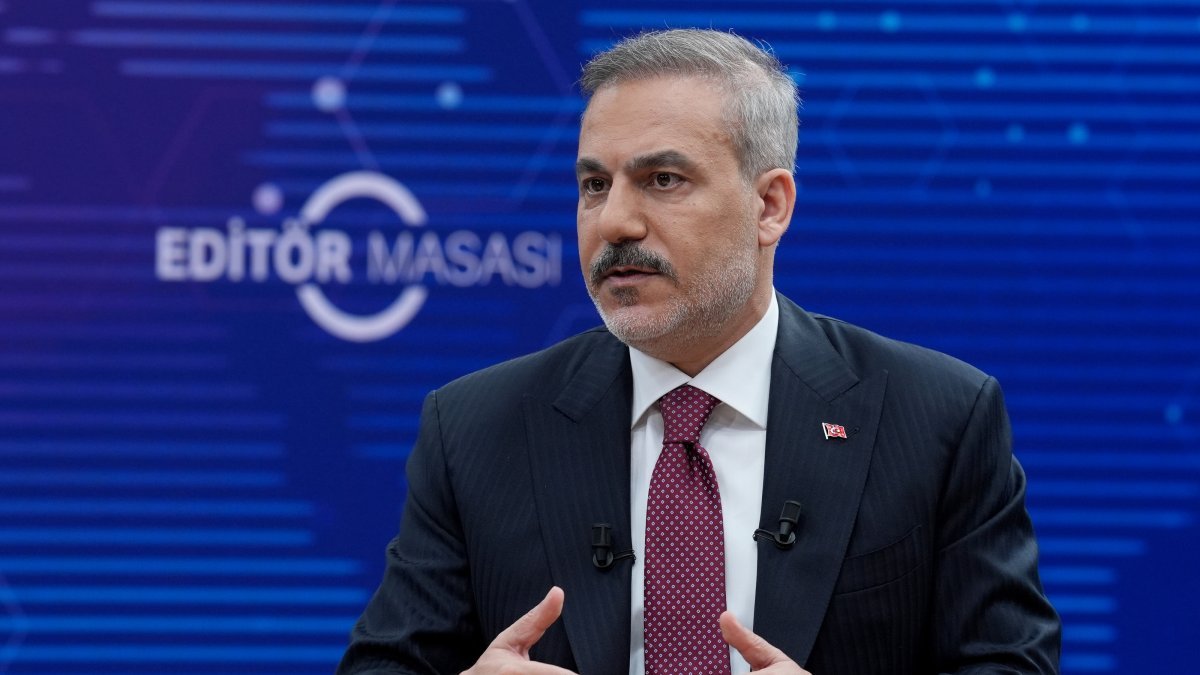
Adding to the complexity is the evolving situation in northeastern Syria. Turkish Foreign Minister Hakan Fidan on Wednesday cautiously welcomed an announcement that the terrorist PKK/YPG’s self-proclaimed autonomous administration and its affiliated military and civilian structures had been dissolved. Fidan said Türkiye would closely examine whether the declaration is being implemented on the ground.
“Our job is to act professionally and verify its implications on the ground. If it is as stated, then of course this is a welcome development,” Fidan told reporters during a visit to the eastern province of Elazığ. He said such a move would complement Türkiye’s objectives in Syria and could help strengthen ties between the country’s Kurdish and Arab communities while contributing to an environment in which all Syrians can look to the future with greater confidence.
Fidan stressed that Ankara supports protecting the identity of Syria’s Kurdish population while rejecting any steps that could undermine the country’s national unity, sovereignty, or territorial integrity. “We underline the importance of preserving Kurdish identity and avoiding any denial of that identity, while at the same time ensuring that Syria’s national unity, sovereignty and territorial integrity are not compromised,” he said. Fidan voiced hope that the emerging process would allow outstanding disputes to be resolved through dialogue and peaceful means.
The YPG was established in 2015 with U.S. backing as the Syrian branch of the PKK terrorist group. Washington partnered with the group in its campaign against Daesh despite longstanding objections from NATO ally Türkiye over its ties to the PKK. The PKK, which has waged a decades-long campaign against Türkiye, is designated a terrorist group by Türkiye, the U.S., and the European Union. The group became Washington’s principal partner on the ground against Daesh and eventually gained control of large parts of northern and northeastern Syria, including areas containing much of the country’s oil resources. The Syrian administration and the YPG terror group reached a new agreement Jan. 29 that provided for a cease-fire and the group’s gradual integration into state institutions.
Fidan’s cautious approach reflects Ankara’s broader strategy: verification over assumption, and integration over fragmentation. The dissolution announcement, if implemented, would remove a major irritant in Türkiye-Syria relations and further consolidate Damascus’s authority, which in turn would narrow Israel’s operational space in Syrian territory.
Regional Implications
The convergence of these developments points to a fundamental reordering of Middle East power dynamics. Israel’s framing of Türkiye as a political threat is not merely an electoral tactic but a recognition of a structural shift. The emergence of a Türkiye-Saudi Arabia-Pakistan axis, the reconstruction of Syrian state capacity, and the development of alternative trade corridors all challenge Israel’s ability to project power unilaterally.
For the region, this means a more multipolar security environment. The Gulf states, particularly Saudi Arabia, are diversifying their partnerships beyond the traditional U.S.-Israel alignment. The “Mecca agreement” signals a willingness to coordinate on defense and economic issues with Ankara and Islamabad, potentially reshaping the balance of power in the Eastern Mediterranean and the Levant.
For energy markets and trade, the competition between IMEC and the Development Road will determine the flow of goods and resources across Afro-Eurasia. A Türkiye-centered connectivity architecture would link the Gulf to Europe via Anatolia, bypassing Israel and potentially reducing its leverage in regional diplomacy.
For the Palestinian question, the alignment of Türkiye, Saudi Arabia, and Pakistan on a two-state solution based on the 1967 borders creates a more coordinated political front. This could complicate Israeli efforts to manage the issue bilaterally with individual Arab states.
Netanyahu’s strategy of framing Türkiye as a threat may resonate domestically in the short term, but it does not alter the underlying geopolitical trajectory. The question is no longer whether Türkiye will play a central role in the region’s future, but how Israel will adapt to a reality in which it is no longer the sole arbiter of security and connectivity in the Middle East.
By Malik Hassan, Staff Writer
This article was produced with AI-assisted research and editorial support. Sources: Daily Sabah.
What's Your Reaction?
 Like
0
Like
0
 Dislike
0
Dislike
0
 Love
0
Love
0
 Funny
0
Funny
0
 Wow
0
Wow
0
 Sad
0
Sad
0
 Angry
0
Angry
0

Middle East Correspondent at Global1.News. Based in Beirut, covering politics, conflict, energy, and society across the Middle East. Brings context and depth to a region often reduced to headlines.












Comments (0)