
Ryanair Window Blowout: NTSB Report Reveals Engine Failure
When a Ryanair jet bound for Germany suffered a catastrophic engine failure at 15,000ft, a passenger was partially sucked through a shattered cabin window — an ordeal that has now been laid bare in a preliminary report from US investigators. For the millions of Britons who fly Ryanair each year, the findings raise urgent questions about engine maintenance, regulatory oversight, and what happens when a routine budget flight turns into a fight for survival.
When a Ryanair jet bound for Germany suffered a catastrophic engine failure at 15,000ft, a passenger was partially sucked through a shattered cabin window — an ordeal that has now been laid bare in a preliminary report from US investigators. For the millions of Britons who fly Ryanair each year, the findings raise urgent questions about engine maintenance, regulatory oversight, and what happens when a routine budget flight turns into a fight for survival.
Engine Blade Failure That Blew Out Ryanair Window: NTSB Report Exposes Chain of Events Over Greece
London, UK – 14 August 2026 — The National Transportation Safety Board (NTSB) has released its preliminary report into the harrowing mid-air emergency aboard Ryanair flight FR1879, confirming that a fractured fan blade in the aircraft's right engine caused the cabin window to blow out, seriously injuring a 61-year-old passenger. The incident, which occurred on 10 July 2026, has sent shockwaves through the aviation industry and prompted renewed scrutiny of one of the world's most widely used jet engines.
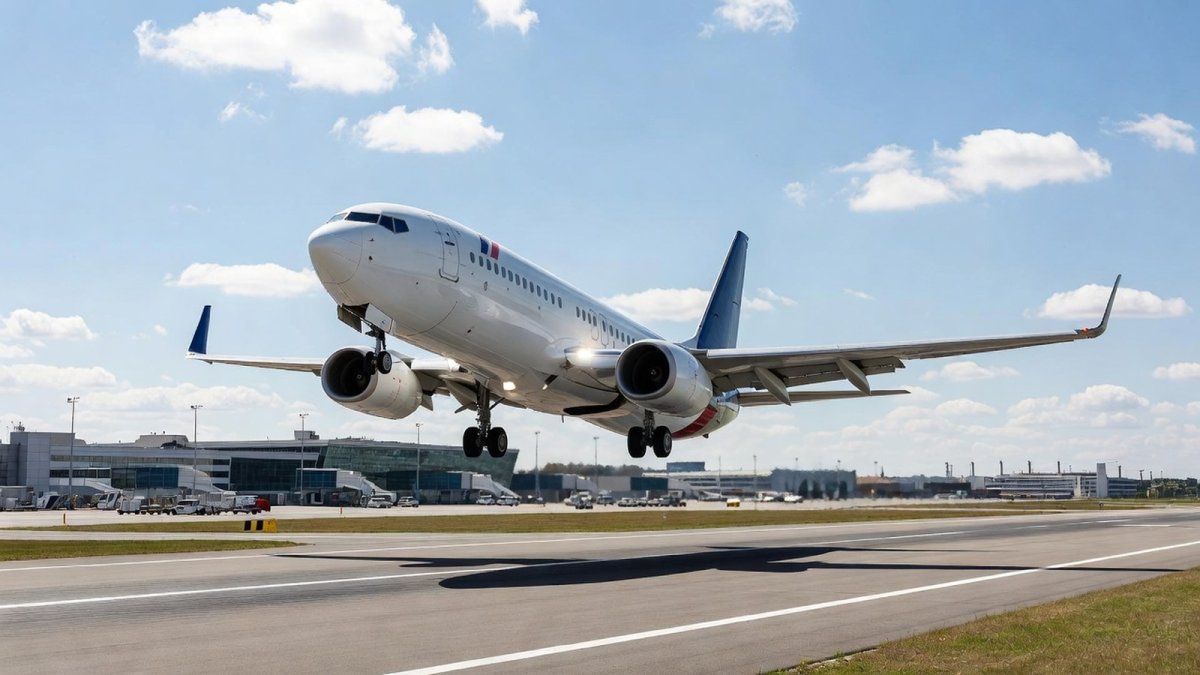
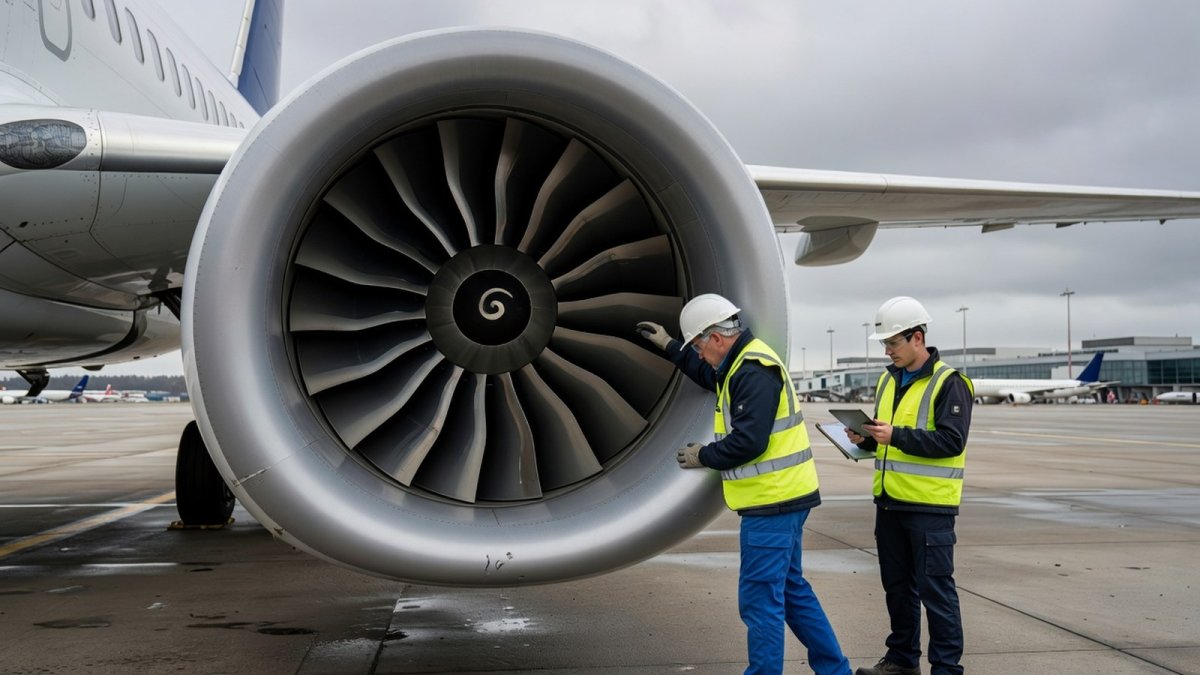
The aircraft, a Boeing 737-800 registered as 9H-QEU and operated by Ryanair subsidiary Malta Air, was climbing through approximately 16,000ft near Polykastro, Greece — just 4.5 nautical miles south of the border with North Macedonia — when the crew received a HIGH VIBRATION indication on the No 2 (right) engine. The engine, a CFM International CFM56-7B26 built by the joint venture between Safran Aircraft Engines and GE Aerospace, then suffered a fan-blade-out (FBO) failure that sent debris tearing through the fuselage.
According to the NTSB report, fan blade No. 10 fractured and separated below the blade platform, with outer blade tips fracturing on two additional blades. Three loose fan blade fragments were recovered. The debris struck the fuselage and right horizontal stabiliser, penetrating the pressurised cabin through the window at row 11 and the lower lobe fuselage skin behind the right wing-to-body fairing. The aircraft, delivered new to Ryanair in 2008 and 18 years old per Flightradar24 data, was carrying 149 passengers and four flight attendants.
UK Aviation Safety Framework — What the CAA and AAIB Will Be Watching
For UK regulators, this incident is being monitored with intense interest. The Civil Aviation Authority (CAA) and the Air Accidents Investigation Branch (AAIB) oversee aviation safety in Britain, while the European Union Aviation Safety Agency (EASA) sets certification standards across the continent. The CFM56 engine is one of the most widely used commercial jet engines in the world, powering countless aircraft in UK airline fleets — meaning the findings have direct relevance to British aviation.
The investigation itself has taken a complex international path. The Republic of North Macedonia initially opened an investigation given the proximity to its border, but on 16 July the NTSB announced that, following further analysis of the flight track, investigators determined the accident occurred in Greek airspace. Under ICAO Annex 13, the Hellenic Air and Rail Safety Investigation Authority elected to delegate the investigation to the NTSB, which accepted and is now leading the probe, with Greece participating as Accredited Representative.
Notably, the NTSB has confirmed that the engine had experienced four suspected bird strikes in the 12 months preceding the incident, with bird remains reportedly found in two of those earlier cases. Bird remains and feathers were also found inside the damaged engine. Maintenance inspections following the four earlier suspected bird strikes did not identify damage, and fan blades underwent ultrasonic inspections in November 2025 and May 2026 — with no findings.
What This Means for UK Passengers
Ryanair is Europe's largest budget carrier and one of the UK's biggest airlines by passenger numbers, operating from bases including London Stansted, Manchester, Luton, Edinburgh, Leeds Bradford, East Midlands, Birmingham and Bristol. Memmingen, the flight's destination serving the Munich area, is a popular Ryanair route. For the millions of Britons who fly with the airline each year, the question is simple: could this happen again?
The NTSB has noted that the Federal Aviation Administration (FAA) issued three airworthiness directives in 2025 requiring modifications intended to reduce the risk of engine inlet and cowling debris striking the aircraft following a fan blade failure. These include revised fasteners, spacers, and maintenance procedures. The Ryanair aircraft had not yet received the major modifications required by those directives — operators have until July 2028 to complete them. However, the NTSB has not said the absence of those modifications contributed to the July accident.
For UK holidaymakers, the incident is a stark reminder that even routine budget flights carry inherent risks. Bird strikes are a known hazard at UK airports, and the CAA and AAIB will be examining whether current inspection regimes are sufficient to detect the kind of damage that may have led to this failure. The final NTSB report, which has not yet been released, is expected to provide a definitive answer.
Deeper Analysis — Echoes of Southwest Airlines Flight 1380
The incident has drawn inevitable comparisons with the 2018 Southwest Airlines Flight 1380 fan blade failure, which broke a passenger window and killed passenger Jennifer Riordan. In that case, a CFM56 engine on a Boeing 737-700 suffered a fan blade failure that sent debris through the fuselage, leading to a catastrophic decompression. The parallels are striking — and the aviation industry will be watching closely to see whether the NTSB identifies systemic issues with the CFM56 engine family.
The sequence of events on FR1879 is now well documented. The crew initially reduced power and ran the checklist after the first vibration indication, and the vibration reduced. But then vibrations increased significantly, a loud bang was heard, and the autopilot disengaged. The cabin altitude warning sounded, crew donned oxygen masks, declared an emergency, and began an immediate descent. The crew secured the No 2 engine below 10,000ft and returned to Thessaloniki, landing uneventfully about 75 minutes after departure. Flightradar24 data shows the aircraft climbed past 15,000ft about six minutes after departure, descended to about 6,000ft to burn fuel for 30 minutes, and returned about an hour after takeoff.
Inside the Cabin — The Fight to Save Ljubisa Karović
In the cabin, chaos unfolded. Oxygen masks dropped, and flight attendants preparing for cabin service reported hearing and feeling a loud continuous vibration and seeing a small amount of fog or smoke before the masks deployed. One flight attendant saw the passenger in seat 11F partially lodged in the damaged window — the entire window was missing. Passengers pulled him back inside, with one passenger fetching a heavy metal box to block the hole. The injured passenger was moved to row 12 and attended to by a doctor who was also a passenger.
The ordeal lasted an estimated one-and-a-half to two minutes, but for those on board it must have felt like an eternity. Passengers told Greek media they heard a loud bang, felt the aircraft begin to lose altitude, and watched as oxygen masks dropped from the ceiling. Panic spread through the cabin as bottles and other objects flew through the air. Channel 4 News has been covering the incident since the day it happened, and its reporting has detailed how fellow passengers — not crew — were the first to reach the injured man, holding him in place until he could be pulled fully back inside.
Reaction and Response — The Passenger, Ryanair, and the Regulators
The passenger at the centre of the ordeal, Ljubisa Karović, a 61-year-old Serbian entrepreneur seated in window seat 11F, has spoken publicly about his experience. In an interview with the Guardian and Irish Times on 22 July, he said: "I am lucky. I don't remember much and my head and neck still hurt but I am still alive. It could have been the seatbelt, the fact that I was still strapped in. But maybe it is fate. I believe in God and I thank him every day." He added: "The explosion is what I remember. It's the noise before the chaos, the noise that is always there when I close my eyes to sleep."
Karović's head and right arm were sucked out of the broken window at about 15,000ft while the aircraft moved at more than 600km/h, according to his lawyer Vasilis Tsiaras, who described him as "being alive by mistake" and said he "dipped in and out of death". Karović suffered neck and shoulder injuries and friction burns on his right arm ascending to his armpit and chest. He fainted two or three times — once outside the aircraft — and his face was briefly swollen and deformed from the pressure and rush of air. The moments he was "half in and out of the plane" lasted an estimated one-and-a-half to two minutes.
His wife Svetlana, seated in 14C three rows behind, paid tribute to the passengers who saved her husband: "I rushed over too. None of the cabin crew helped. It was the passengers. One man, I think he was an Albanian, was incredible. He did all he could to bring him in and then tried to block the window, first with a bag that was immediately sucked out and then with a suitcase, which worked. We are eternally grateful to him."
Ryanair initially said the flight "returned to Thessaloniki shortly after take-off when a passenger window dislodged in-flight". The airline has said it will not comment on the preliminary report, or on whether Karović would receive compensation, until after the final report is published. The airline's finance chief said last month it was "way too early" to discuss compensation. Ryanair has defended its cabin crew's performance as a "phenomenal job".
The NTSB, however, has reprimanded Ryanair chief executive Michael O'Leary after he told investors last month that the investigation was focused on foreign object damage and not the plane's age or maintenance history. The NTSB said investigators had not ruled anything out and O'Leary was not authorised to discuss it. Karović's lawyer has confirmed there is no complaint with the pilot, who followed safety protocols, but noted that neither Ljubisa nor Svetlana had been called or received assistance or support from Ryanair as of 22 July, although their son Danjell, who booked the flight, had been contacted by the company.
The Bottom Line — What Comes Next
The aircraft remains on the ground in Thessaloniki, and the final NTSB report has not yet been released. Boeing and CFM International are assisting with the investigation, which is ongoing. For UK passengers, the key takeaway is that the regulatory framework — from the CAA and AAIB to EASA and the FAA — is designed to learn from incidents like this and prevent recurrence. The FAA's airworthiness directives, while not yet fully implemented on this aircraft, represent a proactive step toward addressing the risks identified in previous fan blade failures.
But the human cost of this incident cannot be overstated. A man was pulled back from the brink of death by fellow passengers at 15,000ft, and his life has been irrevocably changed. As the investigation continues, the aviation industry — and the millions of Britons who fly Ryanair each year — will be watching closely to see what lessons are drawn from this terrifying ordeal. The final report is expected to provide the definitive account of what went wrong, and what must change to ensure it never happens again.
By Erica Thornton, Staff Writer
This article was produced with AI-assisted research and editorial support. Reporting is based on sources cited in the article.
What's Your Reaction?
 Like
0
Like
0
 Dislike
0
Dislike
0
 Love
0
Love
0
 Funny
0
Funny
0
 Wow
0
Wow
0
 Sad
0
Sad
0
 Angry
0
Angry
0

US Politics and Policy Correspondent at Global1.News. Based in Washington DC, covering American politics, policy, elections, and the courts. Knows how the system works and tells you what it actually means.












Comments (0)