
PM Anutin to Visit Australia and New Zealand to Expand Trade and Investment
PM Anutin to Visit Australia and New Zealand Next Week in Push for Trade, Investment and Strategic Ties BANGKOK — Prime Minister Anutin Charnvirakul will embark on official visits to Australia and New Zealand next week, marking the first such trips by a Thai leader in over a decade and signalling a renewed focus on expanding markets for Thai goods and deepening strategic partnerships in the Pacific region.
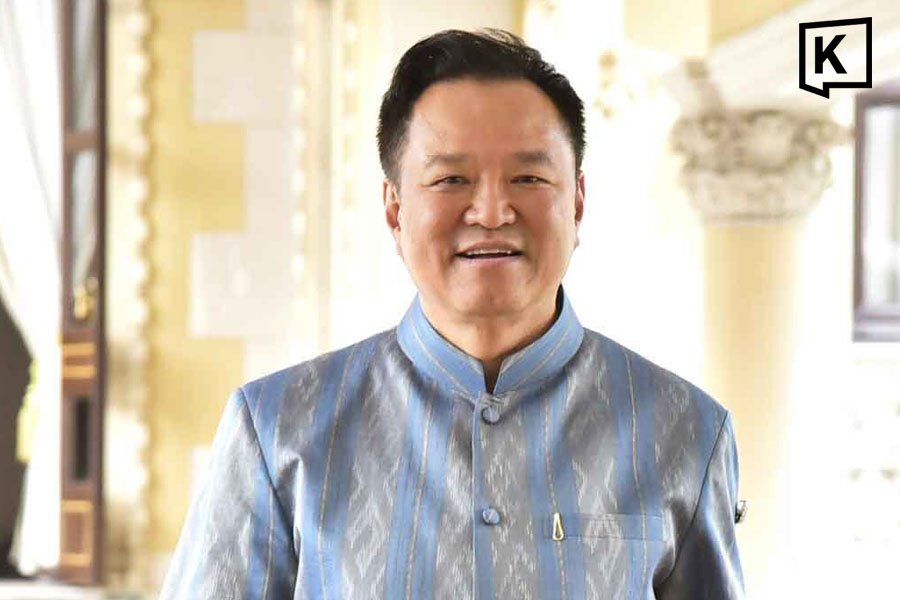
PM Anutin to Visit Australia and New Zealand Next Week in Push for Trade, Investment and Strategic Ties
BANGKOK — Prime Minister Anutin Charnvirakul will embark on official visits to Australia and New Zealand next week, marking the first such trips by a Thai leader in over a decade and signalling a renewed focus on expanding markets for Thai goods and deepening strategic partnerships in the Pacific region.
The visits, announced by government spokesperson Rachada Dhnadirek on Friday, will see the Prime Minister travel to Australia from Monday 17 August to Thursday 20 August, followed by New Zealand from Thursday 20 August to Saturday 22 August. Both trips are made at the invitation of the respective prime ministers, Anthony Albanese of Australia and Christopher Luxon of New Zealand.
The Australia leg is particularly significant, being the first official visit by a Thai prime minister in 14 years. It comes ahead of the 75th anniversary of Thai-Australian diplomatic relations in 2027, a milestone that both governments are expected to use as a springboard for closer cooperation. The New Zealand visit, the first in 13 years, coincides with the 70th anniversary of diplomatic relations between Bangkok and Wellington this year.
Trade, Investment and Security Top the Agenda in Canberra
During his four-day stay in Australia, Prime Minister Anutin will hold bilateral talks with Prime Minister Albanese covering trade, investment, security, clean energy and innovation. The discussions will focus on implementing the Thailand-Australia Strategic Partnership Joint Plan of Action (2026-2029), a framework designed to translate high-level commitments into concrete cooperation across multiple sectors.
Government sources indicate that dairy-import rules and high-value technology cooperation will be key items on the agenda. The dairy issue has been a long-standing point of discussion between the two countries, with Thai producers seeking clearer market access conditions while Australian exporters look to expand their footprint in Southeast Asia. The technology component reflects a shared interest in moving beyond traditional agricultural and manufacturing trade into areas such as digital services, advanced manufacturing and research collaboration.
The Prime Minister will lead a delegation of Thai government and private-sector representatives, underscoring the commercial weight of the trip. The visit follows a recent telephone conversation between Anutin and Albanese that emphasised trade, investment and security, setting the stage for what officials describe as a "substantive and forward-looking" engagement.
New Zealand Leg: Celebrating 70 Years of Relations
From Thursday to Saturday, Prime Minister Anutin will be in New Zealand, where he will meet Prime Minister Christopher Luxon and engage with Thai and New Zealand business leaders. The focus will be on promoting bilateral trade and investment and strengthening economic cooperation, with the 70th anniversary of diplomatic relations providing a celebratory backdrop.
New Zealand, while a smaller trading partner than Australia, offers significant opportunities for Thai exporters, particularly in dairy, meat, and high-value processed foods. The country is also a gateway to the broader Pacific region, and Thai officials view the visit as a chance to strengthen ties that extend beyond simple merchandise trade into education, tourism and people-to-people links.
The New Zealand leg will include dedicated sessions with business communities from both countries, aimed at identifying new investment opportunities and removing barriers to trade. Thai investors have shown growing interest in New Zealand's agri-tech and renewable energy sectors, while New Zealand companies are increasingly looking to Thailand as a regional manufacturing and logistics hub.
Building on Regional Momentum: Indonesia Visit and ASEAN Chairmanship
The upcoming trips come on the heels of Prime Minister Anutin's visit to Indonesia earlier this month, on 3-4 August, where he held talks on trade and security and delivered an address on ASEAN affairs. That visit was widely seen as a preparatory step for Thailand's assumption of the ASEAN chairmanship in 2028, a role that will place Bangkok at the centre of regional diplomacy.
The sequencing of these visits — Indonesia, then Australia, then New Zealand — reflects a deliberate strategy by the government to strengthen Thailand's position within ASEAN while simultaneously deepening ties with key dialogue partners. For Thai readers, this is a clear signal that the government is prioritising economic diplomacy as a core pillar of its foreign policy, particularly as global supply chains continue to shift and competition for investment intensifies across Southeast Asia.
Analysts note that Thailand's 2028 ASEAN chairmanship will require strong relationships with all major partners, and these visits are an early investment in that diplomatic capital. The ability to show concrete outcomes — such as progress on the Australia Strategic Partnership Joint Plan of Action or new investment commitments from New Zealand — will be crucial when Thailand takes the helm of the regional bloc.
What This Means for Thai Businesses and the Region
For Thai businesses, the significance of these visits cannot be overstated. Australia and New Zealand are both members of the Regional Comprehensive Economic Partnership (RCEP) and the Comprehensive and Progressive Agreement for Trans-Pacific Partnership (CPTPP), and Thailand has a long-standing free trade agreement with Australia that has been in force since 2005. That agreement has already eliminated tariffs on the vast majority of goods, but non-tariff barriers — such as the dairy-import rules mentioned on the agenda — remain a point of friction.
Thai exports to Australia are dominated by rice, rubber, processed food, automotive parts and tourism-related services. Australia is one of the largest markets for Thai rice in the region, and Thai automotive components have carved out a significant niche in the Australian supply chain. The clean energy agenda is particularly relevant, as both countries have committed to ambitious net-zero targets and are exploring cooperation in solar, wind and green hydrogen technologies.
For the broader Southeast Asian region, these visits reinforce Thailand's role as a bridge between ASEAN and the Pacific economies. As the second-largest economy in ASEAN, Thailand's trade agreements and diplomatic relationships set precedents that other member states often follow. A successful visit could pave the way for deeper ASEAN-Australia and ASEAN-New Zealand cooperation, particularly in areas like digital trade, food security and climate resilience.
Tourism ties are also expected to feature in the discussions. Australia is consistently among the top sources of tourists to Thailand, with hundreds of thousands of Australian visitors each year, while New Zealand contributes a smaller but steady stream of high-value travellers. Thai students studying in Australia and New Zealand number in the tens of thousands, creating a strong people-to-people foundation that both governments are keen to build upon.
Strategic Partnerships in a Shifting Geopolitical Landscape
The visits also carry a strategic dimension that extends beyond economics. In a region where major powers are vying for influence, Thailand's engagement with Australia and New Zealand — both members of the Five Eyes intelligence network and close allies of the United States — signals a balanced approach to foreign policy. Bangkok has long pursued a policy of engaging with all major powers, and these visits reinforce that stance while adding substance to the "strategic partnership" label that has been attached to Thailand-Australia relations.
Security cooperation is explicitly on the agenda for the Australia talks, and while details are scarce, observers expect discussions on maritime security, counter-terrorism and cyber resilience. Thailand's location at the heart of Southeast Asia makes it a critical partner for Australia's defence and security architecture, and the two countries have a history of military exercises and intelligence sharing that is likely to be deepened.
For New Zealand, the relationship is less security-focused but no less important. Wellington has carved out a niche as a mediator and consensus-builder in the Pacific, and Thailand's engagement with New Zealand is seen as a way to strengthen ties with the broader Pacific Islands region, where China has been expanding its influence in recent years.
Looking Ahead: Concrete Outcomes Expected
Government spokesperson Rachada Dhnadirek said the Prime Minister's visits are expected to yield concrete outcomes, including new trade and investment agreements, enhanced cooperation frameworks and strengthened people-to-people ties. The government has not released specific targets, but officials have indicated that several memoranda of understanding are likely to be signed during the trips.
For Thai exporters, the most immediate benefit will be renewed attention on market access issues and a clear signal that the government is actively working to remove barriers. For Thai investors, the visits open doors to new opportunities in clean energy, technology and agri-business. And for the broader Thai public, the trips reinforce the country's position as a confident, engaged player on the world stage.
As Prime Minister Anutin prepares to board the plane next Monday, the expectations are clear: this is not a ceremonial visit, but a working trip designed to deliver tangible results for Thai businesses and to position Thailand for its 2028 ASEAN chairmanship. The coming week will show whether those expectations are met.
This article was produced with AI-assisted research and editorial support. Sources: Khaosod English, Royal Thai Government announcements, Thai Public Relations Department, Thai Rath.
By Ann Srisawat, Staff Writer
What's Your Reaction?
 Like
0
Like
0
 Dislike
0
Dislike
0
 Love
0
Love
0
 Funny
0
Funny
0
 Wow
0
Wow
0
 Sad
0
Sad
0
 Angry
0
Angry
0

Southeast Asia Correspondent at Global1.News. Based in Bangkok, covering Thai and Southeast Asian politics, economy, technology, and culture. Deep regional perspective on one of the world's most dynamic regions.















Comments (0)