
Russia's Black Sea Stranglehold Chokes Odesa's Lifeline
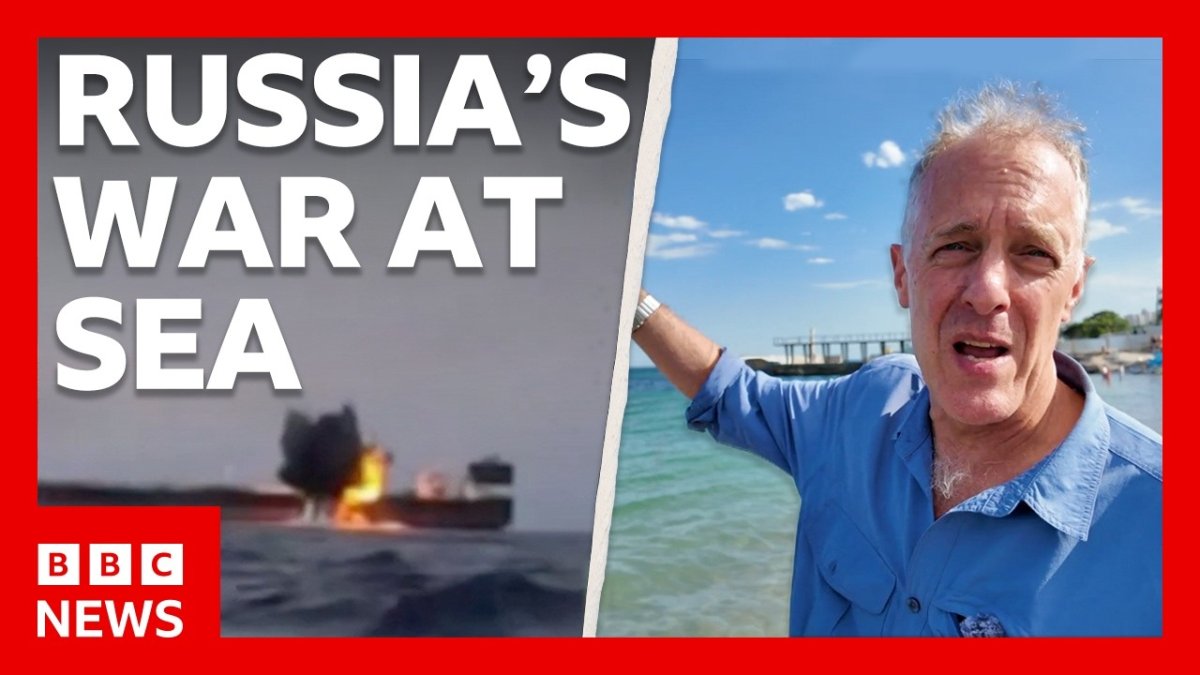
In a recent BBC News report from Odesa, the Ukrainian port city on the Black Sea, the focus turns to how residents navigate daily life amid intensifying Russian sea attacks. The video highlights Odesa as Ukraine's third largest city and former economic powerhouse, now facing a campaign that occupies much of the coastline while locals persist with routines despite the threats.
In a recent BBC News report from Odesa, the Ukrainian port city on the Black Sea, the focus turns to how residents navigate daily life amid intensifying Russian sea attacks. The video highlights Odesa as Ukraine's third largest city and former economic powerhouse, now facing a campaign that occupies much of the coastline while locals persist with routines despite the threats.
Russia's Black Sea Stranglehold Chokes Odesa's Lifeline
Odesa, Ukraine – 9 August 2026 — Russia is systematically strangling Ukraine's commercial links to the outside world, launching attacks all along the country's Black Sea coastline. From damaged port infrastructure to listing ships with blackened bridges, the evidence of a new maritime campaign is everywhere. The approaches to Ukraine's once-bustling ports — Odesa, Chornomorsk, Pivdennyi — are now almost devoid of ships.

Russia's New Black Sea Campaign: A City Under Fire from the Waves
The last few weeks have been the worst yet for Ukraine's maritime economy. According to Ukraine's port administration, July saw 57 Russian attacks on civilian vessels, 22 of them at sea, and a further 67 hits on port infrastructure. While Russian forces have attacked international vessels before, they have never been so numerous or so deadly. On July 19, a Turkish-owned cargo vessel, the Golden Leo, was struck by three Russian missiles, killing nine Indian and Syrian crew members and a Ukrainian pilot. The ship, carrying Ukrainian corn, sank off Odesa a week later. This escalation marks a clear shift in tactics that directly targets commercial traffic.
According to the global shipping journal Lloyd's List, the Black Sea may now be the most dangerous place for shipping in the world, with July the deadliest month for merchant seamen since Russia's full-scale invasion began. The port manager at one of Odesa's facilities told the BBC that recent alerts have forced the port to shut down for 15 out of 24 hours. Technically the port is open, as are all others in the area — there is no prohibition on commercial ships attempting to use them. But the risks are clearly too great for most shipowners. Analysts suggest this pattern could indicate a deliberate strategy to isolate Ukraine economically through sustained pressure on its maritime routes.
These developments connect to broader Kremlin priorities around controlling energy flows and limiting Ukrainian exports. Ordinary Ukrainians in port cities feel the immediate effects through lost jobs and disrupted supply lines. International observers note that such actions also affect regional stability involving Turkey and other Black Sea actors. The cumulative impact leaves ports operating far below capacity, with vessels avoiding the area entirely in many cases.
Human Cost: Port Workers at the Sharp End
The human toll is measured in the lives of dockworkers and sailors who have no choice but to keep the trade moving. Svitlana Halchenko, a warehouse shift manager at the city's main port, remembers the Russian ballistic missile that exploded at work, killing her colleagues. "My crane operator, my partner, died five metres from me… The driver remained in the cabin. He also died," she told the BBC. Despite her injuries — she walks with a limp, pieces of shrapnel still embedded in her leg and back — she is determined to keep working. Her account underscores the personal risks faced daily by those maintaining port operations.
Oleg Grygoriuk, Chairman of the Marine Transport Workers Union of Ukraine, says his members are suffering. "There are a lot of veterans who already served their country, and they literally say that being in the port is more scary than being on the front line," he said. Odesa's proximity to Russian-occupied territory means workers often have little time to react. "A missile flies from Crimea within a minute. If you are sitting in a crane, you need three and a half minutes to get down and go to the shelter. There's literally no time to do that." Union representatives emphasize that safety measures remain inadequate against the speed of incoming threats.
These experiences reflect wider pressures on civilian infrastructure in contested coastal zones. Workers balance economic necessity against constant danger, often with limited alternatives for employment. Local authorities continue to document incidents, while international shipping bodies monitor the human impact on crews from multiple nations. The situation highlights how maritime conflicts extend beyond vessels to affect entire communities reliant on port activity.
The Shipping Crisis: Why the World's Grain Is Stuck
Andrey Stavnitser, co-owner and CEO of one of the largest ports in the area, stated there is barely anybody who wants to call because there is a huge problem with people getting killed. He noted that the whole supply chain is on hold. Two damaged cargo vessels remain moored nearby with severe damage to superstructures, while a lone freighter moves toward the port. A senior manager added that his heart is broken, normally there is a queue even out at sea waiting for a berth. These observations illustrate the sharp decline in commercial activity at facilities that once handled steady traffic.
The UN-brokered 2022 Black Sea Grain Initiative stopped mid-2023, yet systematic attacks on ports only began recently according to port officials. This timing has compounded difficulties for exporters seeking reliable access to global markets. Shipping companies now weigh insurance costs and crew safety against potential revenues, leading many to reroute or cancel voyages entirely. The result leaves Ukrainian grain and other commodities stranded at origin points.
Industry analysts suggest this dynamic signals a broader effort to constrain Ukraine's export capabilities through persistent maritime interdiction. Perspectives from Turkish shipping interests and international unions highlight concerns over precedent for other conflict zones. The crisis affects not only Ukrainian ports but also downstream logistics networks that depend on consistent grain flows from the region.
Ukraine's Response: Operation MoLoChKa and the Drone War at Sea
Stavnitser says Russia is almost certainly retaliating for Ukraine's recent, highly successful attacks on Russian shipping, including sanctioned vessels carrying oil, as well as other ships ferrying supplies to Russian-occupied Crimea. Using its own drones, Ukraine's Operation MoLoChKa, which roughly translates as Moscow will fall through Crimea, has struck around 200 Russian vessels, bringing traffic in the strategic Sea of Azov to a virtual standstill. Kyiv maintains that these actions aim to loosen Moscow's grip on occupied territory while Russia seeks to prevent Ukraine from exporting badly needed grain to the international market.
This retaliation dynamic could indicate mutual calculations where each side targets economic lifelines to gain leverage. Ukrainian officials frame their operations as defensive responses to prior aggression, whereas Russian statements emphasize protection of their own maritime interests. The Sea of Azov standstill disrupts supply lines to Crimea and affects civilian and military logistics alike. International observers track these exchanges for signs of escalation or de-escalation patterns.
Both approaches carry risks of broader involvement from neighboring states monitoring Black Sea traffic. The cycle of strikes and countermeasures shows no immediate resolution, with civilian maritime workers caught in the middle. Analysts suggest the situation reflects entrenched positions where economic pressure serves as a primary tool in the ongoing conflict.
Global Implications: Food Security and the Grain Corridor
Volodymyr Slavinskyi, trading director for Nibulon, one of Ukraine's leading grain exporters, stated it is the most sensitive period. Farmers need to quickly harvest grains from the fields, not to lose the crop. They need to be able to sell the crop they harvested and reinvest money in the next production cycle. He estimates Ukraine has already lost the ability to deliver around half a million to 700,000 metric tons of grains and oilseeds to global customers. Ukraine is one of the world's largest producers of grain and oilseeds, supplying around 6% of global wheat exports before Russia's full-scale invasion and 10% of corn exports.
Export capacity has dropped by at least a third since the invasion. Last year, the Greater Odesa ports accounted for more than 73 million tonnes of Ukraine's maritime exports, with grain accounting for 38 million tonnes. These figures demonstrate the scale of disruption to established trade routes. Disruptions here ripple outward to import-dependent nations in Africa and Asia that rely on Ukrainian supplies for staple foods.
Trading partners and international organizations monitor the situation closely for signs of further contraction. The decline affects not only immediate harvests but also long-term agricultural planning in Ukraine. Officials from Nibulon and similar firms continue to advocate for safer passage mechanisms amid the current constraints.
Odesa's Double Life: Beaches Full, Ports Empty
Away from the port, Odesa is determined to show off a very different side. The summer season is in full swing. Beaches are packed as visitors descend on the Black Sea from all over Ukraine. Buskers perform on the city's famous Potemkin Stairs, while sunbathers barely flinch as the sirens sound and explosions rumble in the distance. In a video published on Monday, swimmers were seen removing a Russian drone from the water as holidaymakers looked on. They know the risks — in late June, 26-year-old Daria Kravchenko was killed when shrapnel from an intercepted Russian drone landed on the beach.
This week, holidaymakers on Russia's equally Black Sea coast suffered a similar fate when an intercepted Ukrainian drone crashed onto a busy beach; local authorities said seven people were killed, including three children. The BBC video feature on Odesa's beaches serves as a springboard for understanding how civilians maintain routines despite surrounding threats. Residents balance leisure activities with awareness of potential incidents from ongoing maritime operations.
Local businesses tied to tourism report mixed outcomes as some visitors arrive while others stay away. The contrast between packed shores and idle ports underscores the divided realities within the city. Such scenes illustrate resilience alongside persistent vulnerabilities in coastal communities.
Analysis and Implications: A Maritime War With No End in Sight
The war on ships and ports has many casual victims — sailors, dockworkers, or people simply unlucky enough to live or work nearby. Outside Odesa, after a recent drone explosion, 83-year-old Andrii Dudik surveyed the mangled wreckage of his house and garden. He was physically unscathed and remarkably sanguine. Did he feel like an accidental victim of Russia's attacks on the nearby ports? "Absolutely," he replied. "And I won't forget it." The Black Sea has become a theatre where both sides calculate that economic strangulation is a war-winning lever, and the civilian cost is mounting.
With Ukraine's summer grain harvest well under way, the timing could not be worse; the global food-security implications ripple far beyond the region. Analysts suggest this signals prolonged pressure on supply chains that could influence diplomatic efforts involving multiple parties. The involvement of actors such as Turkey in monitoring incidents adds layers to the strategic picture.
Future developments may hinge on whether safer corridors can be reestablished or if current patterns persist. The experiences of individuals like Dudik remind observers that abstract strategic goals translate into tangible losses for residents. This maritime dimension continues to shape the wider conflict's trajectory and its regional effects.
By Irina Volkov, Staff Writer
This article was produced with AI-assisted research and editorial support. Reporting is based on sources cited in the article.
What's Your Reaction?
 Like
0
Like
0
 Dislike
0
Dislike
0
 Love
0
Love
0
 Funny
0
Funny
0
 Wow
0
Wow
0
 Sad
0
Sad
0
 Angry
0
Angry
0

Russia/Eastern Europe Correspondent at Global1.News. Covering Russian politics, energy, security, and the shifting dynamics of the post-Soviet space. Provides clear-eyed analysis on one of the world's most opaque regions.













Comments (0)