
Russia Demands Answers on Reported US-Turkey Arms Transfer to Ukraine
Russia's Foreign Ministry has demanded explanations from Washington and Ankara over reported plans to transfer a $256 million arsenal of US-made cluster munitions, artillery rounds and ATACMS missiles from Turkish stockpiles to Ukraine, warning of serious harm to bilateral relations.
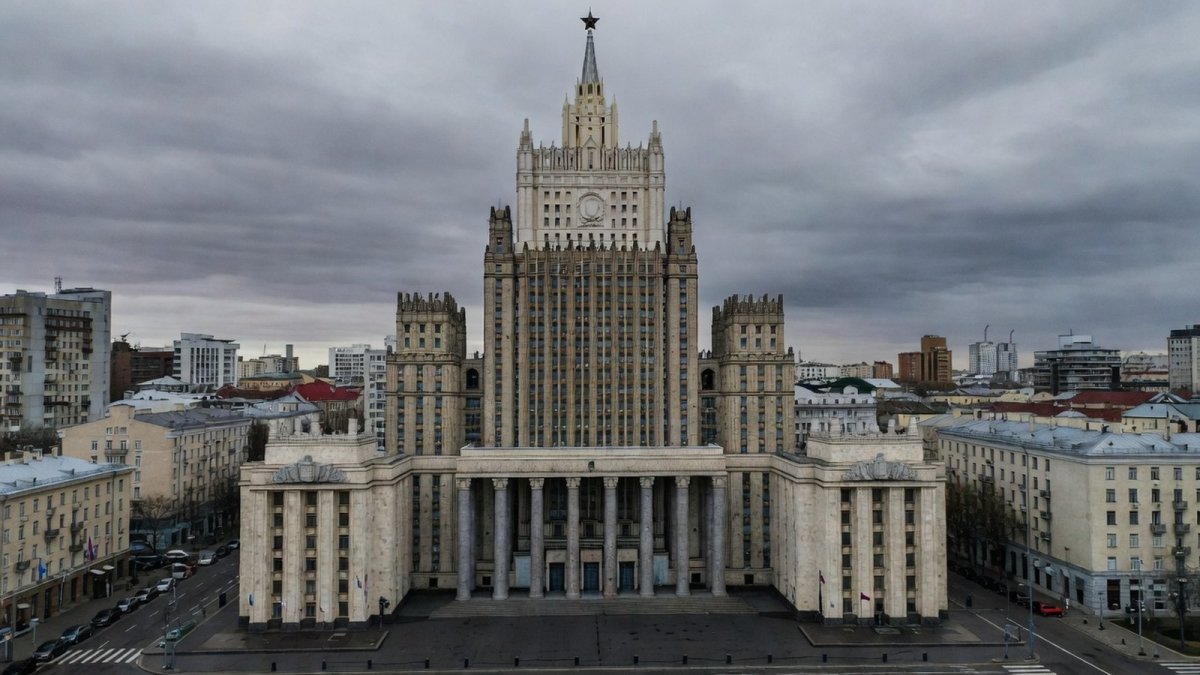
Moscow is demanding answers from Washington and Ankara over reported plans to send Ukraine a "substantial arsenal" of American-made weapons from Turkish stockpiles — a $256 million package that includes cluster munitions, artillery rounds and long-range missiles.
Russia Demands Answers on Reported US-Turkey Arms Transfer to Ukraine
Moscow – August 15, 2026 — Russia has officially requested clarifications from the United States and Turkey following reports that Ankara is preparing to send Kyiv a substantial arsenal of American-made weaponry, including cluster munitions and tactical ballistic missiles. The demand, delivered through Foreign Ministry spokeswoman Maria Zakharova, signals Moscow's growing alarm over the deepening military cooperation between a NATO member and Ukraine, and threatens significant repercussions for bilateral ties.
Kremlin Demands Answers From Washington and Ankara
In a statement released this week, Zakharova confirmed that Moscow has contacted officials in both Washington and Ankara to seek clarification on the proposed transfer. She warned that such a delivery would cause "serious harm" and "serious damage" to Russia's bilateral relations with both nations. The Foreign Ministry's message was unequivocal, stating that sending arms to Ukraine directly undermines any attempts by the U.S. and Turkey to position themselves as mediators in the conflict.
"Attempts to use peace-promoting rhetoric while simultaneously supplying weapons to [Ukraine] inevitably erode mutual trust, especially against the backdrop of repeated assurances by Turkish officials that Turkey is avoiding 'lethal' deliveries," Zakharova told reporters. She added that the weapons would cause "multifaceted damage," not only to targets in Russia but also to Moscow's trust in Washington and Ankara. "It is not too late to assess the situation soberly," she concluded.
The Arsenal in Question: What Turkey Holds
According to documents entered into the Congressional Record on August 6, the Government of Türkiye is the proposer of a permanent transfer of U.S.-origin defense articles to the Government of Ukraine. The arsenal, which has sat in Turkish stockpiles for decades, was originally produced under a 1987 license from the United States. The bulk of the proposed deal consists of artillery projectiles that were removed from U.S. service in 1994, when the howitzers that fired this ammunition were retired.
The first notification, listed as RSAT case 26-11496, covers 12 M270 multi-barrel launchers, 2,524 M26 unguided Dual-Purpose Improved Conventional Munitions (DPICM) rockets, and 47,000 M509A1 203mm DPICM howitzer rounds, with an original acquisition value of approximately $255.9 million. A second notification covers 70 M39 ATACMS tactical ballistic missiles, valued at approximately $28 million. The transfer would proceed via Turkish private entities MKE A.S., ASFAT A.S., and ARCA Savunma San. Tic. A.S., alongside Bulgarian and U.S. private entities.
A $256 Million Package and a 30-Day Review
The proposed transfer requires U.S. authorization and congressional notification under Section 3(d) of the Arms Export Control Act. Senator Jim Risch, chairman of the Senate Foreign Relations Committee, entered the two notifications into the Congressional Record on August 6. Under Section 36(b) of the Act, a 30-calendar-day review period is now in effect, giving Congress a window to scrutinize or potentially block the deal.
A senior State Department official noted in the notification that "the United States Government is prepared to authorize this transfer," adding that Türkiye "seeks to reduce its inventory of older defense articles to focus its financial resources on modernization and sustainment of existing systems." The documents also state that "Ukraine seeks to acquire these systems to bolster its offensive and defense fire support capabilities as it resists the Russian invasion," and that Ukraine already possesses munitions of the same or essentially similar type. The transfer is proposed to proceed "immediately after the congressional notification period is complete."
Cluster Munitions: A Controversial Arsenal
The centerpiece of this transfer is a massive quantity of cluster munitions, weapons that scatter explosive submunitions across a wide area and are inherently indiscriminate. Neither the U.S. nor Turkey is a signatory to the 2008 Convention on Cluster Munitions, which prohibits the use, sale, and export of these weapons. The U.S. had enacted a moratorium on exporting cluster munitions in its annual Defense Department budget every year between 2009 and 2023, when President Joe Biden bypassed the rule to transfer the weapons to Ukraine.
The weapons in question contain over 10 million explosive submunitions. The M26 DPICM rockets and M509A1 howitzer rounds are decades old and were originally produced in part by Türkiye under U.S. licenses initiated in 1987. The M39 ATACMS is a short-range tactical ballistic missile capable of striking targets well beyond the front line, representing a more offensively oriented weapon than the air-defense or artillery systems Türkiye has previously supplied to third countries.
Human Rights Watch: A 'Tragically Foreseeable' Threat
Human Rights Watch (HRW) has strongly opposed the transfer, warning of the severe humanitarian consequences. Nicole Widdersheim, deputy Washington director at HRW, stated: "Dumping obsolete cluster munitions into a conflict creates a humanitarian liability for civilians that is tragically foreseeable. The impact on civilians of these more than 30-year-old inaccurate and unreliable munitions is what motivated 112 countries to ban the weapon by joining the international Convention on Cluster Munitions."
HRW has warned that around 40% of the bomblets fail to explode after dispersal, becoming "de facto anti-personnel landmines" that can injure civilians long after the conflict ends. Widdersheim emphasized that these cluster munitions are "notorious for their record of not hitting their targets and hurting civilians," and that their use is difficult to reconcile with the prohibition on indiscriminate attacks, which can constitute a war crime. "They should never be used. Congress can still act to stop this short-sighted and dangerous transfer," she added.

Turkey's Balancing Act Between Moscow and Kyiv
Turkey, a NATO member, has long positioned itself as a potential peace broker in the conflict, maintaining a close economic and political partnership with Moscow while also providing arms to Kyiv. Ankara helped implement the Black Sea Grain Initiative in 2022 and has hosted trilateral negotiations between the U.S., Ukraine, and Russia. This proposed transfer, however, could signal a significant shift in Turkey's posture.
Turkish defense analyst Arda Mevlutoglu commented on X: "If Türkiye is preparing to hand Ukraine an offensive weapons system, especially a tactical ballistic missile like ATACMS, then 'something' has changed considerably." The move underscores the delicate balancing act Ankara is performing, as it seeks to modernize its military by offloading older equipment while navigating its relationships with both Moscow and Kyiv. The Kremlin's statement specifically noted the contradiction between Turkey's peace-broker rhetoric and its reported willingness to supply lethal, offensive weaponry.
What This Means for the War in Ukraine
The transfer comes at a critical juncture in the war. The Trump administration, which began its second term with promises to end the conflict, has dramatically scaled back direct U.S. military support for Kyiv, ending large-scale defense funding and delivery of military aid. This has left Ukraine to rely on other partners, making third-party transfers from NATO stockpiles, such as Turkey's, a key channel for sustaining its fire support capabilities.
The inclusion of 70 M39 ATACMS missiles is particularly significant, as these tactical ballistic missiles are capable of striking targets well beyond the front line. This deep-strike capability could allow Ukrainian forces to target Russian logistics, command centers, and supply lines far behind the front, potentially altering the dynamics on the battlefield. For Moscow, this represents a direct escalation, prompting the Foreign Ministry's sharp rebuke and demand for clarification.
Analysis and Implications
This proposed transfer highlights a growing trend of NATO members deepening lethal military support to Ukraine while publicly courting Moscow's favor. The "something has changed" reading from Turkish analysts suggests that Ankara may be recalibrating its policy, potentially in response to the stalled peace efforts and the ongoing war. The move also underscores the shifting landscape of military aid, where third-party transfers from allied stockpiles are becoming increasingly vital as direct U.S. funding has been scaled back.
The 30-day congressional review window provides a potential lever for opponents of the transfer. Congress can pass a Joint Resolution of Disapproval to block the sale, a move that HRW and other humanitarian organizations are likely to advocate for. However, it is not publicly known if the Trump Administration has made a determination to sidestep the export moratorium, as President Biden did in 2023. The outcome of this review period will be a key indicator of the future trajectory of U.S. and allied support for Ukraine, and of the resilience of Russia's bilateral relationships with Washington and Ankara.
This article was produced with AI-assisted research and editorial support. Sources: The Moscow Times, Human Rights Watch, Türkiye Today, Kyiv Independent.
By Irina Volkov, Staff Writer
What's Your Reaction?
 Like
0
Like
0
 Dislike
0
Dislike
0
 Love
0
Love
0
 Funny
0
Funny
0
 Wow
0
Wow
0
 Sad
0
Sad
0
 Angry
0
Angry
0

Russia/Eastern Europe Correspondent at Global1.News. Covering Russian politics, energy, security, and the shifting dynamics of the post-Soviet space. Provides clear-eyed analysis on one of the world's most opaque regions.















Comments (0)