
Robots make combat airdrops, clear mines as Ukraine defeats Russian pincer
Ukraine’s latest push shows a stark lesson for any tech‑heavy operation: when you can’t win with manpower, you win with machines that can be dropped from the sky.
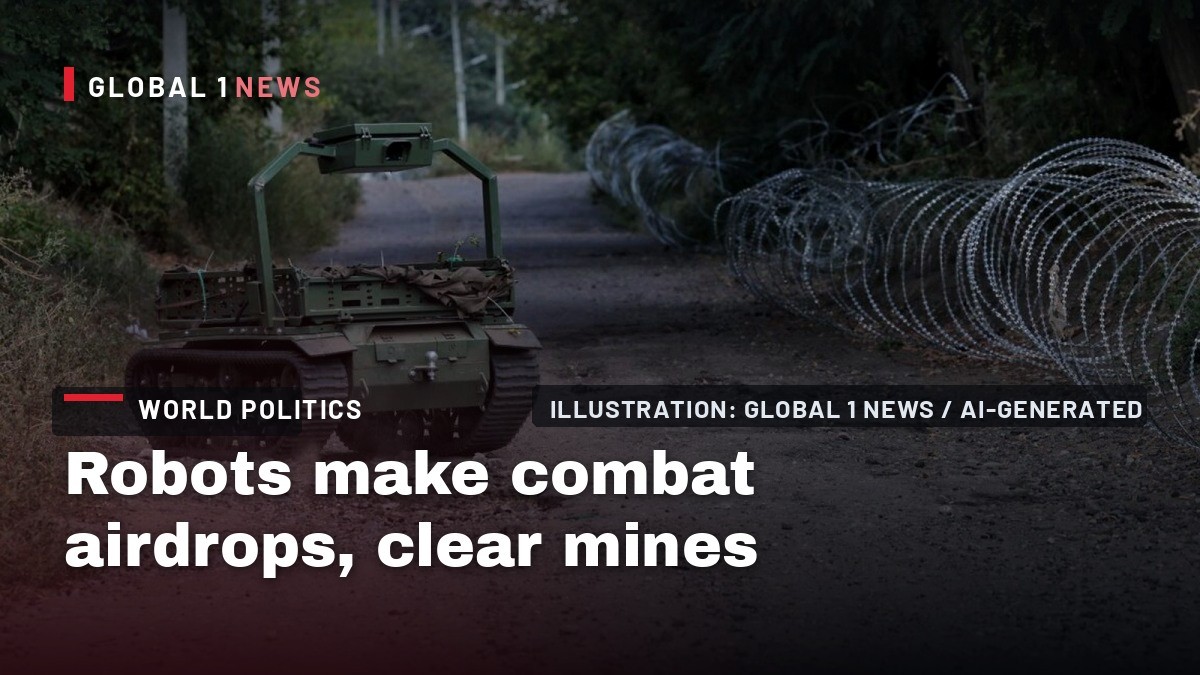
Ukraine’s latest push shows a stark lesson for any tech‑heavy operation: when you can’t win with manpower, you win with machines that can be dropped from the sky. The Ukrainian Third Army Corps just proved that a “world‑first” airborne assault using heavy bomber drones to deliver explosive ground robots six miles behind enemy lines is not a sci‑fi stunt—it’s a practical, low‑cost way to bypass terrain and defenses that would stall a conventional force. For us running real hosting infrastructure, the takeaway is simple: if you can outsource the grunt work to cheap, disposable bots, you can keep your core crew focused on the stuff that actually moves the needle.
Robots as a force multiplier
The operation, dubbed Operation Vivaldi, has already reclaimed up to 96 square miles of occupied territory. That’s not just a headline‑grabbing figure; it’s a direct result of wheeled ground robots taking on roles that would normally require two sapper companies. According to the Ukrainian defense outlet Militarnyi, the same robots cleared more than 18 miles of routes of antipersonnel mines, doing the work of two full infantry sapper units without risking a single human life. In a theater where every casualty chips away at your fighting strength, that kind of efficiency is a game‑changer.
What’s more, the robots are handling roughly 60 percent of the mine‑clearance workload in the Third Army Corps’ sector. That percentage tells us the technology isn’t a fringe experiment—it’s become the backbone of the Corps’ mobility strategy. For independent hosting providers, the parallel is clear: automate the repetitive, dangerous, or high‑volume tasks (think DDoS mitigation, patch roll‑outs, or hardware swaps) and you free up engineers to focus on architecture, reliability, and growth.
Air‑dropping robots: bypassing the bottleneck
Heavy bomber drones air‑dropped the explosive ground robots more than six miles behind Russian frontlines. By doing so, Ukraine sidestepped the choke points that would normally slow a ground advance—rivers, minefields, and entrenched positions. The robots, being wheeled and relatively lightweight, could be delivered directly to supply lines in the rear, striking at logistics hubs that are the lifeblood of any army. That’s a textbook example of “hit the enemy where it hurts” without having to commit a brigade.
From a business‑risk perspective, the lesson is to look for the “logistics hub” of your own operation—those services or components that, if knocked out, would cripple your offering. Then figure out how to deliver a lightweight, disposable solution that can operate in that space without needing a full‑blown human team. In practice, that could be a containerized micro‑service that can spin up in a few seconds to take over a failing API, or a server‑less function that handles a spike in traffic while the main fleet recovers.
Robots taking on combat duties
Ukraine isn’t just using robots for mine clearance; they’re also being turned into mobile weapons platforms. The same wheeled units have been outfitted with machine guns to defend against Russian attacks and even used as explosive kamikaze devices against fortified positions. This dual‑use capability means a single platform can be repurposed on the fly, a flexibility that traditional armored vehicles lack.
In the hosting world, we see a similar need for dual‑purpose assets. A server that can serve traffic under normal conditions but also act as a cache or a firewall under attack is far more valuable than a dedicated appliance that does one thing. Building that flexibility into your infrastructure—through software‑defined networking, programmable load balancers, and modular hardware—lets you respond to threats without having to spin up a whole new stack.
Operational security and the surprise factor
Since May 2026, the Third Army Corps has kept its advances under tight wraps, a secrecy that helped mislead Russian commanders. The element of surprise, amplified by the ability to deliver robots deep behind lines, compounded the tactical advantage. The ISW notes that Russian situational awareness is hampered by a “pervasive culture of lying” when things go south, but Ukraine’s disciplined operational security turned that cultural flaw into a strategic lever.
For a hosting provider, operational security isn’t just about firewalls; it’s about controlling the narrative of your service’s health. If you can quietly roll out updates, migrate workloads, or shift traffic without broadcasting every move, you reduce the attack surface and keep adversaries guessing. Think of it as a “quiet rollout” strategy: use canary releases, staged migrations, and internal monitoring to make changes invisible to the outside world until they’re proven stable.
Drone overmatch and the economics of cheap tech
Ukraine’s “tactical drone overmatch” stems from a combination of aggressive drone strikes on Russian fuel supplies and its own electronic warfare that neutralized about 20,000 Russian drones. By choking the enemy’s diesel and jamming their UAVs, Ukraine forced a reliance on cheaper, expendable platforms—like the ground robots we’ve been discussing. The economics are stark: a cheap robot can be mass‑produced and lost without a massive budget hit, whereas a high‑tech drone or tank is a sunk cost.
This cost asymmetry is a reminder that you don’t need the flashiest hardware to win. In the data‑center arena, commodity servers and open‑source software can out‑perform proprietary, high‑priced solutions when you pair them with clever automation. The key is to build a stack where the loss of a single node or service doesn’t cripple the whole system—a principle that underpins modern cloud‑native design.
Adapting to enemy counter‑measures
Russia isn’t sitting idle. The article notes that Russian armored units are being redirected toward Dobropillya for future assaults, and they’ve trialed a new anti‑drone protection system on their most modern tanks. While the system saw limited success, the fact that they’re field‑testing counter‑measures shows the cat‑and‑mouse nature of tech warfare. Ukraine’s drones still overwhelmed tank defenses, underscoring that even imperfect tech can dominate if it’s deployed at scale.
In business, you can expect competitors to develop counter‑strategies—whether that’s a new security product, a pricing war, or a regulatory push. The lesson is to stay ahead by iterating fast and scaling your deployments. If you can field a new feature or security patch faster than a rival can respond, you maintain the upper hand. Continuous integration and delivery pipelines, paired with rapid incident response playbooks, are the civilian equivalents of “dropping robots from the sky.”
Actionable takeaways for independent providers
First, identify the “minefields” in your operation—those repetitive, high‑risk tasks that drain engineering bandwidth. Automate them with disposable, container‑based bots that can be spun up, run their course, and be terminated without human oversight. Second, build dual‑purpose services that can pivot under stress, much like Ukraine’s robots that switch from transport to fire‑support. Third, keep your rollout strategy low‑profile; use canary deployments and internal monitoring to stay ahead of the threat curve. Fourth, embrace a cost‑effective tech stack: commodity hardware, open‑source software, and robust automation can out‑maneuver expensive, proprietary solutions. Finally, stay nimble. The battlefield shows that even when an opponent fields new defenses, a rapid, adaptable approach can still break through.
In short, the Ukrainian robot assault isn’t just a military curiosity—it’s a case study in leveraging cheap, disposable tech to achieve outsized strategic gains. If we, as founders and operators of real hosting infrastructure, can apply the same principles—automation, flexibility, secrecy, and cost‑efficiency—we’ll not only survive the next wave of industry hype, we’ll thrive in it.
— Allan Ali, Founder
This article was produced with AI-assisted research and editorial support. Reporting is based on the source material cited below. Sources: Ars Technica; arstechnica.com; Global1.News (26 September 2026).
By Allan Ali, Global1.News
What's Your Reaction?
 Like
0
Like
0
 Dislike
0
Dislike
0
 Love
0
Love
0
 Funny
0
Funny
0
 Wow
0
Wow
0
 Sad
0
Sad
0
 Angry
0
Angry
0

Publisher of Global1.News. Automation architect, systems builder, and the guy making sure the truth gets published.















Comments (0)