
Rings around a tiny body have changed over the past decade
When I first heard about Chariklo’s rings back in 2013, I thought it was a gimmick—another hype‑driven headline from the space press. Turns out, it was a genuine shock to the system, the kind of surprise that makes you re‑evaluate the assumptions you build your own data‑center business on.
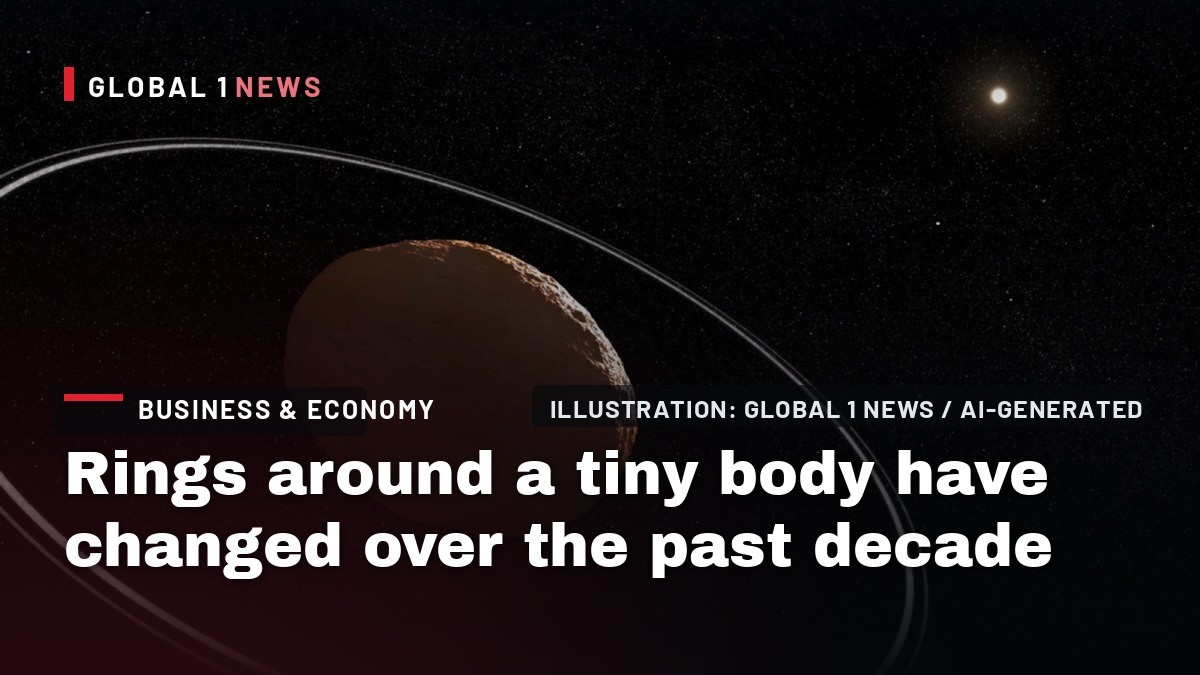
When I first heard about Chariklo’s rings back in 2013, I thought it was a gimmick—another hype‑driven headline from the space press. Turns out, it was a genuine shock to the system, the kind of surprise that makes you re‑evaluate the assumptions you build your own data‑center business on. A 250‑kilometre rock, smaller than most of our backup sites, sporting two narrow rings was enough to prove that even the smallest bodies can pull off tricks that would make a hyperscaler blush. The recent James Webb Space Telescope (JWST) occultation study throws even more curveballs, and it’s a reminder that in the real world, “best practices” can crumble the moment you try to apply them at scale.
From Ground‑Based Guesswork to Space‑Based Precision
The original discovery relied on a simple, old‑school technique: predict when a Solar System object will pass in front of a background star, then watch the starlight dim. As Pablo Santos‑Sanz of the Instituto de Astrofísica de Andalucía explained, the dip’s shape tells you the object’s size, shape and any surrounding material. That’s straightforward when you’re dealing with a planet, but for a distant minor body the challenge multiplies. The silhouette is minuscule, and you need pinpoint positioning for both the object and the star.
Fast forward to 2022, and the same method was taken to JWST, perched at the L2 Lagrange point. The telescope’s orbit needs nudges every few weeks, making the line‑of‑sight prediction a moving target. Santos‑Sanz’s team had to redo the prediction weekly, and the projected sightline shifted about 110 kilometres between the first and last estimates—enough to completely miss Chariklo. Yet they persisted, and the occultation on 18 October 2022 ended up skimming just 7.4 kilometres above the surface, catching the rings while completely missing the body.
What JWST Saw That Ground Telescopes Could Not
JWST recorded the event in two near‑infrared bands, 1.5 µm and 3.2 µm, marking the first time anyone captured a minor body’s rings beyond three micrometres—a regime blocked by Earth’s atmosphere. The inner ring, C1R, showed a clear edge but appeared darker than before. Ground‑based occultations had pegged its normal opacity at roughly 0.30; JWST measured it at about 0.43. Santos‑Sanz admitted the team initially doubted the result and fought the data, but the numbers held up after extensive modelling.
To rule out a lucky hit on a dense clump, the researchers ran a lumpy‑ring model through 10 million simulated occultations. The odds of reproducing the observed opacity at 1.5 µm were about one in a thousand, and even lower at 3.2 µm. Since JWST caught the ring twice—entering and exiting—the combined probability shrank further. The conclusion? The inner ring most likely thickened, while the outer ring, C2R, faded to near‑invisibility in both bands.
Material Changes or Wavelength Tricks?
The outer ring’s disappearance sparked a debate. One hypothesis was that the infrared bands simply interact with the ring particles differently, scattering light in a way that masks the signal. The alternative, which Santos‑Sanz favours, is that the rings have physically evolved. Radiative‑transfer models that fit the older visible‑light data—suggesting a mix of ice and silicates—could not accommodate the new infrared points without invoking a change in composition or grain size.
What’s striking is the measured gain in equivalent width: the inner ring accrued about ten times more material than the outer ring lost. That disparity hints at an external source feeding C1R, not just a redistribution of existing dust. The leading theory points to a small shepherd satellite orbiting with the outer ring, shedding debris that replenishes the inner ring. No such moon has been detected yet, but its existence would explain the rings’ sharp edges and stability.
Why This Matters for Hosting Providers
At first glance, an icy ring around a distant rock seems far removed from the day‑to‑day grind of running servers. Yet the underlying lesson is universal: assumptions based on limited data can be shattered by a single, well‑timed observation. In the hosting world, we see this every time a hyperscaler drops a new pricing tier or a VC‑backed startup promises “unprecedented uptime” based on a prototype. The Chariklo case shows that even with the best models, reality can throw a wrench in the works.
Just as the JWST team had to constantly update their line‑of‑sight predictions, we must constantly revisit capacity forecasts, latency models, and cost structures. The fact that a 250‑kilometre body can host dynamic, evolving rings underscores that even small, seemingly static systems can be surprisingly volatile. For independent providers, that volatility translates into risk—risk that can be mitigated only by real‑time monitoring and flexible architecture.
Lessons on Planning and Execution
The JWST occultation required a 14‑day advance notice for observations, a constraint that forced the team to work “a bit blindly” while the line of sight shifted. In our industry, similar lead‑time constraints exist: hardware procurement cycles, bandwidth contracts, and regulatory approvals. The key takeaway is to build slack into those timelines. Relying on a single, rigid plan is a recipe for missing the target—literally in the case of Chariklo, and figuratively when a client’s traffic spikes.
Another practical lesson is the value of redundancy. The team used two infrared bands simultaneously, providing a cross‑check that validated the unexpected opacity rise. Hosting providers should mirror this approach: diversify monitoring across metrics, locations, and even vendors. When one data stream looks odd, a parallel feed can confirm or refute the anomaly before you make a costly move.
Actionable Advice for Independent Operators
First, treat every model as provisional. Whether you’re forecasting storage growth or network load, embed a margin that accounts for “unknown unknowns”—the kind that turned Chariklo’s rings into a moving target. Second, invest in multi‑band monitoring. Just as JWST’s 1.5 µm and 3.2 µm observations revealed different aspects of the rings, monitoring CPU, memory, I/O, and network latency in parallel gives you a fuller picture of system health.
Third, keep an eye on the “shepherd satellites” of your own ecosystem—small, often‑overlooked components that can destabilise the whole operation. In practice, that means regular audits of third‑party services, firmware updates, and even the physical environment of your data centre. Finally, maintain a rapid‑response capability. The Chariklo team had to re‑predict the occultation weekly; you need a similar agility to spin up extra capacity or reroute traffic when a sudden change hits.
Looking Ahead: More Rings, More Risks
Chariklo isn’t alone. The article notes that rings have been found around another body in the same category, confirming that these phenomena are not isolated quirks. As more small bodies are observed, we’ll likely see a spectrum of ring behaviours—some stable, others volatile. For us in the hosting world, the parallel is clear: the landscape will keep evolving, with new players, technologies, and threats emerging.
What we can control is our preparedness. By treating data as a living, shifting target, building redundancy, and staying nimble, we can avoid the fate of the hyperscalers that over‑promise and under‑deliver when the unexpected happens. The rings around Chariklo remind us that even the tiniest objects can host complex, changing systems. If we ignore that lesson, we’ll be the ones left staring at an empty sightline while the market moves on.
— Allan Ali, Founder
This article was produced with AI-assisted research and editorial support. Reporting is based on the source material cited below. Sources: Ars Technica; arstechnica.com; Global1.News (20 September 2026).
By Allan Ali, Global1.News
What's Your Reaction?
 Like
0
Like
0
 Dislike
0
Dislike
0
 Love
0
Love
0
 Funny
0
Funny
0
 Wow
0
Wow
0
 Sad
0
Sad
0
 Angry
0
Angry
0

Publisher of Global1.News. Automation architect, systems builder, and the guy making sure the truth gets published.















Comments (0)