
Qatar Says Oman-Iran Hormuz Talks at Advanced Stage, Urges Swift Waterway Reopening
The Persian Gulf is holding its breath. As the United States and Iran remain locked in a bitter war that has now entered its sixth month, a quiet diplomatic channel through Muscat and Doha has emerged as the most viable path toward reopening the world's most critical energy artery.
The Persian Gulf is holding its breath. As the United States and Iran remain locked in a bitter war that has now entered its sixth month, a quiet diplomatic channel through Muscat and Doha has emerged as the most viable path toward reopening the world's most critical energy artery. Qatar's confirmation on Tuesday that Oman-Iran negotiations over the Strait of Hormuz have reached an "advanced stage" signals that, even amid active hostilities, the region's smaller powers are engineering a possible off-ramp — one with profound implications for global energy markets and the future of Gulf security architecture.
Qatar Confirms Advanced Oman-Iran Talks on Hormuz, Urges Swift Reopening of Strategic Waterway
Doha, Qatar – August 11, 2026 — Qatar's Foreign Ministry spokesman, Dr Majed bin Mohammed al-Ansari, told reporters at a press conference Tuesday that negotiations between Oman and Iran on the future of shipping in the Strait of Hormuz have reached an "advanced stage," describing the talks as being at a "critical juncture." The spokesman, who also serves as Adviser to the Prime Minister and Official Spokesperson for Qatar's Ministry of Foreign Affairs, said positive feedback had been received from both countries and stressed that Doha supports all efforts aimed at de-escalating tensions in the region. Qatar urged the strategic waterway to reopen "as soon as possible," according to reports from Gulf Times, Anadolu Agency, Al Jazeera, and Al Arabiya English.
The Qatar Statement: A Mediator's Measured Optimism
Dr al-Ansari's remarks represent the most definitive public confirmation yet that the Oman-Iran track is progressing beyond preliminary discussions. His characterization of the talks as being at a "critical juncture" suggests that concrete proposals are now on the table, even if final signatures remain elusive. The spokesman's careful language — emphasizing "positive feedback" from both Tehran and Muscat — reflects Doha's dual role as both a facilitator and a stakeholder with immense skin in the game.
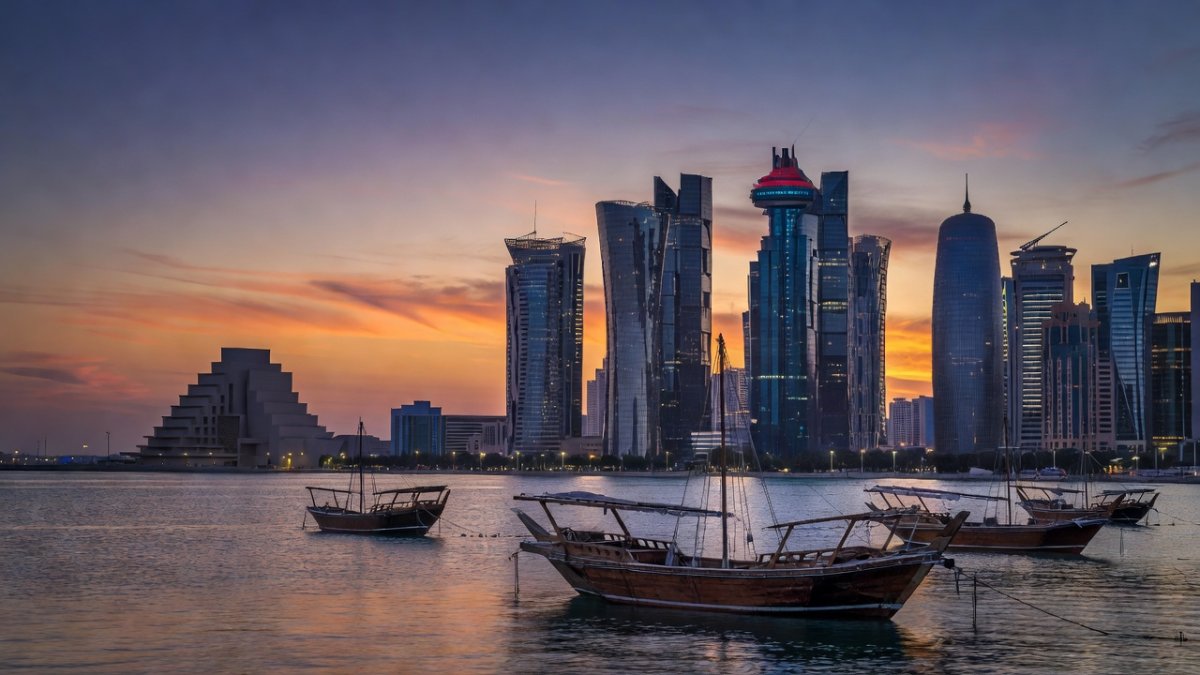
Qatar's interest is not abstract. As the world's largest liquefied natural gas (LNG) exporter, Qatar depends on the Strait of Hormuz to move nearly all of its LNG to global markets. The waterway is not merely a geopolitical abstraction for Qatari planners; it is the lifeline of the state's economic model. Every day the strait remains contested, Qatari LNG carriers face elevated insurance premiums, rerouting costs, and the existential risk of being caught in a US-Iran exchange of fire. This explains why Doha has been so publicly vocal in supporting the Oman-mediated track, even as it maintains its own communication channels with Washington.
The Qatari statement also carries a subtle message to Tehran: the window for a negotiated reopening is open, but it will not remain open indefinitely. By urging the strait to reopen "as soon as possible," Doha is signaling to all parties that the status quo — a de facto closure of the world's most important oil chokepoint — is unsustainable for the region's economies and for global energy security.
Geopolitical Context: The 2026 Iran War and Hormuz as a Front
The current standoff must be understood within the broader catastrophe of the 2026 Iran war. Since 28 February 2026, the United States and Israel have been at war with Iran and its regional allies. Hostilities erupted after US-Israeli airstrikes killed several Iranian officials, including Supreme Leader Ali Khamenei — a strike that fundamentally altered the strategic landscape of the Middle East and removed the clerical establishment's ultimate arbiter from the equation.
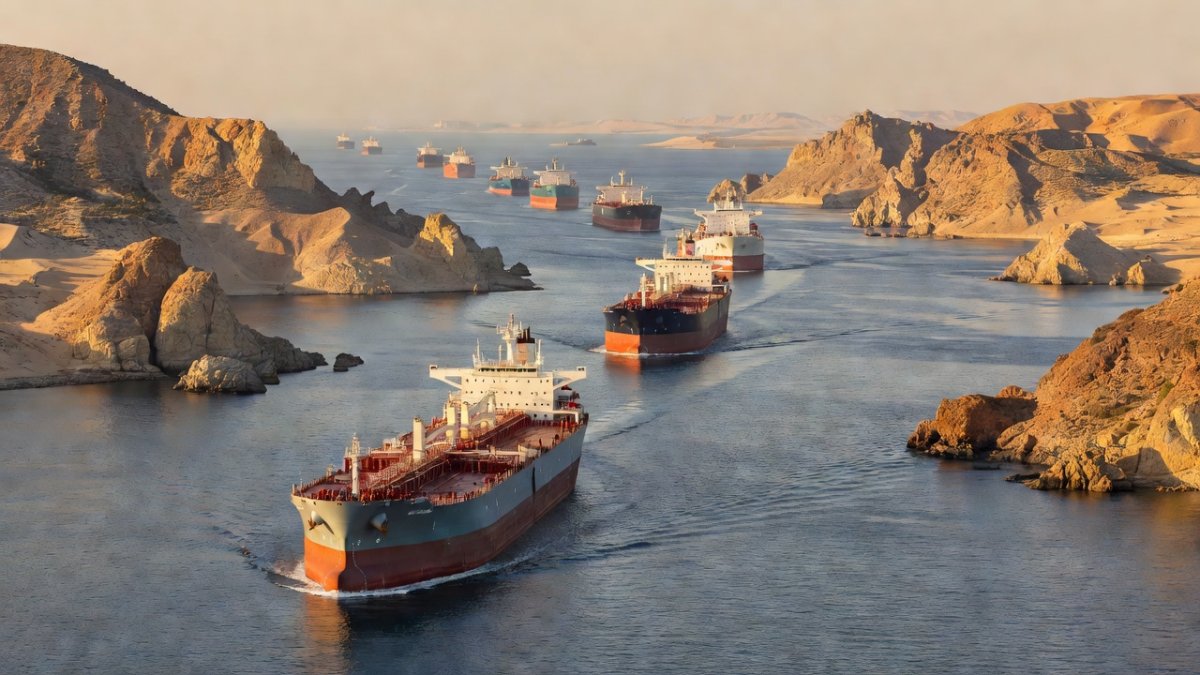
A ceasefire period from 8 April to 19 June 2026 offered a brief respite, punctuated by what analysts have dubbed the "dual blockade" and the signing of the Islamabad Memorandum. But that fragile peace collapsed on 8 July 2026, when hostilities renewed with fresh intensity. Throughout this period, the Strait of Hormuz has been a central front — a US-Iran standoff has effectively prevented tankers from using the strait, transforming a narrow maritime passage into a high-stakes chessboard where a single miscalculation could trigger a regional conflagration.
Iran has consistently denied holding direct talks with Washington, insisting instead that discussions are taking place with Oman over how to manage the strait. This semantic distinction matters: by keeping the channel through Muscat rather than engaging directly with the United States, Tehran preserves its narrative of resistance while still pursuing a pragmatic off-ramp. It is a classic Iranian diplomatic maneuver — maintaining revolutionary posturing on the surface while engaging in quiet, practical negotiations beneath it.
Historical Background: A Chokepoint with a Long Memory
The Strait of Hormuz has been a flashpoint for decades, and its current crisis echoes earlier confrontations. During the 1980s Tanker War, part of the broader Iran-Iraq War, both belligerents targeted oil shipping in the Gulf, drawing in the US Navy to escort reflagged Kuwaiti tankers. That conflict established a precedent for external naval intervention that continues to shape strategic thinking in Washington and Tehran alike.
More recently, the strait has witnessed a series of tanker seizures and shadow-war incidents. Iran has periodically threatened to close the waterway in response to sanctions pressure, and has carried out targeted harassment of commercial shipping. During the current conflict, suspected Iranian explosive boats attacked two oil tankers in Iraqi waters, setting them ablaze and killing one crew member — attacks that demonstrated Iran's asymmetric naval capabilities extend beyond the strait itself, threatening shipping throughout the Gulf's broader maritime domain.
The Islamabad Memorandum, signed during the spring ceasefire, was intended to establish a framework for de-escalation, but its provisions regarding maritime security remained vague and unimplemented. The current Oman-Iran talks can be understood as an attempt to give concrete substance to those earlier commitments — a recognition that without a functional mechanism for managing the strait, any ceasefire remains inherently fragile.
Regional Dynamics: Oman's Mediation, Qatar's Diplomacy, and the Mecca Pact
Oman's role as mediator is deeply rooted in its foreign policy tradition. Muscat has long maintained cordial relations with both Tehran and Washington, serving as a backchannel for US-Iran communication since the 1980s. Sultan Haitham bin Tariq's government has cultivated a reputation for quiet, discreet diplomacy — a reputation that has proven invaluable in the current crisis. Oman's geographic position, commanding the strait's southern shore, gives it both strategic relevance and a direct stake in ensuring maritime traffic flows freely.
Qatar's involvement adds another layer to the mediation effort. Along with Pakistan — whose capital Islamabad has hosted several rounds of discussions — Doha and Muscat have been facilitating communication between Iran and the United States "to bring their viewpoints closer," as Qatari officials have described it. This trilateral facilitation network reflects the Gulf's evolving diplomatic architecture, where smaller states increasingly serve as indispensable intermediaries between great powers.
The regional context has been further complicated by the trilateral "Mecca Pact" defence agreement, signed on 8 August 2026 as the Hormuz deal loomed. While details remain sparse, the pact's timing suggests a coordinated effort among Gulf and regional powers to present a unified security front even as negotiations proceed. The pact may serve multiple purposes: reassuring Gulf states about their collective defense, signaling to Iran that its neighbors are prepared to resist coercion, and providing Washington with evidence that its regional partners are willing to share the burden of Gulf security.
Meanwhile, pressure continues to mount on other fronts. On 11 August 2026, three people were killed after Yemen's Houthi rebels attacked an unidentified commercial ship in the Bab al-Mandeb Strait in the Red Sea. The Houthi attack serves as a reminder that Iran's regional allies can strike at global shipping even if the Hormuz talks succeed — a lever Tehran may be unwilling to fully relinquish.
Strategic Calculus: What Each Side Wants
Iran's position is best understood as a negotiation from weakness disguised as strength. Tehran has signaled it would demand concessions from the United States before reopening the waterway — likely including sanctions relief, guarantees against further strikes, and possibly recognition of its regional security interests. The killing of Supreme Leader Khamenei has created a power vacuum at the top of the Iranian state, and the current leadership in Tehran faces a delicate balancing act: it must demonstrate resolve to its domestic constituency while simultaneously seeking a way out of a war that is exacting a devastating toll on Iran's economy and infrastructure.
Washington's calculus is similarly complex. On 8 August 2026, US Vice President JD Vance said Iran had told the United States it has "no plans" to impose tolls on the Strait of Hormuz, and that Washington is seeking "a commitment from the Iranians that they're not going to fire at commercial vessels." This statement reveals the minimal American objective: ensuring the free flow of shipping without necessarily resolving the broader conflict. President Trump cited progress in the negotiations when canceling a threatened attack on Iran in early August 2026 — a decision that suggests the White House sees diplomatic progress as preferable to further military escalation, at least for now.
US Secretary of State Marco Rubio has expressed optimism about the talks while cautioning that nothing is final yet. This dual message — hopeful but hedged — reflects the inherent uncertainty of negotiating with an adversary while actively fighting a war against it. The United States wants a functional strait without appearing to reward Iranian aggression; Iran wants economic relief without appearing to capitulate to American pressure.
For Muscat and Doha, the stakes are existential. Oman's economy depends heavily on the transshipment trade through its ports, and the closure of the strait has already inflicted significant damage. Qatar's LNG exports — the foundation of its extraordinary wealth and global influence — are directly threatened by continued instability. Both states have every incentive to broker a deal, and their credibility as mediators depends on delivering results.
Energy Markets: The Price of Uncertainty
The market impact of the Hormuz standoff has been severe and volatile. On 9-10 August 2026, Brent crude climbed nearly 5 percent to about $88 a barrel, while US crude rose 6.4 percent to $87.90 a barrel. These spikes reflect the market's acute sensitivity to any news from the strait — positive developments trigger selloffs, while setbacks send prices surging.
The underlying economics are stark. Roughly one-fifth of global oil consumption — about 20 million barrels per day in normal times — passes through the Strait of Hormuz. Around a quarter of global LNG trade transits the waterway, making it indispensable not only for oil markets but for the natural gas trade that has become increasingly central to global energy security. Any prolonged closure would have cascading effects on energy prices worldwide, with developing economies in Asia and Africa likely to suffer the most severe consequences.
Beyond the headline oil prices, the standoff has driven up shipping and insurance costs across the Gulf. War-risk premiums for tankers transiting the region have soared, adding millions of dollars to the cost of each voyage. Some shipping companies have begun rerouting cargoes around the Arabian Peninsula, adding weeks to transit times and further straining global supply chains. The economic damage extends far beyond the energy sector, affecting everything from consumer goods to industrial inputs.
Regional Implications: A Fragile Path Forward
The advanced stage of Oman-Iran talks offers a genuine opportunity for de-escalation, but the path forward remains fraught with obstacles. The renewed hostilities since 8 July have created an environment of deep mutual distrust, and any agreement on the strait will require both sides to take significant political risks. Iran's insistence on negotiating through Oman rather than directly with Washington preserves its revolutionary legitimacy but complicates the implementation of any deal — every commitment must be relayed through intermediaries, creating ample room for misunderstanding and delay.
The Houthi attack in the Bab al-Mandeb serves as a sobering reminder that even a successful Hormuz agreement would not resolve the broader regional crisis. Iran's network of allied militias and proxies across Yemen, Iraq, Syria, and Lebanon gives Tehran multiple levers to pressure Gulf shipping and Western interests. A Hormuz deal might address the most critical chokepoint, but it would not by itself restore regional stability.
Looking forward, the coming weeks will be decisive. If the Oman-Iran talks produce a concrete agreement — even a limited one focused on maritime safety rather than a comprehensive political settlement — it could create momentum toward a broader ceasefire. The United States, for its part, appears willing to accept a narrow deal that secures the strait without resolving the underlying conflict. Whether Iran's leadership can accept such an outcome without appearing to surrender remains the central question.
For Qatar, Oman, and Pakistan, successful mediation would cement their status as indispensable diplomatic actors in the region — states capable of bridging the gap between Washington and Tehran when direct communication has broken down. For the broader Gulf, a reopening of the strait would provide economic relief and a measure of strategic reassurance. But the deeper issues that produced this crisis — the unresolved Iranian nuclear question, the regional balance of power, the future of US military presence in the Gulf — remain untouched by the current negotiations.
The Strait of Hormuz has been closed before, and it has always eventually reopened. The question is not whether shipping will resume, but at what cost — in lives, in treasure, and in the erosion of the norms that have governed maritime commerce for generations. Qatar's confirmation that talks are at an advanced stage offers hope, but hope is not a strategy. The region's leaders must now convert diplomatic momentum into concrete agreements before the window of opportunity closes once again.
By Malik Hassan, Staff Writer
This article was produced with AI-assisted research and editorial support. Reporting is based on sources cited in the article.
What's Your Reaction?
 Like
0
Like
0
 Dislike
0
Dislike
0
 Love
0
Love
0
 Funny
0
Funny
0
 Wow
0
Wow
0
 Sad
0
Sad
0
 Angry
0
Angry
0

Middle East Correspondent at Global1.News. Based in Beirut, covering politics, conflict, energy, and society across the Middle East. Brings context and depth to a region often reduced to headlines.











Comments (0)