
CJP's August 15 School Campaign: Sarpanch Challenge Targets India's Neglected Government Schools
With 10.17 lakh government schools serving 24.8 crore students across India, the Cockroach Janta Party (CJP) has announced a targeted August 15, 2026 campaign to force village-level accountability for crumbling school infrastructure. The move comes as UDISE+ 2023-24 data reveals that 1.52 lakh schools still lack functional electricity and only 57.2% have working computers — stark numbers that the youth-led pressure group says prove decades of systemic neglect. CJP's August 15
With 10.17 lakh government schools serving 24.8 crore students across India, the Cockroach Janta Party (CJP) has announced a targeted August 15, 2026 campaign to force village-level accountability for crumbling school infrastructure. The move comes as UDISE+ 2023-24 data reveals that 1.52 lakh schools still lack functional electricity and only 57.2% have working computers — stark numbers that the youth-led pressure group says prove decades of systemic neglect.
CJP's August 15 'Sarpanch Challenge': A Data-Driven Push to Fix India's 10.17 Lakh Government Schools or Face Protests
New Delhi, India – August 12, 2026 — The Cockroach Janta Party (CJP), which emerged as the face of the Gen Z agitation at Jantar Mantar in July 2026 over the NEET paper leak, is pivoting from exam reform to the classroom itself. In a press conference covered by India Today on August 12, 2026, CJP co-convener Ashutosh Ranka unveiled a nationwide campaign beginning August 15 — Independence Day — demanding that village sarpanchs take direct responsibility for improving government schools. The group has issued a blunt warning: where no action is taken, protests will follow.
The Data That Drives the Demand: UDISE+ 2023-24 Reality Check
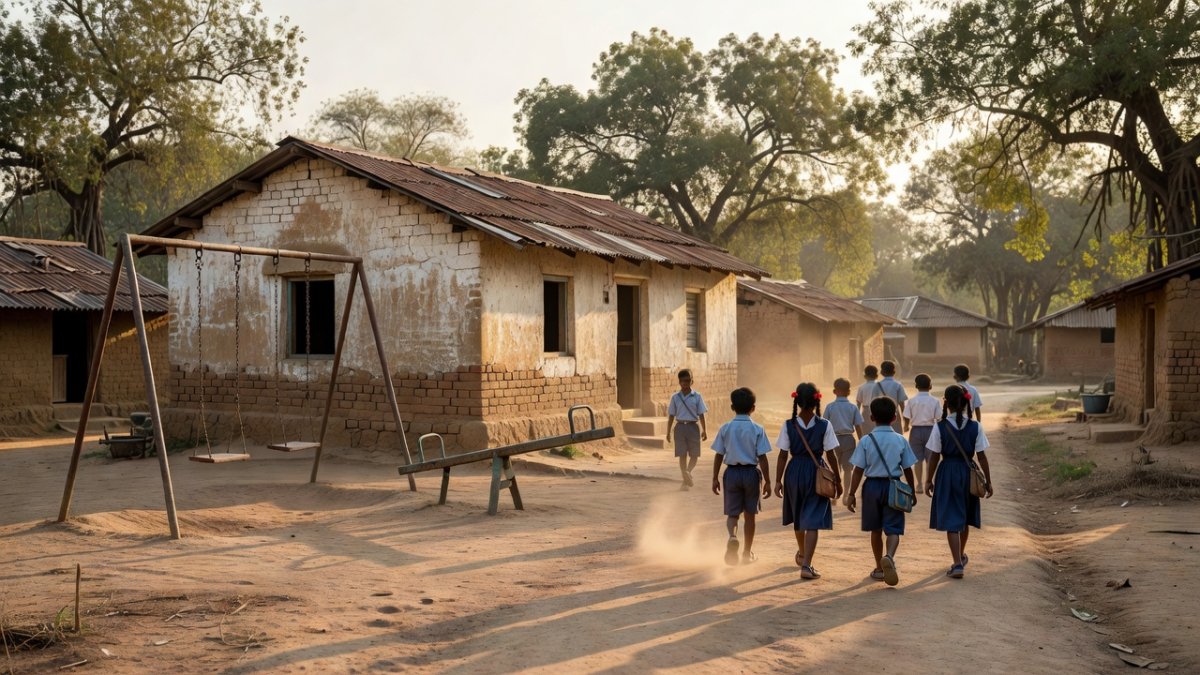
The campaign is anchored in hard numbers from the Ministry of Education's Unified District Information System for Education Plus (UDISE+) 2023-24 report. Of India's 14.71 lakh total schools, 10.17 lakh are government-run — yet the infrastructure deficit is staggering. Nearly 1.52 lakh schools operate without functional electricity, a basic requirement for digital learning in the NEP 2020 era. Only 57.2% of all schools have functional computers, 53.9% have internet access, and just 52.3% are equipped with ramps for disabled access.
The gender dimension is equally alarming. Of the 10.17 lakh government schools, only 3.37 lakh (33.2%) have disabled-friendly toilets, and a mere 30.6% of those are functional. For girls, the absence of clean, usable washrooms remains a primary driver of dropout rates, which spike from 5.2% at the middle school level to 10.9% at the secondary stage. Total enrollment fell by 37 lakh to 24.8 crore in 2023-24, a decline that CJP attributes to both demographic shifts and the push towards private schooling when government schools fail to deliver basics.
Why August 15: Independence Day as a Reckoning, Not a Ritual
CJP's choice of date is deliberate and ideological. "Since independence, government schools in this country have been consistently and completely neglected. Children in our villages have been left to work as labourers," Ranka told ANI. "But now, governments must pay attention to the future of these children." The group argues that Independence Day should be a moment to assess the kind of country being built for its children, not merely a ceremonial celebration of the past.
This is the school-focused phase of CJP's broader "Kya Bolti Public" nationwide outreach, announced by founder Abhijeet Dipke on August 6, 2026, after a two-day party deliberation. While the full outreach formally begins in September, the August 15 school drive serves as a high-visibility pilot. Dipke will personally launch the campaign in his own village in Hingoli district, Maharashtra, by approaching the local village head to demand immediate improvements to the government school there.
The Sarpanch Challenge: Public Recognition or Public Protest
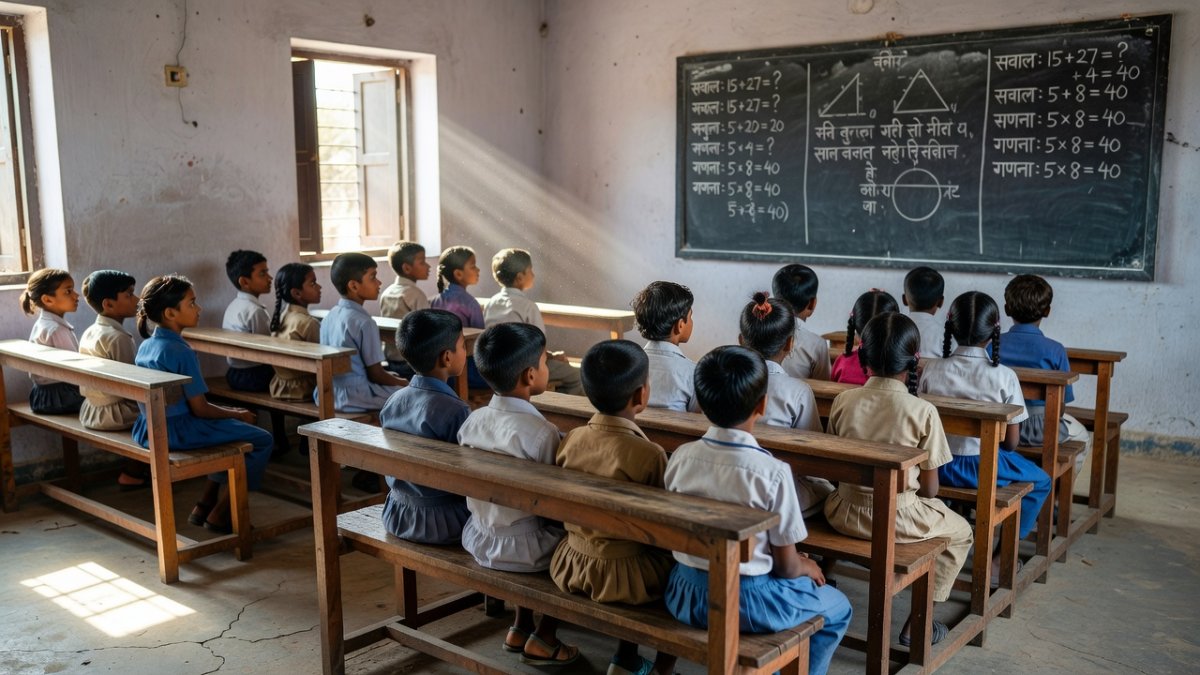
The core mechanism of the campaign is what CJP calls the "Sarpanch Challenge." The party is calling on sarpanches across India's 2.5 lakh gram panchayats to take ownership of their local government schools. Those who succeed in delivering measurable improvements will be publicly recognised, with before-and-after photographs shared across CJP's social media platforms. Those who fail will face organised protests in their villages.
"You cannot run away from your responsibility, that is why we are starting a campaign on August 15. We will demand that the government ask village sarpanchs to improve the schools in their villages. If they don't, we will hold protests there," Ranka stated. The strategy leverages the 73rd Constitutional Amendment's devolution of powers to panchayati raj institutions, making sarpanchs the most accessible elected officials for rural citizens — and the most accountable when they fail to act.
Citizen-Led Social Audits: Parents as Inspectors
Beyond the Sarpanch Challenge, CJP is institutionalising a citizen-led social audit mechanism. Parents of government school children will be encouraged to check whether basic facilities exist — electricity, clean drinking water, functional toilets, and the mid-day meal scheme — and document problems with photos and videos. CJP plans to distribute a printable audit form across villages, standardising the data collection process.
This grassroots verification model is designed to bypass the often-embellished official reports that flow up to the Ministry of Education. By arming parents with a simple checklist, CJP aims to create a parallel, transparent database of school conditions. The focus on girls' safety is explicit: the campaign highlights that girls face additional difficulties when schools lack functional washrooms, a factor that disproportionately impacts their attendance and retention in states like Bihar, Uttar Pradesh, and Rajasthan.
What This Means for India: The Youth Unemployment and Education Cost Crisis
CJP's pivot to schools is not a departure from its core mandate but an extension of it. Founder Abhijeet Dipke has repeatedly stressed that nearly 65 per cent of India's population is below the age of 35, yet their concerns have failed to find space in mainstream political discourse. He claims nearly 80 per cent of the country's youth remain unemployed even after earning a degree — a figure that, while contested, reflects deep anxiety in a job market that added only 4.1 crore formal jobs between 2017-18 and 2021-22, according to the State of Working India report.
"The cost of education has increased significantly, with students facing higher tuition fees and families having to bear substantial educational expenses," Dipke said. This cost burden pushes families towards government schools, which are free but often dysfunctional. The UDISE+ data shows that only 9.9% of government schools have arts and crafts rooms, and just 8.8% have solar panels. Of 1.19 lakh government secondary schools, only 50.2% (59,972 schools) have an integrated science laboratory — a critical gap for a nation aiming to become a global technology hub.
Policy Frameworks at Stake: NEP 2020, Samagra Shiksha, and PM SHRI
The campaign directly challenges the implementation record of existing policy frameworks. The National Education Policy (NEP) 2020 set a target of universal Gross Enrollment Ratio (GER) by 2030, but the current dropout trajectory makes that goal aspirational at best. The Samagra Shiksha Abhiyan, the government's flagship school education programme, has allocated significant funds, yet the physical infrastructure deficits persist. The PM SHRI Schools scheme, launched in 2022 to develop 14,500 model schools, covers less than 1% of the 10.17 lakh government schools.
CJP's argument is that these top-down schemes have failed to translate into bottom-up accountability. By targeting sarpanchs, the party is attempting to create a localised feedback loop that centralised ministries cannot replicate. The group's insistence on remaining a pressure group rather than becoming a political party — with an ideology rooted in the Constitution, Dr B.R. Ambedkar, Mahatma Gandhi, and Jawaharlal Nehru — positions it as a watchdog rather than a contender for power.
Expert Perspectives: From Jantar Mantar to the Village Square
Education policy analysts in Delhi view CJP's school campaign as a logical escalation from its July 2026 protests, which led to the resignation of then Union Education Minister Dharmendra Pradhan following the NEET paper leak. The argument runs that the NEET controversy exposed the integrity of examinations, while this campaign targets the integrity of the entire schooling system — from classrooms to toilets. Analysts note that if CJP can mobilise parents to audit schools at scale, the resulting ground-level data could become difficult for the Ministry of Education to ignore, complementing official UDISE+ reporting with a parallel, citizen-verified record.
However, sceptics point to the constitutional limits of sarpanch authority. Many village heads lack the financial resources or administrative jurisdiction to overhaul schools, which are typically managed by the state education departments and block-level officials. CJP's response is that sarpanchs can at least ensure basic hygiene, water, and toilet functionality — the low-hanging fruit that requires minimal funds but maximum will.
The Bottom Line
As India celebrates its 80th Independence Day on August 15, 2026, CJP is forcing a reckoning with the uncomfortable truth that 1.52 lakh government schools still lack electricity and only a third have functional disabled-friendly toilets. The campaign's success will hinge on whether the Sarpanch Challenge can convert public shame into public action. With 65% of the population under 35 and dropout rates climbing to 10.9% at the secondary stage, the stakes could not be higher. If CJP's social audits reveal the true scale of neglect, the pressure on both central and state governments — from Maharashtra's Hingoli to Bihar's Gaya — will become impossible to dismiss. The party has set a clear benchmark: by September, when the "Kya Bolti Public" outreach formally begins, every sarpanch in India will know that their school's condition is no longer a private shame, but a public record.
— By Dr. Raj Patel, Staff Writer
This article was produced with AI-assisted research and editorial support. Reporting is based on sources cited in the article.
What's Your Reaction?
 Like
0
Like
0
 Dislike
0
Dislike
0
 Love
0
Love
0
 Funny
0
Funny
0
 Wow
0
Wow
0
 Sad
0
Sad
0
 Angry
0
Angry
0

India/South Asia Correspondent at Global1.News. Analytical voice with a background in science and health journalism. Based in New Delhi, covering Indian politics, education, healthcare, technology, and policy. Breaks down complex data into clear, actionable reporting.














Comments (0)