
Pope Leo's West Bank Appeal Lands Amid Qusra Siege, Israeli Annexation Drift, and a Looming Diplomatic Squeeze
The Vatican's moral authority has once again intersected with the volatile realities of the Israeli-Palestinian conflict, as Pope Leo XIV used his Sunday Angelus address to issue a pointed appeal for peace in the West Bank.
The Vatican's moral authority has once again intersected with the volatile realities of the Israeli-Palestinian conflict, as Pope Leo XIV used his Sunday Angelus address to issue a pointed appeal for peace in the West Bank. The timing — days into a tense settler siege of a Palestinian village south of Nablus, amid unprecedented US criticism of settler violence, and with Israeli elections looming — suggests the Holy See is positioning itself as a critical moral voice in a rapidly deteriorating landscape.
Pope Leo's West Bank Appeal Lands Amid Qusra Siege, Israeli Annexation Drift, and a Looming Diplomatic Squeeze
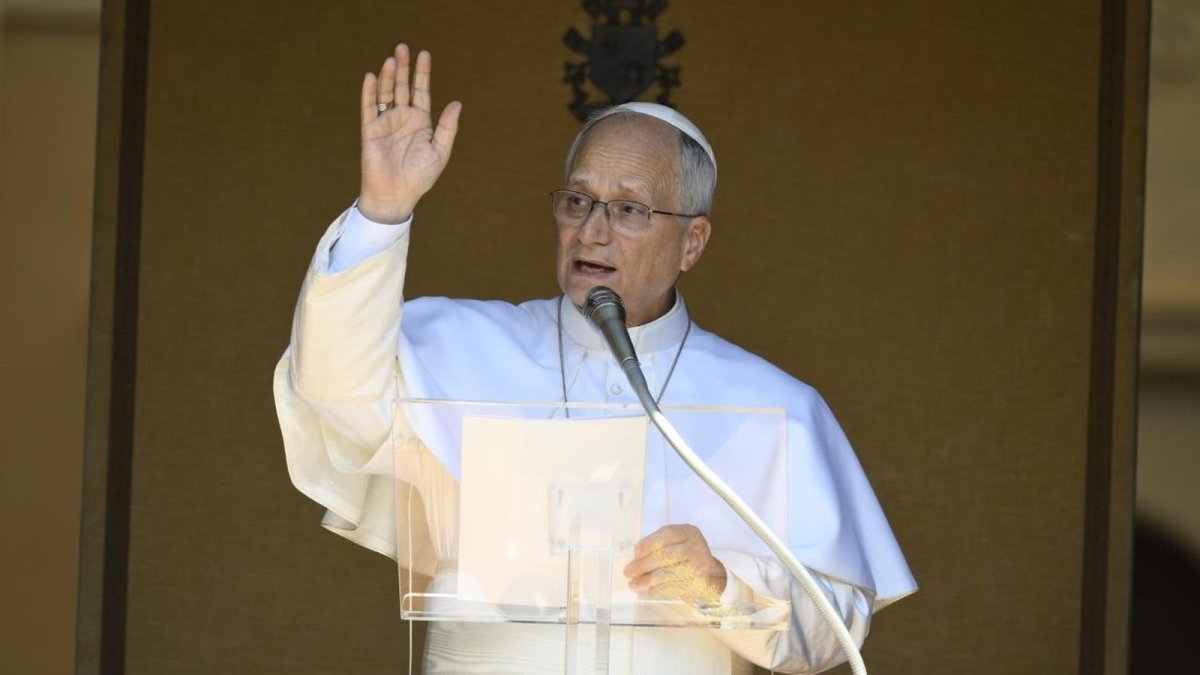
Beirut, Lebanon – August 17, 2026 — From the quiet of his summer residence at Castel Gandolfo, Pope Leo XIV delivered a message that reverberated far beyond the Piazza della Libertà. Speaking after the midday Angelus on Sunday, August 16, 2026, the Pope renewed his appeal for an end to violence against Palestinian civilians in the West Bank, urging the international community to advance the two-state solution. The appeal, met with loud applause from the gathered faithful, comes at a moment of acute tension: the siege of three Palestinian homes in Qusra village has entered its sixth day, Israeli Defense Minister Israel Katz has announced a controversial plan to shift civilian enforcement authority in the West Bank from the military to police, and Washington has publicly rebuked the settlers involved.
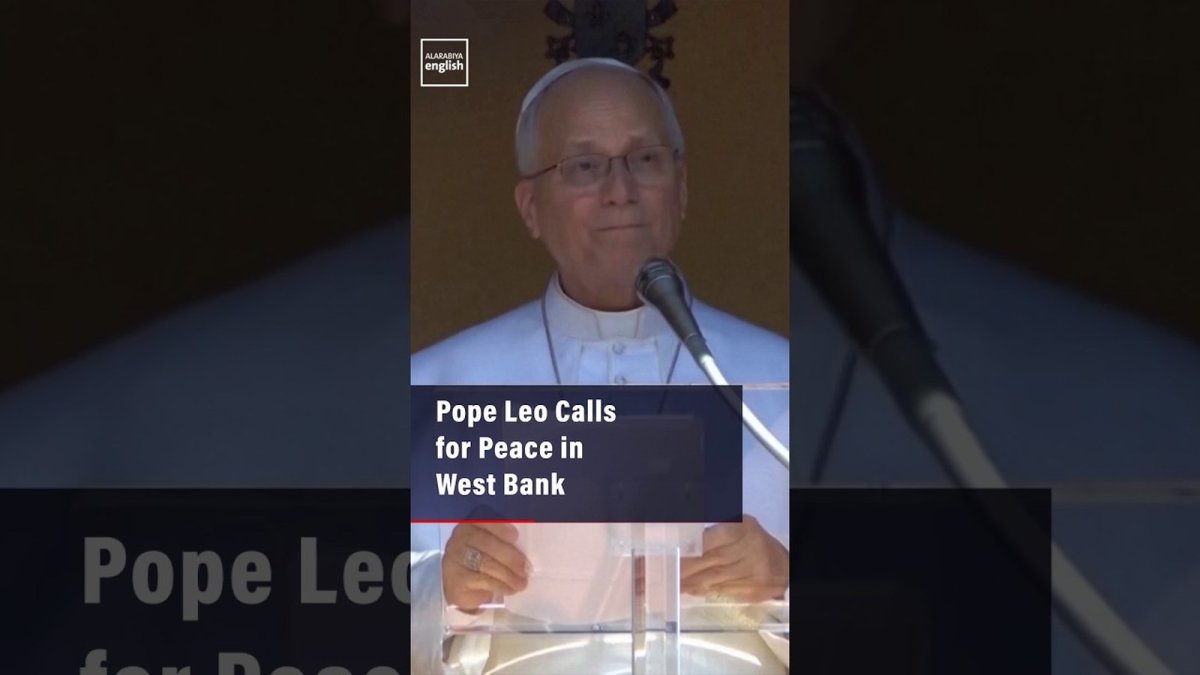
The Pope's exact words — "I renew my appeal for an end to the ongoing violence against the Palestinian civilian population in the West Bank, and I urgently call on the international community to work toward advancing the two-state solution, for a just and lasting peace" — did not mention Qusra by name. But the context was unmistakable. The Vatican has long been a consistent, if often understated, advocate for a negotiated settlement, and Leo XIV has made the two-state solution a cornerstone of his pontificate's Middle East engagement.
The Qusra Siege: A Flashpoint in the Heart of the West Bank
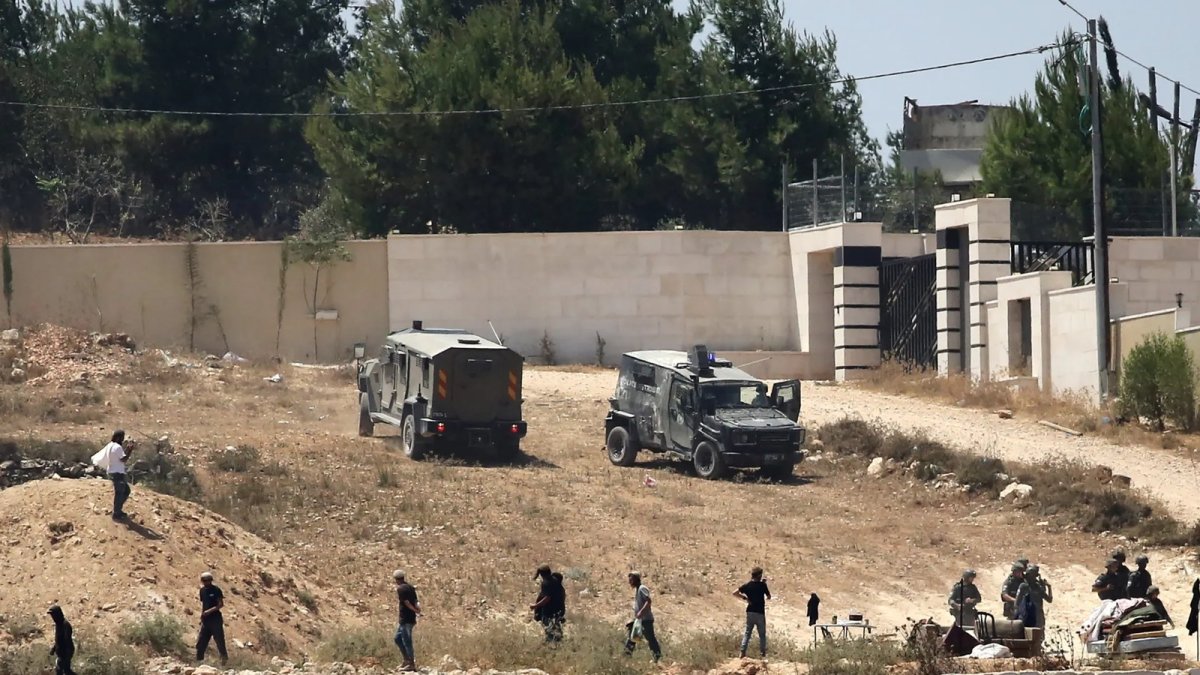
The immediate trigger for the Pope's appeal is a crisis that began on Sunday, August 9, 2026, when Israeli settlers blocked access to three Palestinian homes on the outskirts of Qusra, south of Nablus. The settlers established a tent near the properties, and residents reported that water and electricity were cut. The United Nations confirmed that approximately 15 Palestinians, including two children, were trapped inside without running water or electricity.
The situation gained international attention due to the involvement of a Palestinian-American family. Loai Ridi, speaking from Toledo, Ohio, identified his brother Qusai Abu Rida and 18-year-old nephew Ahmed as being among those trapped. The family has relied on a temporary solar power system and leftover well water. Aisha Abu Rida, another family member, has vowed: "not [to] leave our home, no matter what happens." By August 12, Israeli forces attempted to remove the settlers, using tear gas during clashes, but the operation did not immediately succeed. Reuters still described the homes as besieged as of Sunday, August 16.
Washington's Unusual Rebuke and the Palestinian-American Factor
What elevates this incident beyond a routine, albeit brutal, episode of settler violence is the reaction from Washington. US Ambassador to Israel Mike Huckabee — historically a staunch supporter of Jewish settlement in the West Bank — issued an unusually sharp condemnation on August 13-14, calling the settlers "Israeli terrorists." In a post on X, he wrote: "Actions by those who carried out this horrific act of terror meant to intimidate and harass this family are disgusting. No excuse for such thuggish behaviour."
According to US and Israeli officials speaking to Reuters on condition of anonymity, White House officials have pressed Prime Minister Benjamin Netanyahu to publicly condemn the settlers. Washington's concern escalated significantly after learning that one of the targeted homes belonged to a Palestinian-American citizen. A White House official articulated the administration's strategic calculus: "A stable West Bank keeps Israel secure and is in line with this administration's goal to achieve peace in the region." Notably, Netanyahu had not commented on the siege, and his office did not respond to requests for comment.
This is a significant development. The Huckabee rebuke signals a potential shift in the US posture, or at least a tactical recalibration. For decades, Washington has been reluctant to criticize settler violence directly, often framing it as a law-and-order issue for Israel to handle. The explicit use of the term "terrorists" by an ambassador known for his pro-settlement views suggests that the Palestinian-American angle has created a political vulnerability for the administration, forcing a more assertive stance.
Katz's Police Transfer Plan: A Step Toward De Facto Annexation?
While the Qusra siege unfolds, Defense Minister Israel Katz has announced a move that analysts across the political spectrum view as potentially transformative. On Friday, August 14, Katz instructed the IDF to prepare a plan to transfer all civilian enforcement authority for Israeli communities and residents in the West Bank from the military to the Israel Police. His rationale: "The IDF's role is to fight Palestinian terrorism and focus on defending the borders and the communities against threats. All responsibility for enforcing civilian matters and maintaining law and order will be transferred to the police."
The reaction from within Israel's own security establishment was swift and critical. A senior police official told N12 that the Defense Minister should "better learn how things work." IDF Chief of Staff Eyal Zamir told the Security Cabinet it would be "impossible" for soldiers to "chase after a small group that is giving the settlements a bad name." This internal friction highlights a deep cleavage between the political echelon and the military brass over how to manage the occupation.
Israeli human rights lawyer Michael Sfard offered a stark interpretation, warning that the enforcement transfer "would be another brick, a very major one, of annexation." He added: "This is a cowardly statement made by a minister of defence who is under scrutiny, because the army that reached Syria, Iran and Lebanon and annihilated Gaza cannot evacuate a few Jewish terrorists that invaded a Palestinian home in an area under occupation for six decades."
The timing of Katz's announcement is telling. It came just one day after he celebrated the re-establishment of the Ganim settlement, evacuated by Israel in 2005 under Ariel Sharon's disengagement plan. Katz declared: "Here, this is the land of Israel. Here, we are staying forever." The combination of settlement re-establishment and the proposed enforcement transfer paints a clear picture: the far-right elements within Netanyahu's coalition are moving to consolidate control over the West Bank, regardless of international condemnation or the two-state paradigm.
The Vatican's Consistent, Moral Voice
Into this maelstrom steps Pope Leo XIV, whose appeal is not an isolated statement but part of a sustained diplomatic and moral campaign. The Vatican formally recognized the State of Palestine in 2015, and the Holy See has for decades called for "Israel and Palestine" to live "side by side in peace and security, within internationally recognised borders." The Vatican's position emphasizes that genuine progress can only be achieved "through multilateralism, patient dialogue and inclusive cooperation, not through the use of force."
Pope Leo has been particularly active on this front. In 2025, he met separately with the Israeli and Palestinian presidents, discussing the two-state solution with both. At a September 23, 2025 press briefing at Castel Gandolfo, he stated plainly: "The Holy See has supported the two-state solution for many years." His July 26, 2026 Angelus address echoed similar themes, expressing "deep concern" over escalating violence in the Holy Land and appealing for negotiations "founded on the equal dignity and equal rights of every human person."
The Holy See's diplomatic apparatus has reinforced this message. Archbishop Gabriele Caccia, the Holy See Permanent Observer to the UN, affirmed in July 2025 that the two-state solution based on secure and internationally recognized borders is the only viable and equitable path. On November 14, 2025, the Holy See reaffirmed its support for the two-state solution and for UNRWA, the UN agency for Palestinian refugees. The Pope's reference to the Holy Land as "Mary's Land" adds a deeply theological dimension to what is often framed as a purely political conflict.
The Diplomatic Squeeze on Netanyahu
The convergence of these events — the Qusra siege, US pressure, the Katz plan, and the papal appeal — creates a unique diplomatic environment. For Prime Minister Netanyahu, the pressure is mounting from multiple directions simultaneously. National elections are set for October 2026, roughly two months away, and opinion polls suggest he could lose power. His government, the most right-wing in Israeli history, has rapidly expanded settlements since 2022, and settler violence has risen in the three years since the Hamas-led October 7, 2023 attacks.
Netanyahu's silence on the Qusra siege is politically calculated. Publicly condemning settlers would alienate his far-right coalition partners, who are essential to his political survival. Yet failing to act invites further US criticism and potentially undermines the bilateral relationship that remains Israel's most important strategic asset. The White House's demand for a public condemnation places Netanyahu in an impossible position, caught between his domestic political base and his international patron.
The Katz police-transfer plan adds another layer of complexity. If implemented, it would represent a significant structural change in how the occupation is administered. By removing the IDF from civilian enforcement in settlements, the plan could free the military to focus on Palestinian population centers while effectively normalizing the settlement enterprise under police jurisdiction. This is widely read by Palestinian and international observers as a step toward de facto annexation, a move that would effectively kill any remaining prospects for a two-state solution.
The Holy See's Unique Role in a Fractured Landscape
In this fractured environment, the Holy See's voice carries a particular weight. Among the approximately 2% Christian population of the West Bank, the Pope's appeal offers moral solidarity. Among international Catholic audiences, it reinforces the Vatican's consistent message of peace and dignity. But the Holy See's influence extends beyond its own flock. In a region where the Abraham Accords normalization architecture has stalled and Saudi-Israel normalization talks remain frozen amid the ongoing war, the Vatican remains one of the few moral authorities accepted by all parties.
The Pope's appeal is not merely a statement of principle; it is a strategic intervention. By linking the immediate crisis in Qusra to the broader imperative of the two-state solution, Leo XIV is attempting to reframe the narrative. He is signaling that the international community cannot simply react to each outbreak of violence but must address the underlying political framework. His call for "multilateralism, patient dialogue and inclusive cooperation" is a direct rebuke to the unilateralism that has characterized Israeli policy in the West Bank and the use of force that has defined the broader conflict.
What Comes Next: Elections, Annexation, and the Two-State Test
For Middle East observers, the coming weeks will be critical. The October 2026 Israeli elections will determine whether Netanyahu's coalition survives or whether a new government emerges with a different approach to the West Bank. The Katz plan, if pursued, could accelerate the annexation process, triggering a new round of international condemnation and potentially reshaping the conflict's parameters.
The Qusra siege itself remains unresolved. The Palestinian-American family at the center of the crisis has vowed to stay, and the settlers have shown no sign of backing down. The IDF's failure to remove the settlers — despite promises to the contrary — has exposed the limits of military enforcement when political will is absent. Gen Avi Bluth, commander of Israeli forces in the West Bank, made a second visit to Qusra on Friday, but the situation on the ground remains tense.
For the Vatican, the path forward is clear. The Holy See will continue to advocate for the two-state solution, using its diplomatic channels and moral authority to press for negotiations. The Pope's appeal on August 16 was not a one-off; it is part of a sustained campaign that has included repeated calls for peace in Lebanon, Gaza, and across the Middle East, and a consistent denunciation of using religion to justify war.
Regional Implications
The strategic calculus for all parties is becoming more complex. For the United States, the Qusra incident has exposed the contradictions in its policy: supporting Israel's security while attempting to maintain credibility as a peace broker. The Huckabee statement, while significant, may not signal a fundamental policy shift, but it does indicate that the administration is willing to publicly pressure Netanyahu when American citizens are affected.
For Israel, the international isolation is deepening. The Katz plan, the Ganim re-establishment, and the ongoing siege in Qusra all point toward a policy of creeping annexation that will inevitably provoke stronger international responses. The Pope's appeal, while symbolic, adds to the growing chorus of voices — from the UN to European capitals — calling for a return to the two-state framework.
For the Palestinians, the situation remains dire. The siege in Qusra is a microcosm of the broader reality: a population under occupation, subject to settler violence, military enforcement, and political neglect. The international community's response — from the Pope's appeal to US statements — offers some hope, but the gap between rhetoric and action remains vast.
As the October elections approach and the Qusra siege continues, the two-state solution faces its most serious test in years. The Pope's voice, amplified by the moral authority of the Holy See, may not be enough to reverse the tide of annexation and violence. But it serves as a reminder that the conflict is not merely a political or military issue; it is a moral one, with profound implications for the dignity and rights of every person involved.
By Malik Hassan, Staff Writer
This article was produced with AI-assisted research and editorial support. Reporting is based on sources cited in the article.
What's Your Reaction?
 Like
0
Like
0
 Dislike
0
Dislike
0
 Love
0
Love
0
 Funny
0
Funny
0
 Wow
0
Wow
0
 Sad
0
Sad
0
 Angry
0
Angry
0

Middle East Correspondent at Global1.News. Based in Beirut, covering politics, conflict, energy, and society across the Middle East. Brings context and depth to a region often reduced to headlines.












Comments (0)