
Gardi Sugdub Was the Warning: Panama's Guna Brace for a Second Exodus
The old man’s voice cracked as he pointed toward the horizon, where the Caribbean swallowed the sun. “Our ancestors fought for this land,” Jair Goporas, 21, told me, his words carrying the weight of a century-old struggle. “Don’t forget what happened here.” We stood on the wooden pier of Uggubseni, also known as Playón Chico, an island of 2,500 Guna people, three hours by boat from the more famous Gardi Sugdub.
The old man’s voice cracked as he pointed toward the horizon, where the Caribbean swallowed the sun. “Our ancestors fought for this land,” Jair Goporas, 21, told me, his words carrying the weight of a century-old struggle. “Don’t forget what happened here.” We stood on the wooden pier of Uggubseni, also known as Playón Chico, an island of 2,500 Guna people, three hours by boat from the more famous Gardi Sugdub. Behind us, the thatched roofs of the village sagged under the weight of an unusually high tide. In front of us, the sea—once a source of life—was slowly becoming a source of exile. This is the second act of Latin America’s first large-scale planned climate migration, a story that began in June 2024 when Panama moved roughly 1,350 people from Gardi Sugdub to a new mainland settlement called Isberyala. That relocation was historic: the first island community in the region officially recognized by a government as victims of forced displacement driven by climate change. But as the Guna prepare for a second exodus, the cracks in that first experiment are becoming impossible to ignore. And now, with the 2026 El Niño tightening its grip on the region, the clock is ticking faster than anyone anticipated.
Gardi Sugdub Was the Warning: Panama's Guna Brace for a Second Exodus
Panama City, Panama – August 2026 — The Guna are not strangers to displacement. They arrived on these ~365 low-lying coral islands about 200 years ago, fleeing the Darién mainland in the early 19th century to escape conflict and disease. They built a thriving autonomous society across ~50 inhabited islands in the Guna Yala (San Blas) archipelago, governed by their own laws, the Guna General Congress, and local Saila chiefs. In February 2025, they celebrated the centenary of the 1925 Guna Revolution, when they expelled repressive Panamanian authorities and secured their autonomy. But now, the sea is doing what colonial powers could not: forcing them off their land. The islands sit just 50 centimeters to 1 meter above sea level. Scientists project ~80 centimeters of sea-level rise by century’s end, and many islands could be uninhabitable by 2050. The Guna are not waiting for that day. They are moving—one family, one island, one community at a time.
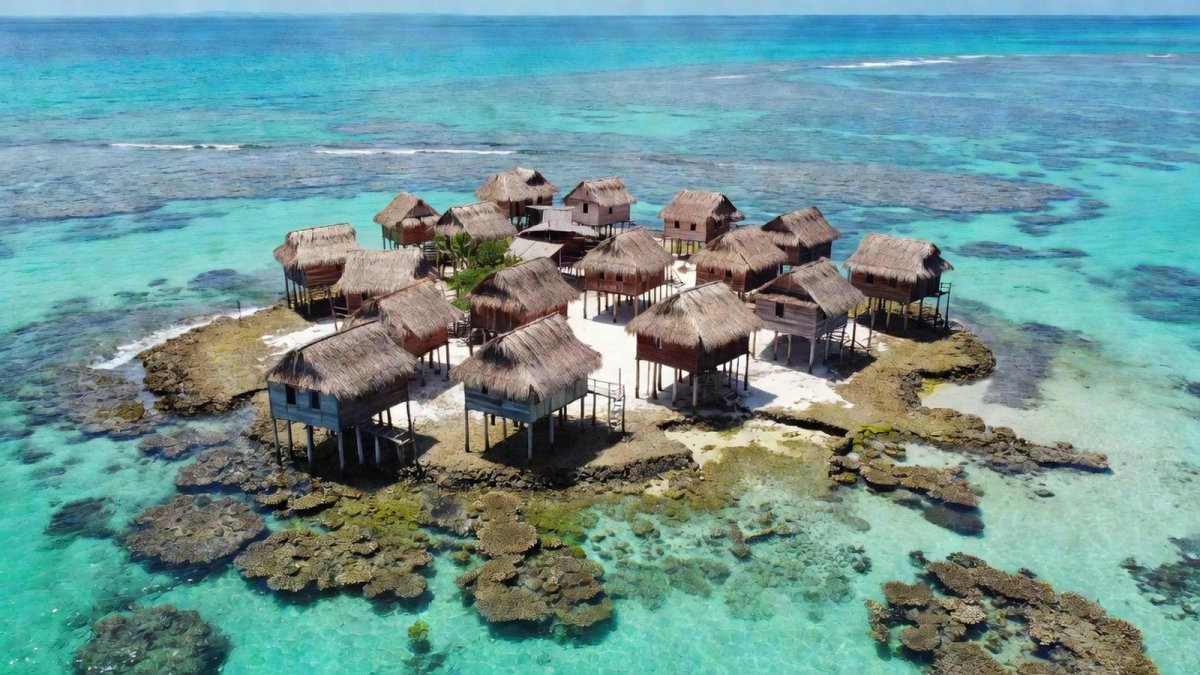
The Island That Became a Warning
Gardi Sugdub, also called Cartí Sugtupu, is a tiny speck of land—roughly 400 meters long and 150 meters wide—home to about 1,300 to 1,350 residents living in ~300 families. For years, the island was chronically flooded. During the rainy season, waves reached inside homes, soaking beds, ruining food stores, and forcing families to sleep on elevated platforms. The situation became so dire that in June 2024, the Panamanian government relocated ~300 families—about 1,350 people—to Isberyala, a new mainland community built at a cost of $15 million, with support from the Inter-American Development Bank (IDB). This was not a voluntary migration; it was a recognition by the state that these people were victims of forced displacement driven by climate change. The government’s own Ministry of Environment identified 63 Guna communities nationwide at risk of sinking, making Gardi Sugdub the first—but by no means the last—to be evacuated. The relocation was framed as a success story. Isberyala offered uniform houses with yards for cassava and plantains, paved roads, a school with computers and sports fields, a traditional meeting house, and reliable electricity. But the reality on the ground is more complicated. Water is limited to a few hours daily and sometimes fails entirely. There is no hospital, forcing residents to take boat trips back to the island for medical care. And while the government touted the project as a model for climate adaptation, critics note that the state deforested 11 hectares (27.2 acres) of protected forest to build the new community—a decision that undermines the very environmental goals the relocation was meant to serve. Still, for many Guna, the move was necessary. “We do not fit. There is no space,” said Eligio Alvarado, 82, from Uggubseni, echoing the sentiment of those who left. But ~100 people stayed behind on Gardi Sugdub, citing doubt or cultural attachment. They are the canaries in the coal mine, watching the water rise around them.Uggubseni Awaits Its Turn
Three hours by boat from Gardi Sugdub lies Uggubseni, or Playón Chico, an island of 2,500 inhabitants that is now preparing for a second relocation. Unlike the first move, which was driven by acute flooding, Uggubseni’s crisis is more gradual but no less existential. The island is overcrowded, with no room for expansion, and the sea is encroaching on its shores. “For me, the move is inevitable,” said Eligio Alvarado, 82, who has lived on the island his entire life. “We do not fit. There is no space.” His words are echoed by Alina Vázquez, 25, who told me, “Sadly, it’s happening again this century.” The consensus to move exists among the community, but there is no government funding or formal process in place. Unlike Gardi Sugdub, which received $15 million in state and IDB support, Uggubseni has been left in limbo. The Guna General Congress, the autonomous governing body of the comarca, has been in talks with Panama City, but progress is slow. Officials admit the state lacks resources. “The population does not have the resources; the state has to supply the resources,” said housing minister Jaime Jované. But climate director Juan Carlos Monterrey was blunter: “The state does not have enough resources to be able to cover all of the necessities.” There is no defined government process for relocation, though a proposed executive decree is under review to create a national protocol. For the people of Uggubseni, the wait is agonizing. They watch Gardi Sugdub’s experiment from afar, weighing the benefits of mainland life against the loss of their island identity. Jair Goporas, 21, put it simply: “Our ancestors fought for this land. Don’t forget what happened here.” The question is whether the Panamanian government will remember before it’s too late.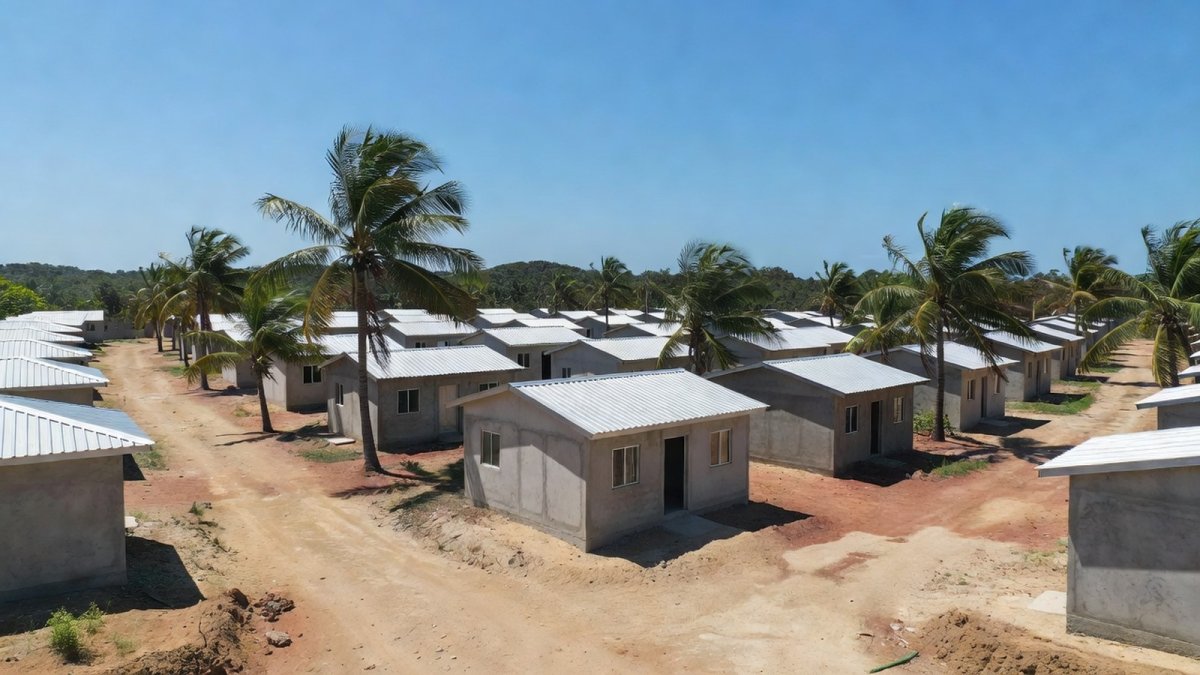
Life in Isberyala: What Relocation Really Costs
Isberyala was supposed to be a fresh start, but for many Guna, it feels like a compromise. The new community is a grid of uniform, box-like houses—a stark contrast to the traditional thatched homes of the islands. Residents say the city-style design doesn’t fit their way of life. Hammocks, the traditional sleeping arrangement, have no place in these rooms. “We can’t hang our hammocks,” one resident told me, gesturing at the concrete walls. The yards, intended for cassava and plantains, are often too small or too dry for cultivation. And while the school is equipped with computers and sports fields, the lack of a hospital means that medical emergencies require a boat trip back to Gardi Sugdub—a journey that can take hours and is impossible in rough seas. The infrastructure gaps are even more glaring. Water is limited to a few hours daily and sometimes fails entirely, forcing residents to ration their usage. There is no waste management system, so residents burn trash in open fires, sending toxic smoke into the air. The government’s decision to deforest 11 hectares (27.2 acres) of protected forest to build the community has also drawn criticism, as it undermines the environmental rationale for the move. Residents say their opinions were not taken into account during the planning process. “They built this for us, but not with us,” one woman said. The result is a community that is physically safer from the sea but culturally and emotionally adrift. For the ~100 people who stayed behind on Gardi Sugdub, the choice was clear: better to face the rising water than to lose their identity. For those in Isberyala, the trade-off is a daily struggle.The Science of a Sinking Archipelago
The science behind the Guna’s plight is stark. According to the Smithsonian Tropical Research Institute (STRI), sea-level rise in the region has accelerated dramatically—from 1.5 millimeters per year in the 1960s to 5.5 millimeters per year in recent observations. Near Gardi Sugdub, the local rate is 3.4 millimeters per year, double the global average. The islands themselves sit just 50 centimeters to 1 meter above sea level, leaving them extremely vulnerable to storm surges and king tides. Scientists project ~80 centimeters of sea-level rise by century’s end, which would render many islands uninhabitable by 2050. The IPCC’s Sixth Assessment Report (AR6) paints an even broader picture: ~22 million people in the Caribbean live below 6 meters of elevation, and the region is projected to become drier, with 5-15% less rainfall. Panama’s Ministry of Environment has identified 63 Guna communities nationwide at risk of sinking, but the government has no comprehensive plan to address them. The relocation of Gardi Sugdub was a pilot project, but it has not been scaled up. Meanwhile, the fishing industry—a lifeline for the Guna—is collapsing. Ovidio Guillem of the Guna General Congress’s agriculture department told me, “Before, we used to catch 6 or 7 boats of fish. Now it’s only one or half a boat.” The decline is attributed to overfishing, coral damage, and warming waters, though the root cause remains unclear per STRI. Tourism, which provides 80 percent of Guna income, is also taking a toll, as boat pollution and waste harm the reefs and fish stocks that sustain the community. The Guna are caught in a vicious cycle: the very activities that keep them afloat are destroying the environment they depend on.El Niño Tightens the Noose
The 2026 El Niño is making an already dire situation worse. According to fresh data from August 2026, the El Niño-associated drought has cut May-August rainfall in the Panama Canal watershed by 34%. Daily vessel transits are set to drop from 36 to 34 on September 3, and to 32 on September 15, with further cuts possible. The lakes that feed the canal also provide drinking water for half of Panama’s 4.2 million people, meaning the drought is not just a shipping crisis—it’s a humanitarian one. UK forecasters, writing on August 21, 2026, have predicted that this El Niño could be among the strongest on record. Panama’s 2023-24 historic drought already forced transit cuts, and the current crisis is a stark reminder that climate change is not a future threat but a present reality. For the Guna, the drought compounds their existing vulnerabilities. Reduced rainfall means less fresh water on the islands, making life even more precarious. It also affects agriculture, as the yards in Isberyala and the fields on the mainland struggle to produce enough food. The government’s response has been reactive rather than proactive. Environment Minister Juan Carlos Navarro said, “President José Raúl Mulino has instructed us to prioritize this issue,” but the words ring hollow without concrete action. The proposed executive decree to create a national relocation protocol remains under review, and no timeline has been announced. Meanwhile, the Guna wait, watching the water rise and the rain fail. The 2026 El Niño is not just a weather event; it is a preview of the future—a future where the Guna’s islands are uninhabitable and their communities are scattered across the mainland.What This Means for Latin America
The Guna’s plight is not isolated. Across the Caribbean and Latin America, ~22 million people live below 6 meters of elevation, according to the IPCC AR6. In the worst-case scenario, sea levels could rise by 0.5 meters by mid-century and 1 meter by the end of the century, displacing millions. The Caribbean is also projected to become drier, with 5-15% less rainfall, exacerbating water scarcity and agricultural decline. Panama’s Guna are the first to undergo a large-scale planned climate migration, but they will not be the last. From the low-lying coasts of Guyana and Suriname to the Pacific islands of Colombia and Ecuador, communities are facing the same impossible choice: stay and drown, or leave and lose their identity. The Guna’s experience offers both a model and a warning. On one hand, the relocation of Gardi Sugdub shows that governments can act, that funding can be found, and that communities can be moved. On the other hand, the problems in Isberyala—the lack of water, the cultural dislocation, the environmental damage—highlight the need for a more holistic approach. Relocation is not just about building houses; it’s about preserving livelihoods, cultures, and dignity. The Guna have lived on these islands for 200 years, and their autonomy is enshrined in Panamanian law. Any relocation must respect that autonomy, not undermine it. As the region grapples with the realities of climate change, the Guna’s story is a test case for how Latin America will respond to the greatest challenge of our time.The Bottom Line
The Guna people are at a crossroads. The sea is rising, the rain is failing, and the government is struggling to keep up. The relocation of Gardi Sugdub was a historic first, but it has exposed deep flaws in how climate migration is planned and executed. The people of Uggubseni are next in line, but they have no funding, no process, and no timeline. The proposed executive decree to create a national protocol remains under review, and legal experts say Panama has obligations under international human rights law and its constitution to protect Guna rights to life, housing, and self-determination. Human Rights Watch has noted that the draft decree is expected, but it has not yet materialized. The Guna are not asking for charity; they are asking for justice. They have lived on these islands for two centuries, and they have the right to decide their own future. Whether that means staying on the islands, moving to the mainland, or finding a middle ground, the decision must be theirs. The government’s role is to provide resources, not to impose solutions. As Jair Goporas said, “Don’t forget what happened here.” The world is watching, and the Guna’s story is a warning to us all. Climate change is not a distant threat; it is happening now, in real time, to real people. The question is whether we will act before it’s too late.By Elena Vasquez, Staff Writer
This article was produced with AI-assisted research and editorial support. Reporting is based on sources cited in the article.
What's Your Reaction?
 Like
0
Like
0
 Dislike
0
Dislike
0
 Love
0
Love
0
 Funny
0
Funny
0
 Wow
0
Wow
0
 Sad
0
Sad
0
 Angry
0
Angry
0

Latin America Correspondent at Global1.News. Based in Mexico City, covering politics, economics, energy, and culture across the region. Brings an on-the-ground perspective to stories spanning from the Rio Grande to Patagonia.












Comments (0)