
CIA Director Makes Rare Visit to Moscow as U.S.-Russia Back-Channel Talks Intensify
CIA Director John Ratcliffe made a rare visit to Moscow this week for talks with Russian security services, the first by a sitting CIA chief in nearly five years. The Kremlin confirmed the trip was for contacts between intelligence agencies amid escalating air strikes in the Ukraine war.

The arrival of CIA Director John Ratcliffe in Moscow on Tuesday marks the first visit by a sitting director of the Central Intelligence Agency to Russia in nearly five years, a rare and high-stakes diplomatic maneuver that signals renewed back-channel communication between Washington and Moscow amid an escalating air war in Ukraine. The trip, confirmed by Kremlin spokesman Dmitry Peskov, comes at a moment when both Russia and Ukraine are intensifying long-range strikes deep into each other's territory, even as President Donald Trump has vowed to broker a peace deal. The visit was conducted under a shroud of secrecy, with U.S. officials declining to comment officially and the American Embassy in Moscow remaining silent on the matter.
CIA Director Makes Rare Visit to Moscow as U.S.-Russia Back-Channel Talks Intensify
Moscow, Russia — CIA Director John Ratcliffe arrived in Moscow on Tuesday aboard a U.S. military transport plane, according to reports from Axios and CBS News, with sources familiar with the trip stating that the intelligence chief was scheduled to hold a series of meetings in the Russian capital. The visit, confirmed by Kremlin spokesman Dmitry Peskov, marks the first known trip to Russia by a senior American official since U.S. special envoys Steve Witkoff and Jared Kushner met with President Vladimir Putin in January to discuss Ukraine peace negotiations. The timing of the visit, coming amid a summer of intensified airstrikes by both Moscow and Kyiv, raises questions about the state of U.S.-Russia relations and the prospects for a negotiated settlement to the war.
Secretive Arrival and Flight Tracking Data
News of the visit broke only hours after the Kremlin told journalists it had no information about a Boeing C-17 Globemaster landing at Moscow's Vnukovo Airport. Flight-tracking data from Flightradar24 showed the large U.S. military transport plane flew from Joint Base Andrews near Washington, D.C., stopping in Riga, Latvia, on Aug. 23 before continuing to Moscow on Tuesday. The flight path, which avoided direct airspace over most of Europe, is consistent with standard diplomatic and intelligence travel protocols for senior U.S. officials visiting Russia, according to aviation analysts. The U.S. Embassy in Moscow did not respond to a request for comment, and U.S. officials have not officially commented on the visit.
Kremlin Confirmation and Official Purpose
Kremlin spokesman Dmitry Peskov later confirmed the visit in remarks to The Washington Post, saying the purpose of Ratcliffe's trip was for "contacts between security services," not for a meeting with President Vladimir Putin. He did not provide further details. The characterization of the visit as a security services matter, rather than a political or diplomatic engagement, suggests the talks are focused on intelligence matters rather than formal peace negotiations. Peskov's confirmation came after initial Kremlin denials of knowledge about the aircraft's arrival, a pattern that analysts say is typical of Moscow's approach to sensitive intelligence exchanges.
Historical Context: A Rare and Significant Visit
The last time a CIA director visited Russia was in November 2021, just months before President Vladimir Putin ordered the full-scale invasion of Ukraine. At that meeting, former Director William Burns met with Nikolai Patrushev, who was then serving as secretary of Russia's Security Council. That meeting, which took place against a backdrop of escalating tensions over Ukraine, was widely interpreted as a last-ditch effort by the Biden administration to deter the invasion. The current visit, by contrast, comes nearly three years into the war, with both sides locked in a grinding conflict that has seen significant territorial changes and a dramatic escalation in long-range strikes this summer.
Established Channels: Ratcliffe and Naryshkin
Since his appointment in January 2025, Ratcliffe has maintained regular contact with his Russian counterpart, SVR chief Sergei Naryshkin. The SVR, Russia's foreign intelligence service, has been a key interlocutor for U.S. intelligence officials in recent years, even as diplomatic relations between Washington and Moscow have deteriorated. The regular contact between Ratcliffe and Naryshkin suggests that despite the public hostility between the two governments, there remains a functioning channel for intelligence communication. Analysts suggest this channel has been used to manage risks, exchange information on sensitive issues, and potentially explore the contours of a negotiated settlement to the war in Ukraine.
Ukraine's Perspective: Concerns and Briefings
An anonymous source told The Kyiv Independent that the United States asked Ukraine to halt its strikes on Moscow and St. Petersburg ahead of Ratcliffe's trip. The source said Ukraine would be briefed on the American intelligence chief's meetings in Russia. The request, if accurate, would represent a significant U.S. effort to de-escalate tensions ahead of the visit, though it remains unclear whether Kyiv has agreed to any such halt. Ukrainian officials have repeatedly stated that they will not accept any peace deal that does not restore Ukraine's territorial integrity, and they have expressed skepticism about U.S. mediation efforts that they fear could pressure Kyiv into unfavorable concessions. The briefing of Ukraine on Ratcliffe's meetings suggests Washington is attempting to maintain transparency with its ally, even as it engages directly with Moscow.
Trump's Peace Vows and the Escalating Air War
U.S. President Donald Trump has vowed to broker an end to Russia's full-scale war against Ukraine. However, the American president has struggled to bring Moscow and Kyiv toward a compromise, as both sides ramp up airstrikes deep inside each other's territory this summer. In recent weeks, Russia has launched waves of drone and missile attacks on Ukrainian cities, while Ukraine has responded with its own long-range strikes on targets inside Russia, including oil refineries and military installations. The escalation has complicated diplomatic efforts, with each side demanding the other halt attacks as a precondition for negotiations. Ratcliffe's visit could represent an attempt to establish a framework for de-escalation, though the Kremlin's characterization of the talks as "contacts between security services" suggests a more limited scope.
FBI Director's Planned Visit: A Broader Engagement
In July, sources told Politico that FBI Director Kash Patel was also planning a trip to Russia later this year. If confirmed, Patel's visit would represent another significant engagement between U.S. and Russian security agencies, potentially covering issues such as counterterrorism, cybercrime, and the return of American prisoners held in Russia. The prospect of multiple senior U.S. security officials visiting Moscow in a single year marks a notable shift from the near-total isolation of Russian officials by the U.S. government following the invasion of Ukraine. Analysts suggest this could indicate a pragmatic approach by the Trump administration, which has sought to maintain channels of communication with Moscow even as it publicly pressures Russia to end the war.
Analysis: What This Signals for U.S.-Russia Relations
The visit by Ratcliffe could indicate a significant shift in U.S.-Russia relations, moving from public posturing toward private engagement. Analysts suggest this signals that both Washington and Moscow recognize the need for direct communication to manage the risks of escalation, particularly as the war in Ukraine enters a potentially more dangerous phase. The choice of an intelligence channel, rather than a diplomatic one, is notable: intelligence services have historically served as a back-channel for sensitive communications that cannot be conducted through formal diplomatic channels. The regular contact between Ratcliffe and Naryshkin, combined with the visit to Moscow, suggests that this channel is being used to explore the contours of a potential settlement, even as public statements from both sides remain confrontational.
Implications for the Ukraine War Trajectory
The timing of Ratcliffe's visit, coming amid a summer of intensified airstrikes, raises questions about the trajectory of the war. The request for Ukraine to halt strikes on Moscow and St. Petersburg, if accurate, suggests the U.S. is seeking to create conditions for negotiations. However, it remains unclear whether Russia is willing to make reciprocal concessions, and whether Ukraine will accept any framework that does not address its core security concerns. The visit could also be connected to broader efforts to secure the release of American citizens detained in Russia, a priority for the Trump administration. The lack of official comment from U.S. officials makes it difficult to assess the full scope of the discussions, but the visit itself represents a significant moment in U.S.-Russia relations.
Conclusion: A Quiet but Significant Diplomatic Step
The arrival of CIA Director John Ratcliffe in Moscow represents a rare and significant step in U.S.-Russia relations, coming at a time of intense conflict in Ukraine and deep mistrust between Washington and Moscow. While the Kremlin has characterized the visit as a matter of security services contacts, the broader implications for the war in Ukraine and the prospects for peace negotiations remain unclear. The visit underscores the importance of back-channel communication in managing great-power tensions, even as public rhetoric remains hostile. Whether this engagement will lead to tangible progress toward ending the war, or whether it will prove to be another in a series of failed diplomatic efforts, remains to be seen. What is clear is that the United States and Russia are talking, and that alone marks a notable development in a conflict that has defied resolution for nearly three years.
By Irina Volkov, Staff Writer
This article was produced with AI-assisted research and editorial support. Sources: The Moscow Times, Axios, CBS News, The Kyiv Independent, Flightradar24, The Washington Post.
What's Your Reaction?
 Like
0
Like
0
 Dislike
0
Dislike
0
 Love
0
Love
0
 Funny
0
Funny
0
 Wow
0
Wow
0
 Sad
0
Sad
0
 Angry
0
Angry
0
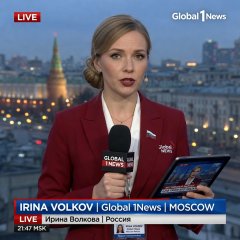
Russia/Eastern Europe Correspondent at Global1.News. Covering Russian politics, energy, security, and the shifting dynamics of the post-Soviet space. Provides clear-eyed analysis on one of the world's most opaque regions.















Comments (0)