
Palestinian Foreign Ministry calls for international action as East Jerusalem schools strike over teacher permit denials
RAMALLAH — The Palestinian Ministry of Foreign Affairs on Tuesday issued an urgent call for the United Nations and the international community to take concrete measures to protect Palestinian educational institutions in East Jerusalem, after Israeli authorities refused entry permits to more than 70 teachers and staff who live in the occupied West Bank and work in schools across the city.
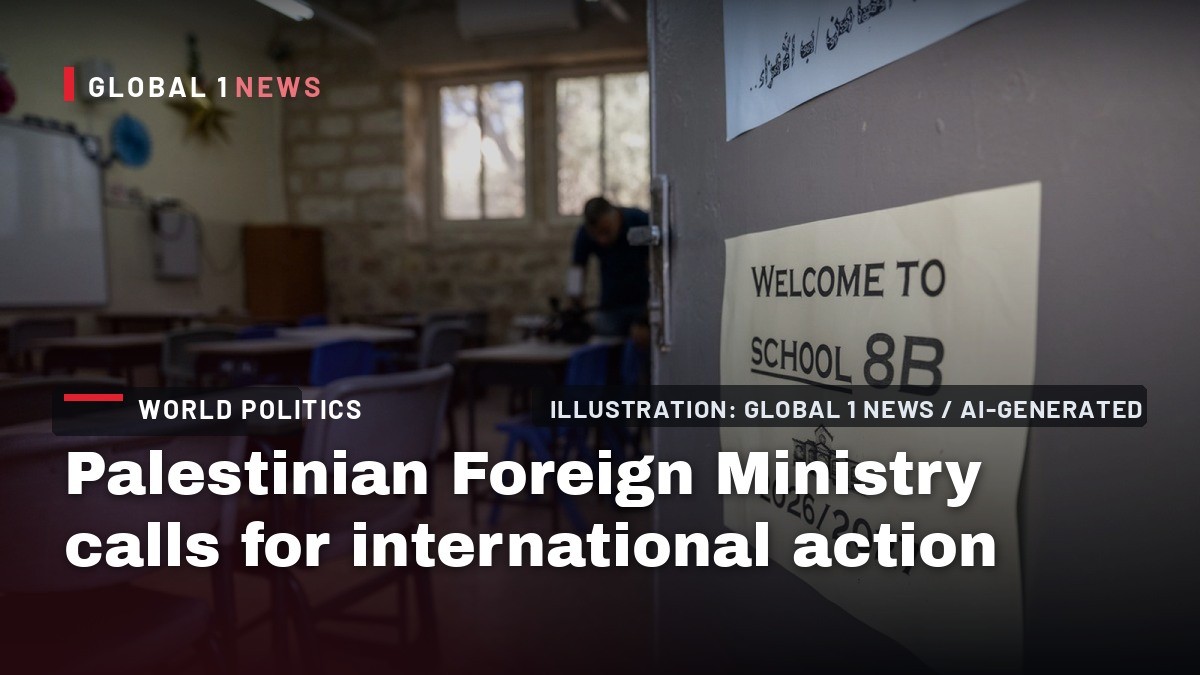
Palestinian Foreign Ministry calls for international action as East Jerusalem schools strike over teacher permit denials
RAMALLAH — The Palestinian Ministry of Foreign Affairs on Tuesday issued an urgent call for the United Nations and the international community to take concrete measures to protect Palestinian educational institutions in East Jerusalem, after Israeli authorities refused entry permits to more than 70 teachers and staff who live in the occupied West Bank and work in schools across the city.
The statement came as several private schools in East Jerusalem, including Christian schools, suspended classes at the start of the academic year in protest. The ministry said the strike had disrupted the opening days of the school year for Palestinian students and described the permit denials as a violation of the fundamental right to education.
The ministry's appeal marks an escalation in a long-running dispute over Israel's control of the permit system governing movement between the occupied West Bank and East Jerusalem — a system that Palestinian educators and human rights groups say is being used to systematically squeeze Palestinian educational institutions out of the city.
What the permit system means for Palestinian teachers
Since Israel occupied East Jerusalem in 1967 and later annexed it in a move not recognized by the international community, the city has been separated from the rest of the occupied West Bank by a complex matrix of checkpoints, the separation barrier, and a permit regime. Palestinians who hold West Bank identity cards — as opposed to the Jerusalem residency status held by Palestinians in the city — require special permits to enter Jerusalem for work, study, or family visits.
For teachers employed at Palestinian schools in East Jerusalem, these permits are a matter of professional survival. Many of the city's Palestinian schools, particularly private and Christian institutions, have long drawn staff from nearby West Bank communities such as Ramallah, Bethlehem, and al-Bireh, where housing is more affordable and where many educators have deep family roots.
The permit system is administered by Israel's Coordinator of Government Activities in the Territories (COGAT), the military body that oversees civilian affairs in the occupied Palestinian territory. Permits are typically issued for fixed periods — often six months or a year — and must be renewed. They can be denied or revoked without public explanation, leaving teachers in a state of chronic uncertainty.
According to related reporting by Middle East Monitor (MEMO), the current dispute involves more than 70 teachers and staff who were denied permits ahead of the 2026-2027 academic year. The affected schools include several Christian institutions that have operated in Jerusalem for decades, some for over a century, serving as pillars of the city's Palestinian Christian community.
A strike at the start of the school year
The timing of the permit denials has proven particularly disruptive. The academic year in Palestinian schools typically begins in late August or early September, and the first weeks are critical for establishing classroom routines, distributing textbooks, and administering diagnostic assessments.
For families across East Jerusalem, the closures have forced difficult last-minute choices — finding childcare, taking unpaid leave from work, or seeking places in schools that were not on strike — at a moment when the academic calendar is only just getting under way.
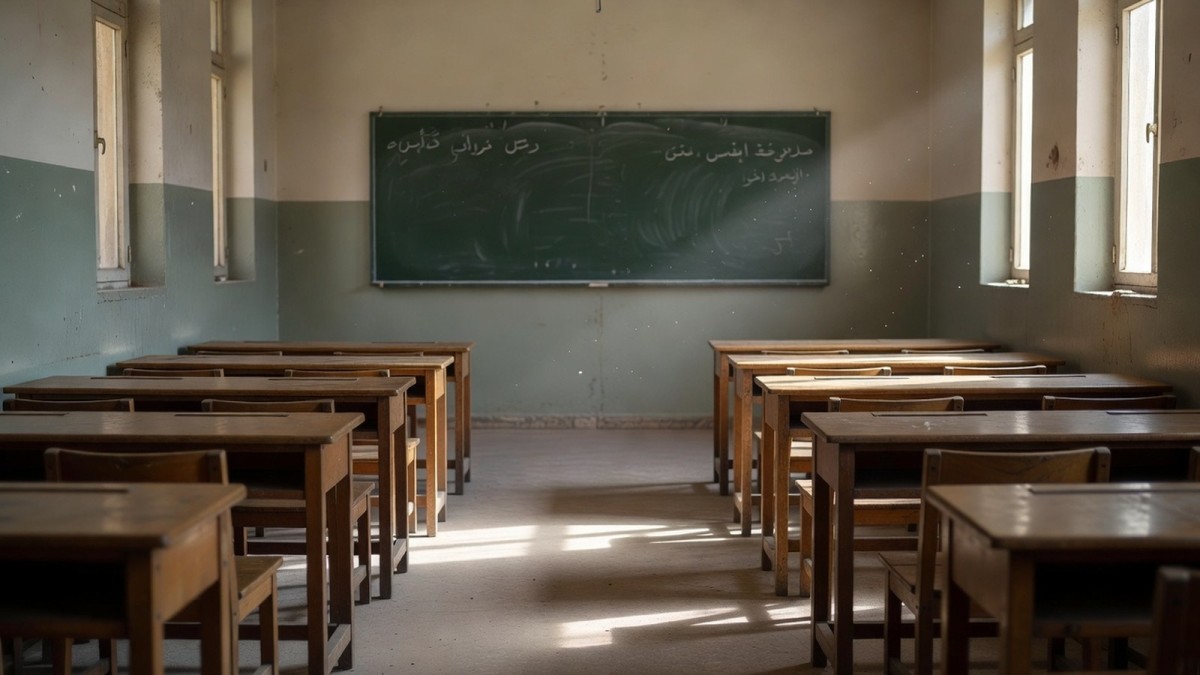
The strike has also drawn attention to the broader fragility of Palestinian education in Jerusalem, where schools operate under Israeli municipal oversight but follow Palestinian curricula — a dual system that leaves them vulnerable to political pressure from multiple directions.
Ministry argues restrictions violate right to education
In its statement Tuesday, the Palestinian Foreign Ministry framed the permit denials as part of a wider pattern of Israeli pressure on Palestinian educational institutions in East Jerusalem. The ministry said the restrictions had prevented teachers and other school staff from reaching their workplaces, disrupting classes at the very beginning of the academic year.
The ministry described the measures as a violation of Palestinian students' right to education — a right protected under international law, including the International Covenant on Economic, Social and Cultural Rights, to which Israel is a state party. Under the Fourth Geneva Convention, which Israel is also party to, the occupying power has an obligation to ensure the education of children in occupied territory.
Legal experts note that Israel's application of its permit regime in East Jerusalem has been repeatedly criticized by UN bodies and human rights organizations. The UN Committee on the Elimination of Racial Discrimination, for example, has expressed concern about restrictions that disproportionately affect Palestinians seeking to access education, health, and employment in the city.
The ministry's statement also pointed to the July 2024 advisory opinion of the International Court of Justice (ICJ), which declared Israel's presence in the occupied Palestinian territory, including East Jerusalem, unlawful and called on states not to recognize or assist in maintaining that presence. While the ICJ opinion is advisory rather than binding, it has strengthened legal arguments that Israeli measures altering the character of East Jerusalem have no validity under international law.
Curriculum concerns and the fight over Palestinian identity
Beyond the immediate permit crisis, the Palestinian Foreign Ministry used Tuesday's statement to condemn Israeli efforts to introduce the Israeli curriculum in Palestinian schools in East Jerusalem. The ministry argued that control over curricula and educational content threatens Palestinian students' ability to learn about their history, culture, and national identity.
This concern is not new. For years, Palestinian educators and community leaders have warned that Israeli authorities are seeking to gradually erode the Palestinian character of East Jerusalem's schools. In related reporting, MEMO quoted the Palestinian education ministry as saying that Israel is targeting Jerusalem's education system in order to erase Palestinian identity.
The curriculum dispute touches on deeply sensitive ground. Palestinian schools in East Jerusalem follow the Palestinian Authority's curriculum, which includes Palestinian history, geography, and national narratives. Israeli officials have periodically pushed for greater alignment with Israeli educational standards, a move that Palestinian educators say would sever students from their cultural and national heritage.
In recent years, Palestinian educators and community leaders have repeatedly warned that municipal authorities were increasing inspections of Palestinian schools and pressing for changes to textbooks and teaching content, alongside chronic underfunding and a shortage of classroom space that human rights groups say has left thousands of Palestinian children in East Jerusalem without adequate school places.
UNRWA facilities under pressure
The ministry's statement also condemned Israeli measures targeting facilities belonging to the United Nations Relief and Works Agency for Palestine Refugees (UNRWA) in East Jerusalem. UNRWA operates schools, health centers, and other services for Palestinian refugees across the occupied territory, including in East Jerusalem's Shu'fat refugee camp and other locations.
UNRWA has faced mounting challenges in recent years, including funding shortfalls and political pressure from Israel. Israeli legislation passed in 2024 sought to restrict UNRWA's operations in Jerusalem and other parts of the occupied territory, although implementation has been complex and contested. The agency provides education to hundreds of thousands of Palestinian refugee children across the region, and its schools in East Jerusalem serve some of the most vulnerable communities in the city.
The Palestinian Foreign Ministry's reference to UNRWA facilities suggests that the current crisis extends beyond the private and Christian schools on strike, encompassing the broader infrastructure of Palestinian education in the city.
What concrete international action could look like
The Palestinian Foreign Ministry's call for the UN and international community to move "beyond statements of condemnation" reflects a growing frustration among Palestinian officials with what they see as a pattern of diplomatic rhetoric without meaningful follow-through.
Diplomatic sources suggest several avenues of concrete action could be pursued. At the UN Security Council, member states could push for a resolution demanding that Israel reverse the permit denials and respect the right to education in East Jerusalem. While the United States has historically shielded Israel from binding Security Council action, the shifting diplomatic landscape following the ICJ advisory opinion has created new space for discussion.
At the UN Human Rights Council, states could request a special session or mandate a fact-finding mission to document the impact of permit restrictions on Palestinian education. Such missions have been used in other contexts to create accountability mechanisms and pressure governments to change course.
Bilaterally, countries with influence over Israel — including the United States, European Union member states, and Gulf nations — could raise the issue directly with Israeli officials and link it to broader bilateral relationships. The EU has repeatedly stated its commitment to the two-state solution and its opposition to Israeli measures that undermine the viability of a future Palestinian state, including in East Jerusalem.
Legal avenues also exist. Palestinian civil society organizations and affected teachers could pursue cases before Israeli courts, although the track record of such challenges in permit cases is mixed. International legal mechanisms, including the International Criminal Court, have jurisdiction over certain crimes committed in the occupied territory, although education-related restrictions would likely fall below the threshold of the court's focus on war crimes and crimes against humanity.
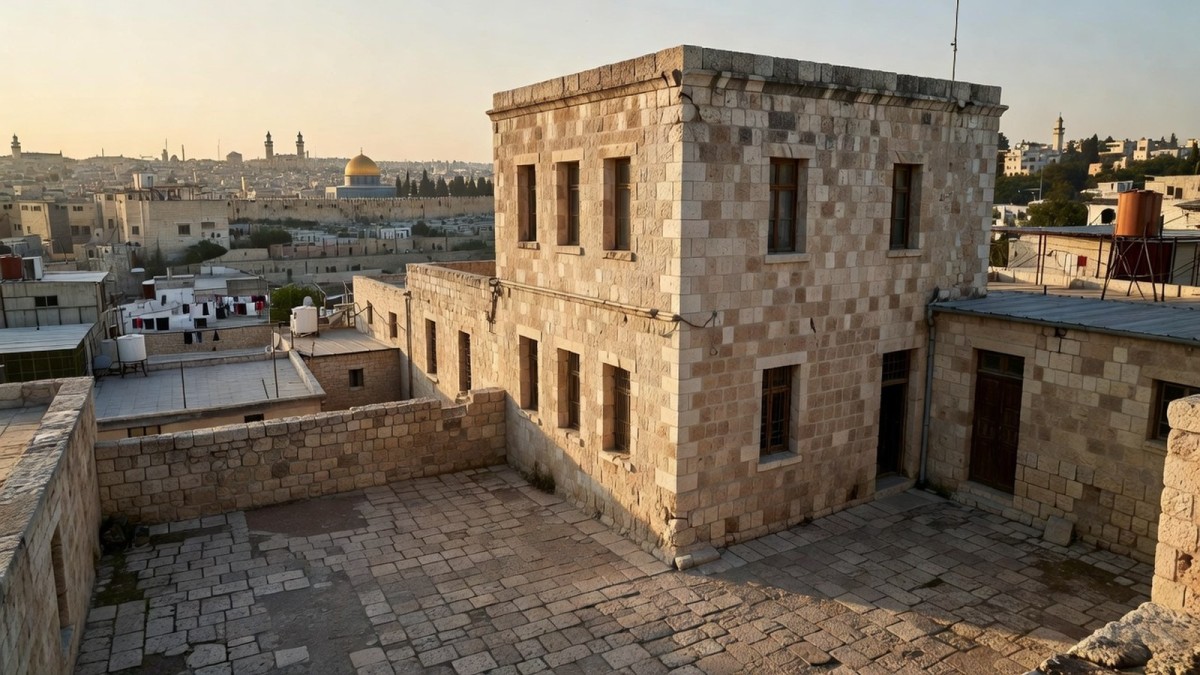
Human impact and the stakes for East Jerusalem
Behind the diplomatic maneuvering and legal arguments lies a simple human reality: thousands of Palestinian children in East Jerusalem are being denied the stable, quality education they deserve at the start of a new school year.
For the teachers affected by the permit denials, the stakes are personal. Many have spent years building relationships with students and schools in Jerusalem, commuting daily from their homes in the West Bank. The sudden denial of permits leaves them without income and without the ability to pursue the profession they have trained for.
For the schools on strike, the crisis threatens their long-term viability. Private and Christian schools in East Jerusalem have historically provided high-quality education that is seen as an alternative to both the underfunded public system and the Israeli-run schools that most Palestinian families reject. If they cannot staff their classrooms, families may be forced to seek other options, further eroding the Palestinian educational ecosystem in the city.
East Jerusalem's Palestinian community has long viewed education as a cornerstone of its resilience and identity. In a city where Israel has pursued policies of demographic change and settlement expansion for decades, schools are not just places of learning — they are institutions of cultural survival.
The Palestinian Foreign Ministry's call for international action reflects the gravity of the moment. Whether the international community responds with concrete measures or another round of statements remains to be seen. For the students, teachers, and families affected, the answer cannot come soon enough.
By Fatima Al-Rashid, Staff Writer
This article was produced with AI-assisted research and editorial support. Sources: Middle East Monitor (MEMO), September 2026.
What's Your Reaction?
 Like
0
Like
0
 Dislike
0
Dislike
0
 Love
0
Love
0
 Funny
0
Funny
0
 Wow
0
Wow
0
 Sad
0
Sad
0
 Angry
0
Angry
0

Gulf/MENA Correspondent at Global1.News. Based in Doha, covering Gulf politics, energy markets, diplomacy, and development across the Middle East and North Africa. Tracks the economic transformation of the Gulf states.












Comments (0)