
UK Tells British Companies to Respect International Law in Palestinian Waters
In a recent Middle East Eye report, the UK government has issued a clear directive to British companies operating in the region: respect international law in Palestinian waters.
In a recent Middle East Eye report, the UK government has issued a clear directive to British companies operating in the region: respect international law in Palestinian waters. The statement, delivered by Minister of State for the Middle East Stephen Doughty, marks a notable shift in tone from London as it navigates the complex legal and political terrain of offshore energy exploration in the Eastern Mediterranean.
UK Tells British Companies to Respect International Law in Palestinian Waters
London, United Kingdom – 2 September 2026 — The instruction, delivered in response to parliamentary questions about Aberdeen-based oil company Dana Petroleum, comes as Foreign Secretary Ed Miliband prepares to set out a “comprehensive set of measures” over Israel’s West Bank settlement expansion. In a recent Middle East Eye video report, Minister of State Stephen Doughty made clear that Britain expects its companies to abide by their obligations under international law in Palestinian waters.

What Britain Told Its Companies
Stephen Doughty, the British minister of state for the Middle East, North Africa, Afghanistan and Pakistan, said he expects UK companies to abide by their obligations under international law over oil exploration in Palestinian waters. The remarks came in response to a question from British MP Brian Leishman, who pressed the foreign secretary on the government's stance regarding Dana Petroleum's activities in the region.
The minister's language is careful but consequential. By explicitly invoking international legal obligations, London is signalling that commercial interests cannot be pursued in a vacuum, particularly in maritime zones that remain the subject of dispute and Palestinian sovereign claims. The statement does not name Dana Petroleum directly, but the context leaves little doubt about which company's operations are under scrutiny.
This position aligns with a broader pattern of UK diplomatic messaging that has grown more assertive in recent months. The government has repeatedly stated its support for Palestinian economic development, yet the gap between rhetoric and enforceable policy has often frustrated rights groups and legal experts who monitor British corporate activity in occupied territories.
Dana Petroleum and the Licences at the Centre of the Row
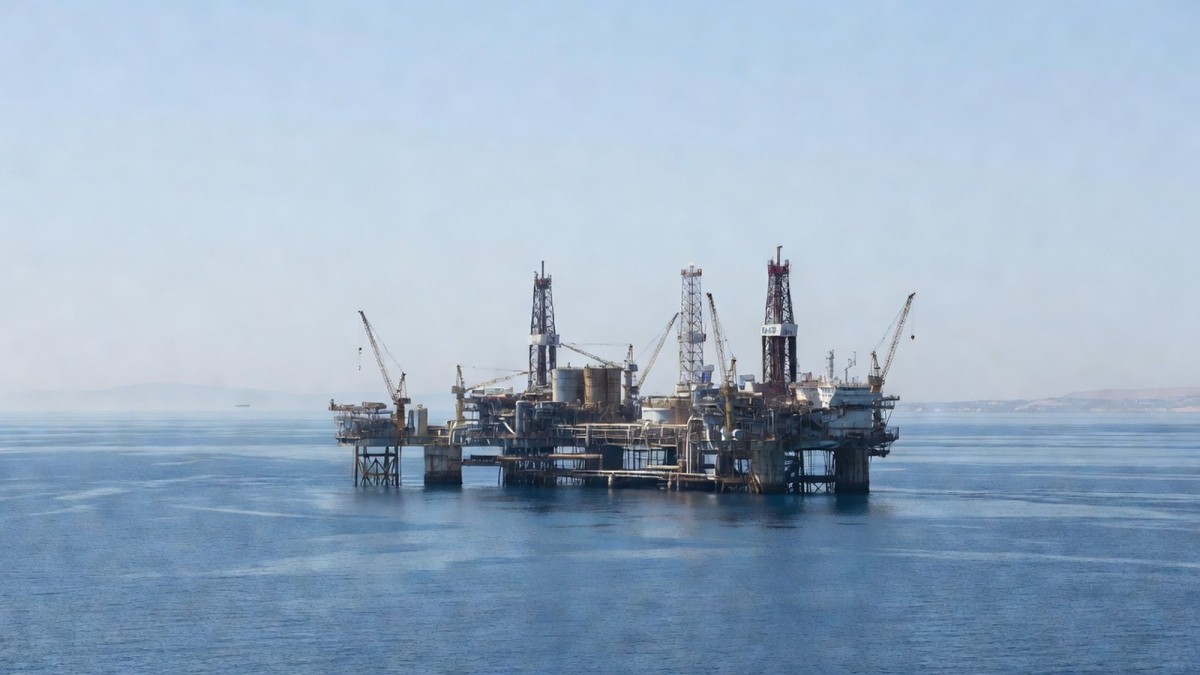
Dana Petroleum, an Aberdeen-based oil and gas company and a wholly owned subsidiary of the Korea National Oil Corporation, finds itself at the heart of this controversy. In October 2023, a consortium that included Dana Petroleum won six oil and gas exploration licences awarded by the Israeli government. Campaigners have said that approximately 62 percent of the area covered by those licences lies within Palestinian waters.
The figure is striking. It suggests that the majority of the exploration area granted by Israeli authorities overlaps with maritime zones that Palestinians consider part of their future state's natural resources. Under international law, particularly the UN Convention on the Law of the Sea, coastal states hold sovereign rights over the natural resources of their continental shelf and exclusive economic zone. Palestine's status in this framework remains contested, but the legal arguments for Palestinian claims to these waters have been advanced by numerous international jurists.
In a written parliamentary answer dated 25 August 2026, responding to question 901104, a UK minister stated: "I have not had discussions with my Israeli counterpart specifically on oil exploration in Palestinian waters off the coast of Gaza. We support efforts to promote Palestinian economic development and long-term stability and continue to work with international partners to advance peace and security for both Israelis and Palestinians."
The admission that no direct discussions have taken place with Israeli officials on this specific issue may raise eyebrows. If British companies are operating in areas of contested sovereignty, one might expect active diplomatic engagement to clarify legal parameters. Instead, the response suggests a hands-off approach that has drawn criticism from those who believe the UK should be more proactive in protecting Palestinian maritime rights.
Miliband's 'Comprehensive Reset' and Settlement Measures
The statement on Palestinian waters arrives amid a broader recalibration of UK policy toward Israel. On 1 September 2026, Foreign Secretary Ed Miliband addressed the House of Commons for the first time in that role and promised a "comprehensive reset" of UK policy on Israel. His words were unambiguous: "This Government will not acquiesce in the destruction of the two-state solution. We will act, and I will set out a comprehensive set of measures in the coming weeks."
Miliband continued: "We need a comprehensive reset of our policy across the piece." He said the government is looking at how to stop British companies financing settlement activity in the occupied West Bank. This represents a potential escalation from previous positions, moving beyond advisory guidance toward what could become binding restrictions on British economic engagement with illegal settlements.
The reset follows Israel's plans to expand settlements in the occupied West Bank, including the E1 project east of Jerusalem. Critics say the E1 development would cut the West Bank in two, severing its northern and southern halves and destroying the territorial contiguity necessary for a viable Palestinian state. The project has long been considered a red line by Palestinian negotiators and international observers alike.
Israel's foreign minister, Gideon Sa'ar, has already warned that Israel would retaliate if the UK imposes sanctions. The threat underscores the diplomatic tightrope London must walk. Any meaningful action against settlement activity will likely provoke a response from Jerusalem, potentially affecting bilateral relations across trade, security cooperation, and intelligence sharing.
A Quiet Shift in British Business Guidance
The current trajectory did not emerge from nowhere. In 2024, the UK updated official guidance for the first time to state that there should be no economic involvement in illegal Israeli settlements. The updated advice explicitly warned British businesses against economic and financial activity in settlements, which are considered illegal under international law.
That guidance represented a significant departure from decades of relatively permissive British policy toward commercial engagement in the occupied territories. For years, UK companies operated with minimal oversight, and successive governments resisted calls to clarify the legal risks of doing business in settlements or in areas of contested sovereignty such as Palestinian waters.
The shift has been gradual but discernible. On 9 June 2026, the UK, Australia, Canada, France and Norway imposed sanctions on six entities and one individual accused of financing, enabling and carrying out settler violence in the occupied West Bank. The coordinated action demonstrated that London is willing to move beyond statements and impose concrete consequences for activities that undermine Palestinian rights and international law.
The International Centre of Justice for Palestinians (ICJP) sent a letter to Stephen Doughty on 12 August 2026 calling for targeted sanctions on illegal settlements. The organisation has been among the most vocal advocates for holding British companies accountable for their operations in occupied territory, arguing that commercial engagement legitimises and sustains the occupation.
What Is at Stake for Palestinians on the Ground
Behind the diplomatic language and legal technicalities lies a human reality that is often overlooked in discussions of maritime boundaries and exploration licences. Palestinian fishermen and maritime rights off Gaza have long been restricted under Israel's blockade, which has been in place since 2007. The restrictions have devastated the fishing industry, once a cornerstone of Gaza's economy, and have limited Palestinians' ability to access and benefit from their own natural resources.
Offshore gas, such as the Gaza Marine field off Gaza's Mediterranean coast, has long been cited as vital potential revenue for Palestinian economic development and reconstruction. The field was discovered more than two decades ago, but successive rounds of conflict and Israel's blockade have kept it undeveloped, leaving Gaza's economy dependent on aid and its people cut off from the resources beneath their own waters. Developing the field, experts and Palestinian officials have argued, could fund infrastructure, healthcare, education, and the rebuilding of areas devastated by repeated wars.
Israel's 2023 licence awards to international companies in areas overlapping Palestinian maritime zones have drawn criticism from rights and legal groups. The concern is not merely about the specific licences held by Dana Petroleum and its consortium partners, but about the precedent they set. If international companies accept Israeli authority over waters that Palestinians claim, it undermines the basis for future Palestinian economic sovereignty.
UN figures cited in reporting show settler attacks against Palestinians in the West Bank at record levels this year. The violence, often carried out with impunity, has forced dozens of Palestinian communities to abandon their homes. The connection between settlement expansion, settler violence, and the erosion of Palestinian rights is direct and well-documented. When the UK speaks of respecting international law in Palestinian waters, it must be seen in this broader context of systematic erosion of Palestinian rights across all spheres.
Analysis and Implications
The UK's position on Palestinian waters, combined with Miliband's promised reset, suggests a government attempting to carve out a more principled stance without fully breaking with longstanding alliances. The challenge lies in translating words into enforceable action. A ministerial expectation that companies will respect international law is not the same as a regulatory framework that penalises those who do not.
The coming weeks will be telling. Miliband has promised to set out a comprehensive set of measures, and the question of British companies operating in Palestinian waters will likely feature prominently. Whether the government opts for binding sanctions, enhanced due diligence requirements, or simply stronger diplomatic messaging remains to be seen.
For Dana Petroleum and other companies holding licences in contested areas, the uncertainty is itself a commercial risk. International investors generally prefer clarity and stability. Operating in areas of disputed sovereignty, under licences issued by one party to a conflict, exposes companies to legal challenges, reputational damage, and potential future claims for compensation or restitution.
The Israeli response will also shape the outcome. Gideon Sa'ar's warning of retaliation suggests that any UK action will be met with countermeasures. This could affect British diplomatic interests in the region, but it also reflects the high stakes involved. If the UK backs down in the face of threats, its credibility on international law and human rights will be diminished. If it proceeds, it may inspire other European nations to follow suit.
Looking Ahead
As the UK moves toward what Miliband describes as a "comprehensive reset," the situation in Palestinian waters offers a test case for whether London's new approach will have substance. The government has stated its expectations clearly. Now the international community, Palestinian rights advocates, and the companies themselves will be watching to see whether those expectations are backed by meaningful enforcement mechanisms.
For Palestinians, the stakes could not be higher. Control over maritime resources is not merely a legal abstraction; it is about the ability to build an economy, to provide for families, and to exercise sovereignty over land and sea that rightfully belongs to them. The Gaza Marine field alone could transform the economic prospects of a population that has endured decades of blockade, conflict, and deprivation.
The UK's statements are welcome, but they are only a beginning. The true measure of Britain's commitment will be in the actions it takes in the coming weeks and months. Will it impose sanctions on companies that operate in illegal settlements? Will it take concrete steps to prevent British firms from exploring for oil and gas in Palestinian waters without Palestinian consent? Will it use its diplomatic weight to challenge Israeli actions that undermine the two-state solution?
These questions remain unanswered. But for the first time in years, there is a sense that the UK may be willing to move beyond rhetoric. The promise of a comprehensive reset, the updated business guidance, the coordinated sanctions on settler violence, and now the explicit statement on international law in Palestinian waters all point in the same direction. Whether that direction leads to meaningful change for Palestinians on the ground remains to be seen.
This article was produced with AI-assisted research and editorial support. Sources: Middle East Eye video report (2 September 2026); The Guardian; BBC News; The National; GB News; STV News; UK Parliament written question 901104; ICJP.
By Fatima Al-Rashid, Staff Writer
What's Your Reaction?
 Like
0
Like
0
 Dislike
0
Dislike
0
 Love
0
Love
0
 Funny
0
Funny
0
 Wow
0
Wow
0
 Sad
0
Sad
0
 Angry
0
Angry
0

Gulf/MENA Correspondent at Global1.News. Based in Doha, covering Gulf politics, energy markets, diplomacy, and development across the Middle East and North Africa. Tracks the economic transformation of the Gulf states.















Comments (0)