
Tech Leader Mati Gill Joins Bennett's Beyachad Party
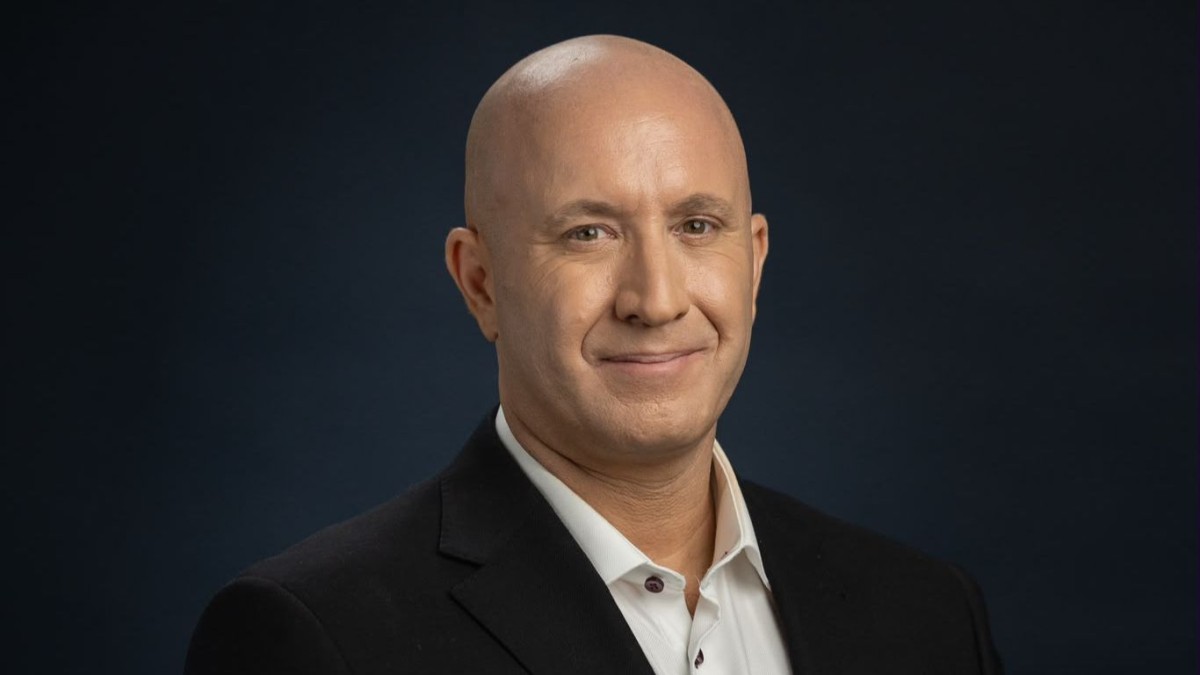
In a recent i24NEWS Innov'Nation report, tech entrepreneur Mati Gill, founding CEO of AION Labs, sat down with host Lynn Plagmeijer to explain why he is leaving the private sector to join former prime minister Naftali Bennett's Beyachad party ahead of Israel's October 27, 2026...
In a recent i24NEWS Innov'Nation report, tech entrepreneur Mati Gill, founding CEO of AION Labs, sat down with host Lynn Plagmeijer to explain why he is leaving the private sector to join former prime minister Naftali Bennett's Beyachad party ahead of Israel's October 27, 2026 elections. Gill, who helped form a political party roughly two decades ago before pivoting to high-tech, said the October 7, 2023 Hamas attack and the current government's handling of the economy pushed him back into politics.
Tech Leader Mati Gill Joins Bennett's Beyachad Party
Jerusalem, Israel — Gill's announcement comes as Beyachad, the merger of Bennett's "Bennett 2026" party and Yair Lapid's Yesh Atid, struggles to regain momentum against Gadi Eisenkot's surging Yashar party. The former AION Labs CEO cited "brain drain, the lack of investments, the downturn in the amounts of employees that we see in the R&D sector" as dangerous trends requiring immediate intervention from Israel's most capable innovators.
From Startup Studio to Political Arena
Gill's career trajectory spans both worlds: he helped establish a political party approximately 20 years ago, then moved into the private sector where he founded AION Labs, a startup studio using artificial intelligence to discover and develop drugs. His return to politics, he told Plagmeijer, stems from a conviction that Israel's leading innovators must step into the Knesset to reverse what he describes as a deteriorating national trajectory.
"I am proud to be working to help Naftali Bennett be the next prime minister because he himself is a tech entrepreneur," Gill said during the Innov'Nation interview. Bennett, who served as prime minister between June 2021 and December 2022, founded his own tech company, Cyota, before entering politics. That entrepreneurial background, Gill argued, distinguishes Bennett from career politicians who lack hands-on experience building companies and creating jobs.
Gill sat alongside Yonatan Zinder, Co-CEO of Blueye AI, who offered a parallel perspective on the intersection of technology and politics. Zinder noted that this election cycle will be shaped significantly by AI-driven deepfake content, making it increasingly difficult for voters to distinguish real information from manipulated content. He said he has been approached by political parties seeking AI capabilities, confirming that all major parties are currently using AI in some form.
Brain Drain and Innovation Warnings
Gill's central warning concerns Israel's eroding position as a global technology hub. He identified three pillars the tech sector requires: strong human capital, cutting-edge technology, and sufficient private investment. On all three fronts, he argued, Israel is currently falling short — particularly in artificial intelligence infrastructure, where he said the country lags behind global leaders.
"We need to become a top-three player globally in defense technology, deep technology, and AI infrastructure," Gill stated. His concern reflects broader anxieties within Israel's high-tech community, which has watched thousands of engineers and entrepreneurs relocate abroad since the October 7 attack and the subsequent judicial reform debate that divided the country throughout 2023.
The recent death of Nobel laureate Professor Ada Yonath served as a poignant reminder of Israel's scientific legacy, Gill said. Yonath, who won the 2009 Nobel Prize in Chemistry for her work on ribosome structure, represented a generation of Israeli scientists who built the country's research institutions from scratch. Gill argued that Israel must strengthen its education system to produce the next generation of Yonaths while simultaneously working to bring back Israelis who have emigrated abroad.
His ambition extends beyond repatriation: Gill hopes to help attract another million immigrants to Israel over the next decade. That target echoes historical waves of aliyah that transformed Israeli society, from the post-1948 mass immigration to the influx of Soviet Jews in the 1990s. Whether such a goal is realistic given current security tensions remains an open question, but Gill framed it as essential for Israel's demographic and economic future.
Beyachad's Election Calculus
Gill joins Beyachad at a precarious moment. The party, founded in late April 2026 as a merger between Bennett's "Bennett 2026" and Lapid's Yesh Atid, bills itself as representing Israel's liberal centre-right majority — hawkish on security, moderate on social and religious issues. Women comprise the majority of its candidate list, and Lapid serves as number two behind Bennett.
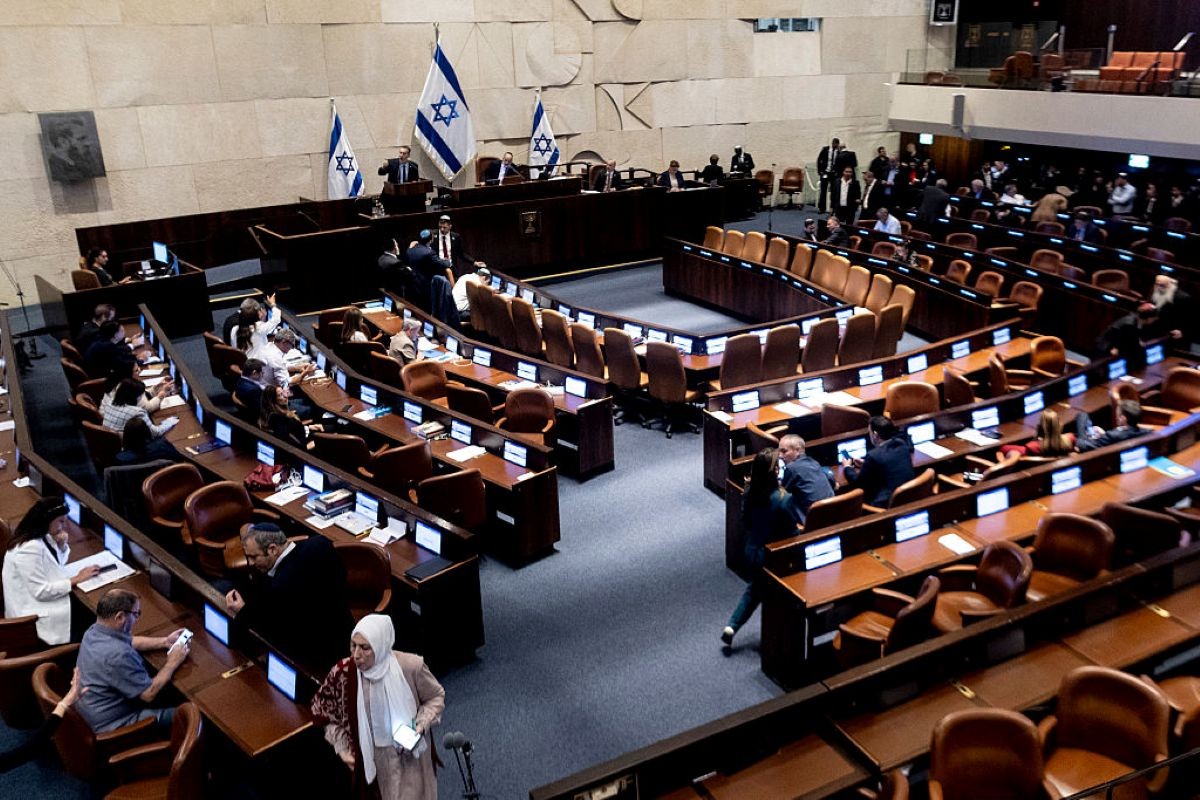
The latest Channel 11 poll, as cited by Labour Friends of Israel, shows a fragmented Knesset: Yashar (Gadi Eisenkot) leads with 24 seats, followed by Likud (Benjamin Netanyahu) at 22, Beyachad at 14, Democrats at 10, Otzma Yehudit at 9, Yisrael Beiteinu at 9, United Torah Judaism at 8, Shas at 7, Hadash-Ta'al-Balad at 7, Ra'am at 5, and Religious Zionism at 5. The pro-Netanyahu bloc commands 51 seats, the Zionist opposition 57, and Arab-led parties 12 — with 61 seats needed for a ruling majority.
An i24NEWS poll this week showed Bennett's party slipping while Eisenkot gained at his expense. Eisenkot, a former IDF chief of staff, has positioned Yashar as the credible alternative on national security — the top voter concern given IDF deployments in Gaza, Syria, Lebanon and the West Bank. In a July survey, roughly half of coalition voters rated Israel's national security situation good or very good, versus only 11 percent of opposition voters.
Bennett is seen as more effective than Eisenkot on economic issues, which explains his recent pivot to elevate economic reform to the core of his campaign. Gill's arrival bolsters that economic credibility, giving Beyachad a recognizable tech-sector figure who can speak authentically about innovation policy, investment attraction, and R&D employment.
AI's Role in the 2026 Campaign
Zinder's warning about AI-driven disinformation adds another layer to an already volatile election. He cited a recent survey showing 71% of Israelis encountered fake news while researching the election — a staggering figure that underscores how digital manipulation has become mainstream in Israeli political discourse.
"AI's impact will intensify in the final two weeks before the election, when Israeli voters traditionally make final decisions," Zinder said. That timeline suggests campaigns are preparing for a last-minute flood of deepfake content targeting undecided voters. Israeli elections have historically been decided in the final days, with late swings frequently determining coalition outcomes.
Blueye AI, the company Zinder co-leads, builds custom AI agents for traditional and low-tech industries in Israel, targeting operational bottlenecks in sales, customer support and recruitment. The company recently sold a 49% stake to DB Group Investment, signaling growing commercial interest in applied AI solutions. Zinder's dual role as tech entrepreneur and election observer gives him unusual insight into how campaigns are weaponizing the same tools his company sells to businesses.
The use of AI in Israeli campaigns raises profound questions about electoral integrity. Unlike previous elections, where disinformation was primarily text-based and relatively easy to debunk, AI-generated video and audio can fabricate statements with alarming realism. A deepfake of Bennett or Eisenkot making inflammatory remarks could shift voter sentiment in ways that are difficult to counteract in real time.
Bennett's Economic Strategy
Bennett recently unveiled a plan for economic revival he called the "heart" of his agenda — an attempt to regain his lead over Eisenkot. The plan reportedly focuses on reducing regulatory burdens, incentivizing R&D investment, and creating conditions for high-tech growth. Gill's endorsement lends credibility to those proposals, though specific policy details remain sparse.
The economic stakes are considerable. Israel's high-tech sector accounts for a disproportionate share of exports and tax revenue, and its slowdown since 2023 has ripple effects throughout the economy. The cost of living remains a major voter concern, alongside ultra-Orthodox conscription and judicial reform — issues that have divided the Knesset and fueled repeated election cycles.
Gill's definition of success over the next four to five years is clear: reversing the brain drain, closing Israel's gap in AI and quantum technology development, and restoring investor confidence. Those metrics are measurable, and they provide a benchmark against which voters can judge Beyachad's performance if it enters government.
His motivation, he told Plagmeijer, is personal: ensuring a better future for his children in Israel. That framing resonates with many Israeli parents who have watched the past three years of war and domestic tumult and wondered whether their children will have the same opportunities they enjoyed. Gill's answer is that the country needs its most capable people working to fix fundamental problems — and that he intends to be among them.
What This Means for October 27
Gill's entry into Beyachad is unlikely by itself to close the gap with Yashar, but it signals something important about the party's strategy. Beyachad is attempting to position itself as the home for Israel's tech elite — the engineers, entrepreneurs and investors who built the "Startup Nation" brand and who fear that current policies are dismantling it.
The challenge is that national security dominates voter concerns, and Eisenkot's military credentials give him an advantage Bennett cannot easily match. Bennett's response has been to argue that economic strength is itself a security issue — that Israel cannot maintain its military edge without a thriving innovation ecosystem to develop next-generation defense technologies.
Gill's specific warnings about AI infrastructure and deep technology align with that argument. If Israel falls behind in these fields, he suggests, its qualitative military edge — long the foundation of its deterrence strategy — will erode. That message may resonate with security-conscious voters who understand that technology wins modern wars.
The final two weeks before October 27 will likely determine whether Beyachad can regain momentum. AI-driven disinformation, as Zinder warned, will make that period particularly treacherous. Voters will need to navigate a landscape where manipulated content is increasingly indistinguishable from reality, and where campaigns are using sophisticated message testing to target individual voters with personalized appeals.
For Israeli readers, the practical takeaway is straightforward: the election will be decided on security and economics, with technology as the connective tissue. Gill's presence in Beyachad gives Bennett a credible voice on innovation policy, but whether that translates into seats depends on whether voters believe the party can actually deliver change. The polls suggest a tight race, with no bloc currently commanding a ruling majority. Every seat will count, and Gill's appeal to the high-tech community could make the difference in a handful of close races.
By Hannah Berg, Staff Writer
This article was produced with AI-assisted research and editorial support. Sources: i24NEWS English; i24NEWS Innov'Nation; Labour Friends of Israel — Israel Elects 2026; i24NEWS election polling coverage.
What's Your Reaction?
 Like
0
Like
0
 Dislike
0
Dislike
0
 Love
0
Love
0
 Funny
0
Funny
0
 Wow
0
Wow
0
 Sad
0
Sad
0
 Angry
0
Angry
0

Israel Correspondent at Global1.News. Based in Tel Aviv, covering Israeli politics, security, technology, and society. Provides balanced, deeply-sourced reporting on one of the most closely-watched regions in the world.















Comments (0)