
INS Hanit 20 Years: Deadly Hezbollah Strike on Israel's Navy
In a recent i24NEWS English report marking two decades since the deadliest single blow to the Israeli Navy in modern history, the story of the INS Hanit remains a stark reminder of how a single missile can reshape naval doctrine.
In a recent i24NEWS English report marking two decades since the deadliest single blow to the Israeli Navy in modern history, the story of the INS Hanit remains a stark reminder of how a single missile can reshape naval doctrine. On 14 July 2006, during the Second Lebanon War, Hezbollah fired a Chinese-built C-802 anti-ship missile that struck the Sa'ar 5-class corvette off the coast of Beirut, killing four Israeli sailors and exposing critical vulnerabilities in the Navy's layered defense systems. Twenty years later, as Israel faces a far more sophisticated Iranian-backed arsenal, the lessons of the Hanit strike continue to reverberate through the corridors of the IDF's naval headquarters in Haifa and the decks of its newest warships.
INS Hanit: 20 Years On from the Deadly Hezbollah Strike on the Israeli Navy
Haifa, Israel – July 2026 — The INS Hanit (503), whose name means "Spear" in Hebrew, was the flagship of the Israeli Navy's 3rd Flotilla when it took up position roughly 8-10 nautical miles west of Beirut in mid-July 2006. Built by Northrop Grumman Ship Systems and commissioned in the mid-1990s, the corvette was enforcing a naval blockade against Lebanon as part of Operation Change of Direction, the IDF's response to Hezbollah's cross-border raid that killed three soldiers and captured two others on 12 July. The blockade was meant to cut off Hezbollah's supply lines, but it also made the Hanit a high-value target for a group that had spent years preparing for exactly this kind of confrontation.
The Strike That Changed Naval Warfare
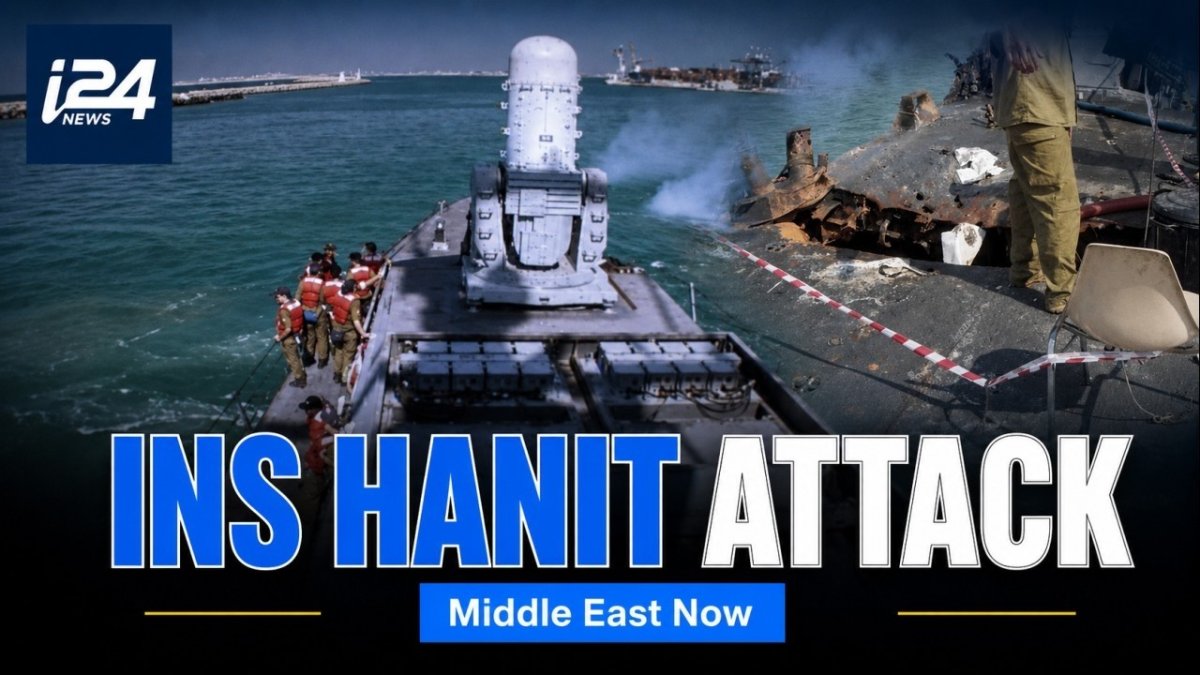
At approximately 8:40 PM on 14 July 2006, Hezbollah launched two Chinese-built C-802 anti-ship missiles fitted with upgraded Iranian radar seekers from a coastal launcher south of Beirut. The first missile struck a Cambodian-flagged Egyptian freighter operating about 60 kilometers offshore, a tragic but telling sign of the weapon's range and accuracy. The second missile locked onto the INS Hanit, striking the ship's less-stealthy crane near the rear helicopter pad. The warhead ignited the flight deck, sending flames and thick black smoke into the Mediterranean night sky, and critically damaged the corvette's propulsion systems.
The ship stayed afloat, a testament to its Sa'ar 5-class design, and its crew managed to get the vessel out of the line of fire before returning to the port of Ashdod under its own power for extensive repairs. But the human cost was immediate and devastating. Four Israeli sailors were killed in the attack: Staff Sergeant Tal Amgar, Corporal Shai Atas, Sergeant Yaniv Hershkovitz, and First Sergeant Dov Steinshuss. Their names are now etched into the memorial wall at the Israeli Navy's headquarters in Haifa, and their families have spent two decades pressing for answers about how such a sophisticated warship could be caught so unprepared.
Operational Complacency and the Investigation
The IDF's official investigation into the strike, completed in late 2006, painted a damning picture of operational complacency. The ship's automatic missile defense system was not deployed at the time of the attack. A junior officer had shut down the central radar and parts of the defense system without notifying the ship's commander, believing the vessel was not under immediate threat. The investigation found that Israeli Navy leadership had underestimated Hezbollah's anti-ship capability, assuming the group's arsenal was limited to short-range rockets and small arms. That assumption was shattered in a matter of seconds.
In the aftermath, two navy officers, two junior officers, and the ship's commander were formally reprimanded and moved to non-commanding positions on land. The reprimands were a clear signal that the Navy took the failure seriously, but they also raised questions about whether the institutional culture that allowed such complacency had truly been addressed. The Hanit itself underwent months of repairs at the Ashdod shipyard and returned to active service in 2007, but the scars of that night — both physical and psychological — remained.
Regional Context: Hezbollah's Evolving Arsenal
Twenty years on, the threat landscape has transformed dramatically. Hezbollah has reportedly acquired more advanced anti-ship weapons, including the Russian-made Yakhont, the export version of the P-800 Oniks supersonic cruise missile. With a range of up to 300 kilometers and a speed of Mach 2.5, the Yakhont poses a far greater challenge than the C-802 that struck the Hanit. Israeli intelligence assessments, shared with the Knesset Foreign Affairs and Defense Committee in recent months, indicate that Hezbollah now possesses a multi-layered coastal defense network that includes radar-guided missiles, unmanned aerial vehicles, and loitering munitions capable of targeting naval assets from the Lebanese coast to deep into Israel's exclusive economic zone.
The broader regional picture has also shifted. The Israel-Iran war that began in February 2026 has brought the Iranian axis into direct confrontation with Israel on multiple fronts. Hezbollah, while significantly degraded by Israeli strikes during the 2024-2025 conflict, remains a potent force with thousands of rockets and a cadre of naval specialists trained in Iran. The Israeli Navy has responded by modernizing its fleet, commissioning new Sa'ar 6-class corvettes equipped with the Barak 8 air defense system and the C-Dome, the naval version of the Iron Dome. These ships are designed to operate in the littoral environment that proved so dangerous for the Hanit, with layered defense systems that can engage multiple threats simultaneously.
Diplomatic and International Reactions
The 20th anniversary of the Hanit strike has drawn attention beyond Israel's borders. In August 2019, Hezbollah's al-Manar TV aired footage it claimed showed the 2006 strike on the Israeli ship, a propaganda move that underscored the group's continued pride in the attack. The footage was dismissed by Israeli officials as a distortion, but it served as a reminder that Hezbollah views the Hanit strike as a strategic victory, one that demonstrated its ability to challenge Israeli naval superiority.
Internationally, the strike has been studied by naval academies and defense analysts from Washington to Tokyo. The U.S. Navy's Surface Warfare Development Command has incorporated the Hanit case study into its training curriculum, using it as a cautionary tale about the dangers of electronic warfare complacency and the need for constant vigilance in littoral operations. European naval forces, particularly those operating in the Eastern Mediterranean as part of UNIFIL's maritime task force, have also taken note, adjusting their own defense postures in response to the evolving threat from non-state actors with advanced anti-ship capabilities.
Analysis and What This Means
The Hanit strike was the first direct hit on an Israeli warship in decades, and its lessons have shaped Israeli naval doctrine in profound ways. The Navy has invested heavily in electronic warfare capabilities, including advanced radar systems that can detect and track low-flying anti-ship missiles, and in layered defense systems that provide multiple opportunities to intercept incoming threats. The Barak 8, with its 70-kilometer range and advanced seeker technology, is now the backbone of the Navy's air defense, while the C-Dome provides a last line of defense against saturation attacks.
But the deeper lesson of the Hanit is about mindset. The investigation revealed that the ship's crew had become complacent, believing that Hezbollah lacked the capability to strike them. That complacency was a product of years of Israeli naval dominance in the Eastern Mediterranean, a dominance that had gone unchallenged since the 1973 Yom Kippur War. The Hanit strike shattered that assumption, and the Navy has spent two decades rebuilding its culture to ensure that such a failure never happens again.
As Israel enters its sixth month of war with Iran, the Hanit's legacy is more relevant than ever. The Iranian Navy and its proxies have demonstrated a willingness to use anti-ship missiles, and the threat to Israeli naval assets in the Mediterranean and the Red Sea is real. The Israeli Navy's new Sa'ar 6 corvettes, with their advanced sensors and layered defenses, are a direct response to the lessons of 2006. But the human element remains the most critical factor. The Navy's training now emphasizes constant readiness, the importance of following protocols, and the need to challenge assumptions about enemy capabilities.
For the families of Tal Amgar, Shai Atas, Yaniv Hershkovitz, and Dov Steinshuss, the 20th anniversary is a time of reflection and remembrance. For the Israeli Navy, it is a reminder that the sea is a dangerous place, and that the price of complacency is measured in the lives of sailors. The Hanit still sails, a symbol of resilience and a warning from history. As the Navy's newest ships patrol the waters off Lebanon and beyond, the lessons of that July night in 2006 remain etched into every operational plan, every training exercise, and every decision made in the war room at Haifa headquarters.
By Hannah Berg, Staff Writer
This article was produced with AI-assisted research and editorial support. Reporting is based on sources cited in the article.
What's Your Reaction?
 Like
0
Like
0
 Dislike
0
Dislike
0
 Love
0
Love
0
 Funny
0
Funny
0
 Wow
0
Wow
0
 Sad
0
Sad
0
 Angry
0
Angry
0

Israel Correspondent at Global1.News. Based in Tel Aviv, covering Israeli politics, security, technology, and society. Provides balanced, deeply-sourced reporting on one of the most closely-watched regions in the world.















Comments (0)