
Notting Hill Carnival turns 60 — and the fight for space isn't over
For six decades, the last weekend of August has belonged to the Caribbean in London. This year, as Notting Hill Carnival celebrated its 60th anniversary, up to two million people flooded the streets of west London to dance, eat, and remember — a number that makes it Europe’s biggest street festival by a
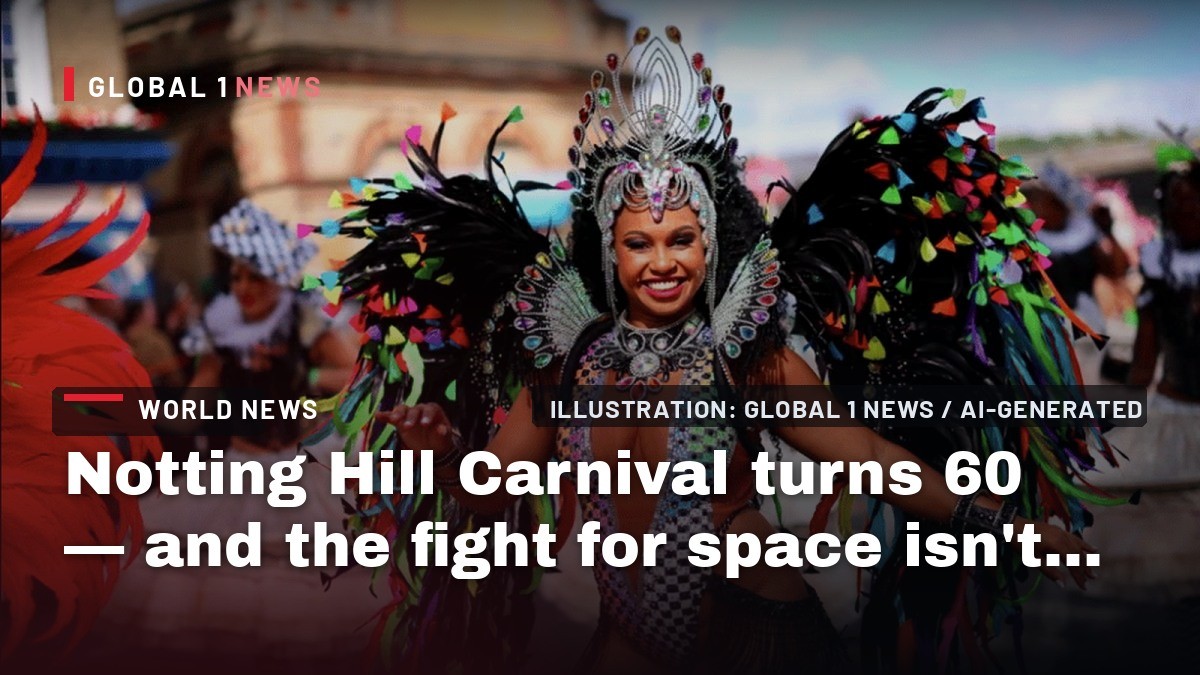
For six decades, the last weekend of August has belonged to the Caribbean in London. This year, as Notting Hill Carnival celebrated its 60th anniversary, up to two million people flooded the streets of west London to dance, eat, and remember — a number that makes it Europe’s biggest street festival by a country mile. But behind the feathers, the bass, and the smell of doubles and jerk chicken, there is a story that runs much deeper than the parade route. It is a story of survival, of roots that trace directly back to Trinidad and Tobago, and of an ongoing fight for space that is far from finished.
A Caribbean heartbeat in the heart of London
For Trinidadian readers, Carnival is not merely an event; it is a birthright. The rhythm of the steelpan, the wit of calypso, the sheer exuberance of soca — these are the sounds of home. And it is precisely this heritage that pulses through Notting Hill each year. The 2026 edition, held over the August bank holiday weekend (30-31 August), was not just a party. It was a homecoming of sorts, a reaffirmation of a cultural bridge that spans the Atlantic. The numbers are staggering. Up to two million attendees across the weekend, according to organisers, packed the streets of the Royal Borough of Kensington and Chelsea. To put that in perspective, that is roughly the entire population of Trinidad and Tobago descending upon a few square miles of London. The Met Police, acutely aware of the scale and the scrutiny, deployed around 7,000 officers, supported by some 3,000 stewards and organisers — roughly double the usual security presence, a clear sign of the times we live in. Police reported around 560 arrests over the weekend. On the surface, that figure might raise eyebrows. But organisers were quick to stress the context: 560 arrests out of up to two million attendees is a tiny fraction, a statistic that speaks more to the professionalism of the security operation than to any sense of lawlessness. Still, the tragedy of the weekend cannot be ignored. A man died after entering a canal near the carnival route, a sombre note that tempered the jubilation. A carnival spokesperson called the 2026 event "a fantastic celebration of the 60th anniversary of an iconic event," while acknowledging the loss.From the ashes of 1958: Claudia Jones and the birth of a tradition
To understand Notting Hill Carnival, you have to go back to the late 1950s. In 1958, racist violence tore through the Notting Hill area. White youths, fuelled by hatred and the rhetoric of the far-right, attacked Black residents in a series of brutal incidents that became known as the Notting Hill race riots. It was a terrifying time for the Windrush generation — the Caribbean men and women who had answered the call to help rebuild Britain after the Second World War, only to find hostility and discrimination. Out of that darkness came a defiant light. Claudia Jones, a Trinidadian journalist and activist, is widely credited with planting the seed. Jones, a fierce campaigner for civil rights and a member of the Communist Party, had been deported from the United States for her political activities and found refuge in London. She saw the need for a celebration that could unite the Caribbean community, to give them a sense of pride and belonging in a country that often rejected them. In 1959, Jones organised a Caribbean Carnival in a London hall, a precursor to the street festival we know today. It was an indoor affair, but it captured the imagination. Then, in 1966, community figures including Rhaune Laslett, a local activist of mixed heritage, took the celebration to the streets. The first Notting Hill Carnival was a modest procession, but it was a revolution in motion. Those seeds, planted by Jones and nurtured by Laslett and countless others, grew into the spectacular, sprawling event that now draws millions.Panorama, steelpan, and the soul of the festival
For the uninitiated, Notting Hill Carnival might seem like a blur of colour and sound. But for those in the know, the heart of the event lies in its musical traditions. Panorama, the steelband competition, remains a centrepiece. The sound of a full steel orchestra — the ping of the pans, the rolling bass, the intricate arrangements — is a direct line to Port of Spain. It is a sound that Trinidadians in the diaspora hold dear, a reminder of the panyards of Laventille or San Fernando. Calypso and soca are equally central. The great calypsonians of the past — from Mighty Sparrow to Calypso Rose — have always had a presence in London, and their legacy lives on in the sound systems and live stages that line the route. For younger generations born in the UK, the carnival is a vital connection to their parents' and grandparents' homeland. It is a way of saying, "We are here, and we are proud of where we come from." London Mayor Sadiq Khan captured this sentiment perfectly when he said, "60 years after the first Carnival, its spirit is as strong as ever." That spirit is not just about music and dancing. It is about identity, resilience, and the refusal to be erased.The ongoing fight for space
Yet, for all its joy, Notting Hill Carnival has always faced an "ongoing fight for space." This is not a new struggle, but it is one that has intensified in recent years. The first issue is gentrification. The Notting Hill of today is a far cry from the working-class, multicultural area of the 1960s. Property prices have skyrocketed, and the demographic has shifted. Many of the Caribbean families who built the community have been priced out, moved to outer London boroughs or even back to the Caribbean. The carnival now takes place in a neighbourhood that is increasingly affluent and increasingly white, which creates a tension between the event's roots and its current surroundings. The second issue is cost. Policing a two-million-person event is not cheap. The Met Police's bill for the weekend runs into the millions of pounds, and there is a constant debate about who should foot that bill. The carnival is a free event, a point of principle for organisers who see it as a community celebration, not a commercial venture. But the pressure to commercialise, to sell more sponsorship, to charge for access, is ever-present. Balancing the need for revenue with the ethos of a free, open-access festival is a delicate dance. The third issue is security. In an age of heightened terror threats and concerns about public safety, the sheer scale of the event makes it a logistical nightmare. The doubling of the security presence this year is a sign of the times. The 7,000 officers and 3,000 stewards were not just there to manage crowds; they were there to protect. This security apparatus, while necessary, can sometimes feel like a heavy hand, a reminder that the carnival is now a major security operation as much as a cultural celebration.A regional lens: what this means for the Caribbean
For readers in Trinidad and Tobago, the Notting Hill Carnival is more than a news story from abroad. It is a mirror of our own Carnival, and a reminder of the diaspora's power. The Caribbean community in London has managed to create a space that is unapologetically Caribbean, a space that commands the attention of the world. That is no small feat. But the challenges facing Notting Hill are challenges that resonate across the region. The cost-of-living crisis that is squeezing households in Port of Spain and San Fernando is also affecting the diaspora in London. The gentrification that is pushing Caribbean people out of Notting Hill is a phenomenon seen in cities across the globe, from Brooklyn to Toronto. And the security concerns are universal. There is also a deeper, more existential question. As the Windrush generation ages and passes on, who will carry the torch? The young people of Caribbean descent born in the UK are the future of Notting Hill Carnival. They are the ones who will decide whether it remains a free community celebration or becomes something more corporate. They are the ones who will fight for space in a city that is increasingly expensive and increasingly competitive.Looking ahead: the next 60 years
The 60th anniversary was a moment of triumph, a chance to look back at how far the carnival has come. From a small, defiant procession in 1966 to a global phenomenon, it is a testament to the resilience of the Caribbean spirit. But it was also a moment of reflection. The fight for space is not over. It will continue, year after year, as long as the carnival exists. The organisers, the mas bands, the steel orchestras, the sound systems — they all know that the battle is ongoing. They know that every year they must justify their existence, prove their value, and navigate the complex politics of a city that both loves and fears them. But they also know that the carnival is worth fighting for. It is a living, breathing monument to the Windrush generation, to Claudia Jones, to all those who came before. As the last notes of soca fade and the streets of Notting Hill return to their quiet, affluent normality, the question hangs in the air: what will the next 60 years bring? If the past is any guide, the carnival will endure. It will adapt, it will evolve, but it will not disappear. Because for the Caribbean community in London, and for the millions who flock to the streets each August, Notting Hill Carnival is not just a party. It is a home. And home is always worth fighting for. By Sharon Sahatoo, Staff Writer This article was produced with AI-assisted research and editorial support. Sources: Caribbean360, BBC News, LBC, The Guardian, Mirror Online.What's Your Reaction?
 Like
0
Like
0
 Dislike
0
Dislike
0
 Love
0
Love
0
 Funny
0
Funny
0
 Wow
0
Wow
0
 Sad
0
Sad
0
 Angry
0
Angry
0

Sharon Sahatoo
Caribbean Correspondent at Global1.News. Based in Port of Spain, Trinidad, covering Caribbean politics, economy, energy, climate, and culture. Amplifying the voices and stories of the Caribbean region.










Comments (0)