
Norse Atlantic's Norwegian Unit Files for Bankruptcy as Jet Fuel Finishes the Job
Norse Atlantic's Norwegian operating unit filed for bankruptcy at Norway's Agder District Court after failing to raise short-term financing. Every flight is canceled and ticket sales have stopped, while the group's UK subsidiary seeks a way to keep operating.
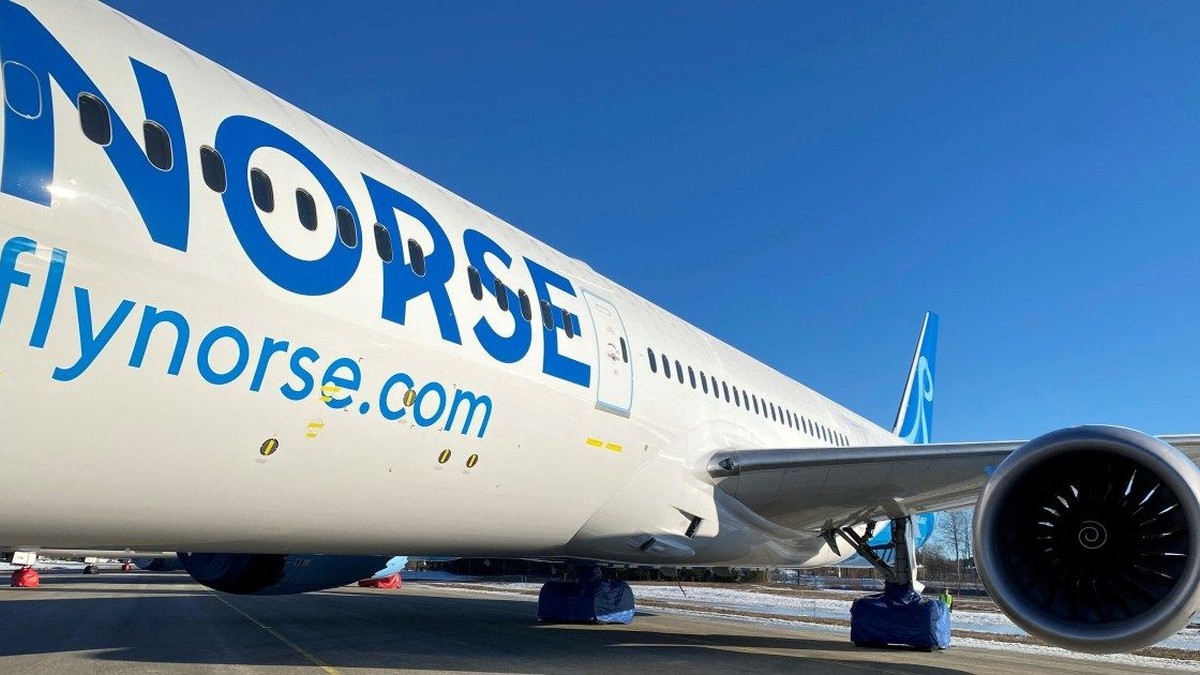
Norse Atlantic promised cheap flights across the Atlantic and delivered them for four years. On Friday its Norwegian operating company filed for bankruptcy, every flight it sold was canceled, and the chief executive blamed the one input the airline never protected itself against.
Norse Atlantic's Norwegian Unit Files for Bankruptcy as Jet Fuel Finishes the Job
Oslo, Norway — The board of Norse Atlantic Airways AS resolved to petition the Agder District Court for bankruptcy on Friday, after the long-haul budget carrier failed to raise the short-term financing it needed to keep flying. Every flight operated by the Norwegian company and by its British subsidiary is canceled, ticket sales have stopped, and customer service no longer answers at all.
What Norse Atlantic Was
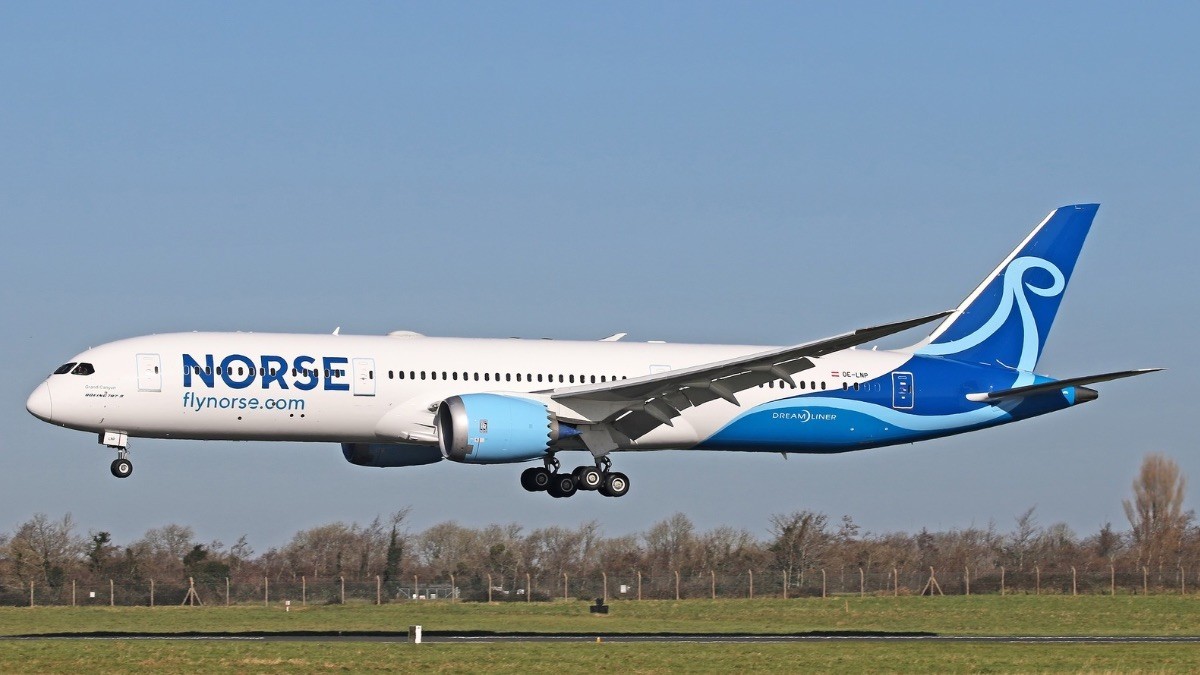
Norse Atlantic was founded in 2021, built to fill the hole left when Norwegian Air walked away from long-haul flying. Its first commercial flight, Oslo to New York, took off in June 2022, and it flew a fleet of twelve Boeing 787 Dreamliners into destinations across North America, Europe, Asia and South Africa.
The pitch was simple and it worked for a while: the comfort of a Dreamliner at prices closer to a short-haul carrier. In Britain the airline operated from Gatwick to Bangkok, Cape Town, Orlando and Phuket, according to the Civil Aviation Authority. Its Gatwick to Orlando route launched in 2023 with fares from 409 pounds return and was still selling seats into April 2027.
It also leased aircraft and crews to other carriers, including Pakistan International Airlines. That side business is now caught in the wreckage too.
The Four Days It Took to End a Carrier
The end came fast enough to be measured in days. On Wednesday the company told the Oslo exchange its financial position was "critical" and that it needed new money to meet short-term liquidity needs. The shares fell more than 70 percent that day, according to Reuters, and Al Jazeera reported they closed 85 percent lower by Thursday.
Norway's Civil Aviation Authority added pressure the same week, imposing a fine of 8,000 Norwegian crowns, about 814 dollars, for every business day the airline failed to pay compensation it owed to passengers.
On Thursday Norse suspended every flight and said that without urgent financing, bankruptcy was the board's intention. It returned its aircraft to bases in Norway, Sweden and Britain. By Friday morning the lessors had issued termination notices covering all twelve Dreamliners, a step Norse disputes, and by that afternoon the board had filed. Court documents reported by the business daily E24 put the company's debts at roughly 6.3 billion Norwegian crowns against assets of about 4 billion.
Fuel Is What Toppled This Company
Chief executive Eivind Roald did not spread the blame around. "We were unable to absorb the extra cost ... Fuel is what toppled this company," he told the Norwegian broadcaster NRK. In the stock exchange announcement confirming the filing he said the board had made a difficult decision despite extensive efforts, and the company issued a statement: "We are deeply sorry for the impact this has on our passengers, employees and partners."
Aviation analyst John Strickland told Al Jazeera that the structural failure was visible in the balance sheet long before the filing. "Many airlines hedge their fuel purchases and stockpile fuel to protect themselves against crises like this. Norse Atlantic did not hedge at all, so it had no protection against rising prices," he said.
That left a carrier selling seats at leisure prices paying spot rates for the most expensive fuel in a generation, on routes where a 787 burns enormous quantities of it.
Why Jet Fuel Outran Crude Oil
The numbers behind that exposure come from the International Air Transport Association. Global jet fuel averaged about 99 dollars a barrel on February 27, the day before the war involving the United States, Israel and Iran began. It more than doubled to 209 dollars by April, eased in early summer, then climbed again to about 190 dollars in early October and above 200 dollars in Europe.
The gap between crude and jet fuel is the part that broke small carriers. Refineries around the Gulf supplied roughly one fifth of the world's jet fuel and kerosene exports before the war, and the disruption pushed the crack spread, the premium jet fuel commands over crude, to record levels.
IATA expects the industry's fuel bill to reach about 350 billion dollars this year, up from 252 billion in 2025, with fuel taking 31.4 percent of operating costs instead of roughly 25. For some low-cost carriers it is as much as 60 percent.
The 1,071 Workers and the People at the Gate
Norse employed 1,071 people as of its June 30 quarterly filing. Chief executive Roald met staff on a virtual call at 1300 GMT on Friday, Norwegian media reported, and the pilots' association issued a statement through Reuters that read like what it was. "This is a very hard day for the pilots and their families, and for all other Norse employees," its board said, adding that its thoughts were with passengers whose journeys had been canceled.
The passengers got a blunter message. Do not go to the airport, the airline said, and do not expect a reply, because customer service is closed by phone, email, chat and social media. Anyone holding a return ticket from Florida, Thailand or South Africa has to buy a new one and chase the old money separately.
The timing makes it worse. Christmas is less than four weeks away, and Norse had been flying Scandinavians direct to Thailand for the winter.
What a Norse Ticket Is Worth Now
Britain's Civil Aviation Authority told passengers to stay home and pointed them at the machinery instead. Travelers who booked directly and paid by credit card may be protected under Section 75 of the Consumer Credit Act 1974, which makes the card provider jointly liable on purchases between 100 and 30,000 pounds. Debit and charge card payments may fall under chargeback rules.
Anyone who bought a flight-inclusive package from a UK operator is covered by ATOL, and anyone holding scheduled airline failure insurance should call the insurer before booking a replacement. Norse customers who booked through an agent should start with the agent.
Norway's Consumer Council advised passengers to file a claim with the bankruptcy estate, then take a copy of that claim to their bank or card provider. Norse itself says claims information will be posted once confirmed, and warns that submitting a claim does not guarantee payment.
The UK Airline Has Not Filed — Yet
The distinction matters more than it looks. The bankruptcy covers Norse Atlantic Airways AS, the Norwegian operating company. The listed parent, Norse Atlantic ASA, and Norse Atlantic UK Ltd are not part of the filing.
That does not mean British passengers can relax, because the parent has confirmed that flights operated by both companies are canceled. Roald said the board, management and advisers of the listed entity and the UK subsidiary "are working to find a solution for the remaining part of the business to continue operations."
Andrew McConnell, a spokesperson for the Civil Aviation Authority, said the cancellations were causing concern and disruption and urged customers to use the regulator's website for the latest information. With no aircraft, no ticket sales and no staff able to sell seats, a restart would need fresh money and new leases.
Norse Is the Latest, Not the Only One
Norse joins a list that has been growing since the fuel shock began. Spirit Airlines, the American ultra-low-cost carrier, ceased operations on May 2 after talks for a 500 million dollar federal rescue failed, ending 34 years of flying. Latvia's airBaltic abandoned its expansion in August and entered Chapter 11 restructuring in the United States, then said on October 5 that it would cut 500 to 700 of roughly 3,000 jobs.
Spain's Volotea opened formal negotiations with creditors on September 29 under the country's pre-insolvency procedure, puts the cost of higher fuel since March at about 150 million euros, and plans to shrink from 44 aircraft to between 30 and 35 while it keeps flying. Plus Ultra, another Spanish carrier, suspended Madrid routes to Buenos Aires and Lima indefinitely on November 17, leaving Venezuela as its only market.
Network retreats are quieter but everywhere. United cut capacity 5 percent in March, KLM and Finnair have extended suspensions of Gulf flights into 2027, and WestJet has removed every scheduled flight to Cuba, Denmark and Colombia from its schedules through October 2027, according to Cirium data reported by aviation outlets.
Why the Gulf Carriers Are Still Flying
The contrast with the Gulf majors is the clearest evidence that this is a hedging story as much as a fuel story. Emirates reported a 68 percent drop in half-year profit before tax to 1 billion dollars for the six months to September 30, with capacity down 17 percent and passenger traffic down 25 percent. Its fuel costs rose 60 percent before hedging, but 1.9 billion dollars in hedging gains cut the net increase to 13 percent.
Geography helped too. With Gulf refiners unable to export normally, local stocks grew, and jet fuel averaged about 165 dollars a barrel in the Middle East in early October against more than 200 in Europe. Qatar's reserve cover rose by more than five months and the UAE's by about 15 days, according to Bloomberg.
Competition thinned as foreign carriers stayed away, though Qatar Airways still trimmed departures about 7 percent for the northern winter.
Nobody Expects Relief in 2027
IATA now forecasts global airline profits will halve to 23 billion dollars this year, on net margins of just 2 percent. Its director general, Willie Walsh, said war-related disruption and rising fuel costs had shifted the outlook for airlines to the worse. Chief economist Marie Owens Thomsen put it more plainly: "This is eye-watering stuff ... It will affect absolutely everyone in the global economy."
Passengers are already paying. US airfares were 23.4 percent higher in August than a year earlier, and the five biggest American carriers earned 18 percent more passenger revenue in the third quarter even as traffic grew by less than 1 percent.
Next year looks thinner still. Ryanair has hedged only about 25 percent of its fuel from April 2027 and Turkish Airlines 12 percent, while Air France-KLM models a 2027 fuel bill of 10.4 billion euros after hedging, up from 9.2 billion. "The risk is that oil prices might roll off and we catch ourselves on the wrong side of the market," Ryanair chief executive Michael O'Leary told analysts this month.
For the 1,071 people who worked at Norse, and the passengers now shopping for December seats at fares they never budgeted for, that argument is already settled.
By Jessica Ali, Staff Writer
This article was produced with AI-assisted research and editorial support. Sources: Al Jazeera, Reuters, Life in Norway, the UK Civil Aviation Authority, E24, the International Air Transport Association, the BBC, Bloomberg data reported by Al Jazeera, and Cirium schedule data reported by aviation outlets. Photographs: Victoria Klesty/Reuters (lead image); Norse Atlantic Airways (cabin and aircraft).
What's Your Reaction?
 Like
0
 Dislike
0
 Love
0
 Funny
0
 Wow
0
 Sad
0
 Angry
0

Editor-in-Chief at Global1.News. Atlanta-based journalist who cuts through the BS and tells it like it is. Lead anchor, host, and the voice you hear when the spin stops and the truth starts.












Comments (0)