
Meta Just Put $2.3 Billion Down on a $14 Billion Data Center — Wall Street Owns the Rest Now
Meta and BlackRock formed a $14 billion venture for a 1GW El Paso data center with Meta putting in just $2.3 billion in equity. As Meta's free cash flow collapses and the Pentagon seeks $30 billion for sovereign AI supercomputing, Wall Street now owns the AI buildout.
Meta Just Put $2.3 Billion Down on a $14 Billion Data Center — Wall Street Owns the Rest Now
Let me tell you something that's been bouncing around my head since Tuesday. Meta Platforms — the company that spent a decade building the biggest social network on Earth — just signed up to be the junior partner in its own data center. Not the owner. Not the lead investor. The junior partner, with 20 percent.
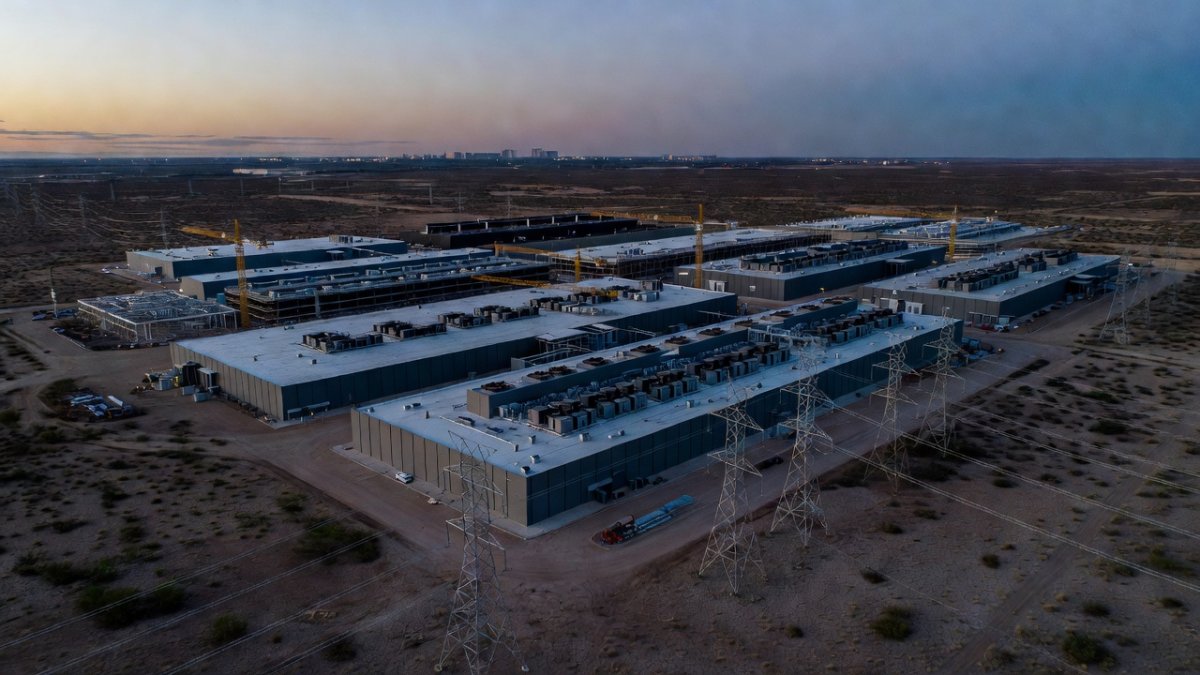
The deal: Meta and BlackRock announced a joint venture on July 28 to develop and own a data center campus in El Paso, Texas. Total cost, around $14 billion. One gigawatt of compute capacity, coming online in 2028, already under construction. And here's the part that should make every founder sit up straight: BlackRock-managed funds are putting in about $4.9 billion in equity. Meta is putting in $2.3 billion. The rest is debt arranged by a consortium of lenders. BlackRock funds hold 80 percent of the venture. Meta holds 20.
Read that again. The largest social media company in the world is now renting its AI future from the largest asset manager in the world. That's not a footnote. That's the whole story of where the AI buildout is headed — and if you run hosting infrastructure for a living, you need to understand it, because it changes who you're actually competing against.
The Deal — How a $14 Billion Data Center Gets Built Without Meta's Money
Let me break down the El Paso deal properly, because the structure tells you everything. The campus is designed for 1 gigawatt of AI-optimized compute — enough to power a midsize city. The project is expected to support more than 4,000 construction jobs at peak and around 300 permanent roles once complete. It joins a string of 1-gigawatt campuses Meta has announced over the past two years in Ohio, Indiana, and Canada.
But look at the money. This is not Meta writing a $14 billion check. This is Meta contributing $2.3 billion of equity into a venture that BlackRock's funds dominate, with a lender consortium financing the rest. Meta gets capacity. BlackRock gets an infrastructure asset with a contracted tenant. The debt gets serviced by Meta's lease payments, which means BlackRock's downside is hedged by the world's most cash-generative advertising business — in theory.
This is the "real assets" play that institutional investors have been circling for two years. Land with grid connections. Firm megawatts. Buildings that come with a Fortune 50 tenant attached. Asset managers don't care about GPUs or model architectures. They care about yield, and a data center with a hyperscaler as anchor tenant is a bond with a building around it.
Why Meta Can't Afford to Build It Anymore
Now here's the uncomfortable part, and it's the reason this deal exists at all. Meta's free cash flow collapsed in its latest quarter. We're talking $784 million in free cash flow — down 91 percent from $8.55 billion in the same quarter a year ago, and down from more than $12 billion the previous quarter. The company that once printed $12 billion a quarter in free cash is now scraping by on less than a billion.
And the commitments keep piling up. Meta has disclosed nearly $700 billion in future spending commitments tied to AI data centers, third-party cloud agreements, servers, network infrastructure, and leases — including around $68 billion added in just July alone, with payments ramping hard in 2027 and 2028. On top of that, it's guiding $130 to $145 billion in near-term AI data center capex.
Let me put that in founder terms. You've got a business whose operating cash flow just got crushed, a mountain of contractual obligations coming due in two years, and a board that refuses to slow down. What do you do? You stop owning and start renting. You find a partner with a bigger balance sheet than yours — and there are only a handful of those on Earth. BlackRock is one of them.
Temple — The Old Way Still Works, It Just Takes Forever
This is why the other Meta story this week matters. On July 22, Meta officially brought its first AI-optimized data center online in Temple, Texas — 760,000 square feet on Industrial Boulevard, about $1.2 billion of Meta's own money. The company redesigned and restarted the project in 2023, four-plus years after plans were first shared. Locals are sounding off about water, power, and heat concerns around the facility.
Temple is the old model: build it yourself, own it yourself, run it yourself. It works. It also took four years, required a mid-construction redesign, and soaked up $1.2 billion of balance sheet that Meta now doesn't have to spare. That's the difference between 2022 and 2026. The old model still functions — it's just too slow and too heavy for the pace the market is demanding.
And Now the Government Wants In
Then there's the third story that landed this week, and it's the one nobody in tech is talking about. The Pentagon is requesting nearly $30 billion for fiscal 2027 under a new "AI Arsenal" initiative — government-owned AI supercomputing infrastructure, next-generation GPUs, and hyperscale-class data centers on military installations, built in partnership with private industry.
Think about what that means. The federal government has decided it can't rely on renting compute from companies whose landlords are now asset managers. It wants sovereign capability, owned by the state, on military bases. That's the same conclusion every hyperscaler reached two years ago — you don't want your critical infrastructure controlled by somebody else's balance sheet. Except now the hyperscalers themselves are the ones who can't control theirs.
The Counter-Argument — "This Is Just Smart Finance"
Before you call me a doom merchant, let me steelman the other side, because it deserves a fair hearing. Off-balance-sheet financing is standard practice in real estate, energy, and telecom. Every utility on Earth funds its grid through project finance. BlackRock is patient capital — it's not flipping these assets next quarter. And the demand picture is genuinely enormous: BloombergNEF just revised U.S. data center power demand up to roughly 194 gigawatts by 2035, an 83 percent increase from its forecast seven months ago. Nearly 75 percent of the AI data center capacity under construction right now is already spoken for. The buildout is real. The tenants are real.
Buh here's the problem with the smart-finance story, and I say this as somebody who's financed servers with everything from credit cards to bank lines: infrastructure debt works until the yield stops working. Asset managers mark to market. Their funds have redemption windows and performance fees and limited partners who ask hard questions. When the AI cycle hiccups — and every cycle hiccups — the landlord's first move is to protect the yield, not the engineering. The tenant's first move is to protect the lease, not the technology. Somewhere in that negotiation, the actual quality of the infrastructure becomes negotiable. That's the hidden cost of renting your future.
What This Actually Means for Independent Hosting Providers
Alright, let's get practical, because this isn't a spectator sport for those of us running real infrastructure.
First, know who you're actually competing against now. You're not competing with Meta's engineers anymore. You're competing with BlackRock's yield models. That changes pricing logic entirely — asset managers will lease capacity to whoever covers debt service, which means hyperscaler cloud pricing becomes less predictable, not more.
Second, watch free cash flow like a hawk. Meta's $784 million quarter is the same signal we saw at Oracle — the capex story has become a cash-flow story, and the follow-on effects (price hikes, lease cancellations, distressed capacity sales) land two to four quarters later. When the giants start selling or subleasing, the secondary market gets flooded and your pricing assumptions go out the window.
Third, reposition as the operator-owned alternative. "Your landlord isn't a hedge fund" is now a legitimate sales pitch. Businesses that care about who controls their critical infrastructure — and after this week, more of them will — are exactly the customers independent hosting exists for.
Fourth, borrow a page from the giants' playbook. If Meta is using asset managers to avoid balance-sheet risk, you should use leasing and flexible terms to avoid yours. In a market this uncertain, ownership is a luxury. Optionality is survival.
The Structural Reality — The Physical Layer Now Has Landlords
Step back and look at the shape of this week. Meta puts $2.3 billion into a $14 billion campus it doesn't control. Meta's own first AI data center takes four years and a redesign to go live. The Pentagon asks for $30 billion to build sovereign compute because it doesn't trust the market's landlords. And underneath all of it, the demand forecasts keep climbing — 194 gigawatts by 2035, with interconnection queues now a bigger bottleneck than permitting, and build timelines stretching three to seven years.
What this adds up to is simple: the AI buildout has become a real-estate play with a technology sticker on it. The people who own the physical layer are no longer the people who build the models. The incentives are splitting — owners want yield, tenants want capacity, engineers want scale, and governments want control. Those four interests are not aligned, and they're about to start pulling in different directions.
The Bottom Line
I've been running hosting infrastructure for over a decade, and I've never seen the industry's center of gravity shift the way it just did. The story of AI infrastructure is no longer about chips and models. It's about balance sheets — whose balance sheet, whose risk, whose building, whose yield.
Meta just told you everything you need to know about the future of this industry, and it did it with a press release about a joint venture in El Paso. The largest tech companies on Earth are becoming tenants. The largest asset managers are becoming landlords. And the government is becoming a competitor. If you're an independent hosting provider, that's not a threat — it's the clearest market signal you've had in years. The people who control their own infrastructure are about to be worth more than the people who rent it.
That's the real story of the AI buildout. Not the billion-dollar announcements. Not the model releases. The quiet transfer of ownership that happened while everybody was watching the chips.
-- Allan Ali, Founder
This article was produced with AI-assisted research and editorial support. Reporting is based on sources cited in the article.
What's Your Reaction?
 Like
0
Like
0
 Dislike
0
Dislike
0
 Love
0
Love
0
 Funny
0
Funny
0
 Wow
0
Wow
0
 Sad
0
Sad
0
 Angry
0
Angry
0

Publisher of Global1.News. Automation architect, systems builder, and the guy making sure the truth gets published.












Comments (0)