
Met Police Seize £8m Supercars in London Crackdown
The Metropolitan Police has seized more than £8 million worth of supercars — including a £3.7 million Ferrari that had been on British soil for barely a day — in the largest crackdown on antisocial driving in the capital's history. The operation, which ran across London's wealthiest postcodes between Friday 7 August and Sunday 9 August, has reignited a distinctly British debate about wealth, entitlement and who exactly the rules are written for.
The Metropolitan Police has seized more than £8 million worth of supercars — including a £3.7 million Ferrari that had been on British soil for barely a day — in the largest crackdown on antisocial driving in the capital's history. The operation, which ran across London's wealthiest postcodes between Friday 7 August and Sunday 9 August, has reignited a distinctly British debate about wealth, entitlement and who exactly the rules are written for.
£8m of Supercars Seized in London: The Ferrari, the Provisional Licence, and the Message to Wealthy Drivers
London, UK – 10 August 2026 — The driver of the Ferrari Monza SP2 — one of only 499 ever built by the Italian marque — had been behind the wheel for less than half an hour when Metropolitan Police officers pulled him over near Hyde Park at the weekend. He was holding a provisional licence. The car, registered in Dubai, had arrived in the United Kingdom just 24 hours earlier. It was uninsured and unlicensed for UK roads.
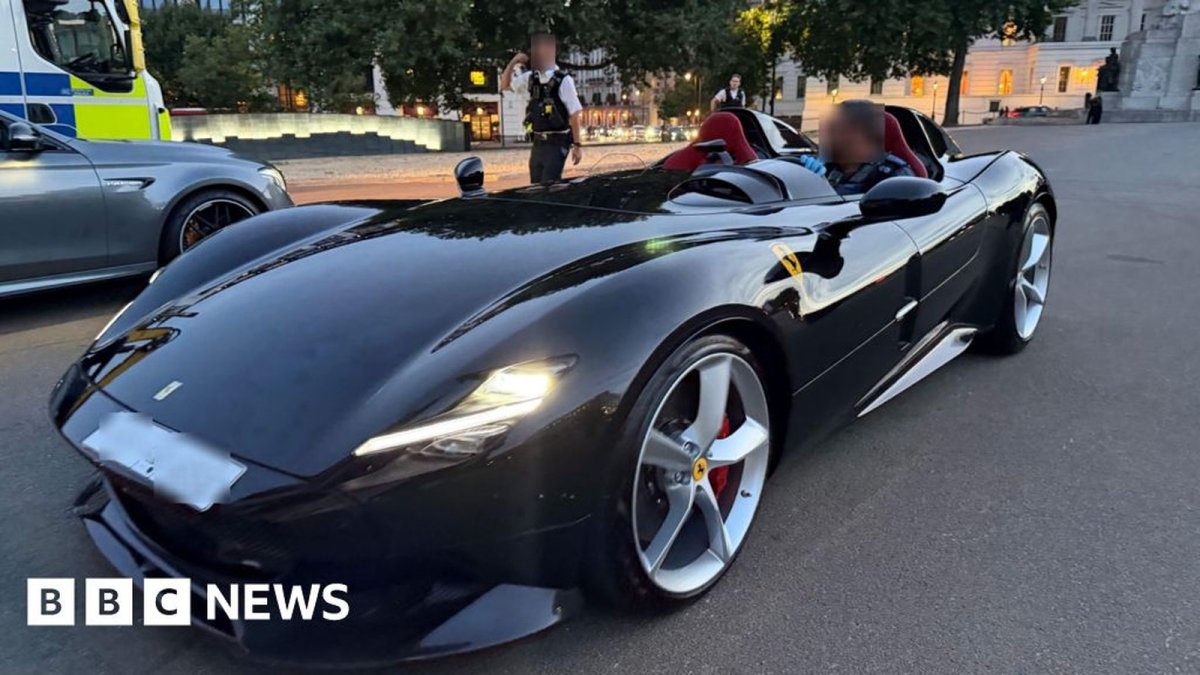
That single stop encapsulates everything about the Met's five-year-old enforcement campaign targeting uninsured and antisocial driving in the capital's most exclusive neighbourhoods. Between Friday 7 August and Sunday 9 August, 120 officers — including 95 from the Met's Special Constabulary and Vehicle Enforcement Team — seized 90 vehicles with a combined value exceeding £8 million. It is the highest number and highest value of vehicles confiscated in the operation's history, according to the force's official press release.
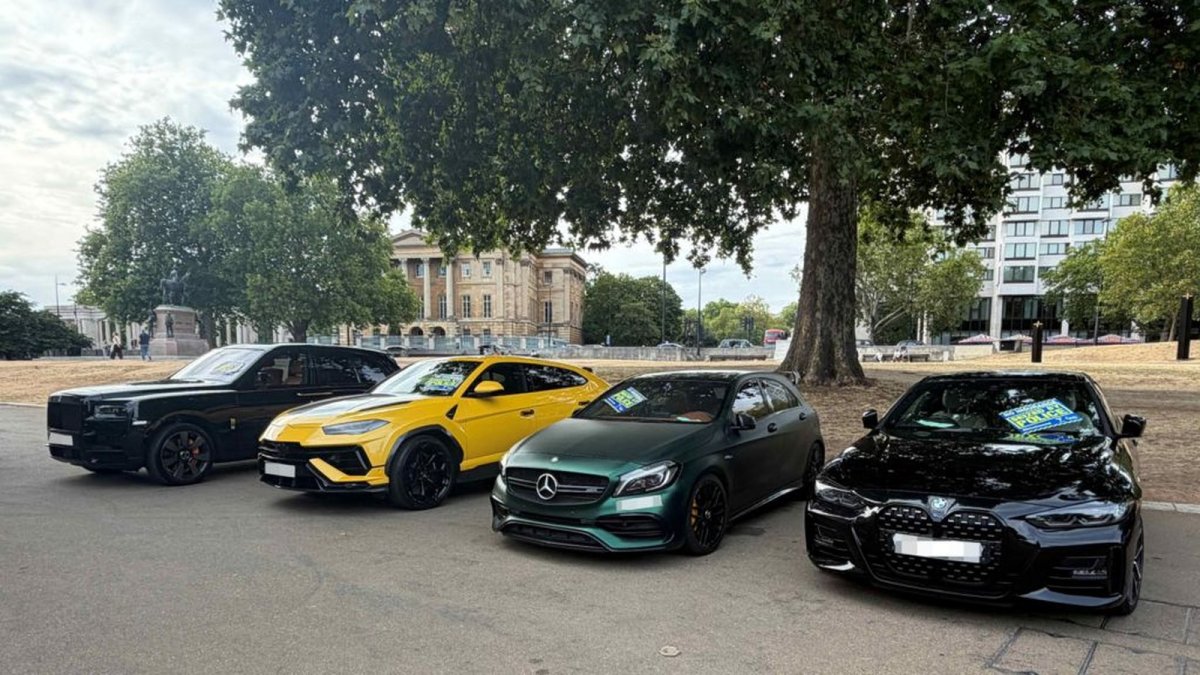
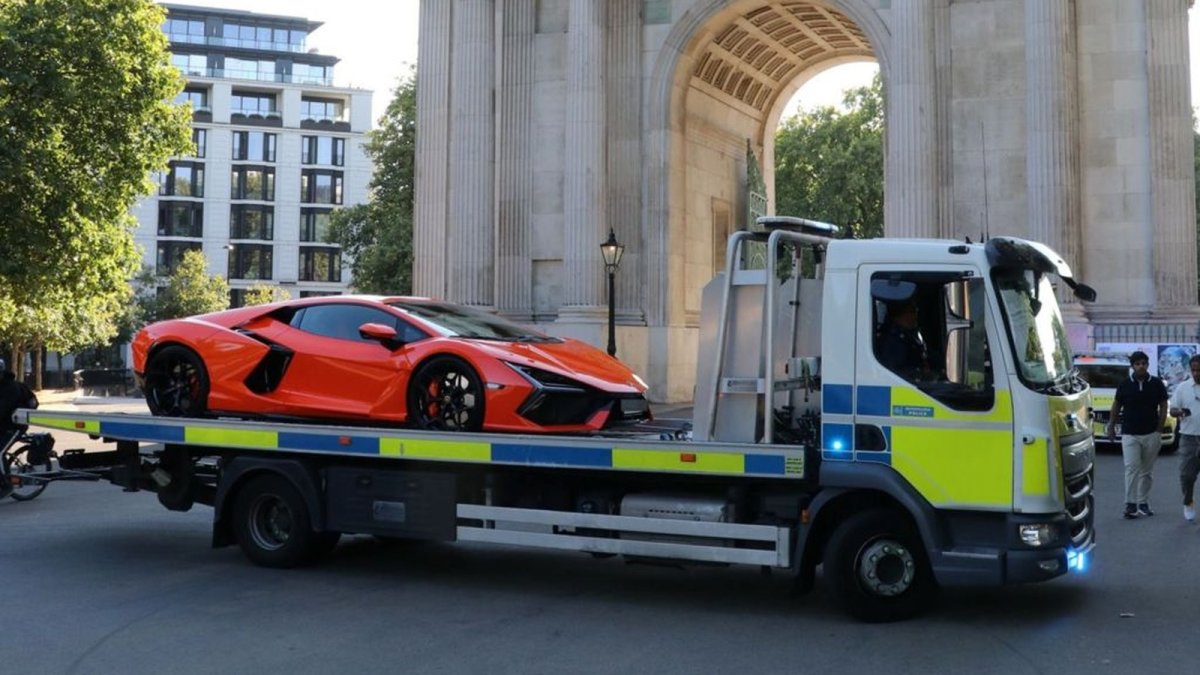
The haul reads like a parking lot outside a Mayfair hedge fund Christmas party: a Lamborghini Revuelto photographed being winched onto a recovery truck at Wellington Arch, a black Rolls-Royce, a yellow Lamborghini, a green Mercedes and a black BMW. But the crown jewel was the Ferrari Monza SP2, a limited-edition "barchetta" style roadster that sold at auction earlier this year for $4,995,000 — approximately £3.7 million. The Met officer tasked with driving it to the police pound around Mayfair and Marble Arch reportedly enjoyed the escort, accompanied by police vehicles including an empty flatbed truck, per The Guardian's reporting.
The Provisional Licence Problem — and a New Legal Weapon
The Ferrari driver's situation — a high-value vehicle, a provisional licence, and a foreign registration — illustrates precisely the enforcement gap the Met has been trying to close. Under new powers available to officers, vehicles involved in antisocial behaviour can now be seized immediately, rather than the driver being given a warning and allowed to continue. Fifteen of the 90 vehicles seized this weekend were taken under these new powers.
Special Chief Inspector Geoff Tatman, who led the operation, was unambiguous about the intent. "We regularly hear from local people who are fed up with people driving cars dangerously in the area, or with modifications which make them a nuisance to those who live nearby," he said. "Through operations like this we're arresting these drivers and seizing their cars so we can keep our roads safe and send clear message that we won't put up with their reckless and dangerous behavior."
The operation was supported by the Motor Insurers' Bureau (MIB), the industry-funded body that compensates victims of uninsured and hit-and-run drivers. The MIB's 'Navigate' database — the UK's central insurance intelligence system — was used in real time by officers on the ground to identify vehicles without valid cover. The MIB's involvement is not incidental; it reflects a growing recognition that uninsured driving is not a victimless crime. The bureau's own statistics are stark: every week, someone in the UK is killed by an uninsured driver, with daily cases of life-altering injuries.
Beyond the Supercars: What Else the Operation Uncovered
While the supercars dominate the headlines, the weekend's enforcement activity produced a series of arrests that paint a broader picture of criminality intersecting with the roads. Officers arrested a man found in possession of 19 bank cards in other people's names and more than £2,500 in cash — he now faces questioning for handling stolen goods and money laundering. Another man, stopped for driving without insurance, was found with £5,500 in cash and has been arrested on suspicion of possession with intent to supply Class A, B and C drugs.
A further arrest was made for harassment, alarm and distress, and another for an immigration offence. The range of offences underscores a point the Met has made repeatedly: uninsured driving frequently overlaps with wider criminal activity, including drug offences, drink-driving and illegal street-racing. Last year's iteration of the operation saw 72 vehicles seized, two stolen vehicles recovered and eight people arrested for offences including actual bodily harm, theft of a motor vehicle, dangerous driving and failing to stop for police.
The Westminster Factor: Boy Racers, Injunctions and Local Frustration
The operation's geography is no accident. Hyde Park, Kensington and Chelsea are not merely affluent postcodes; they are also thoroughfares for what locals describe as a persistent problem with "boy racers" and visiting motorists who treat London's grand boulevards as a private racetrack. Westminster City Council has been fighting back through the courts. Deputy Leader and Cabinet Member for Enforcement, Cllr Caroline Sargent, pointed to the council's recent High Court injunction against antisocial driving in the borough — a legal tool that allows for swifter enforcement action against repeat offenders.
"People who think it's acceptable to drive illegally in Westminster are not welcome here," Sargent said. "We welcome the Met Police's latest round of enforcement and our continued partnership in deterring anti-social driving, as well as the recent High Court injunction." The injunction, secured in June 2026, bans racing, stunt-performing and car meetings in known hotspots — including Hyde Park, Bond Street, St James's and the West End — and prohibits excessive engine revving or dangerous driving between 18:00 and 07:00. It was the culmination of a Westminster City Council campaign that has also seen a Public Space Protection Order expanded across the West End, generating 370 fixed penalty notices at locations including Exhibition Road, Pall Mall and parts of Soho.
For residents of these neighbourhoods, the issue is not merely noise. It is the sense that a small minority of wealthy individuals — often visitors from the Gulf states or elsewhere in Europe — believe the rules of the road do not apply to them. The Ferrari Monza SP2, registered in Dubai and driven on a provisional licence, is a case study in that attitude. The car had been in the UK for a single day before it was impounded.
The MIB's Role: Who Pays When Uninsured Drivers Kill?
Behind the spectacle of seized supercars lies a more sobering reality. The Motor Insurers' Bureau is funded by a levy on every UK motor insurance policy — currently estimated at between £35 and £40 per policy per year, up roughly 20 per cent in two years. That means the average British driver, insuring a modest family hatchback in Birmingham or a delivery van in Manchester, is effectively subsidising the consequences of those who choose not to insure their vehicles, whether they are driving a £500 banger or a £3.7 million Ferrari.
Angus Eaton, Chief Executive at the Motor Insurers' Bureau, framed the operation in precisely those terms. "Operations like these show that the rules apply to all motorists, regardless of the value of the vehicle they chose to drive," he said. "The consequences of not having insurance or getting the right cover for their needs are severe and long-lasting." Eaton's point is a pointed one: the MIB compensates victims of uninsured drivers — people injured or killed by those who flout the law — and that compensation comes from the pockets of law-abiding policyholders.
The Politics of Conspicuous Wealth and Road Safety
There is an unavoidable class dimension to this story, and it resonates far beyond the royal boroughs of Kensington and Chelsea. In a country still grappling with the cost-of-living crisis, where millions of households are making impossible choices between heating and eating, the sight of a £3.7 million Ferrari being towed away by police carries a particular symbolic weight. It is not merely an enforcement action; it is a statement about fairness.
The contrast could not be starker. While the average UK motorist now pays significantly more for comprehensive cover than they did before the pandemic — with premiums having climbed steadily through inflation and rising repair costs — the driver of the Ferrari Monza SP2 appears to have simply not bothered. The car was uninsured, unlicensed and driven by someone with only a provisional licence. That is not a victimless oversight; it is a calculated disregard for the law, and for the safety of every other road user in the vicinity.
The Met's decision to publicise the operation — complete with photographs of the seized vehicles and the unusual detail of an officer driving the Ferrari to the pound — is a deliberate piece of messaging. The force wants the public to know that the law applies equally to a £3.7 million Italian exotic and a £1,000 Ford Fiesta. Whether that message lands with the intended audience — the wealthy visitors and residents who treat London's streets as their personal playground — remains to be seen.
Reaction and Response: Local Support, National Questions
Local residents and councillors have broadly welcomed the operation, though some question whether it goes far enough. The Westminster High Court injunction is a step forward, but enforcement is resource-intensive, and the Met's Special Constabulary — volunteer officers who gave up their weekend for this operation — cannot be everywhere at once. There are also questions about what happens to the seized vehicles. Under current legislation, uninsured vehicles can be crushed or sold at auction, with proceeds going to cover enforcement costs. The fate of the Ferrari Monza SP2, which could fetch millions at auction, will be watched with interest.
National road safety charities have also weighed in, noting that while the supercar seizures make for good headlines, the broader problem of uninsured driving — which disproportionately affects younger and lower-income drivers — requires sustained investment in enforcement and education. The MIB's 'Navigate' database is a powerful tool, but it is only as effective as the officers using it on the ground.
The Bottom Line — What Comes Next
The Met has sent a clear signal: the Metropolitan Police, backed by Westminster City Council and the Motor Insurers' Bureau, is prepared to use every legal tool available — including the new powers to seize vehicles used antisocially — to tackle antisocial driving in the capital. The seizure of 90 vehicles worth £8 million in a single weekend is a record, and the Met has indicated that further operations are planned.
But the deeper question is whether the message will stick. The driver of the Ferrari Monza SP2, who lost a £3.7 million car after less than 30 minutes behind the wheel, will almost certainly face financial consequences that would be ruinous for an ordinary motorist but are merely an inconvenience for someone who can afford such a vehicle. The real test of this operation's success will be whether it changes behaviour — whether the next wealthy visitor to London thinks twice before treating the city's streets as a racetrack. For the residents of Kensington, Chelsea and Hyde Park, and for the families of the 52 people killed every year by uninsured drivers across the UK, that change cannot come soon enough.
By Erica Thornton, Staff Writer
This article was produced with AI-assisted research and editorial support. Reporting is based on sources cited in the article.
What's Your Reaction?
 Like
0
Like
0
 Dislike
0
Dislike
0
 Love
0
Love
0
 Funny
0
Funny
0
 Wow
0
Wow
0
 Sad
0
Sad
0
 Angry
0
Angry
0

US Politics and Policy Correspondent at Global1.News. Based in Washington DC, covering American politics, policy, elections, and the courts. Knows how the system works and tells you what it actually means.










Comments (0)